

Blog
Chinese Cigarettes in Malta: 7 Top Brands & Buying Guide

TL;DR
Chinese cigarettes are not sold in Malta shops. Personal import is legal: 200 cigs from non-EU duty-free; 800-cig EU guideline. Online distance sales may be prohibited (EU TPD Art. 18 grey zone; verify with Malta Customs before ordering). Malta smoking rate: 22.9%. HTP/IQOS banned in Malta. Top brands: Chunghwa, Panda, Double Happiness, Furongwang, Yuxi, Hongtashan, Zhongnanhai. Adults 21+ only; verify local laws.
Abstract
Malta sits in an unusual spot on the European tobacco map. Adult smoking prevalence hovers around 22.9%, one of the highest rates in the EU, yet the country is a small island fully dependent on imports, with cigarettes carrying a total tax burden of roughly 77.56% of retail price and an excise component near 38.91%. Chinese cigarette brands such as Chunghwa, Double Happiness, Panda, Furongwang, Yuxi, Hongtashan, and Zhongnanhai are not stocked in licensed Maltese retail. For Malta-based buyers, the only routinely lawful path to these specific brands is personal-allowance import under EU and non-EU duty-free rules, kept strictly within the relevant quantitative limits and declared where required.
The sections below cover the Maltese tobacco-law framework (EU TPD plus local statutes), the country’s ban on heated tobacco products (HTPs) including IQOS, duty-free allowances for travellers from EU and non-EU origins, the grey zone around online distance sales into Malta, profiles of seven Chinese brands Malta buyers most often ask about, and the market context that shapes pricing and availability on the island.
YMYL notice. This article is for adults aged 21 and over. Smoking is harmful to health and addictive. Nothing here is legal, tax, or medical advice. Verify current Maltese and EU rules with Malta Customs and the Tobacco and Alcohol Control Unit before acting.
Key Takeaways
- Chinese brands are absent from Maltese retail. No licensed tobacconist or supermarket on the island stocks Chunghwa, Panda, or peers.
- Personal import is the lawful route. EU travellers: 800 cigarettes guideline; non-EU arrivals: 200 cigarettes duty-free per adult.
- Online distance sales sit in a grey zone. Cross-border B2C tobacco delivery into Malta should be verified with Malta Customs before ordering.
- Heated tobacco products are banned in Malta. IQOS and similar HTP devices cannot be lawfully sold or imported for personal use.
- Malta has one of the EU’s highest smoking rates. Adult prevalence sits at roughly 22.9%, with total cigarette tax near 77.56% of retail price.
- Adults 21+ only. Maltese law permits purchase at 18; this guide applies a stricter 21+ editorial floor.
Table of Contents
- TL;DR
- Abstract
- Key Takeaways
- Table of Contents
- Are Chinese Cigarettes Legal in Malta? The Direct Answer
- Malta’s Tobacco Law Framework: EU TPD + Maltese Legislation
- Online Tobacco Sales to Malta: A Regulatory Grey Zone
- Personal Import: Your Duty-Free Tobacco Allowances Into Malta
- The 7 Chinese Cigarette Brands Malta Buyers Should Know
- Where to Find Chinese Cigarettes in Malta
- Malta’s Tobacco Market: High Prevalence, Heavy Tax, and the HTP Ban
- Frequently Asked Questions
- Conclusion
- Further Reading
- References
Are Chinese Cigarettes Legal in Malta? The Direct Answer
EU Directive 2014/40/EU (the Tobacco Products Directive) binds Malta to a regulatory framework covering health warnings of at least 65% on pack surfaces, standardised presentation rules, and an optional Article 18 prohibition on cross-border distance sales. Several member states have exercised that option, though Malta’s domestic implementation remains unconfirmed in English-language official sources (European Parliament & Council, 2014).
Yes, conventional Chinese cigarettes are legal to possess and use in Malta when obtained through lawful channels. A pack of Chunghwa or Double Happiness sitting in your hand is treated the same as any other tobacco product under Maltese law, provided it carries the required EU health warnings and excise stamps or was brought in legally through duty-free allowances. The complications start at the point of acquisition, not at the point of personal use.
Conventional Cigarettes vs Heated Tobacco: Two Different Legal Realities
Buyers often blur two product categories that Maltese law treats very differently. The distinction matters because answering "is it legal" depends entirely on which category you are asking about.
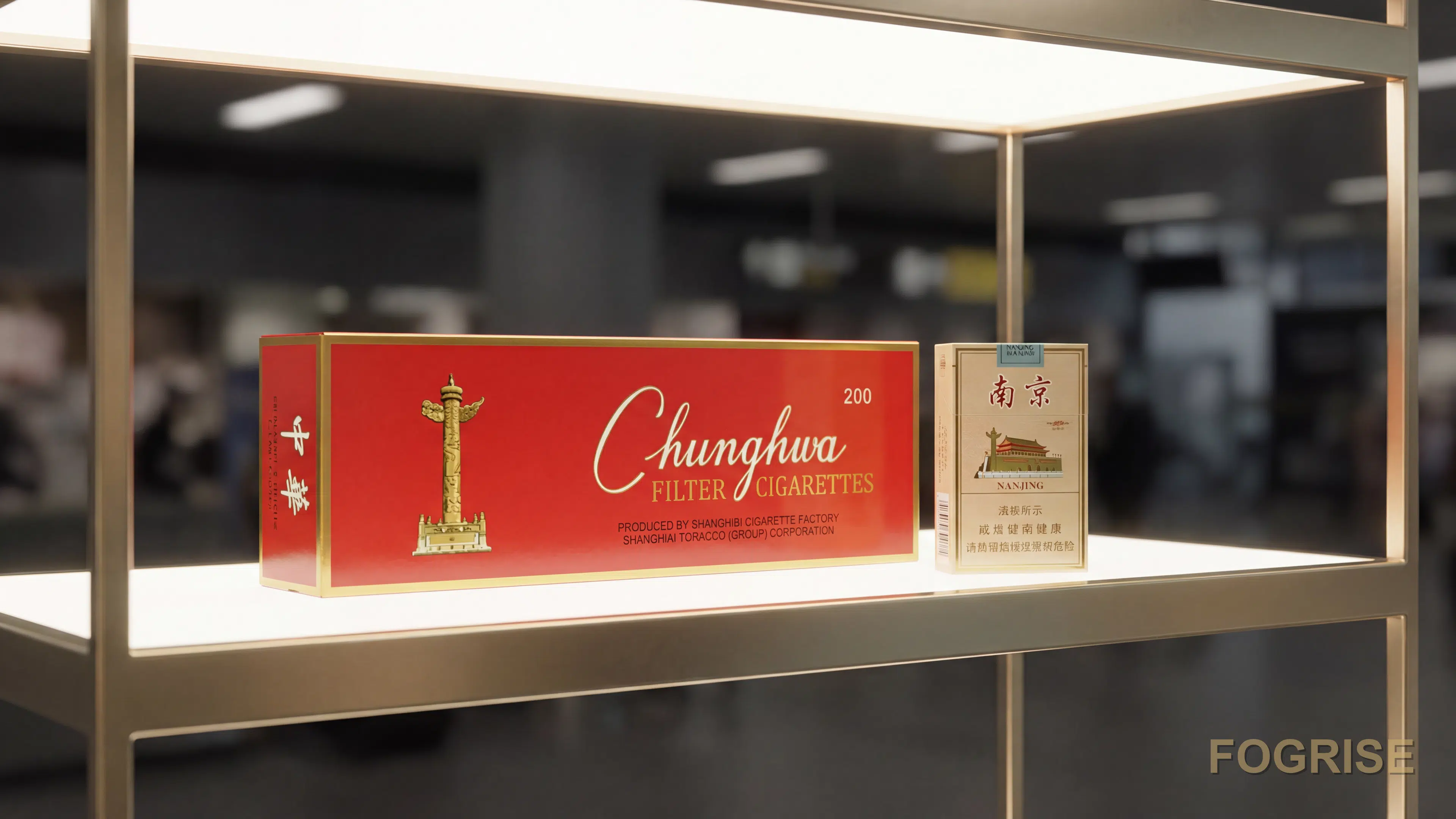
Conventional combustible cigarettes, which is the category Chunghwa, Double Happiness, Zhongnanhai, Furongwang, and every other classic Chinese brand belongs to, are legal products in Malta. You can carry them in your luggage within personal-use duty-free allowances. You can possess them at home. You can give them as a gift to another adult. Specialised tobacconists in Valletta and Sliema occasionally stock Asian brands for collectors and expatriate communities, and that supply chain is fully lawful.
Heated tobacco products are a different story. Malta has prohibited heated tobacco devices and their consumable sticks. That ban covers the IQOS device, the HEETS and TEREA stick variants, and similar systems regardless of country of origin. A traveller arriving from a country where these products are sold legally cannot bring an IQOS kit into Malta for personal use without falling foul of the restriction. If your interest in "Chinese cigarettes" actually means a heated alternative to combustibles, the answer flips: those are not legal in Malta.
Ordering conventional cigarettes online and shipping them into Malta sits in a regulatory grey zone we treat separately in the next section. EU rules give member states the option to permit or prohibit cross-border distance sales, and Malta’s specific position is not clearly documented in publicly accessible English-language sources. Before placing any online order, contact the Customs Department or the Malta Tobacco Regulation desk and confirm in writing. We say "verify before you buy", not "go ahead, it’s allowed", because the difference between the two answers can be the difference between a delivered parcel and a seizure notice.
The short version: possess and use, yes. Heated alternatives, no. Online imports, ask first.
Malta’s Tobacco Law Framework: EU TPD + Maltese Legislation
Malta’s Excise Duty Act Chapter 382 Article 14A implements the EU TPD’s 65% health-warning requirement; Malta’s total tax burden on cigarettes reaches 77.56% of retail price, with excise accounting for 38.91%, well above the EU TPD minimum excise floor of 60% (Global State of Tobacco Harm Reduction, 2025).
Malta sits inside two overlapping rule sets when it comes to tobacco. The first is the EU Tobacco Products Directive, which sets baseline standards every member state must meet. The second is Malta’s own Excise Duty Act and the regulations published under it, which take the EU floor and add national specifics around tax rates, retail conduct, and prohibited categories. Reading the two together is the only way to get an accurate picture, because EU TPD tells you what is on the pack and Maltese law tells you what happens at the till and at the border (European Parliament & Council, 2014; European Commission, 2024).
EU Tobacco Products Directive 2014/40/EU in Malta
Directive 2014/40/EU is the foundation. Every pack sold legally in Malta must carry combined picture and text health warnings covering 65% of the front and back surfaces. Standardised packaging requirements limit branding to a defined name area, restrict colour, and forbid promotional descriptors like "light" or "natural". Ingredient and emission reporting is mandatory for manufacturers placing products on the Maltese market. Article 18 of the directive is the provision relevant to online buyers: it gives each member state the option to either permit cross-border distance sales under a notification regime or prohibit them outright. Some states have chosen the prohibition route. We address Malta’s specific position in the next section.
Malta’s Excise Duty Act and Tobacco Regulations
Domestic implementation runs through the Excise Duty Act, Chapter 382 of the Laws of Malta, with Article 14A covering tobacco-specific provisions. The minimum legal purchase age is 18. xiangyandd applies a stricter 21+ policy across the board and that is the threshold we ask buyers to meet before any account is created. Excise duty on cigarettes in Malta is heavy: combined excise and value added tax push the total tax burden to roughly 77.56% of retail price, one of the higher rates inside the EU. Malta has publicly contested proposals to raise the EU minimum excise floor in 2025, arguing that further rises encourage cross-border arbitrage and illicit trade rather than reducing consumption.
The Heated Tobacco Ban: What Products Are Affected
The heated tobacco prohibition is the single most consequential national rule for buyers coming in from outside the EU. It covers both the devices and the consumables, treating them as a single regulated category. The IQOS device, the lil device, and any equivalent heating system fall under the ban. The consumable sticks designed for those devices, HEETS, TEREA, and SENTIA among them, are also prohibited. Personal-use imports are not exempt. Travellers carrying a heated kit through customs face confiscation regardless of whether the product was purchased legally in the country of departure.
| EU TPD requirement | Malta implementation |
|---|---|
| Combined health warnings covering 65% of pack surfaces | Enforced on all retail packs; non-compliant stock removed at border |
| Standardised packaging and ban on misleading descriptors | Fully transposed; "light" and similar terms prohibited |
| Minimum purchase age (member-state set) | 18 under Excise Duty Act Ch. 382 Art. 14A (xiangyandd applies 21+) |
| Tracking and tracing of all tobacco products | Active; unique identifiers required on every pack |
| Heated tobacco regulation (Art. 7) | Stricter: outright prohibition on devices and sticks |
| Article 18 cross-border distance sales option | Position not clearly documented in English sources; verify with Customs |
The table is the practical version. EU TPD tells you the floor. Malta either matches it or raises it, and the heated tobacco line is where the two diverge most clearly. Conventional cigarette buyers operate inside the standard EU framework with Maltese excise rates added on top. Anyone interested in heated alternatives is operating against a national prohibition that the directive itself does not require but the directive does permit.
Online Tobacco Sales to Malta: A Regulatory Grey Zone
Article 18 of EU Directive 2014/40/EU gives each member state the option to prohibit cross-border distance sales of tobacco to consumers in its territory; member states exercising this option include Lithuania and Luxembourg (both confirmed 2025), while Malta’s domestic implementation of Article 18 has not been confirmed in English-language official sources as of mid-2026 (European Parliament & Council, 2014).
Several articles aimed at buyers in other EU countries make confident claims about Malta’s online-sales regime. Most of those claims do not survive a check against publicly accessible English-language sources. Malta is bound by the EU Tobacco Products Directive, the directive gives each member state a choice on cross-border distance sales, and Malta’s specific exercise of that choice is not something that can be confirmed from English-language official sources alone. Buyers should verify directly with Maltese authorities before placing any cross-border order (European Parliament & Council, 2014).
What EU TPD Article 18 Says
Article 18 of Directive 2014/40/EU gives each member state two options for cross-border distance sales of tobacco. Option one is to permit such sales under a notification regime, where the retailer registers with the destination country’s competent authority and complies with that country’s labelling, age-verification, and tax-collection rules. Option two is to prohibit cross-border distance sales outright. Both options are valid under EU law. The directive does not pick a default. Member states have made different choices, and those choices are recorded in each country’s domestic transposing legislation rather than in a single EU-wide register.
Malta’s Position: What We Know and What Remains Unclear
What we can say with confidence: Lithuania and Luxembourg have both exercised the Article 18 option to prohibit cross-border distance sales of tobacco. Those bans are confirmed in publicly accessible regulatory summaries and in trade press coverage. What we cannot say with the same confidence is what Malta has done. The Excise Duty Act and its subsidiary regulations contain the framework, but the specific status of cross-border online sales, the notification mechanism if one exists, and the enforcement posture at customs are not documented in a way we can cite cleanly in English. Italian, Spanish, or local-language sources may carry the answer. We have not been able to verify it. Telling you "Malta has banned online tobacco sales" or "Malta allows online tobacco sales" without that verification would be a fabrication, and fabrications in this area cost buyers real money in seized parcels.
What This Means for Buyers Ordering Online
The practical instruction is short. Before ordering any tobacco product for delivery to a Maltese address, contact the Customs Department of Malta or the relevant Tobacco Regulation desk and ask two questions in writing: first, whether cross-border distance sales of conventional cigarettes are permitted under current Maltese law, and second, what notification, excise, and labelling requirements apply if they are. Keep the reply. If the answer is that sales are prohibited or that the import will be intercepted at the border, you have saved yourself a loss. If the answer is that sales are permitted subject to specific conditions, you now have written guidance you can act on.
We will not ship to Malta on the basis of a guess. Neither should any buyer act on one. The Malta Customs portal and the Ministry for Health tobacco regulation pages are the authoritative starting points. A short email is cheaper than a confiscated parcel.
Personal Import: Your Duty-Free Tobacco Allowances Into Malta
For most readers of this guide, the realistic way to get a pack of Chunghwa or Yuxi onto Maltese soil is to carry it yourself. Maltese tobacconists do not stock CNTC brands, and posting a parcel from China rarely ends well. The legal route is personal baggage, and the size of that route depends entirely on where your flight took off.
Malta applies two different rule sets. Arrivals from outside the EU sit under customs duty-free thresholds. Arrivals from another EU member state sit under personal-use guidelines that are larger but more conditional. Both apply per adult traveller, and both assume the tobacco is for your own consumption, not resale. xiangyandd treats 21 as the editorial floor for any discussion of tobacco purchasing, although Maltese law sets the minimum age for tobacco sales at 18 and Malta International Airport duty-free at 17.
Non-EU Arrivals: 200-Cigarette Duty-Free Limit
If you fly into Malta International Airport from Beijing, Shanghai, Dubai, Istanbul or any other non-EU origin (including hubs like Toronto for Maltese-passport visitors returning home), customs treats you under the EU’s third-country traveller allowance. The duty-free quota for tobacco is 200 cigarettes per adult, which is one standard carton of ten packs. You can substitute 100 cigarillos, 50 cigars, or 250 grams of smoking tobacco for the cigarette allowance, but you cannot stack them. One adult, one allowance.
A traveller flying Beijing to Malta with a carton of Chunghwa in checked baggage is inside the rule. A second carton in the same bag is not. The excess is subject to Maltese excise duty and VAT, declared at the red channel, and the duty alone often exceeds the brand’s retail value. Two travellers in the same family can carry one carton each, declared separately. Children do not generate a tobacco allowance even if they walk through customs with you (European Commission, 2024).
EU Internal Travel: 800-Cigarette Personal-Use Guideline
Flights from Rome, Frankfurt, Paris or any other EU origin are different. There is no customs border for personal goods inside the single market, so the question is not duty-free but whether the tobacco is for personal use. The EU’s indicative personal-use guideline is 800 cigarettes per adult, which is four cartons. Sit below the threshold and Maltese customs almost never asks questions. Sit above it and officers may interview you about quantity, intended use and frequency of travel. Commercial intent triggers full Maltese excise.
The catch for Chinese brands here is supply. Yuxi and Hongtashan are not on the shelf in EU duty-free shops outside of a handful of Chinese diaspora retailers in Paris and Milan. The 800-stick guideline is theoretically generous, but you still need to find the cigarettes first.
Postal and Courier Parcels: Treat as Commercial Import
Mailing tobacco from China to a Maltese address is the route most likely to fail. Maltese customs treats inbound tobacco parcels as commercial imports regardless of declared value or who is named on the waybill. The parcel is opened, the tobacco is held pending excise payment and Tobacco Products Directive compliance checks, and the goods are usually seized when no licensed importer is named. The sender’s invoice value does not protect the shipment.
| Route | Quantity Limit | Legal Basis | Key Condition |
|---|---|---|---|
| Non-EU air arrival | 200 cigarettes per adult, duty-free | EU third-country traveller allowance | One adult, one carton, personal baggage |
| EU internal travel | 800 cigarettes per adult, indicative | EU personal-use guideline | Must be for own consumption, not resale |
| Postal or courier parcel | Effectively zero | Treated as commercial import | Excise, TPD and importer licensing apply |
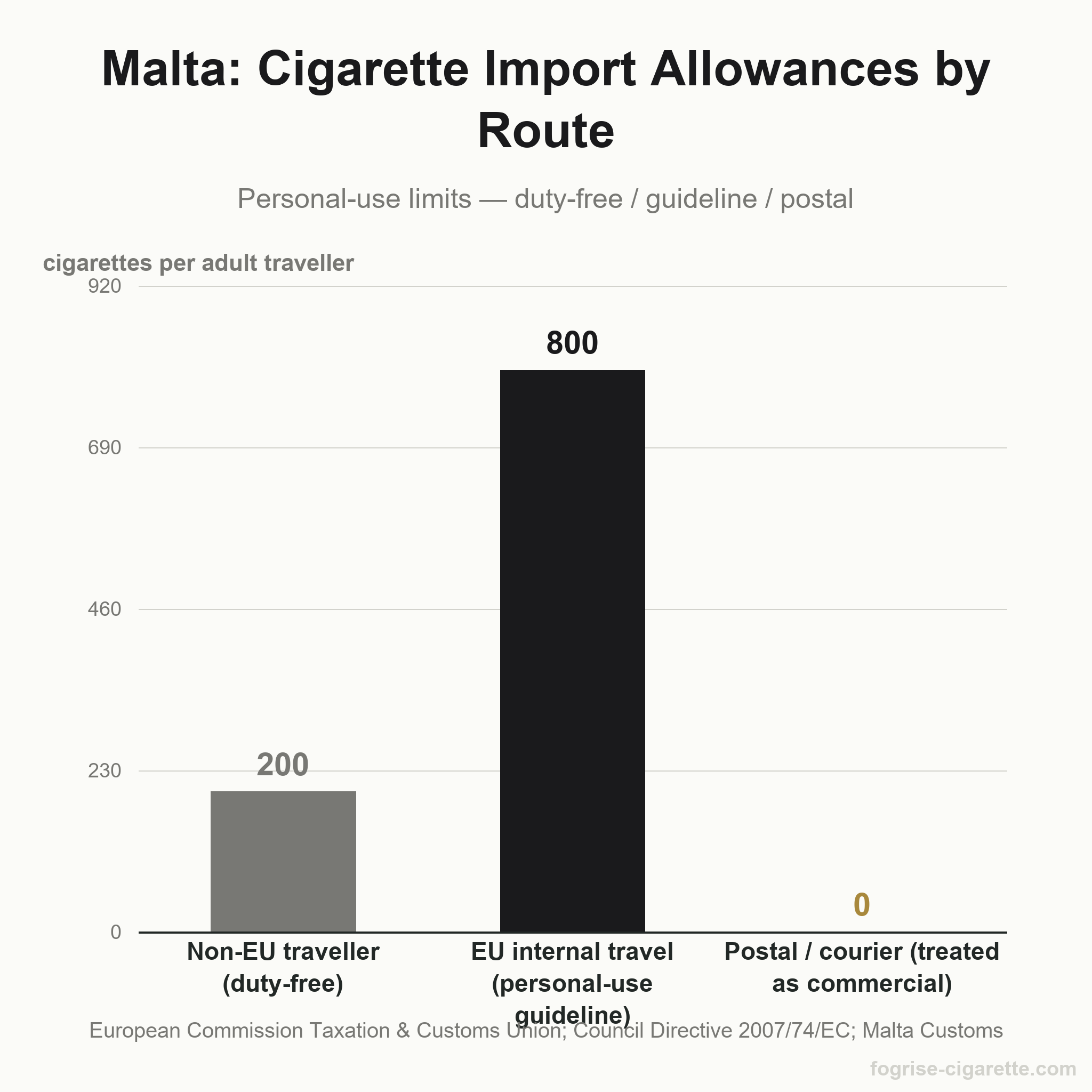
The practical takeaway is simple. Carry your own carton through Malta International Airport on a flight from a Chinese origin, declare it if you go over, and do not ship.
The 7 Chinese Cigarette Brands Malta Buyers Should Know
China’s tobacco market is a state monopoly. Every brand below is owned and produced by a subsidiary of China National Tobacco Corporation (CNTC), the parent organisation that accounts for roughly four in every ten cigarettes sold worldwide. That single fact shapes everything else about these brands: pricing tiers, regional identity, packaging style and the cultural roles they play at Chinese business dinners, weddings and New Year exchanges. Smoking is harmful to health, and nothing about flavour profile in this section should be read as a health claim (Vital Strategies & Tobacconomics, 2024).
Below are seven brands worth recognising before you stand in a Beijing duty-free corridor or open a colleague’s offered pack at a Maltese hotel reception. They sit across three tiers: premium gift, mid-market staple, and everyday daily-smoker.
Premium tier: Chunghwa and Panda
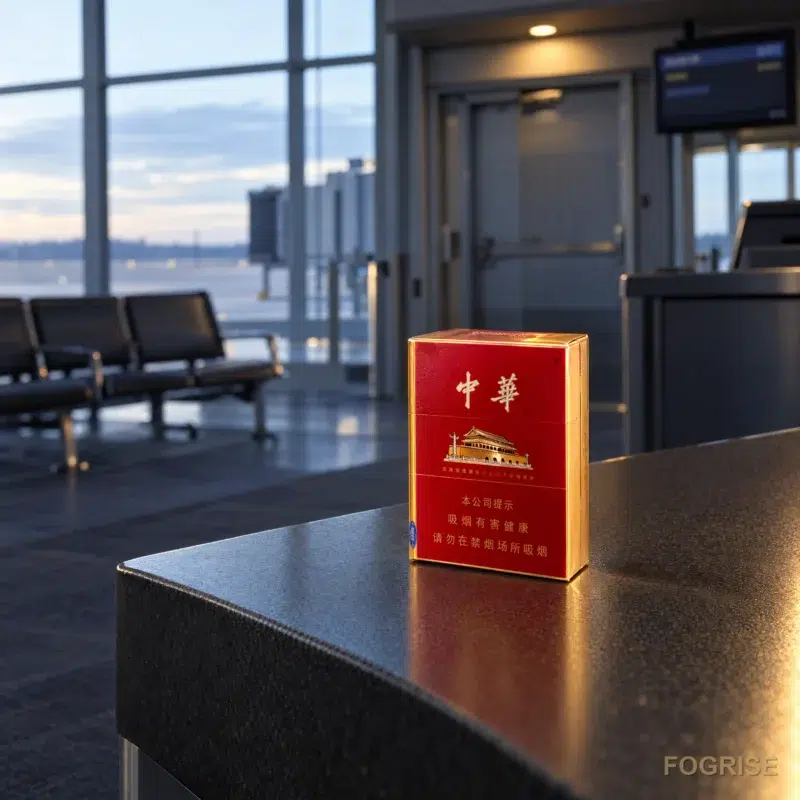
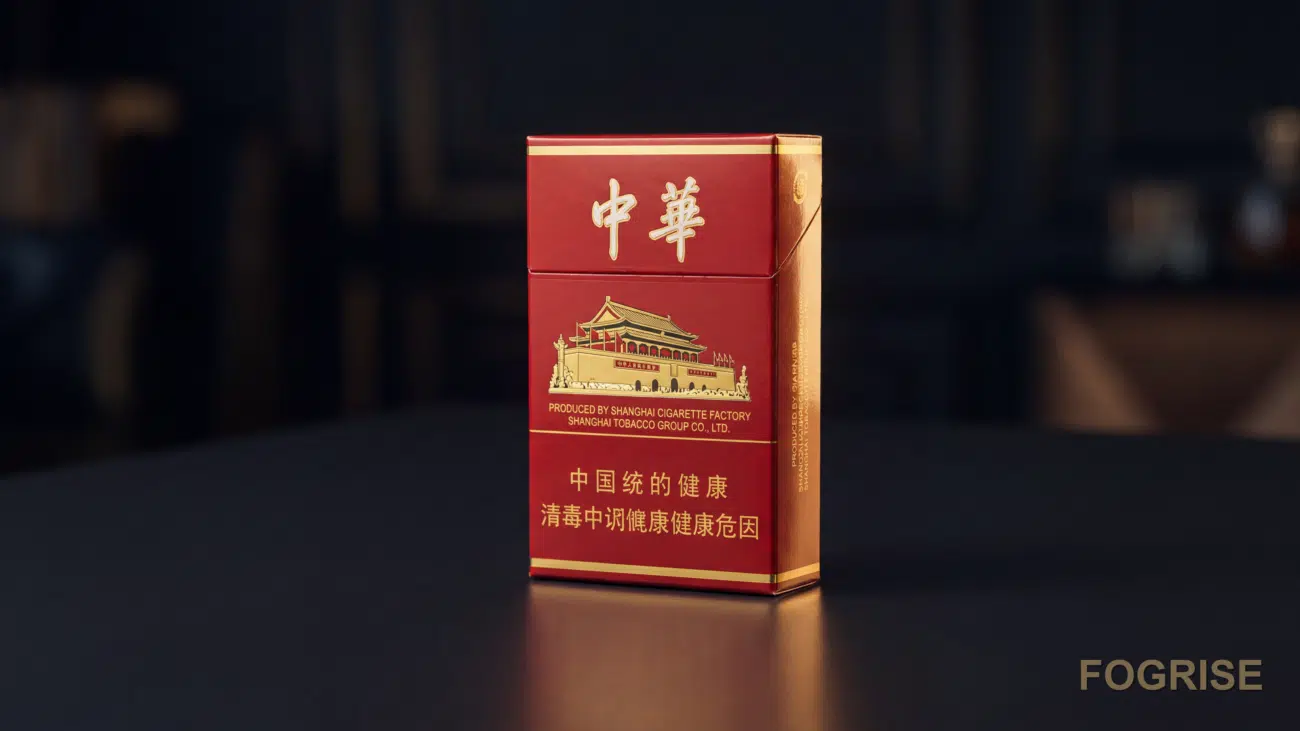
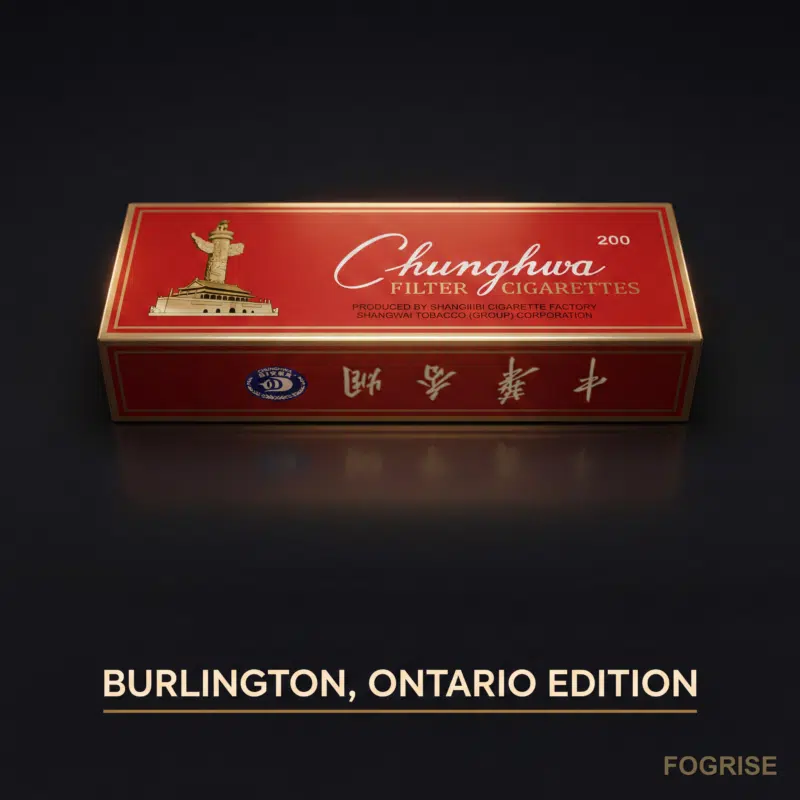
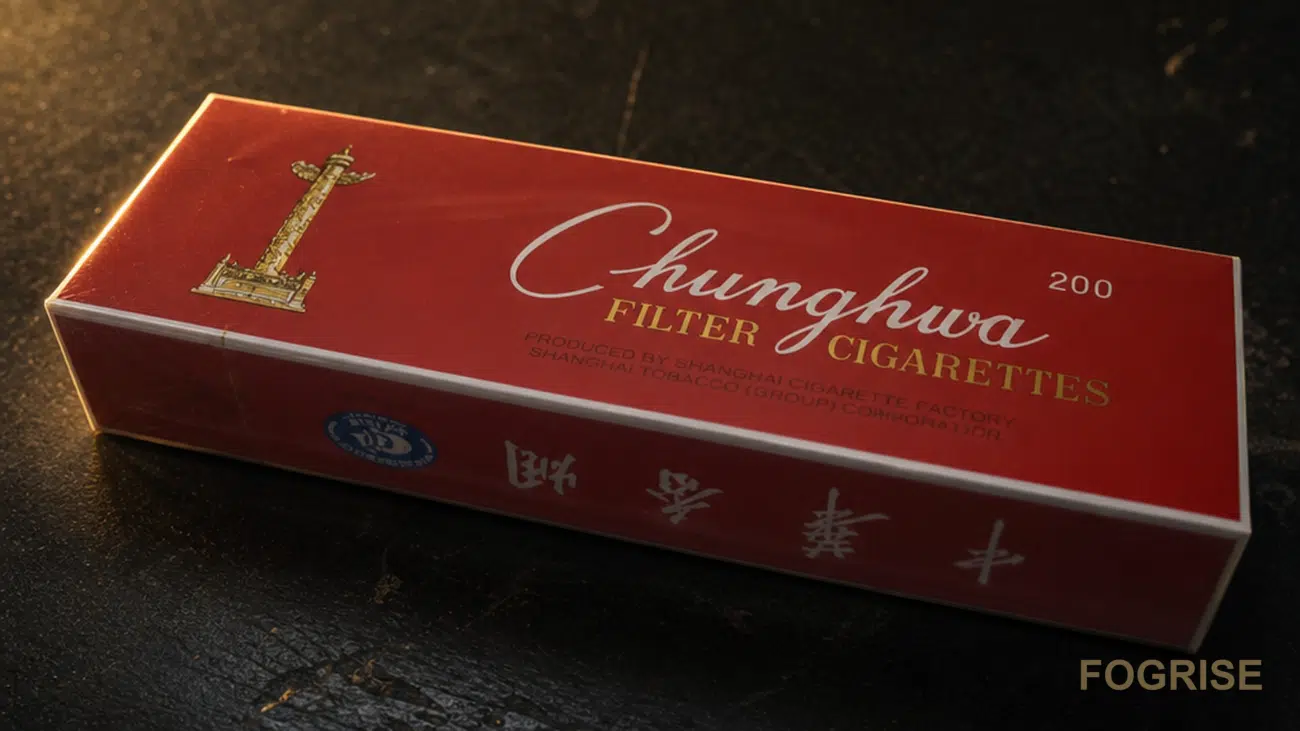
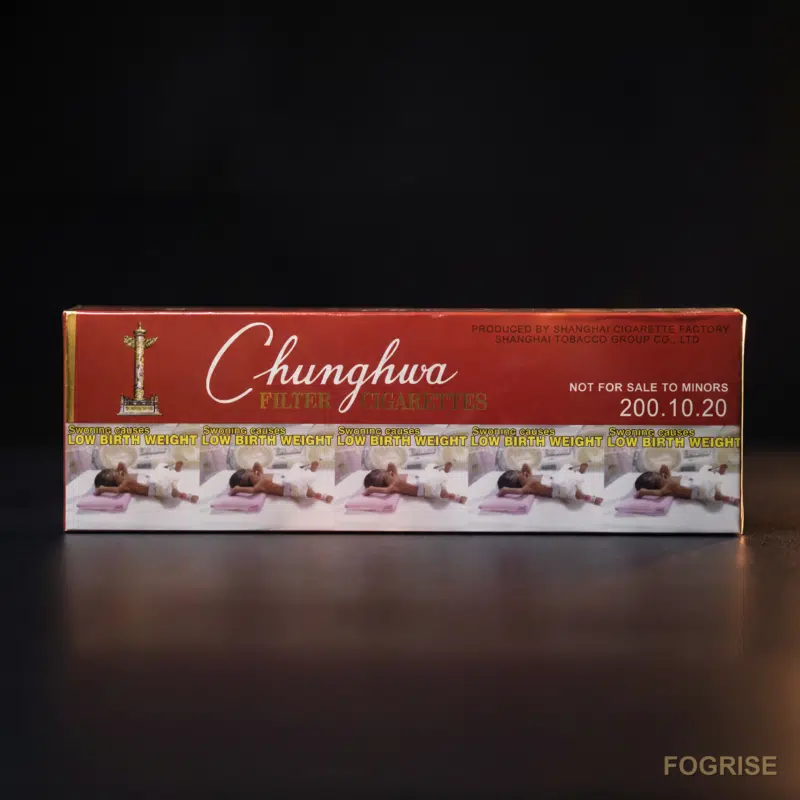
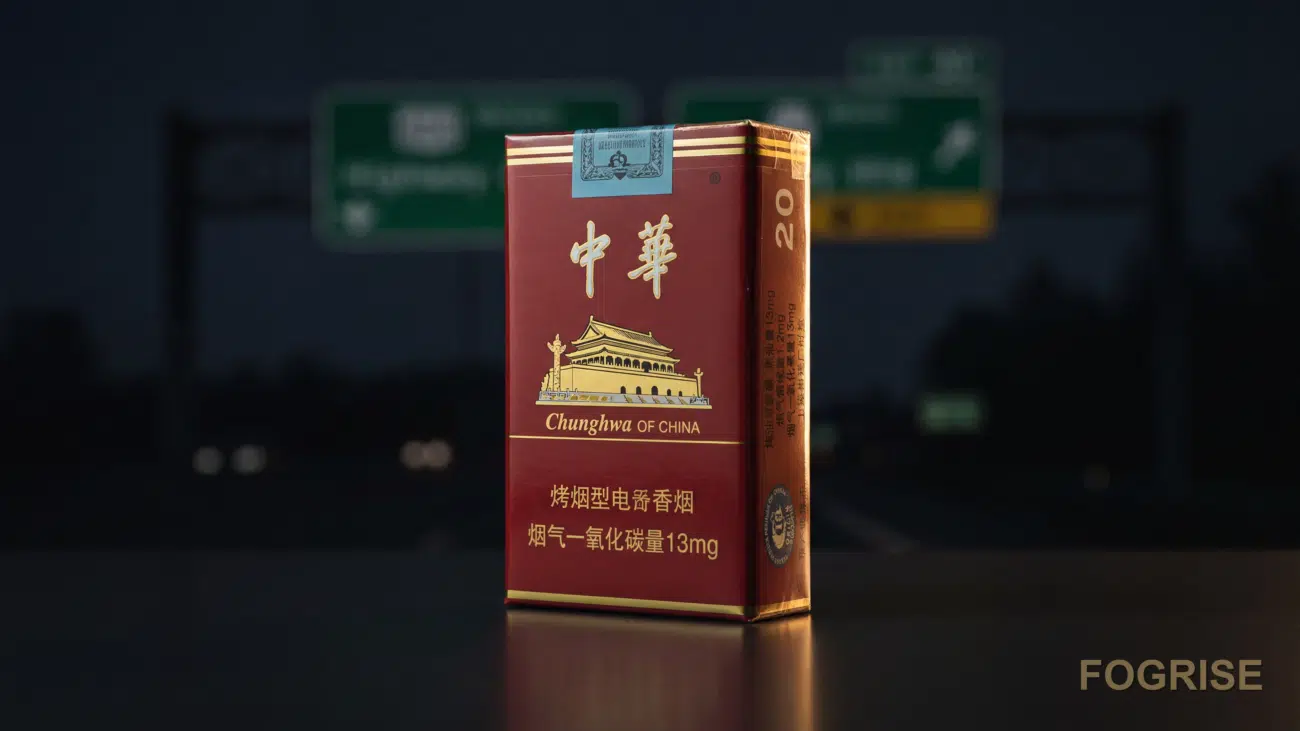
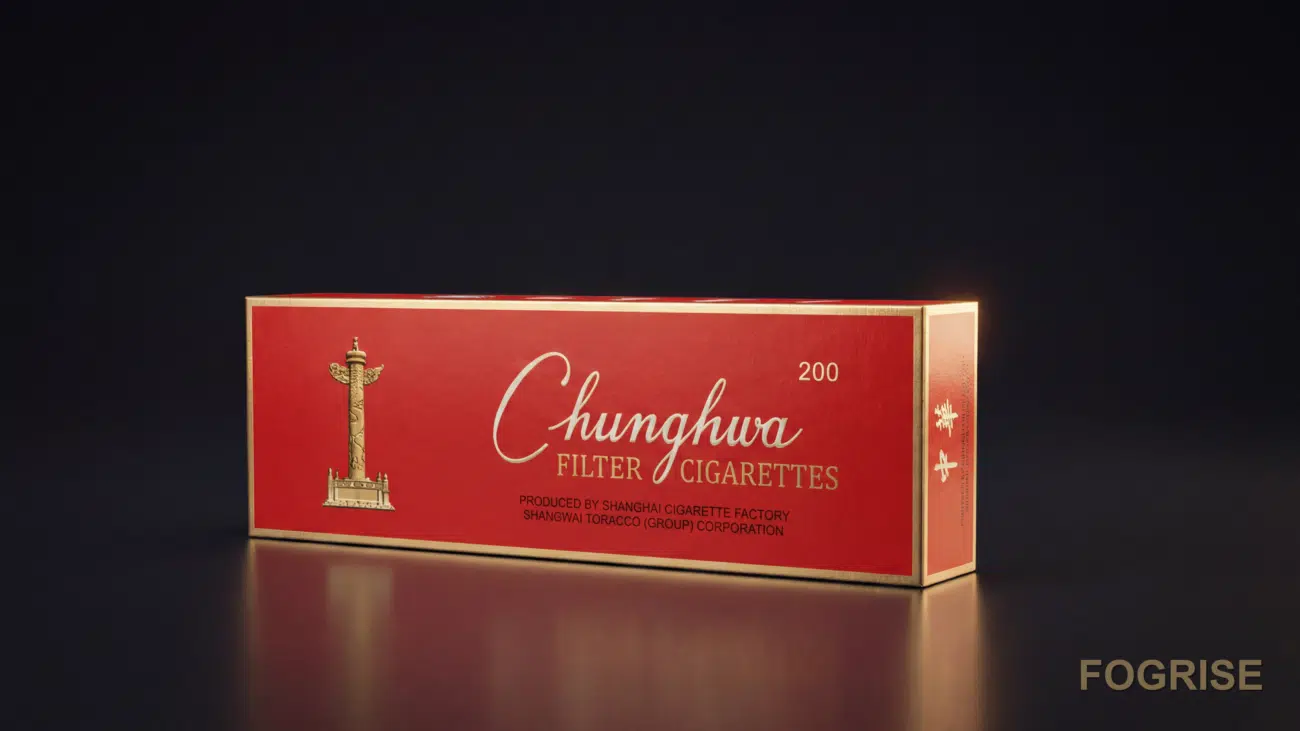
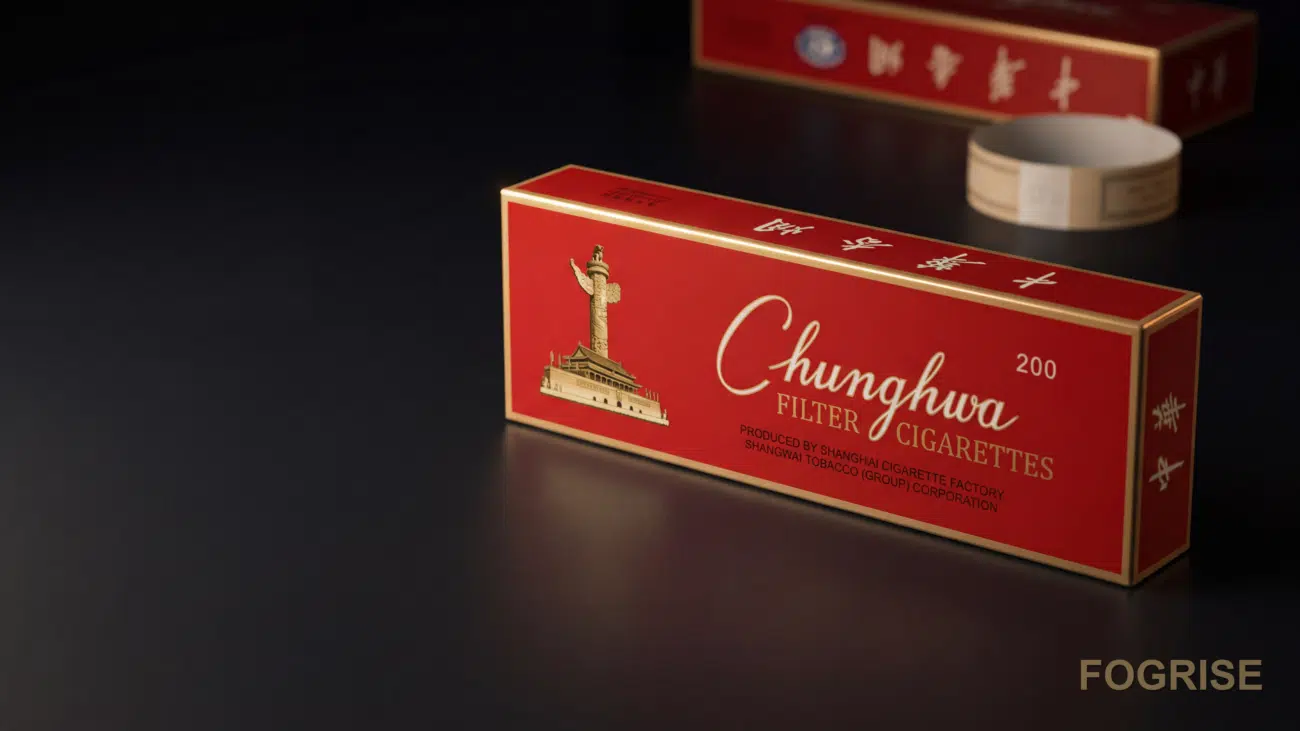
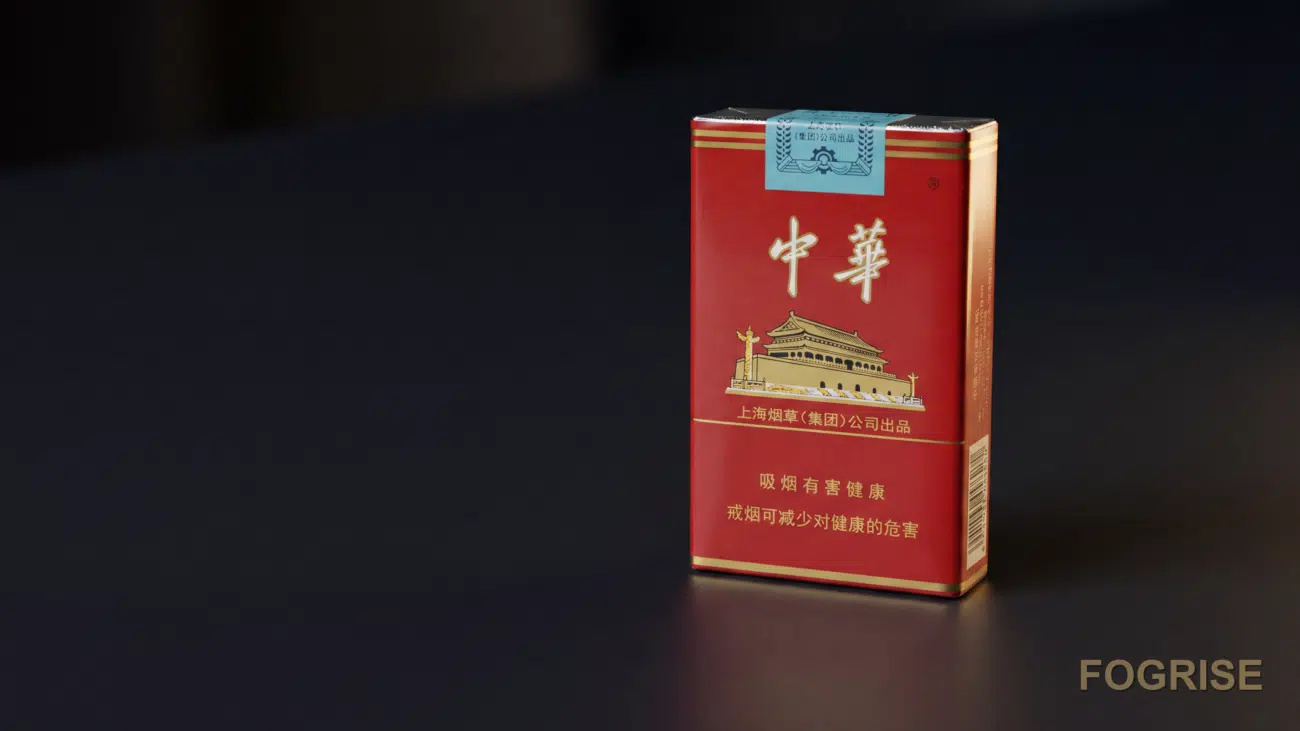
Chunghwa (中华) is the prestige cigarette of China. Produced by Shanghai Tobacco Group under CNTC, it carries Tiananmen Gate on the pack in red and gold. Chunghwa is the cigarette of state banquets, business gifting and senior-executive desks. Retail in China sits around $25 to $50 per pack at the standard hard-pack level, with special editions running higher. In Malta you will only see Chunghwa if someone has carried it.
Panda (熊猫), also from Shanghai Tobacco Group, is the rarer prestige label. Deng Xiaoping famously smoked it. White pack, panda graphic, $30 to $60 and up per pack at standard, and very limited production. Outside China, Panda is almost a collector’s brand. A pack appearing at a Maltese dinner usually signals the host has just returned from Shanghai.
Mid-market tier: Double Happiness and Furongwang
Double Happiness (双喜) is the wedding cigarette. The red pack and the doubled 囍 character mark it as the brand chosen for celebrations, and CNTC’s Guangdong subsidiary produces it for the southern Chinese market. Pricing is mid-tier at roughly $8 to $20 per pack depending on the line. The blend is medium strength.
Furongwang (芙蓉王) comes from Hunan and is the gift-tier choice when Chunghwa feels too obvious. Gold packaging, lotus-king branding, $15 to $25 per pack. It has a strong following among middle-management buyers across Hunan, Hubei and the wider central Chinese market. The blend leans toward a smoother, milder draw, which is a flavour description and not a relative safety claim.
Everyday tier: Yuxi, Hongtashan and Zhongnanhai
Yuxi (玉溪) is from Yunnan, the southwestern province that produces a disproportionate share of China’s tobacco leaf. Teal and blue packaging, $10 to $18 per pack, and a reputation as the everyday smoker for working professionals who want a recognisable Yunnan blend without paying gift-tier prices.
Hongtashan (红塔山), also Yunnan, is the historic volume brand. Red and white packaging with the Hongta mountain logo, $8 to $15 per pack. It was for years the highest-volume single cigarette brand in the world and remains a default everyday choice in southern and central China.
Zhongnanhai (中南海) is the Beijing brand. Named after the central government compound, it ships in minimalist teal packaging and prices around $8 to $15 per pack. It is associated with a younger Beijing urban demographic and is the most likely of the seven to turn up in airport duty-free corridors outside China.
| Brand | Chinese Name | Tier | Origin Province | Strength | Approx. Price | Availability |
|---|---|---|---|---|---|---|
| Chunghwa | 中华 | Premium | Shanghai | Medium-full | $25 to $50+ | Personal import only |
| Panda | 熊猫 | Premium | Shanghai | Medium | $30 to $60+ | Personal import, very limited |
| Double Happiness | 双喜 | Mid | Guangdong | Medium | $8 to $20 | Personal import only |
| Furongwang | 芙蓉王 | Mid | Hunan | Medium-light | $15 to $25 | Personal import only |
| Yuxi | 玉溪 | Everyday | Yunnan | Medium | $10 to $18 | Personal import only |
| Hongtashan | 红塔山 | Everyday | Yunnan | Medium | $8 to $15 | Personal import only |
| Zhongnanhai | 中南海 | Everyday | Beijing | Light-medium | $8 to $15 | Personal import, some duty-free |

Adults 21 and over only. Pricing and availability shift across CNTC’s regional pricing tiers and through duty-free channels, so treat the figures as a planning guide rather than a quote.
Where to Find Chinese Cigarettes in Malta
Chinese cigarettes are not a normal Maltese retail category. No Pavi, Lidl, Greens, kiosk or licensed tobacconist on the island carries Chunghwa, Yuxi or any other CNTC brand as a stocked SKU. Demand on the island is small, the import licensing path for a CNTC product is heavy, and the supply chain into Europe favours larger Chinese diaspora markets like Paris, Milan and Manchester. That leaves three realistic channels for a Malta-based buyer, none of them a shelf you can walk to on a Saturday afternoon.
Malta International Airport Duty-Free
Malta International Airport (MLA) has a Dufry-operated duty-free arrivals shop, and arrivals from non-EU origins can buy tobacco there inside the 200-cigarette allowance discussed earlier. The selection is built around European mainstream brands plus a small rotation of premium Asian and Middle-Eastern labels. Chinese brand availability at MLA is occasional rather than reliable. Zhongnanhai sometimes appears in the airport’s Asian-brand rotation; Chunghwa and Panda almost never do. Check the live shelf rather than assuming.
Personal Import from Travels to China or Asia
The most reliable channel by a wide margin is carrying the cigarettes yourself. A traveller flying Beijing-Malta on Air China through Frankfurt, or Shanghai-Malta via Istanbul on Turkish Airlines, can clear a carton through Maltese customs under the non-EU 200-cigarette allowance. The same holds for arrivals from Hong Kong duty-free, Dubai, Singapore Changi and the major Chinese hubs. Plan the purchase at the originating Asian duty-free, not at the European transit airport, because the European duty-free shops carry European brands.
For buyers based in Malta with no near-term trip to Asia, the most realistic option is to ask a colleague, family member or trusted friend travelling that direction to pick up a carton. The transaction sits inside the personal allowance for that traveller, and the cigarettes are then a gift on arrival.
If you are reading this from outside Malta and want CNTC product shipped to a non-Maltese address, xiangyandd stocks a range of premium Chinese brands in our online shop — buyers in the United States and Canada should consult our jurisdiction-specific guides first. Adults 21 and over only, and check your destination jurisdiction’s import rules before ordering. Maltese addresses are not a fit for this channel, for the postal-parcel reasons covered in the previous section.
The Chinese Community and Tourism Angle
Malta hosts a small but established Chinese community, estimated in the low thousands of permanent residents, concentrated around Sliema, St Julian’s and the university area in Msida. Pre-pandemic Chinese tourism into Malta was material, with state visit reciprocity supporting visa-friendly travel for tour groups. Neither population is large enough to have produced a licensed Chinese tobacco retail channel on the island. There is no Chinese supermarket in Malta selling Chunghwa over the counter, and any informal offer of CNTC-branded cigarettes by a private individual sits in a grey legal zone you should not rely on.
The honest picture is that Malta is a personal-carry market for Chinese cigarettes, supplemented occasionally by what shows up in MLA duty-free for arriving non-EU travellers. Anyone telling you otherwise is selling something. Adults 21 and over only.
Malta’s Tobacco Market: High Prevalence, Heavy Tax, and the HTP Ban
Malta’s adult smoking prevalence reached 22.9% in 2024, placing it among the highest in the EU. The island counts roughly 106,000 current smokers in a population of approximately 553,000, and total cigarette taxation stands at 77.56% of retail price, giving Malta one of the steeper combined excise and VAT burdens in the region (Global State of Tobacco Harm Reduction, 2025).
Malta is an unusual EU tobacco market. Adult smoking prevalence sits well above the EU average, total tax loading on a pack is among the heaviest in the bloc, and heated tobacco products are banned outright. The combination affects every part of the buyer experience, from what a cashier at a Sliema kiosk is allowed to sell you to what happens if you arrive at MLA with an IQOS device in your hand-luggage (Global State of Tobacco Harm Reduction, 2025; Joossens et al., 2025).
Malta’s Smoking Rate: 22.9% Among the EU’s Highest
Roughly 22.9% of Maltese adults smoke, a figure that puts the country in the upper third of EU member states for tobacco prevalence. The EU average sits closer to 18%. Daily smoking accounts for the bulk of the Maltese figure, with occasional and social smoking adding a smaller share. The prevalence has been broadly stable across recent surveys despite repeated tax increases and a long-running national cessation programme, which is one reason Maltese tobacco policy has moved toward product-category restrictions rather than relying on price alone.
Tobacco Taxation: 77.56% Total Tax on Cigarettes
A pack of cigarettes bought in a Maltese tobacconist carries a total tax share of about 77.56% of retail price. The excise component is around 38.91%, with VAT and the EU specific-and-ad-valorem floor making up the rest. The EU Tobacco Products Directive sets a minimum overall tax share of 60%; Malta sits well above that floor. Standard Maltese-brand packs retail in the roughly five to seven euro range at the point of sale, and the buyer is paying for tax, not leaf. Malta joined several lower-income EU member states in formally contesting the European Commission’s proposed 2025 excise floor hike, arguing the existing burden already discourages legal-market purchasing.
The Heated Tobacco Ban: Why Malta Is Different from Most EU States
Malta is one of a small group of EU member states to have banned heated tobacco products entirely. The ban places Malta closer to the posture of Singapore than to most of its EU peers, although the Singaporean and Maltese regimes differ in scope and enforcement. The ban covers IQOS devices, HEETS sticks, the newer TEREA consumables, the SENTIA line and any equivalent heat-not-burn system from competing manufacturers. Conventional cigarettes remain legal under the standard TPD framework, as does loose tobacco. The asymmetry matters for travellers. Bringing an IQOS device through Malta International Airport for personal use is not protected by the EU’s free-movement-of-goods rules for tobacco, and customs has the authority to refuse entry, confiscate the device and the sticks, and in some cases fine the traveller. Do not pack heated tobacco for Malta.
| Indicator | Malta | EU Average |
|---|---|---|
| Adult smoking prevalence | 22.9% | ~18% |
| Daily smoking prevalence | ~19% | ~15% |
| Total tax share on cigarettes | 77.56% | ~70% |
| Heated tobacco product status | Banned | Legal in most states |
| Approx. retail pack price | €5 to €7 | €4 to €11 range |
The market shape this produces is a high-prevalence, high-tax, conventional-cigarette market with no heat-not-burn alternative available. Readers familiar with Malaysia, another high-tax conventional market with tight HTP restrictions, will recognise the pattern. That context explains why Chinese conventional brands have a clear if narrow buyer profile in Malta, while no Chinese heated-tobacco SKU has any route into the country at all.
Frequently Asked Questions
Q: Can I buy Chinese cigarettes in Malta?
Not from retail. No Maltese tobacconist, kiosk or supermarket stocks CNTC brands like Chunghwa, Yuxi or Furongwang as a regular SKU. Malta International Airport duty-free occasionally rotates a Chinese label, most often Zhongnanhai. The realistic channel is personal import: carry a carton in your own baggage on a flight from a Chinese or Asian origin, inside the 200-cigarette duty-free allowance.
Q: Are Chinese cigarette brands like Chunghwa legal in Malta?
Yes, for adult possession and personal use, provided you obtained them lawfully and stayed inside the import allowance. The cigarettes themselves are conventional tobacco products under the EU Tobacco Products Directive framework, which Malta applies. Buying CNTC product online from an overseas seller for delivery to a Maltese address sits in a grey zone; verify with Malta Customs before ordering anything.
Q: How many cigarettes can I bring from a non-EU country?
The duty-free allowance for arrivals from a non-EU origin is 200 cigarettes per adult traveller, which is one standard carton of ten packs. The allowance is per person, not per family or per booking. Substitution at 100 cigarillos, 50 cigars or 250 grams of smoking tobacco is permitted, but you cannot stack the categories.
Q: How many can I bring from another EU country?
EU internal travel uses an 800-cigarette indicative personal-use guideline, equal to four cartons per adult. Sit inside it and Maltese customs almost never questions you. Sit above it and you may be asked to demonstrate the tobacco is for own consumption rather than resale. Commercial intent triggers full Maltese excise on the whole quantity, not just the excess.
Q: What is the legal smoking age in Malta?
Maltese law sets the minimum age for purchasing tobacco at 18. Malta International Airport duty-free uses an even lower threshold of 17 under the airport’s own rules for arrivals shopping. xiangyandd applies an editorial floor of 21 across every guide and product reference, because we consider 21 the responsible threshold for any tobacco purchasing decision.
Q: Can I order Chinese cigarettes online and have them shipped to Malta?
Treat this as a genuine grey zone. EU TPD Article 18 gives every member state the option to ban cross-border distance sales of tobacco, but Malta’s domestic implementation has not been confirmed in publicly accessible English-language official sources. Postal and courier tobacco parcels are treated as commercial imports by Maltese customs regardless of declared value, and seizure is a documented outcome. Verify the current position with Malta Customs in writing before placing any order.
Q: Where are cigarettes normally sold in Malta?
Conventional cigarettes are sold through supermarkets, kiosks, licensed tobacconists, hotel reception kiosks and some bar counters across the islands. Mainstream European and Maltese brands dominate every shelf, with selected American and Middle Eastern labels alongside. Chinese cigarette brands have no place in Maltese retail and only reach the country through personal import.
Q: How expensive are cigarettes in Malta compared to the rest of the EU?
Total tax on a Maltese pack sits at about 77.56%, which is well above the 60% TPD minimum and toward the upper end of the EU range. Maltese-brand packs retail in roughly the five to seven euro range. Chinese brands are priced by their international tier rather than Maltese excise, so a personal-import pack of Chunghwa often costs more than a local Marlboro at the kiosk.
Q: Is there a Chinese community in Malta selling Chinese cigarettes?
Malta hosts a small Chinese resident community, mostly around Sliema, St Julian’s and the university area in Msida. There is no licensed Chinese tobacco retail channel on the island and no Chinese supermarket selling Chunghwa or other CNTC brands over the counter. Any informal offer of Chinese-brand cigarettes by a private individual sits in a grey legal zone you should not rely on.
Q: What is Malta’s excise rate on cigarettes?
The excise component on a Maltese pack runs at about 38.91%, with VAT and the specific-plus-ad-valorem floor lifting total tax to roughly 77.56%. That is comfortably above the EU TPD minimum of 60% total tax share. Malta has joined other lower-income EU member states in formally contesting the European Commission’s proposed 2025 excise floor increase.
Q: Are IQOS and other heated tobacco products legal in Malta?
No. Malta is one of a small group of EU member states to have banned heated tobacco products outright. The ban covers IQOS devices, HEETS sticks, TEREA consumables, the SENTIA line and equivalent heat-not-burn systems from any manufacturer. Do not pack a heated tobacco device or sticks for a trip to Malta; customs has authority to confiscate the hardware and the sticks, and to fine the traveller.
Q: What is the difference between EU and non-EU duty-free for Malta arrivals?
Non-EU arrivals get a hard 200-cigarette duty-free allowance per adult, enforced at the customs channel at Malta International Airport. EU internal arrivals do not pass a customs border for personal goods and instead sit under an 800-cigarette indicative personal-use guideline. The 200-stick non-EU rule is a ceiling; the 800-stick EU rule is a presumption that the tobacco is for personal use.
Conclusion
Chinese cigarettes occupy a narrow, well-defined corner of the Maltese tobacco picture. No licensed shop on the island stocks Chunghwa, Double Happiness, Panda, Furongwang, Yuxi, Hongtashan, or Zhongnanhai, and the country’s ban on heated tobacco products closes off the IQOS-style alternative that buyers in many other EU markets fall back on. The lawful route for Malta-based adults who want to try these specific Chinese marques is personal-allowance import: 200 cigarettes per adult arriving duty-free from outside the EU, or up to the 800-cigarette EU guideline when bringing goods home from another Member State for personal use. Online distance sales into Malta are a grey zone that should be checked with Malta Customs and the Tobacco and Alcohol Control Unit before any order is placed.
If you would like to see the curated xiangyandd Chinese-brand range and ask about shipping logistics to your jurisdiction, our shop and contact pages are the right starting points.
Reminder. Adults 21+ only. Smoking is harmful and addictive. Verify current Maltese and EU rules before acting.
Further Reading
For Malta-specific travel and customs rules, the European Commission’s Your Europe: alcohol, tobacco and cash when travelling in the EU page is the authoritative starting point and is updated when allowances change. Adults 21+ who want to see the curated xiangyandd Chinese-brand range, including the seven marques discussed above, can browse our shop for product cards with origin notes, and use the contact page to confirm whether delivery to a given jurisdiction is supported before ordering.
If you are comparing Malta with other small or import-heavy EU markets, our companion guides on Chinese cigarettes in Spain, Sweden, and the United Kingdom cover the same brand families against very different tax, retail, and HTP rules, which helps put the Maltese picture in context.
References
- European Parliament & Council. (2014). Directive 2014/40/EU on the approximation of the laws of the Member States concerning the manufacture, presentation and sale of tobacco and related products (Tobacco Products Directive). EUR-Lex. https://eur-lex.europa.eu/legal-content/EN/TXT/?uri=CELEX:32014L0040
- European Commission. (2024). Alcohol, tobacco and cash when travelling in the EU. Your Europe — Citizens. https://europa.eu/youreurope/citizens/travel/carry/alcohol-tobacco-cash/index_en.htm
- Global State of Tobacco Harm Reduction. (2025). Malta country profile. GSTHR. https://gsthr.org/countries/profile/mlt
- Joossens, L., Olefir, L., Feliu, A., & Fernández, E. (2025). The Tobacco Control Scale 2025 in Europe. Smoke Free Partnership / Catalan Institute of Oncology. https://tobaccocontrolscale.org/wp-content/uploads/2026/05/TCS-2025.pdf
- Vital Strategies & Tobacconomics. (2024). China — Country factsheet. The Tobacco Atlas. https://tobaccoatlas.org/factsheets/china/
- World Health Organization. (2023). Tobacco [Fact sheet]. WHO. https://www.who.int/news-room/fact-sheets/detail/tobacco
- European Commission, Directorate-General for Taxation and Customs Union. (2024). Excise duties on tobacco. European Commission. https://taxation-customs.ec.europa.eu/taxation/excise-duties/excise-duties-tobacco_en
- Council of the European Union. (2008). Directive 2008/118/EC concerning the general arrangements for excise duty. EUR-Lex. https://eur-lex.europa.eu/legal-content/EN/TXT/?uri=CELEX:32008L0118
- Campaign for Tobacco-Free Kids. (2023). Malta — Tobacco control laws summary. Tobacco Control Laws. https://www.tobaccocontrollaws.org/legislation/country/malta/summary
Last reviewed and updated: June 2026. Author: xiangyandd editorial team. For tailored guidance, contact our team.



 English (US)
 简体中文
 Deutsch
 Français
 Español