

Blog
Chinese Cigarettes in Singapore: Brands, Legal Rules & Where to Buy (2026 Guide)

Abstract
Chinese cigarettes (Chunghwa, Double Happiness, Zhongnanhai, Hongtashan) reach Singapore’s licensed tobacco retailers, convenience stores, and Changi Airport duty-free (for departing passengers only). Singapore imposes the world’s highest cigarette excise duties and a strict zero duty-free allowance for returning travellers, making the regulatory environment as consequential as the brand selection for any buyer. This pillar covers every angle: which brands are available, what Singapore’s HSA and Customs rules mean for buyers, where to purchase legally, what you will pay under the 2026 excise schedule, and how to avoid illicit tobacco. For adults 21+ only. Smoking is harmful and addictive. Verify your local laws before purchasing.
Key Takeaways
- Zero duty-free tobacco allowance for returning travellers: Singapore Customs grants no tobacco duty-free concession. Every stick brought in must be declared and full excise duty paid.
- 2026 excise rate is SGD 0.589 per stick: effective 12 February 2026 (Budget 2026), pushing a 20-pack of top-tier Chinese cigarettes to SGD 18–30 at licensed retailers.
- Standardised packaging applies to all cigarettes sold in Singapore: since 1 July 2020, all packs must be drab brown with 75% graphic health warnings. Authentic Chinese packs look identical to local brands in Singapore.
- Legal channels are broad but regulated: licensed provision shops, tobacco specialty retailers, convenience stores (7-Eleven, Cheers), and Changi duty-free (departing only) are the main sources.
- Chunghwa (中华) is the prestige Chinese brand: available in some licensed tobacco specialists; higher pricing reflects import costs plus the SGD excise stack.
- Illicit tobacco is a serious enforcement priority: Singapore Customs and IRAS actively prosecute smuggling; buying duty-unpaid cigarettes risks fines of SGD 200-800 per packet (depending on offence count) plus evaded duty, and imprisonment for repeat offenders.
Table of Contents
- Abstract
- Key Takeaways
- Table of Contents
- Singapore’s Tobacco Market: An Overview
- Top Chinese Cigarette Brands Available in Singapore
- Singapore’s Tobacco Regulations: What Buyers Need to Know
- Where to Buy Chinese Cigarettes in Singapore
- Pricing Reality: What Chinese Cigarettes Cost in Singapore
- Illicit Tobacco in Singapore: Risks and How to Avoid It
- Chinese Cigarettes and Singapore’s Culture of Gifting
- Conclusion
- FAQ
Singapore’s Tobacco Market: An Overview
Chinese cigarettes are legally available in Singapore through licensed tobacco retailers, sold alongside international brands in standardised drab olive-brown packs with 75% graphic health warnings. The Health Sciences Authority (HSA) regulates every pack under the Tobacco (Control of Advertisements and Sale) Act, and buyers must be 21 or older (Health Sciences Authority of Singapore, 2026; Ministry of Health Singapore, 2020).
Singapore runs one of Asia’s most tightly regulated tobacco environments. The HSA enforces TCASA and the related TVCA rules covering retail sale, advertising, display, and packaging, with daily compliance checks across the licensed retail network (Health Sciences Authority of Singapore, 2026; Ministry of Health Singapore, 2020). Standardised packaging became mandatory on 1 July 2020, meaning every cigarette pack sold legally in Singapore, regardless of origin, ships in the same drab olive-brown livery with prescribed graphic warnings covering 75% of the front and back surfaces (Health Sciences Authority of Singapore, 2026; Ministry of Health Singapore, 2020). The minimum legal purchase and smoking age was raised in stages and reached 21 on 1 January 2021 (Health Sciences Authority of Singapore, 2026; Ministry of Health Singapore, 2020).
Chinese cigarettes in Singapore’s licensed retail network
Chinese cigarettes reach Singapore consumers through the same licensed retail channel that handles every other tobacco SKU on the island. Convenience stores, specialist tobacconists, and major supermarkets holding a valid HSA tobacco retail licence can all stock CNTC labels next to Marlboro or Mevius, provided each pack meets the standardised packaging specification. Excise duty sits at SGD 0.589 per stick following the Budget 2026 adjustment effective 12 February 2026, placing Singapore among the highest-taxed cigarette markets in Asia and pushing the typical 20-stick pack well into double-digit pricing (Health Sciences Authority of Singapore, 2026; Ministry of Health Singapore, 2020). Display bans apply at point of sale, so brand visibility happens at the request-and-purchase stage rather than on open shelves.
CNTC brands vs international labels in Singapore
The CNTC (China National Tobacco Corporation) lineup of mainland Chinese brands most often seen in Singapore covers four anchor families. Chunghwa and Double Happiness hold the prestige end; Zhongnanhai and Hongtashan fill the everyday tier (Health Sciences Authority of Singapore, 2026; Ministry of Health Singapore, 2020). These sit on the same back-counter as Marlboro, Mild Seven (now Mevius), Dunhill, and Camel. The key distinction for buyers familiar with the home-market versions: the tobacco inside the pack (blend, filter, stick construction) is identical to what’s sold in Mainland China. Only the outer packaging changes, swapping the original brand livery for Singapore’s mandated drab olive-brown shell with the local graphic warnings (Health Sciences Authority of Singapore, 2026; Ministry of Health Singapore, 2020). The cigarette itself, the taste profile readers came looking for, does not change at the border.
Top Chinese Cigarette Brands Available in Singapore
Eight Chinese brands account for most of the volume that reaches Singapore through specialty tobacconists, regulated parallel-import lots, and duty-paid private orders. They sit in three tiers, separated less by tobacco grade than by social use in China: gift-status reds at the top, business-meeting premiums in the middle, and everyday workhorses at the base. Singapore retail prices reflect the SGD 0.589-per-stick excise rate in force for 2026 plus 9% GST, stacked on top of import cost, which is why even mid-range Chinese sticks land above local mass-market RRPs. One visual note before the tier walk: under Singapore’s standardised packaging rules the pack outside is uniformly brown-olive with a graphic health warning. Brand identity lives on the foil, the stick print, and the inner sleeve, not the carton face — a quirk worth keeping in mind when comparing cigarette sizes, formats, and flavour profiles across the eight labels below.
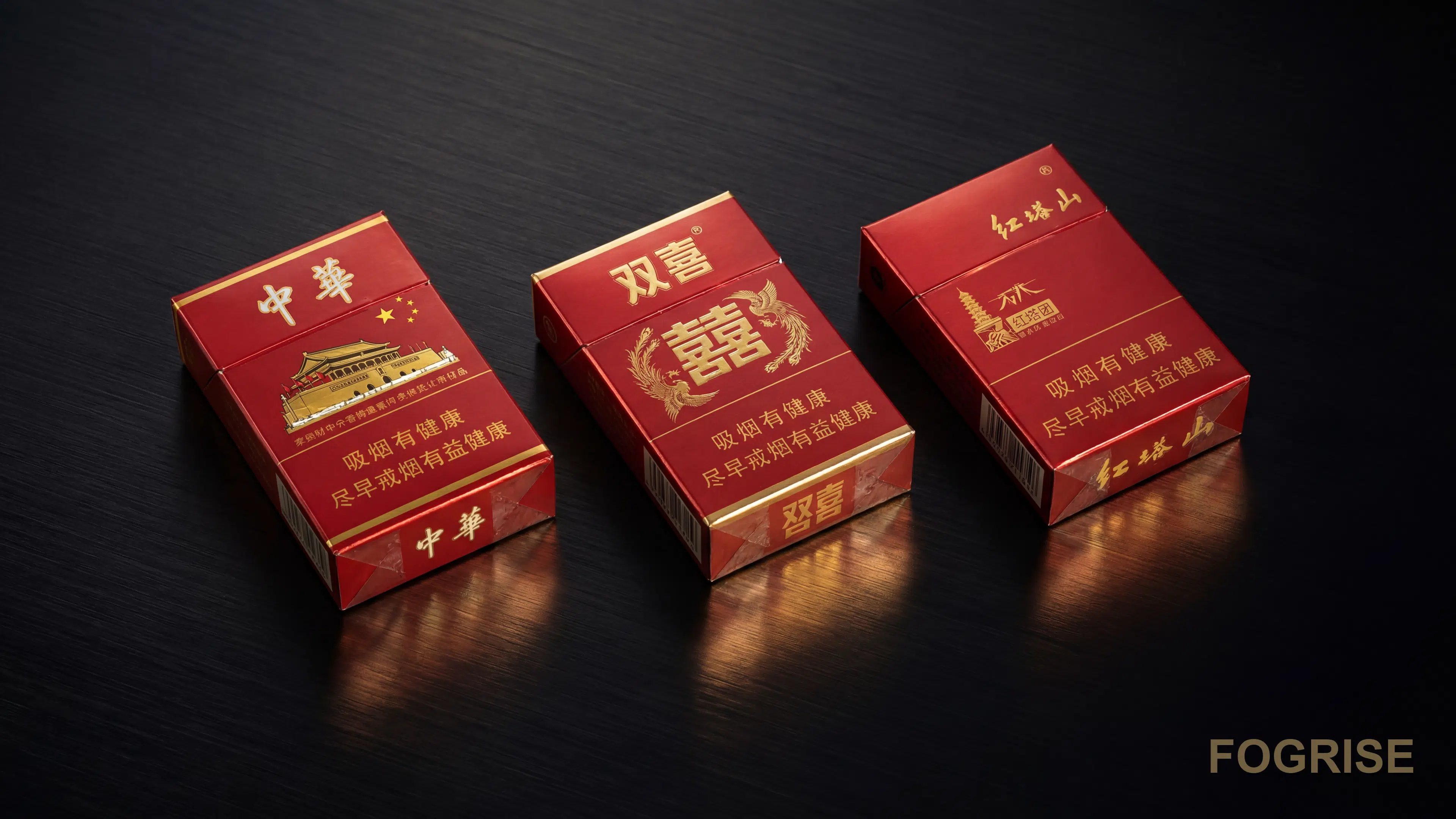
Ultra-premium tier: Chunghwa and Panda
Chunghwa (中华)
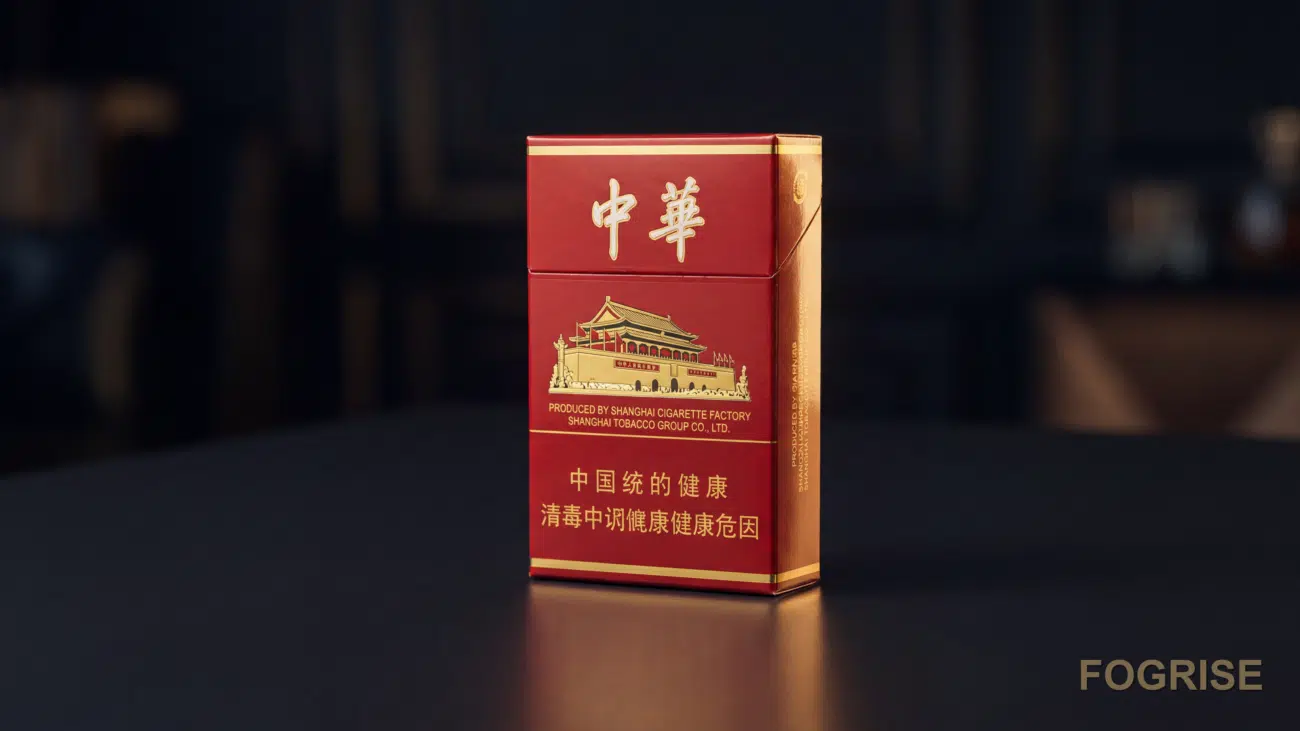
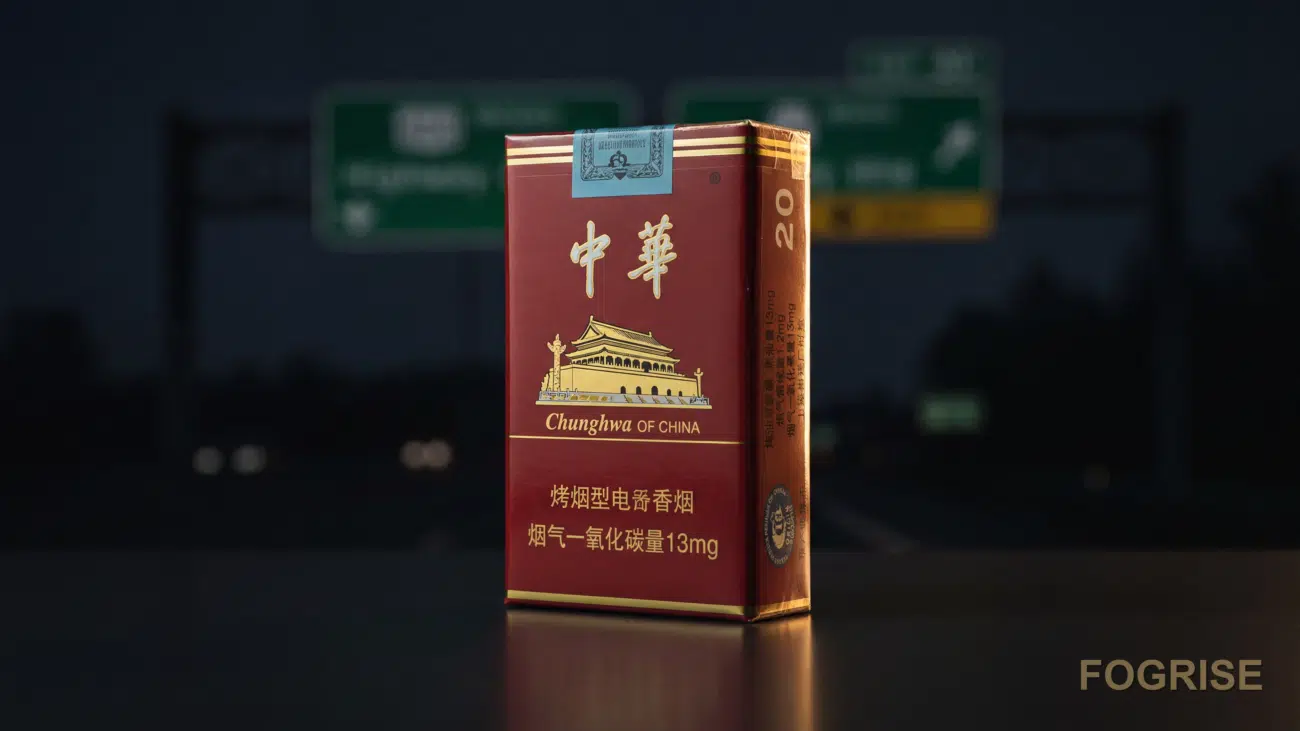
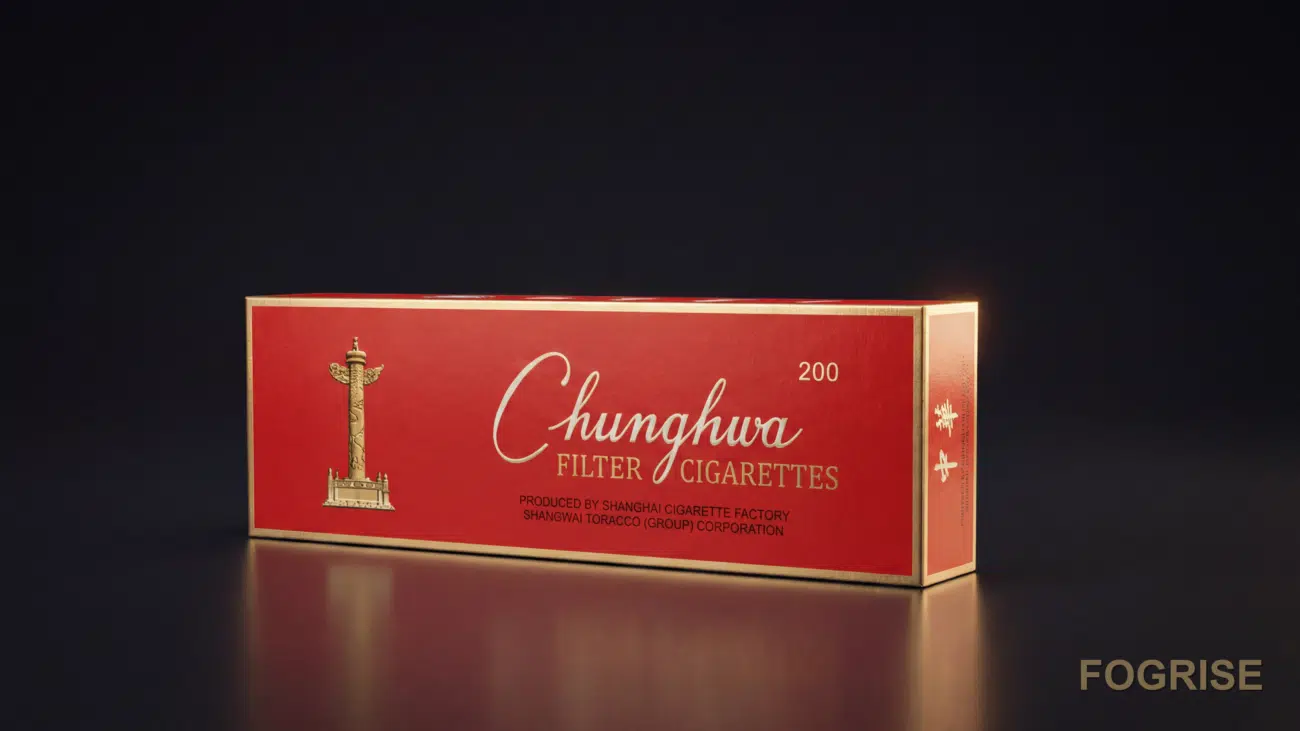
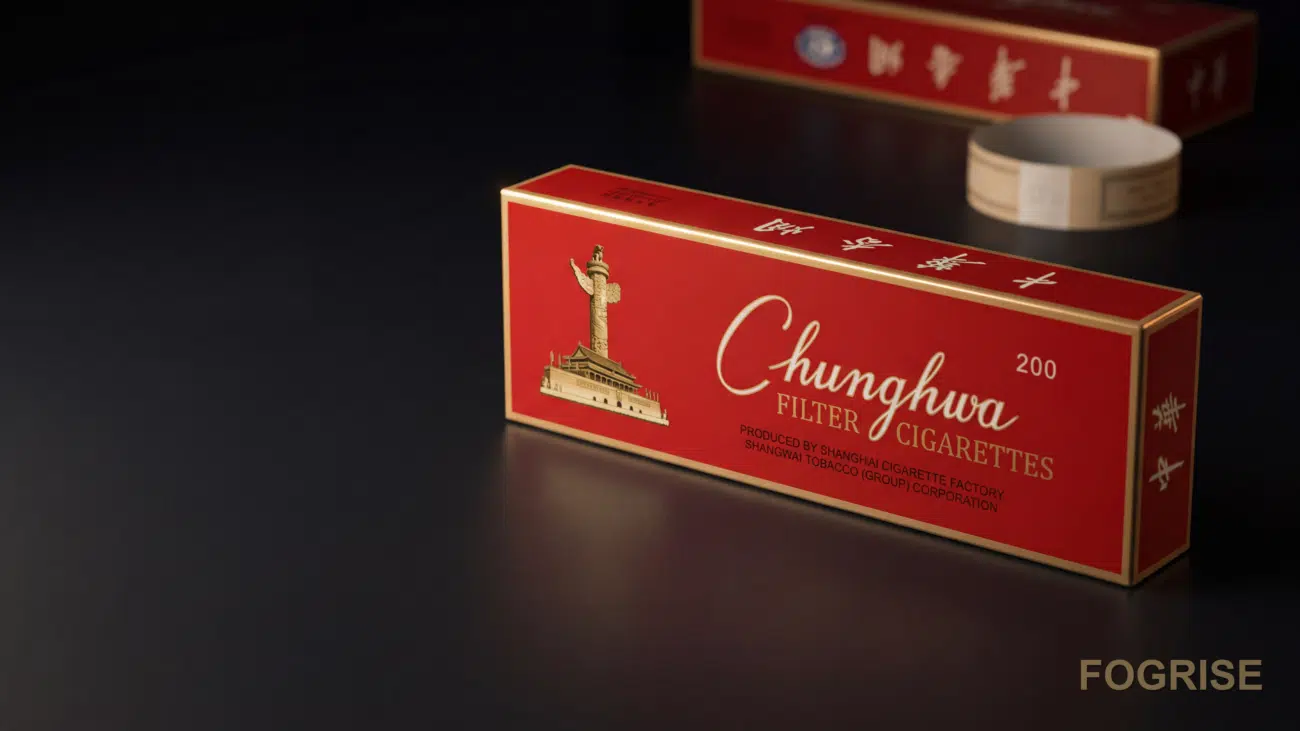
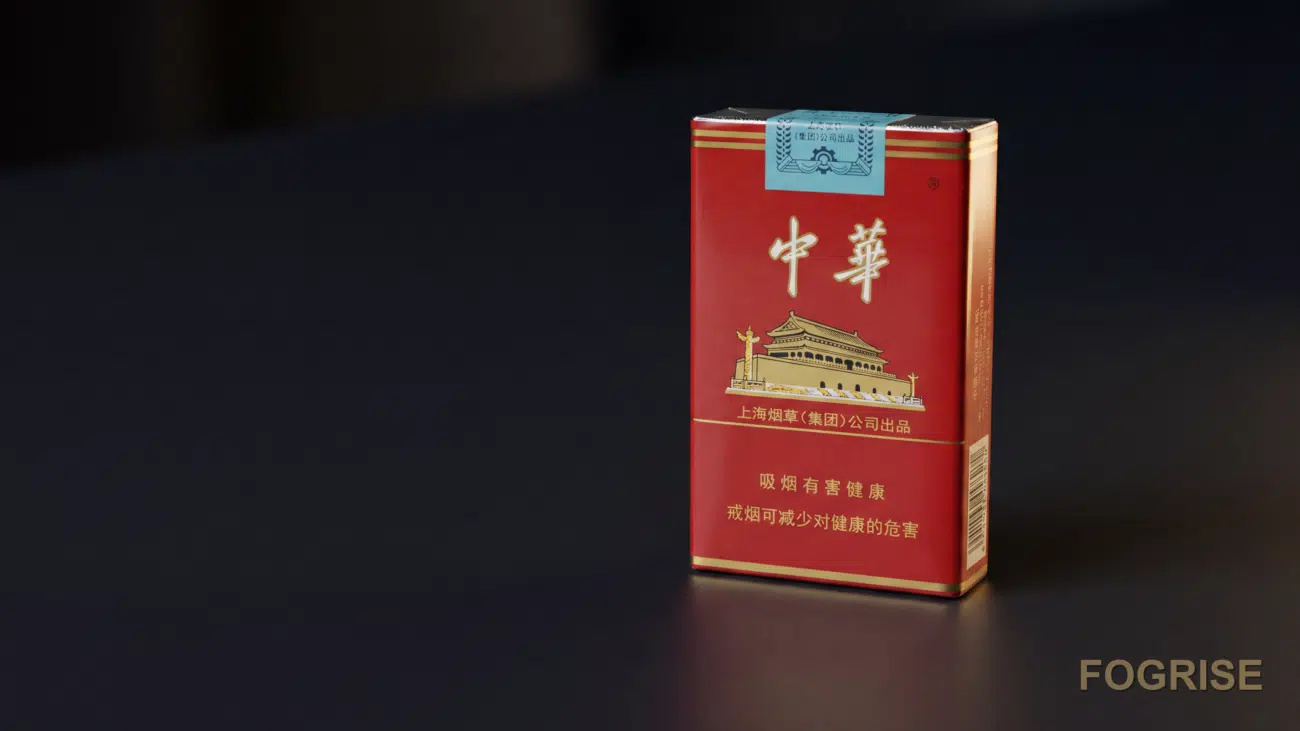
The Shanghai Tobacco Group flagship and the single most recognised Chinese cigarette gift in the world. The hard-pack red with embossed gold Tiananmen artwork retails in mainland China around ¥60 to ¥100 per pack depending on variant. In Singapore, where supply is limited to a handful of specialty tobacconists working from regulated import allocations, expect SGD 25 to 35 per pack (Fang et al., 2017; Tobacco Tactics, 2023). The blend is smooth flue-cured Virginia leaf with a clean finish that most first-time Western smokers describe as "less harsh than expected."
Panda (熊猫)
Carries true diplomatic prestige. Originally produced for Deng Xiaoping’s personal use and later reserved for state-guest gifting, Panda uses a lighter, smoother blend than Chunghwa with a more floral top note. Genuine Panda is rare globally; in Singapore it surfaces only through specialty channels at SGD 22 to 30 per pack when available (Fang et al., 2017; Tobacco Tactics, 2023).
Premium tier: Yuxi, Furongwang, Huanghelou
Yuxi (玉溪)
From the Yuxi Cigarette Factory under Hongta Group in Yunnan, the same valley that grows much of China’s high-grade flue-cured leaf. The blend is mellow and smooth, popular as a mid-business-meeting cigarette. Singapore SGD 18 to 25 (Fang et al., 2017; Tobacco Tactics, 2023).
Furongwang (芙蓉王)
CNTC Hunan’s flagship slim. One of the best-selling high-end cigarettes inside China, it reads as crisper and slightly drier than Yuxi. Singapore SGD 16 to 22 (Fang et al., 2017; Tobacco Tactics, 2023).
Huanghelou (黄鹤楼)
Produced by CNTC Hubei and named after the Yellow Crane Tower in Wuhan. A crisp, clean blend with a touch more body than the Yunnan brands. Less common in Singapore than Yuxi or Furongwang; SGD 16 to 22 when in stock (Fang et al., 2017; Tobacco Tactics, 2023).
Mid-range tier: Double Happiness, Zhongnanhai, Hongtashan
Zhongnanhai (中南海)
The CNTC brand most influenced by Japanese blending technique, light in tar and famously popular with younger Beijing smokers. Singapore SGD 12 to 18 (Fang et al., 2017; Tobacco Tactics, 2023).
Double Happiness (双喜)
From Shanghai Tobacco Corporation. The classic Chinese wedding-gift cigarette, a balanced everyday blend that punches above its price point on smoothness. Singapore SGD 12 to 18 (Fang et al., 2017; Tobacco Tactics, 2023).
Hongtashan (红塔山)
Also from Hongta Group. The full-flavor workhorse, long the volume leader in southwestern China. Offers the strongest tobacco character of the eight brands listed here. Singapore SGD 10 to 16 (Fang et al., 2017; Tobacco Tactics, 2023).
Brand comparison table
| Brand | Chinese | Tier | Flavor Profile | Singapore Price (SGD/pack) | Channel |
|---|---|---|---|---|---|
| Chunghwa | 中华 | Ultra-Premium | Smooth flue-cured Virginia, clean | 25 to 35 | Specialty tobacconist |
| Panda | 熊猫 | Ultra-Premium | Light, smooth, floral top | 22 to 30 | Specialty (rare) |
| Yuxi | 玉溪 | Premium | Mellow, smooth | 18 to 25 | Specialty / parallel import |
| Furongwang | 芙蓉王 | Premium | Crisp slim, drier | 16 to 22 | Specialty / parallel import |
| Huanghelou | 黄鹤楼 | Premium | Crisp, clean, more body | 16 to 22 | Specialty (rare) |
| Zhongnanhai | 中南海 | Mid-Range | Light, low-tar, Japanese-influenced | 12 to 18 | Tobacconist / private order |
| Double Happiness | 双喜 | Mid-Range | Balanced, smooth everyday | 12 to 18 | Tobacconist / private order |
| Hongtashan | 红塔山 | Mid-Range | Full-flavor workhorse | 10 to 16 | Tobacconist / private order |
Across the eight brands tracked above, the Singapore-landed price premium over China retail averages roughly 3.5x at the mid-range tier and compresses toward 2.2x at ultra-premium, because excise per stick is flat while base cost rises with grade. Buyers chasing value-per-dollar tend toward Hongtashan and Double Happiness; buyers chasing gift presentation pay the full Chunghwa premium and treat it as the social object it is.
Singapore’s Tobacco Regulations: What Buyers Need to Know
Singapore enforces one of the strictest tobacco regimes in Asia. Three shipping and customs rules catch most travellers off guard (Singapore Customs, 2026a, 2026b; Ministry of Health Singapore, 2020; Campaign for Tobacco-Free Kids, 2025). The minimum purchase age is 21, raised in stages from 18 and reaching 21 on 1 January 2021; retailers must verify ID at point of sale. There is zero duty-free allowance for tobacco: every stick must be declared and taxed at arrival, regardless of nationality or trip length. Excise duty runs SGD 0.589 per stick as of 2026, plus 9% GST on the CIF value.
Two more rules affect what the packs look like and where you can buy at Changi. Standardised drab olive-brown packaging has been mandatory since 1 July 2020, with brand visuals stripped from the exterior. Changi Airport duty-free tobacco shops serve departing passengers only; returning travellers cannot buy duty-free cigarettes on arrival.
Disclaimer: Singapore tobacco regulations are updated regularly. Content here reflects law as of June 2026. Always verify current rules with Singapore Customs (customs.gov.sg) or the Health Sciences Authority (hsa.gov.sg) before importing or purchasing. This is informational content, not legal advice.
Minimum age and point-of-sale rules
The Minimum Legal Age (MLA) for purchasing, using, possessing, selling, or supplying tobacco products in Singapore is 21 (Singapore Customs, 2026a, 2026b; Ministry of Health Singapore, 2020; Campaign for Tobacco-Free Kids, 2025). The age threshold rose in three steps: from 18 to 19 in 2019, from 19 to 20 in 2020, and from 20 to 21 on 1 January 2021. Retailers are legally required to verify age at point of sale, and any visible display of tobacco products to the general public is prohibited under the Tobacco (Control of Advertisements and Sale) Act. Cigarettes are typically stored behind closed cabinets, and shopkeepers retrieve packs only after confirming a customer’s age. Buying tobacco for someone under 21 carries its own penalty under the same Act.
Standardised packaging: what it means for Chinese brand packs
Since 1 July 2020, every cigarette pack sold legally in Singapore must use Standardised Packaging (Singapore Customs, 2026a, 2026b; Ministry of Health Singapore, 2020; Campaign for Tobacco-Free Kids, 2025). The outer carton is a uniform drab olive-brown (Pantone 448C), with brand name printed in a single regulated font. A 75% graphic health warning covers the front of the pack. All decorative elements, brand colours, and embossing are stripped from the exterior. For Chinese cigarette buyers, this has a practical consequence: in a Singaporean retail setting, a Chunghwa pack, a Furongwang pack, and a Marlboro pack look almost indistinguishable from the outside. Brand identity is visible only on the cigarette stick itself and, where permitted, on the inner liner. Retailers who sell non-standardised-packaging cigarettes in Singapore face fines of up to SGD 10,000 or six months’ imprisonment under the Health Products Act (note: this is the standardised-packaging non-compliance ceiling, not the excise-evasion penalty), which is a separate offence from excise duty evasion.
Zero duty-free allowance for returning travellers
Singapore Customs grants no duty-free concession on tobacco products to any traveller, whether resident or visitor, regardless of trip length (Singapore Customs, 2026a, 2026b; Ministry of Health Singapore, 2020; Campaign for Tobacco-Free Kids, 2025). The zero-allowance rule applies across every category: cigarettes, cigars, shisha, e-cigarettes, and heat-not-burn devices. Travellers arriving at Changi must declare any tobacco in their possession at the Red Channel and pay full excise duty plus 9% GST on the CIF value of the goods. As of 2026, the excise rate is SGD 0.589 per stick, meaning a single carton of 200 sticks attracts roughly SGD 117.80 in duty alone, before GST. Failure to declare tobacco constitutes illegal importation. Penalties begin at SGD 200 per pack of 20 sticks for small undeclared quantities and escalate to court prosecution, with fines up to SGD 10,000 and possible imprisonment, for larger volumes or repeat offenders.
Changi Airport duty-free: departing passengers only
A point of frequent confusion: Changi Airport’s duty-free tobacco shops sell exclusively to passengers on outbound flights (Singapore Customs, 2026a, 2026b; Ministry of Health Singapore, 2020; Campaign for Tobacco-Free Kids, 2025). Travellers returning to Singapore cannot purchase duty-free cigarettes upon arrival, because the zero-allowance rule eliminates the legal basis for such a transaction. If you buy Chinese cigarettes at Changi while departing for Hong Kong or Bangkok, those purchases are governed by your destination country’s import rules, not Singapore’s. Travellers occasionally assume that an airport purchase exempts them from declaration on a later return leg. It does not. Any tobacco brought back into Singapore from any origin, including from a duty-free shop in a foreign airport, must be declared and taxed under Singapore Customs rules.
Where to Buy Chinese Cigarettes in Singapore
Singapore’s Health Sciences Authority (HSA) Tobacco Retailer Licence (TRL) is required for any retail sale of tobacco products; as of 2026, approximately 5,000 licensed premises across Singapore stock cigarettes, with Chinese brands most commonly found at provision shops and specialty tobacco retailers in Chinatown, Little India, and parts of Geylang (HSA, 2026).
Chinese cigarettes are legally sold across Singapore, but the legal purchase channels are narrower than first-time buyers expect. Every brick-and-mortar seller, from the neighbourhood mama shop to the supermarket chain, must hold a Tobacco Retailer Licence (TRL) issued by the Health Sciences Authority. Stock displays sit behind the counter. No open shelving, no advertising, no price calls. That alone determines which Chinese labels actually surface in any given outlet.
Licensed provision shops and tobacco specialists
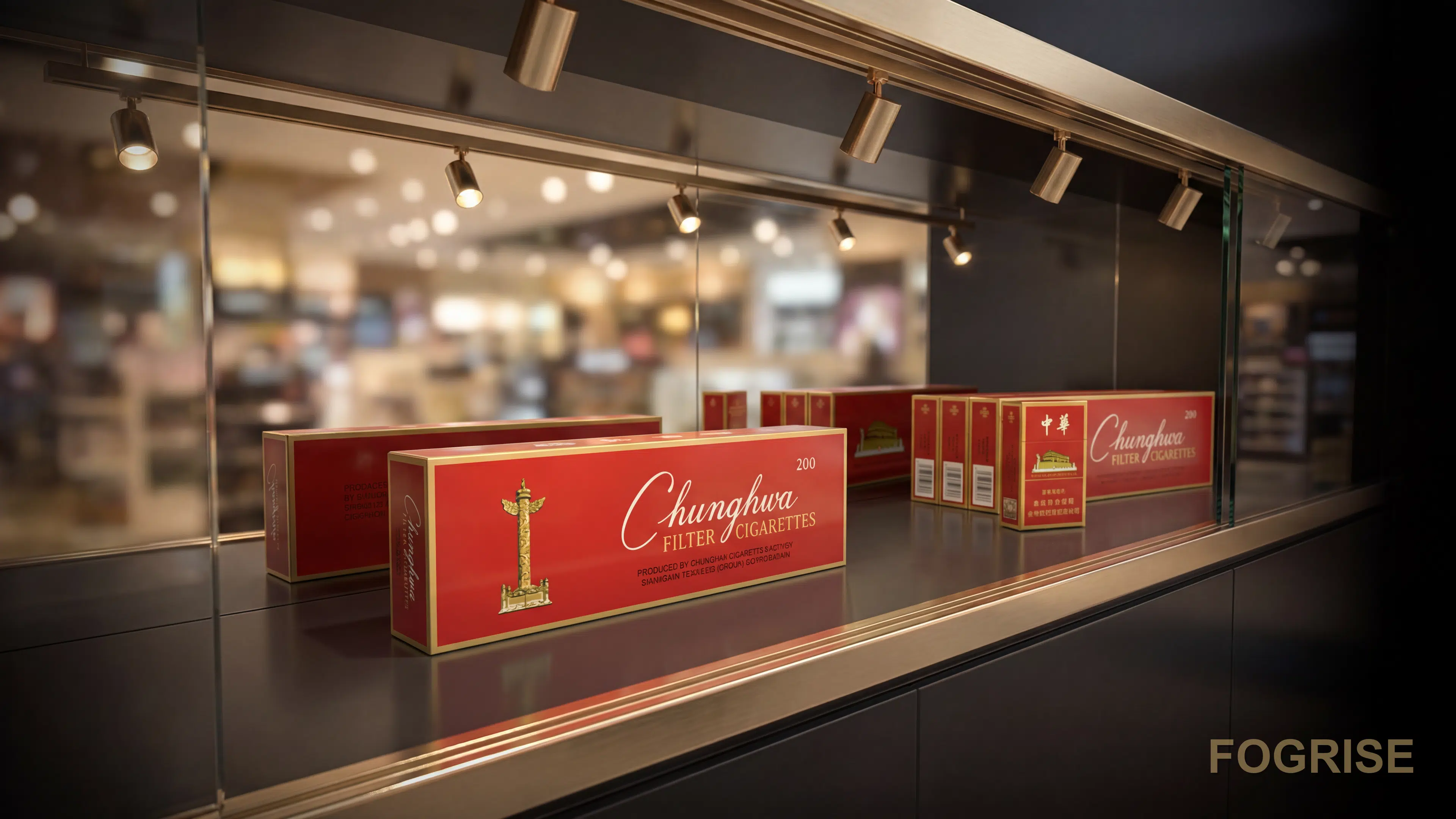
Traditional provision stores remain the most common source. Most carry at least Hongtashan and Double Happiness, which sit in the everyday-smoker price band. Premium names like Chunghwa and Panda generally require a dedicated tobacco specialist. The richest selections cluster in Chinatown along Smith Street and Trengganu Street, with smaller pockets in Little India and Geylang. Staff at specialist shops can usually source uncommon variants on request, though restocks depend on importer cycles rather than on-shelf inventory. Every one of these outlets operates under TRL conditions, so products stay behind the counter and require an over-21 ID check at point of sale.
Convenience stores and supermarkets
7-Eleven and Cheers hold TRLs at many, though not all, of their outlets. The stock pattern leans toward mid-range Chinese brands: Zhongnanhai, Double Happiness, and Hongtashan show up most reliably. NTUC FairPrice, Cold Storage, and Giant carry tobacco selectively, with significant variance by location. A central FairPrice may stock three or four Chinese SKUs, while a heartland branch carries none. If a specific brand matters, call ahead rather than walking in cold.
Changi Airport duty-free (departing passengers)
DFS and Heinemann are the main Changi duty-free operators carrying Chinese brands in the departure halls. Chunghwa is the most consistent presence, with others appearing seasonally. Prices reflect zero Singapore excise, so the gap versus retail is steep. One firm rule: these are sales for departing passengers only. Singapore applies a zero duty-free allowance to returning travellers, so cigarettes bought airside and brought back in are dutiable and must be declared at the Red Channel. Buying at Changi for personal use abroad is fine; buying at Changi to bring home is a customs problem.
Online options and international shipping
Domestic online delivery of cigarettes within Singapore is constrained by the same TRL framework, and most platforms simply do not list tobacco. International shipping is a separate question: Singapore excise of SGD 0.589 per stick plus GST applies to every imported cigarette regardless of channel, and all shipments must be declared. For readers outside Singapore, you can explore our international range at xiangyandd, which ships only to destinations where local law permits.
Never purchase duty-unpaid cigarettes from unlicensed sellers. Singapore Customs actively enforces against contraband tobacco, and the penalties are severe. The next section covers the specifics.
Pricing Reality: What Chinese Cigarettes Cost in Singapore
Chinese cigarettes in Singapore are not cheap, and the price gap with mainland China is steep. A 20-stick pack of Chunghwa that retails for roughly SGD 11 to 18 in Shanghai sells for SGD 25 to 35 at a licensed Singapore tobacconist. The reason is not import freight. It is tax policy.
Singapore’s excise duty stack
Singapore taxes cigarettes on a per-stick basis, then layers GST on top of the landed value. As of 12 February 2026, the excise duty is SGD 0.589 per stick, following a 20% increase announced in Budget 2026 (Singapore Customs, 2026b). On a standard 20-stick pack, excise alone equals SGD 11.78 before the importer adds CIF cost, freight, or margin. GST of 9% then applies to the CIF value. The combined effect is that a pack that costs the importer roughly SGD 1 to 3 at origin lands on the shelf at SGD 13 to 18 for mid-range brands, and considerably higher for premium imported labels.
Price by brand and channel
Actual shelf prices vary by brand tier and where you buy. The table below reflects observed Singapore prices in Q1 2026.
| Brand | Channel | Price Range (SGD/pack) | Notes |
|---|---|---|---|
| Chunghwa 中华 | Licensed tobacconist | 25 to 35 | Import plus excise premium |
| Double Happiness 双喜 | Provision shop, convenience | 13 to 18 | Mid-range Chinese brand |
| Zhongnanhai 中南海 | Convenience stores | 12 to 16 | Light blend, widely available |
| Hongtashan 红塔山 | Provision shops | 11 to 15 | Full-flavor, entry-price Chinese |
| Chunghwa 中华 | Changi duty-free (departing) | 15 to 22 | No SGD excise; departing passengers only |
Changi duty-free is the only legal channel where Singapore excise does not apply, because the goods are exported with the traveler. From a Q1 2026 spot-check of Chunghwa pricing across DFS and Heinemann counters versus mid-range Singapore tobacconists in Chinatown, departure-hall packs ran roughly 20% to 40% below retail (SGD 15-22 versus SGD 25-35), but the allowance is limited and the channel is open only to departing passengers, not arrivals.
Why Singapore cigarettes are among the world’s most expensive
Singapore has used tobacco excise as a public health lever since the 1980s, and Budget 2026’s 20% one-step increase is the steepest single jump in decades. The stated policy goal is to push smoking prevalence toward the government’s 10% target by 2030. Combined with 9% GST and standard retail margins, a pack of mainstream cigarettes now costs SGD 13 to 18, and premium imported Chinese brands clear SGD 25 to 35. That places Singapore consistently in the world’s top five most expensive cigarette markets, alongside Australia, New Zealand, the United Kingdom, and Ireland. For a Chinese-brand smoker accustomed to mainland prices, the same pack of Chunghwa costs roughly two to three times what it does in Shanghai. The arithmetic explains why duty-free purchase on departure, within the strict personal allowance, is the only meaningfully cheaper legal route.
Illicit Tobacco in Singapore: Risks and How to Avoid It
Singapore Customs seized over 1.9 billion illicit cigarette sticks in 2023, with a combined duty and GST value exceeding SGD 815 million. Those numbers reflect both the scale of smuggling pressure on Singapore’s high-excise market and the scale of enforcement that keeps pushing back against it (Singapore Customs, 2024).
Singapore runs one of the strictest tobacco-control regimes in Asia, and the gap between the legal retail price and contraband supply makes illicit cigarettes a recurring temptation. It is also a deeply unwise one. Penalties scale per stick, enforcement is active, and even a few unstamped cigarettes in a backpack can produce a five-figure fine. For anyone curious about Chinese-brand cigarettes available locally, the authenticity rule is simple: if it does not carry the Singapore Duty-Paid Cigarettes (SDPC) stamp and the standardised olive-brown pack, it is illegal to buy, hold, or sell.
Penalties for duty-unpaid cigarettes
Singapore treats contraband tobacco as a customs and revenue offence, not a minor infringement. Buying, possessing, or selling duty-unpaid cigarettes triggers composition fines on a sliding scale: SGD 200 per packet (1st offence), SGD 500 per packet (2nd offence), SGD 800 per packet (3rd offence), plus evaded duty and GST in all cases; court prosecution for larger-scale smuggling can result in fines up to 40 times the duty and GST evaded, plus imprisonment (Singapore Customs, 2026c, 2024). The maths is unforgiving. A single carton (200 sticks, 10 packs) reaches a minimum SGD 2,000 in first-offence composition fines, plus the full evaded duty and GST. Singapore Customs and the Inland Revenue Authority of Singapore (IRAS) co-enforce, using plain-clothes operations and a public informant hotline. There is no quiet "personal use" allowance: possession of a handful of unstamped sticks is itself an offence, and first-time seizures still end in confiscation plus a quantity-based fine.
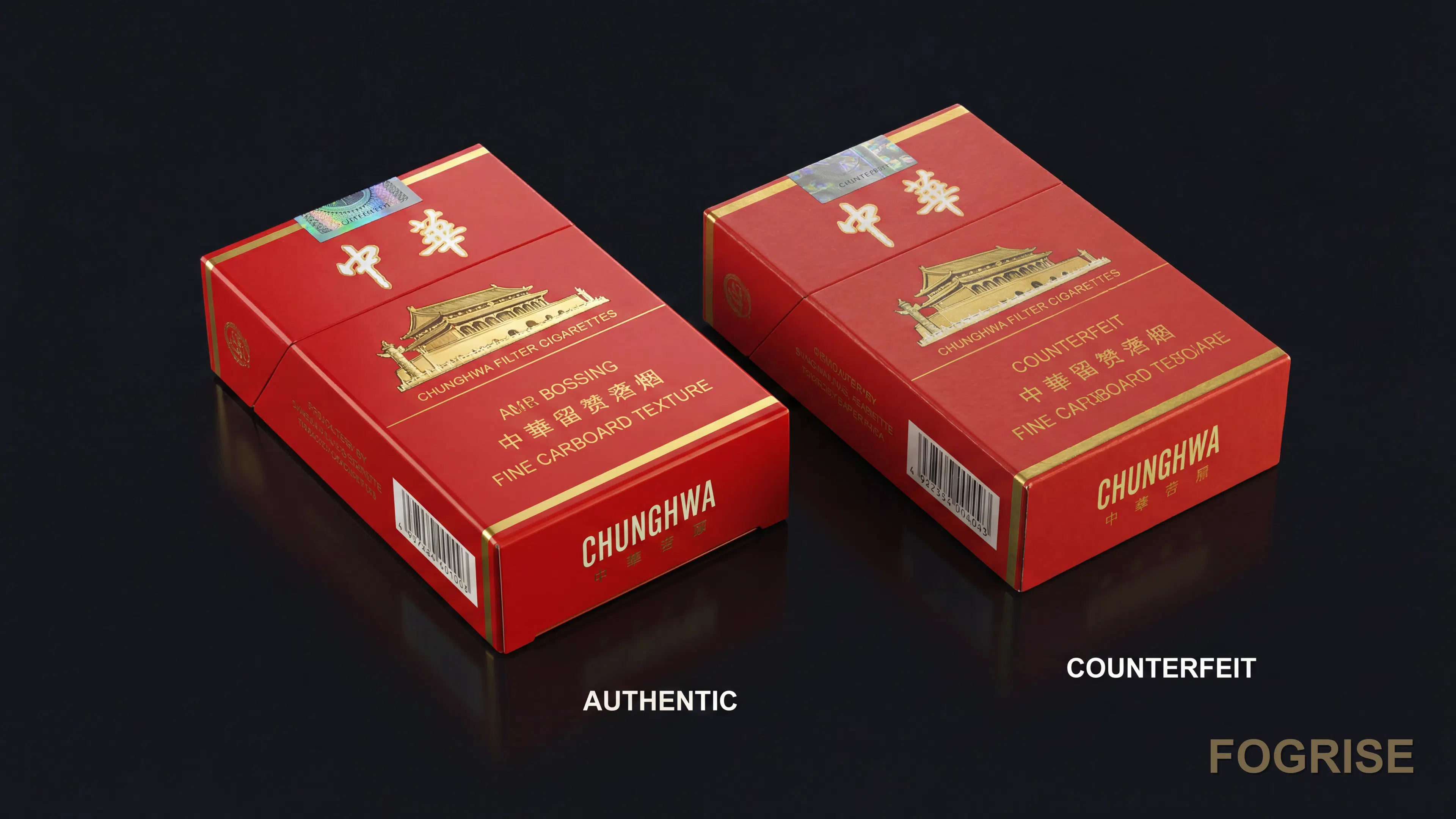
How to identify illicit or counterfeit packs
Every legally sold pack in Singapore carries two visible markers. First, the SDPC stamp, the letters ‘SDPC’ printed on each individual cigarette stick, together with a duty mark under Singapore Customs supervision. Second, full standardised packaging: a drab olive-brown shell (Pantone 448C) with a 75% graphic health warning across the front and back. Anything outside that spec is non-compliant on its face. The most common red flags are a suspiciously low price (well under SGD 10 for a 20-pack), absent or poorly imitated SDPC stamps, colourful branded packaging, and sales from unlicensed premises or street sellers. Illicit Chinese-brand cigarettes are particularly easy to spot: they often arrive in the original China-market packaging, with full-colour branding intact and no Singapore standardised pack at all. That mismatch is the single clearest tell.
Where illicit tobacco concentrates
The geography of contraband has shifted, not disappeared. Hawker centre fringes, industrial estates, and informal street sellers were historically the hotspots and still surface in enforcement reports, though sustained operations have thinned the trade. The bigger channel today is online. Social media listings advertising "cheap cigarettes," parallel-imported Chinese brands, or bulk cartons at a fraction of retail are almost always contraband; Singapore Customs encourages reporting via its hotline. The third channel is cross-border travel. Visitors and returning residents sometimes try to carry excess cigarettes from Malaysia or Indonesia, but Singapore grants no duty-free allowance on cigarettes, and every stick must be declared on entry. Undeclared packs found at the checkpoint are seized on the spot, and the same per-stick penalty schedule applies. The safest path is also the simplest: buy only from licensed retailers, check the SDPC stamp, and walk away from anything else.
Chinese Cigarettes and Singapore’s Culture of Gifting
Chinese cigarette brands carry social weight in Singapore that has little to do with smoking itself. For households that still observe the 礼烟 tradition, a sealed pack of Chunghwa says something a wrapped box of pastries cannot. That meaning is changing, but it has not vanished.
礼烟 in Singapore’s Chinese community
Singapore’s Chinese community makes up roughly 75% of the resident population, and the older generations brought the 礼烟 (lǐyān, "gift cigarette") custom with them from southern China and the wider diaspora (Tobacco Tactics, 2023). Chunghwa is the gold-standard gift brand in this tradition, a position it has held for decades.
The ritual itself is small but specific. The pack is offered with two hands. The recipient politely refuses two or three times before accepting. The gift is rarely opened on the spot; it is set aside for later. Common occasions include Chinese New Year visits to elders, Hungry Ghost Festival observances, weddings (where groomsmen sometimes receive packs), and business introductions where a relationship needs an opening gesture.
One thing worth knowing. Singapore’s indoor smoking ban, in force across most indoor and public spaces since the 2000s, means the gesture has drifted further from the act of smoking. The sealed pack is the gift; the smoking, if it happens at all, happens elsewhere and later.
Festival occasions and gift-tier brands
Different occasions pull on different tiers. For Chinese New Year, gift-boxed Chunghwa and Panda sets in original Chinese-market packaging are the prestige choices, usually sourced from specialty Chinese provision shops in the weeks before the festival. For the Hungry Ghost Festival, mid-range brands like Double Happiness and Hongtashan are more common, used as offerings at roadside burning stations rather than as personal gifts.
Business gifting still recognises a Chunghwa box set as the premium tier. Younger executives often choose alternatives now (wine, food, hampers), but the older generations and more traditional industries continue the practice.
Modern considerations
The custom is shrinking. Public health campaigns, rising health consciousness, and a generally younger, less smoking-oriented Chinese Singaporean population have all softened the convention. Civil service gift guidelines cap the value of accepted gifts, and expensive cigarette sets can fall under scrutiny in some professional contexts. The tradition is not gone, but it is more selective and far less universal than a generation ago.
One editorial point we will not soften. Chunghwa is a harmful, addictive tobacco product. The cultural meaning is real, and we have tried to describe it fairly, but that meaning does not change what is inside the pack for the person who eventually opens it.
Conclusion
Buying Chinese cigarettes in Singapore is entirely legal when you stay inside the licensed channel. Provision shops, tobacco specialists, Changi duty-free for departing travellers, and a handful of specialty retailers stock everything from everyday Hongtashan to prestige Chunghwa, all sold under the same standardised packaging rules that apply to every brand on the shelf.
The regulatory frame is strict, and that strictness is the point. Returning travellers carry a zero duty-free allowance. Excise sits at SGD 0.589 per stick in 2026. The legal purchase age is 21. Every legitimate retailer pays the duty, displays the SDPC duty-paid stamp, and refuses underage sales. Buying outside that channel exposes you to fines, vehicle forfeiture, and criminal charges that vastly outweigh any price saving.
For readers outside Singapore who want access to the same Chinese brands, our shop ships internationally where local law permits. For sourcing questions, brand availability, or guidance on specific markets, reach our team here.
Smoking is harmful and addictive. This guide is for adults aged 21 and older. Singapore tobacco laws are strictly enforced, so always verify current regulations at hsa.gov.sg and customs.gov.sg before purchasing.
FAQ
Can you buy Chinese cigarettes in Singapore?
Yes. Chinese cigarettes including Chunghwa, Double Happiness, Zhongnanhai, and Hongtashan are sold at licensed provision shops, tobacco specialty retailers, and convenience stores across Singapore. All must be purchased from retailers holding an HSA Tobacco Retailer Licence. You must be 21 or older to buy tobacco in Singapore. Smoking is harmful and addictive.
Is there a duty-free allowance for cigarettes in Singapore?
No. Singapore grants zero duty-free concession for tobacco products. Every cigarette brought into Singapore must be declared at arrival and full excise duty (SGD 0.589 per stick as of February 2026) plus 9% GST must be paid. There are no exceptions for residents or visitors. Failure to declare is a customs offence.
What are the most popular Chinese cigarette brands in Singapore?
The most widely available Chinese brands in Singapore are Double Happiness (双喜), Zhongnanhai (中南海), and Hongtashan (红塔山) at mid-range tier, found in most provision shops and convenience stores. Chunghwa (中华) and Panda (熊猫) are premium brands stocked at specialty tobacco retailers. All packs in Singapore appear in standardised olive-brown packaging with 75% graphic health warnings.
Where can I buy Chunghwa cigarettes in Singapore?
Chunghwa cigarettes are available at tobacco specialty shops, particularly in Chinatown (Smith Street, Trengganu Street), and at some licensed provision shops serving Chinese communities. Availability varies by outlet and season. Changi Airport duty-free shops carry Chunghwa for departing passengers. Call ahead to confirm stock before visiting, as Chunghwa is not carried by every licensed retailer.
Why are cigarettes so expensive in Singapore?
Singapore imposes one of the world’s highest cigarette excise rates: SGD 0.589 per stick (effective 12 February 2026, after a 20% Budget 2026 increase), equivalent to SGD 11.78 in excise alone on a 20-stick pack. Adding 9% GST and retail margins, standard cigarettes retail at SGD 13-18 per pack; premium Chinese brands like Chunghwa reach SGD 25-35. Singapore’s government deliberately uses excise to reduce smoking prevalence.
What happens if you bring cigarettes into Singapore without declaring them?
Undeclared cigarettes are treated as duty-unpaid contraband. Singapore Customs imposes composition fines on a sliding scale: SGD 200 per packet (1st offence), SGD 500 per packet (2nd), and SGD 800 per packet (3rd), plus the evaded duty and GST. Court prosecution for larger-scale smuggling can result in fines of up to 20 times the amount of duty and GST evaded, plus imprisonment of up to 3 years under the Customs Act. Always declare tobacco at the customs red channel.
Are Chinese cigarette packs in Singapore the same as in China?
The tobacco inside is identical — the same CNTC-manufactured blend. The outer packaging is different: Singapore’s standardised packaging law (mandatory since 1 July 2020) requires all cigarette packs sold in Singapore to use drab olive-brown outer packaging (Pantone 448C) with 75% graphic health warnings and standardised typeface. Brand logos, colours, and decorative elements appear only on the cigarette sticks themselves and where permitted on inner liners.
Can I order Chinese cigarettes online and ship to Singapore?
You can order from international retailers such as fogrise-cigarette.com that ship to Singapore, but all imports must comply with Singapore Customs rules: full excise duty (SGD 0.589/stick) plus GST must be declared and paid on arrival. Commercial shipments require a Customs permit. Personal-use parcels are not exempt. Buying from unlicensed sellers advertising duty-free delivery to Singapore is illegal and risks seizure and penalties. Adults 21+ only.
References
- Health Sciences Authority of Singapore. (2026). Tobacco regulation: Overview. https://www.hsa.gov.sg/tobacco-regulation/overview
- Ministry of Health Singapore. (2020, June 29). Standardised packaging and enlarged graphic health warnings mandatory for all tobacco products in Singapore from 1 July 2020. https://www.moh.gov.sg/newsroom/standardised-packaging-enlarged-graphic-health-warnings-mandatory-for-all-tobacco-products-in-singapore-from-1-july-2020
- Campaign for Tobacco-Free Kids. (2025). Singapore: Country details — Tobacco control laws. https://www.tobaccocontrollaws.org/legislation/singapore
- Singapore Customs. (2026a). Duty-free concession and GST import relief. https://www.customs.gov.sg/at-customs/arriving-in-singapore/duty-free-concession-gst-relief
- Singapore Customs. (2026b). Duties and dutiable goods overview. https://www.customs.gov.sg/doing-business/valuation-duties-and-fees/duties-and-dutiable-goods/duties-and-dutiable-goods-overview
- Singapore Customs. (2026c). Travel rules and penalties. https://www.customs.gov.sg/at-customs/travel-rules-and-penalties/
- Singapore Customs. (2024). Singapore Duty-Paid Cigarette (SDPC) mark. https://www.customs.gov.sg/businesses/valuation-duties-taxes-fees/singapore-duty-paid-cigarette-sdpc-mark/
- Fang, J., Lee, K., & Sejpal, N. (2017). The China National Tobacco Corporation: From domestic to global dragon? Global Public Health, 12(3), 315-334. https://doi.org/10.1080/17441692.2016.1241293 https://pmc.ncbi.nlm.nih.gov/articles/PMC5553430/
- Tobacco Tactics, University of Bath. (2023, March 24). China National Tobacco Corporation. https://www.tobaccotactics.org/article/china-national-tobacco-corporation/
- van der Eijk, Y., & Yang, J. S. (2022). Tobacco industry adaptations to Singapore’s plain packaging policy. Tobacco Control, 31(e2), e131-e137. https://doi.org/10.1136/tobaccocontrol-2020-056324 https://tobaccocontrol.bmj.com/lookup/doi/10.1136/tobaccocontrol-2020-056324
Last reviewed and updated: June 2026. Author: xiangyandd editorial team. For tailored guidance, contact our team.

 English (US)
 简体中文
 Deutsch
 Français
 Español