

Blog
Chinese Cigarettes in Kingston, Ontario: Laws & 2026 Guide

Abstract
The Kingston covered here is Kingston, Ontario, Canada, the city of about 132,000 on Lake Ontario at the head of the St. Lawrence River, home to Queen’s University. It is not Kingston, Jamaica; not Kingston-upon-Hull or Kingston-upon-Thames in the UK; and not Kingston, New York. That matters: Kingston has no land bridge to the US. The nearest crossing, the Thousand Islands Bridge, sits 51 km east at Lansdowne. Kingston’s own path to New York State runs by water in two legs: the free Wolfe Islander III ferry to Wolfe Island, then the seasonal private Horne’s Ferry from Wolfe Island’s southern shore to Cape Vincent. In March 2026 Kingston Police shut down an unlicensed Montreal Street tobacco shop and seized $95,000 in illicit product (Kingston Police, 2026). Queen’s also brings a transient international-student population, with China a named top-origin country, so local demand for Kingston Chinese cigarettes and brands like Chunghwa (中华) and Zhongnanhai (中南海) looks different than in a resident-only community.
Readers here are adults 21 and older who live in Kingston or study, teach, or work at Queen’s, and want to know what is legal, what is not, and what is real locally. The sections that follow cover the brands people search for, the March 2026 Kingston Police case, the border and ferry geography, current CBSA import rules for tobacco, the role of Queen’s and the wider Chinese-Canadian community, Ontario’s 2026 enforcement picture, the legal purchase age with honest retail realities, and how to spot a counterfeit pack.
Important: This article is written for adults 21 and older. Smoking is harmful and addictive. Tobacco laws vary by country, province, and state; verify current CBSA and Ontario regulations before any purchase or crossing decision. Informational only, not legal or medical advice.
Key Takeaways
- This guide is about Kingston, Ontario, not Kingston, Jamaica or any other of the world’s cities that share the name.
- Kingston has no direct US land border; the nearest drivable crossing sits 51 km east at the Thousand Islands Bridge.
- In March 2026, Kingston Police shut an unlicensed Montreal Street tobacco shop, seizing about $95,000 in illicit product.
- The only in-city US route is a two-leg ferry, using the free Wolfe Islander III plus the seasonal Horne’s Ferry.
- Queen’s University hosts roughly 3,199 international students, with China a named top-origin country that shapes local demand differently.
- The yellow Ontario provincial tax stamp is the fastest legal check, separating a regulated pack from contraband on sight.
- No incumbent lists which Kingston retailers stock Chinese cigarette brands, so this guide stays honest rather than inventing a retailer.
Table of Contents
- Abstract
- Key Takeaways
- Chinese Cigarette Brands Kingston Buyers Search For
- The Kingston Police Shutdown: What Happened on Montreal Street
- Kingston’s Border Geography: Why There’s No Bridge Here
- CBSA Rules for Bringing Cigarettes Into Kingston
- Queen’s University and Kingston’s Chinese-Canadian Community
- By the Numbers: Queen’s University and the Chinese-Canadian Community
- Ontario’s 2026 Contraband Tobacco Crackdown: Where Kingston Fits
- By the Numbers: Ontario’s 2026 Enforcement Scale
- Legal Age, Retail Rules, and Where Kingston Buyers Actually Look
- Spotting Counterfeit Chinese Cigarette Packs
- Frequently Asked Questions
- Conclusion
- References
Chinese Cigarette Brands Kingston Buyers Search For
Kingston’s search traffic for Chinese cigarettes clusters around a handful of brand names that carry cultural weight far beyond their raw market share. Queen’s University’s Chinese student community and downtown residents near Princess Street type in "Chunghwa cigarettes Kingston Ontario" and "Zhonghua cigarettes Kingston Canada" each month, looking for the state-banquet flagship they remember from home. A parallel search pattern, "Kanyen’kehá:ka tobacco Kingston," reflects the Montreal Street sourcing case addressed later in this pillar, where buyers conflated Indigenous-supplied tobacco with the specific Chinese brands they were actually trying to find. The eight brands below are the ones that recur across those queries.
Kingston’s 2021 census counted 3,155 residents identifying as Chinese-Canadian, 2.4 percent of the city’s 132,485 population (Statistics Canada, 2022). That base, layered onto Queen’s University’s international community, is why Chunghwa, Nanjing, and the other six brands in the table below stay in local search demand year-round.
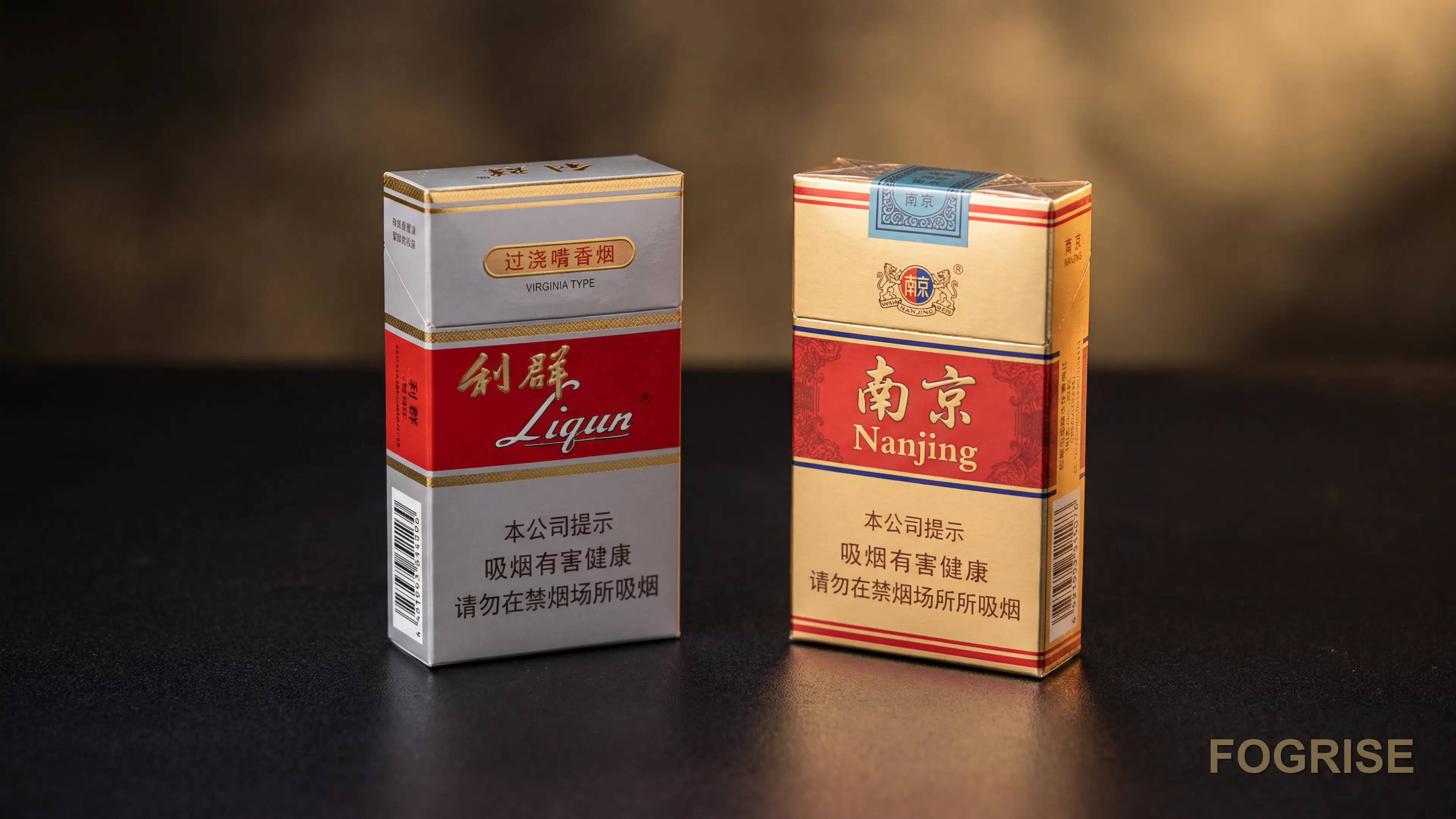
| Brand (romanised) | Chinese | Producer | Tier | Positioning |
|---|---|---|---|---|
| Chunghwa | 中华 | Shanghai Tobacco Group | Premium / gifting | The flagship state-banquet pack |
| Nanjing | 南京 | China Tobacco Jiangsu Industrial | Upper-mid / premium | Regional favourite; known for a popular slim (细支) line |
| Liqun | 利群 | China Tobacco Zhejiang Industrial | Upper-mid | Affordable-premium positioning, widely distributed |
| Furongwang | 芙蓉王 | China Tobacco Hunan | Upper-mid | Softer draw, a common step-down from Chunghwa |
| Yuxi | 玉溪 | Hongta Group | Upper-mid | Yunnan-tobacco lineage, widely stocked in Chinese diaspora channels |
| Double Happiness | 双喜 | Shanghai Tobacco Group | Value | Everyday red-and-gold pack, weddings and daily use |
| Hongtashan | 红塔山 | Hongta Group | Value | Long-running Yunnan value staple |
| Zhongnanhai | 中南海 | Beijing Cigarette Factory | Lighter-tar line | Lower-tar filter positioning, a Beijing-market signature |
Premium and gifting tier: Chunghwa and Zhongnanhai
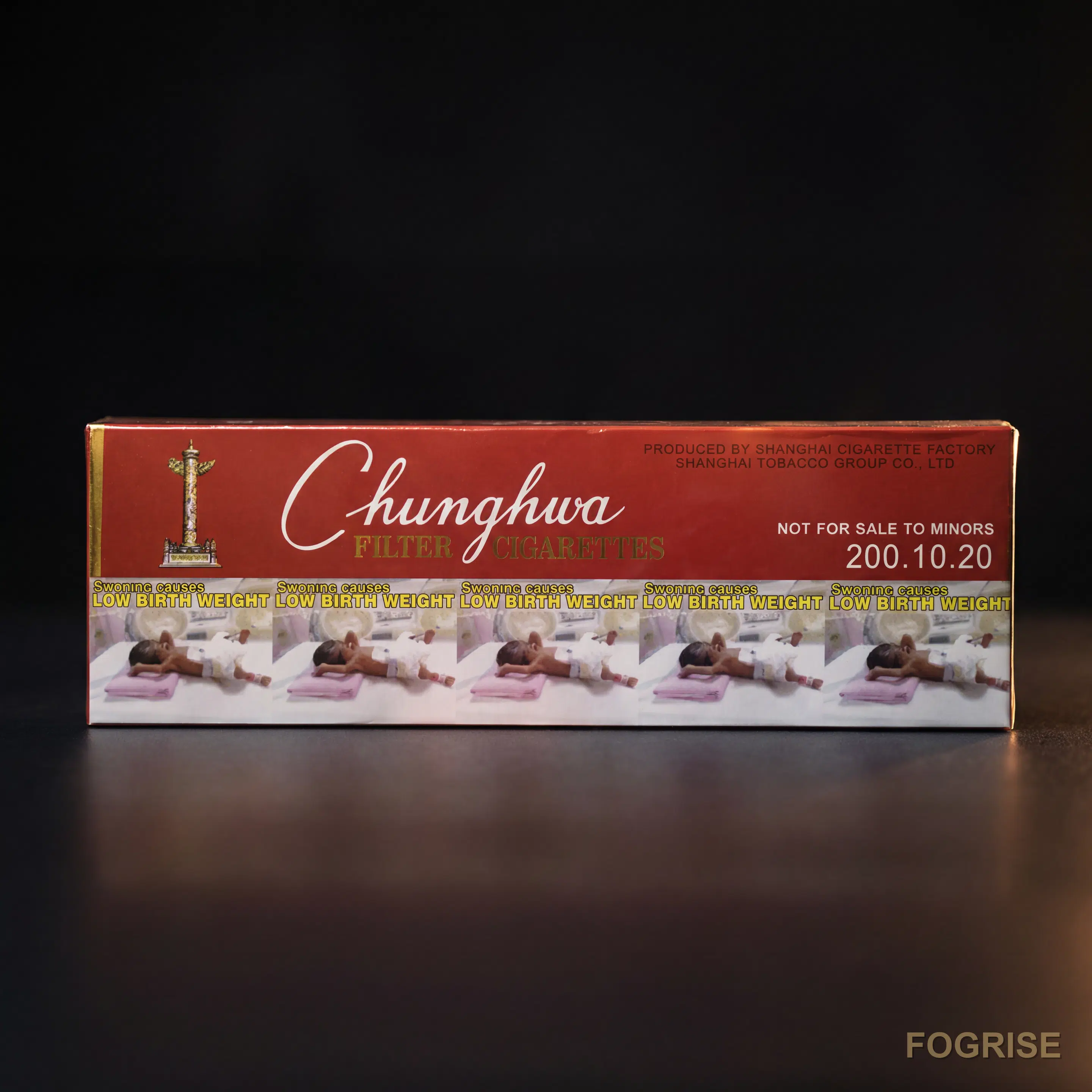
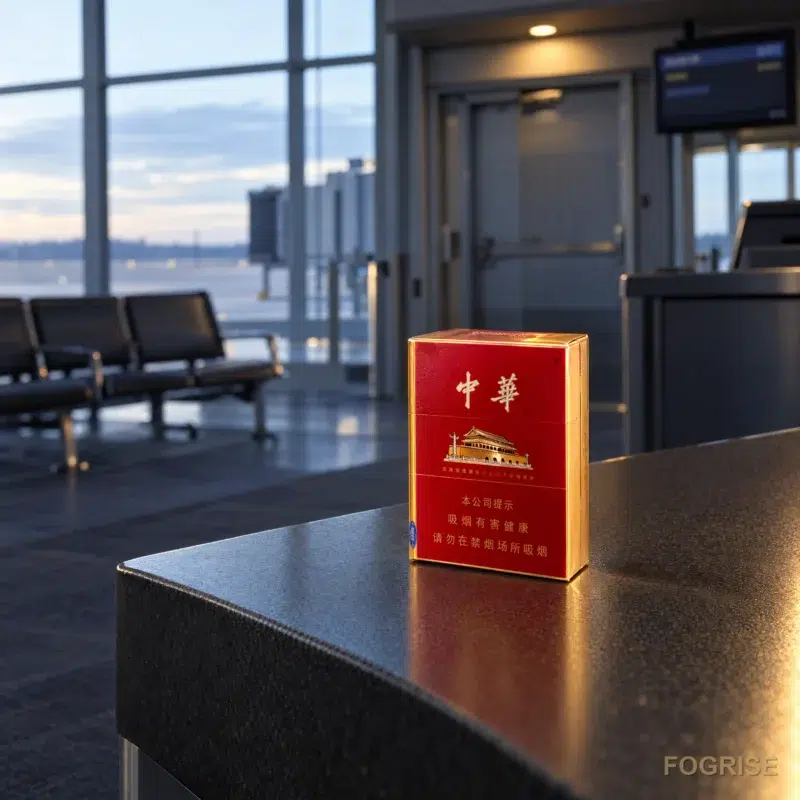
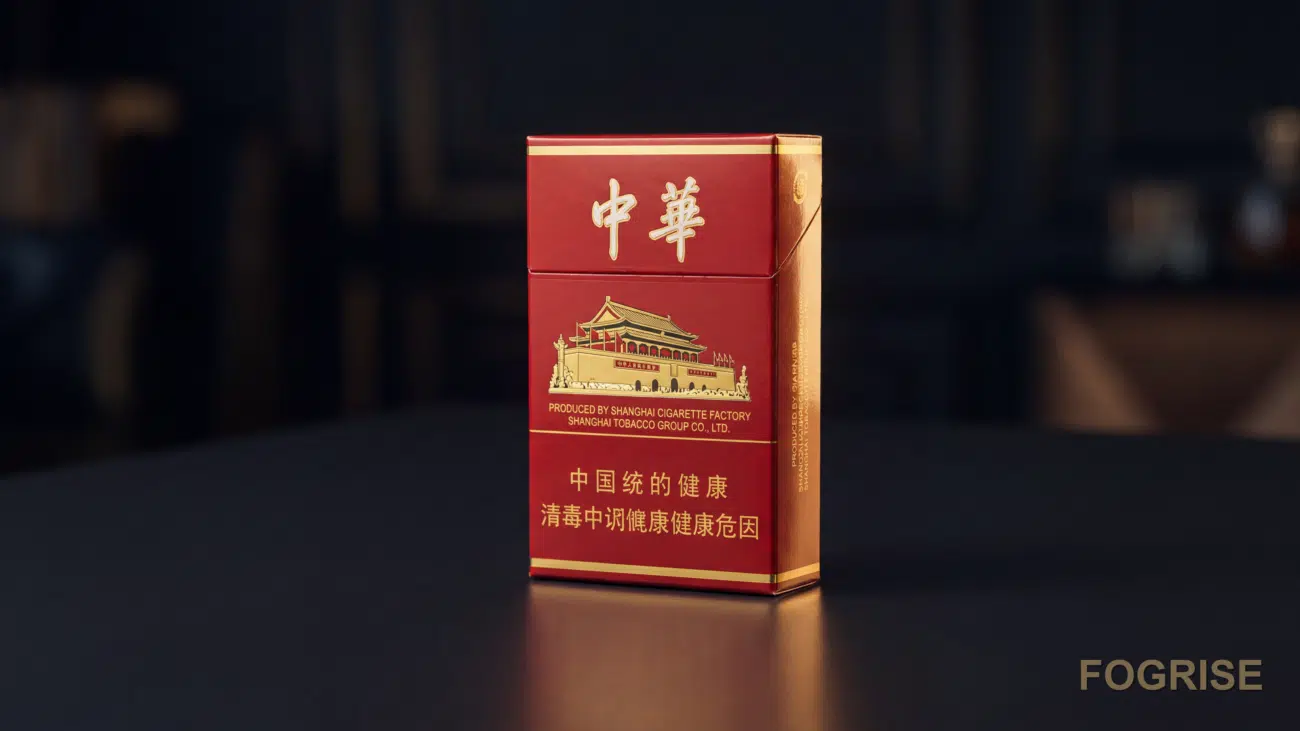
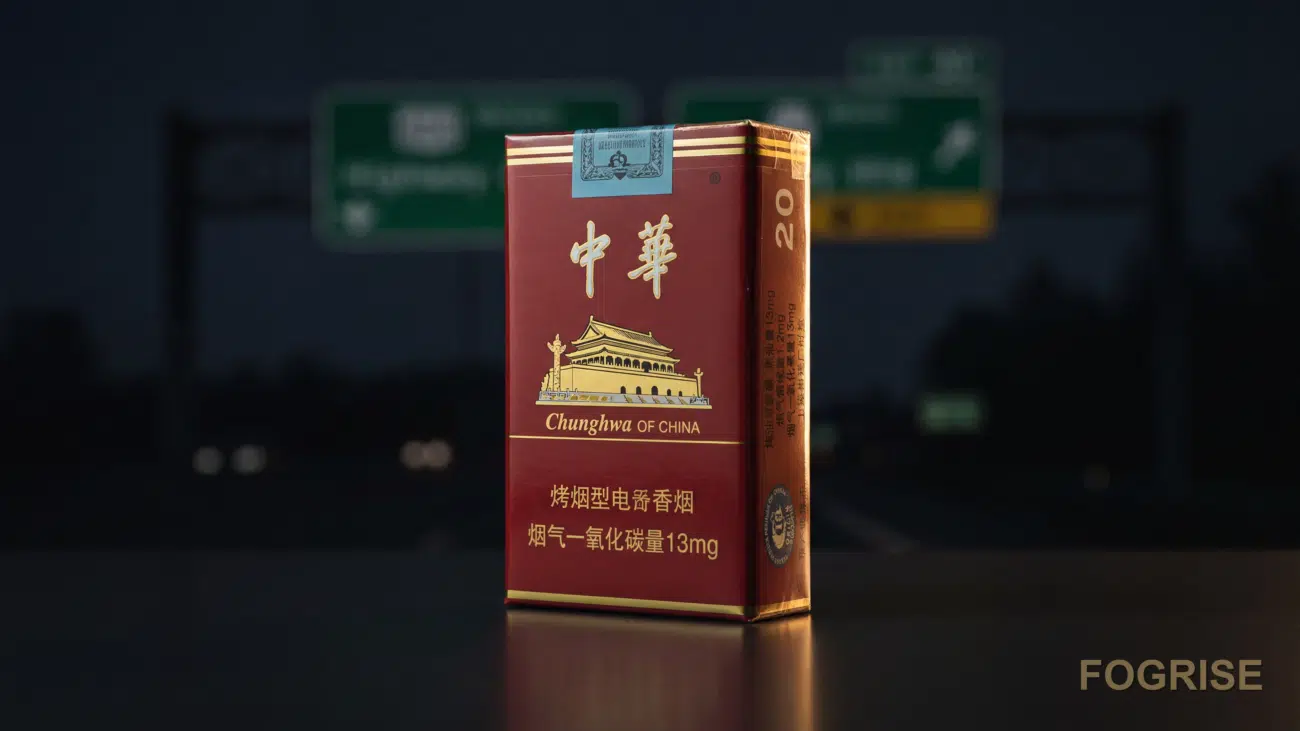
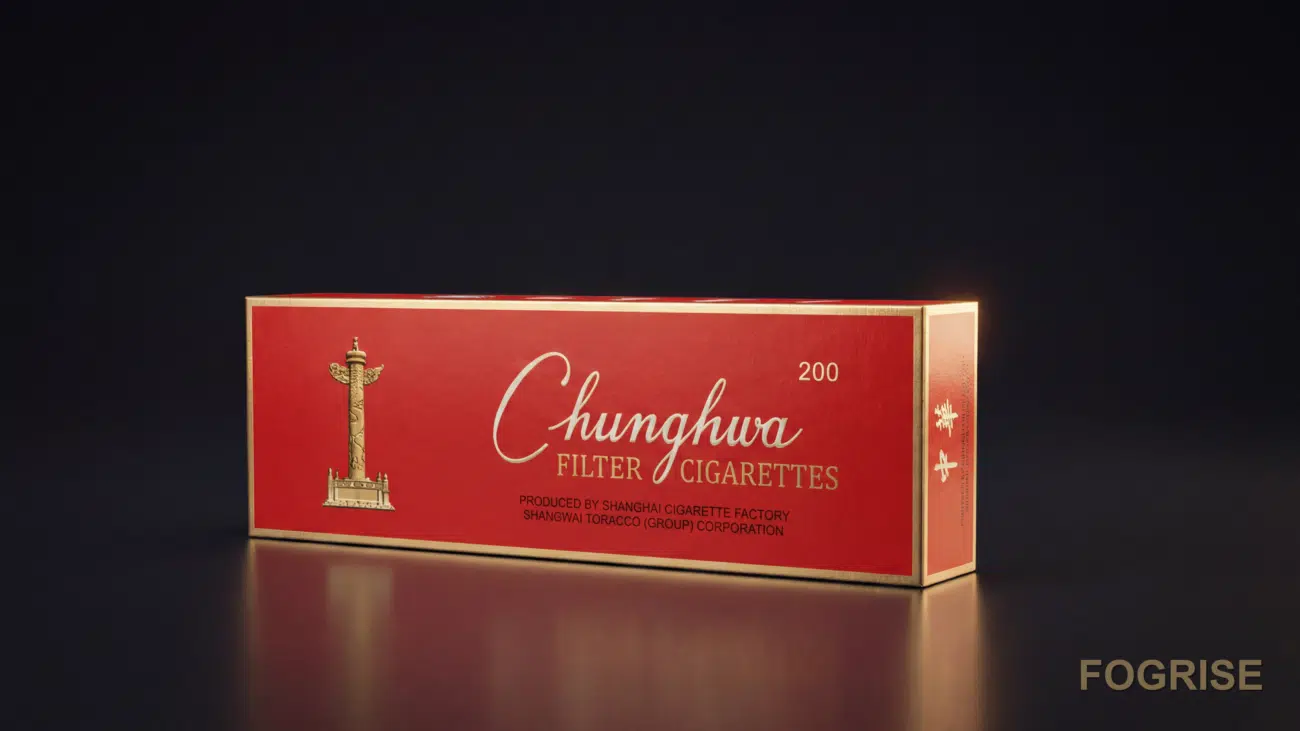
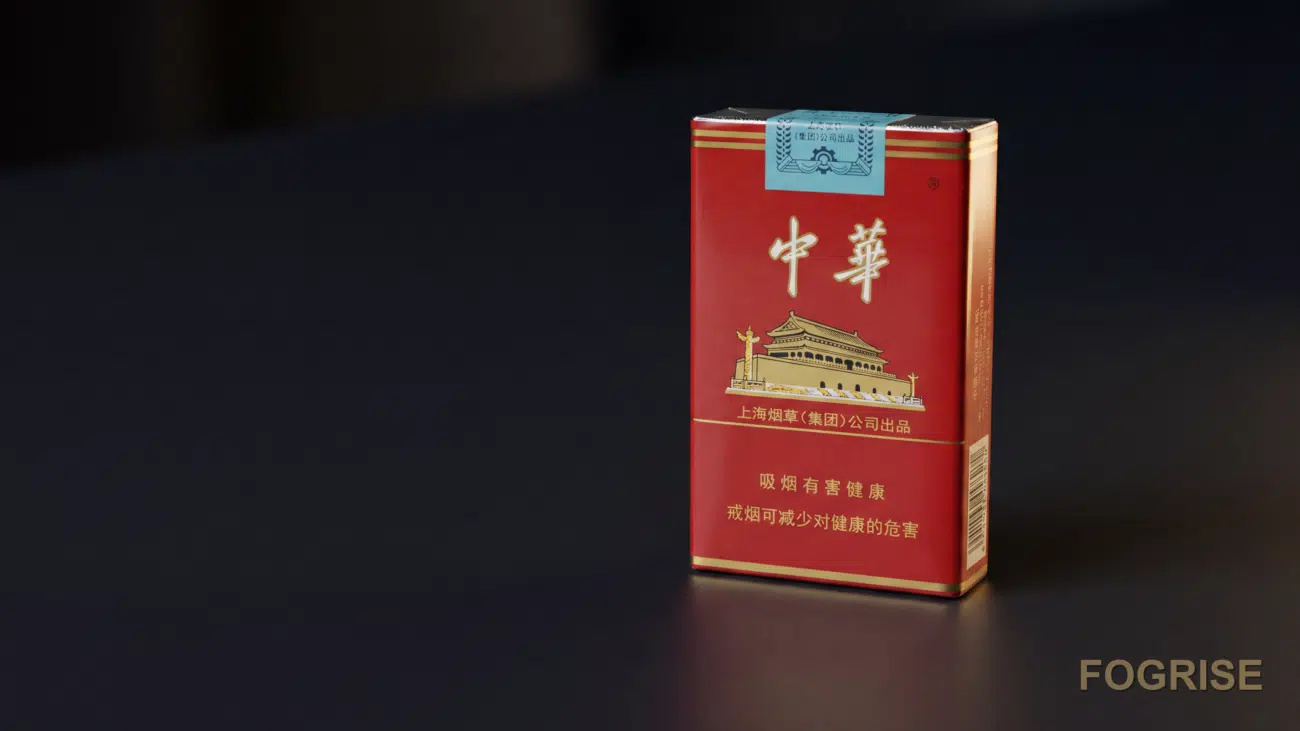
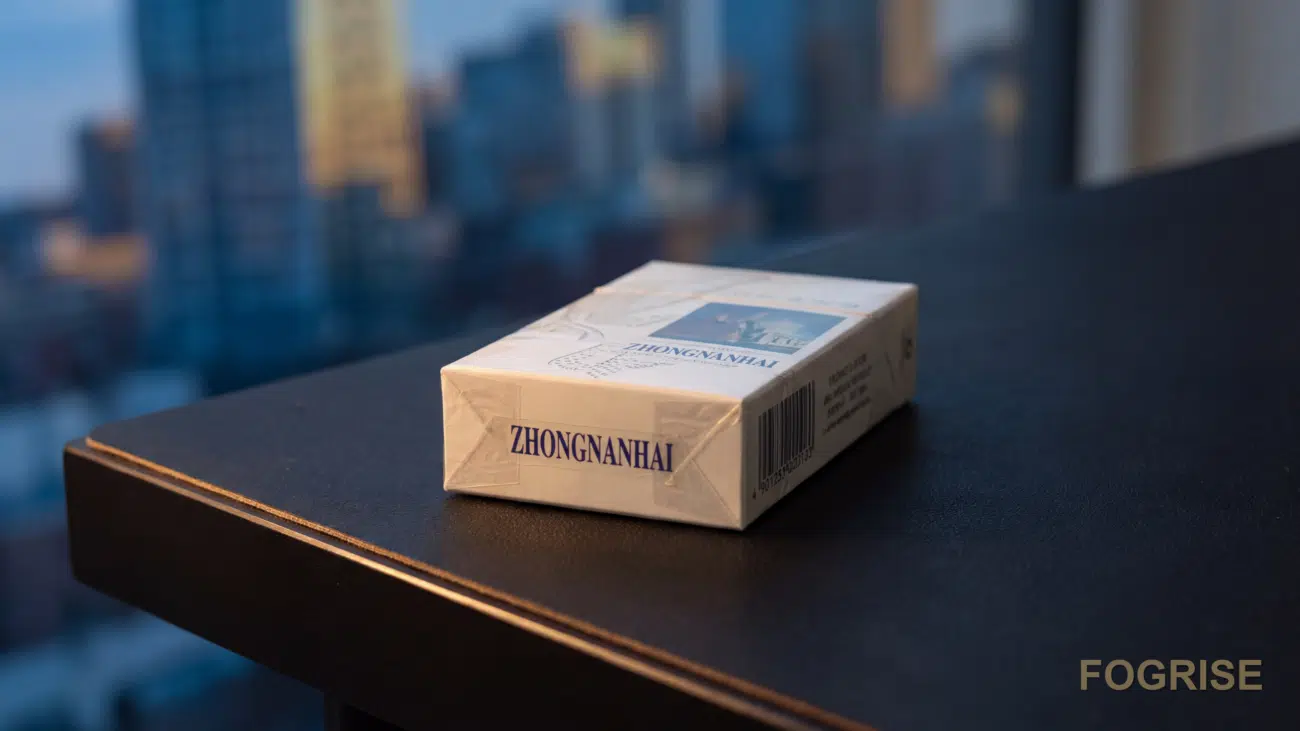
Chunghwa (中华) has been produced by Shanghai Tobacco Group since 1951 and is the informal state-banquet cigarette of the People’s Republic of China, presented at diplomatic receptions and gifted at weddings and business dinners across the Chinese diaspora, which is why Kingston queries repeatedly include the pack by name in both romanizations. The red-and-gold hard pack usually commands the highest price point in any Chinese-brand comparison lineup, and the gifting identity is inseparable from that price. Zhongnanhai, produced by Beijing Cigarette Factory, sits at the lighter-tar end of the mainstream mainland lineup and is closely tied to the Beijing market and northern-China consumers. Lower-tar filter positioning is a brand claim, not a health finding; Health Canada’s guidance is unambiguous that no cigarette is safe to consume.
Everyday and value tiers
Nanjing (南京), produced by China Tobacco Jiangsu Industrial, is best known in the diaspora for its slim (细支) line, a narrower stick format that Kingston buyers frequently request by the specific SKU rather than by the parent brand name. Liqun (利群), the flagship line from China Tobacco Zhejiang Industrial, occupies the affordable-premium bracket, cheaper than Chunghwa but positioned above value staples like Double Happiness and Hongtashan, and it ships widely across mainland Chinese retail channels. Furongwang (China Tobacco Hunan) is often chosen as a step-down from Chunghwa for its softer draw and lower price. Yuxi (Hongta Group) draws on the Yunnan tobacco-growing tradition and appears frequently in diaspora-channel inventories alongside its sister brand Hongtashan, a long-running Yunnan value staple. Double Happiness, another Shanghai Tobacco Group line, is the red-and-gold pack most associated with weddings and everyday consumption at the value end of the range.
Romanization note: Chunghwa = Zhonghua = 中华
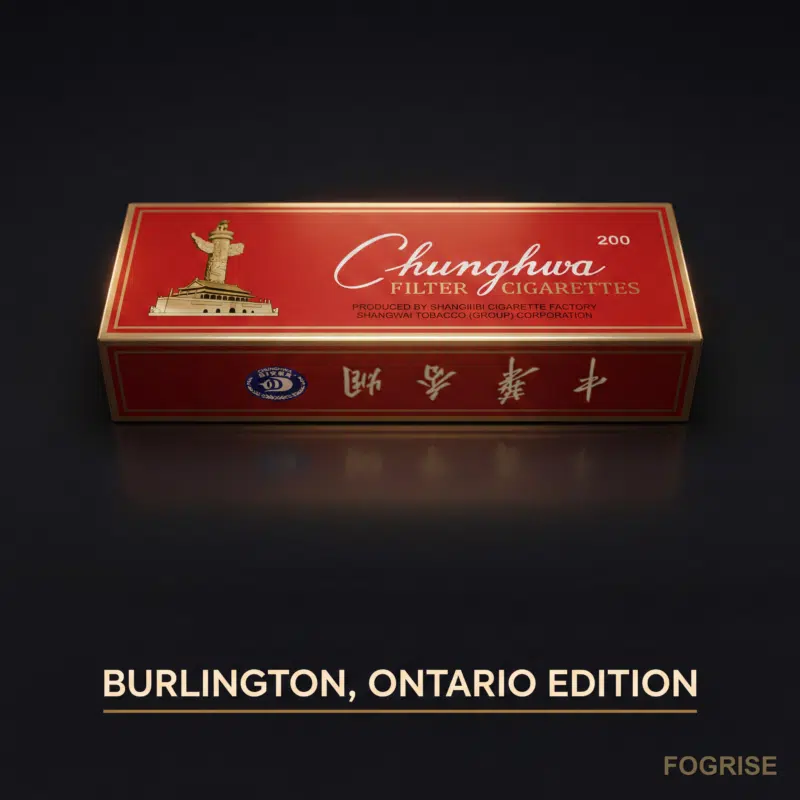
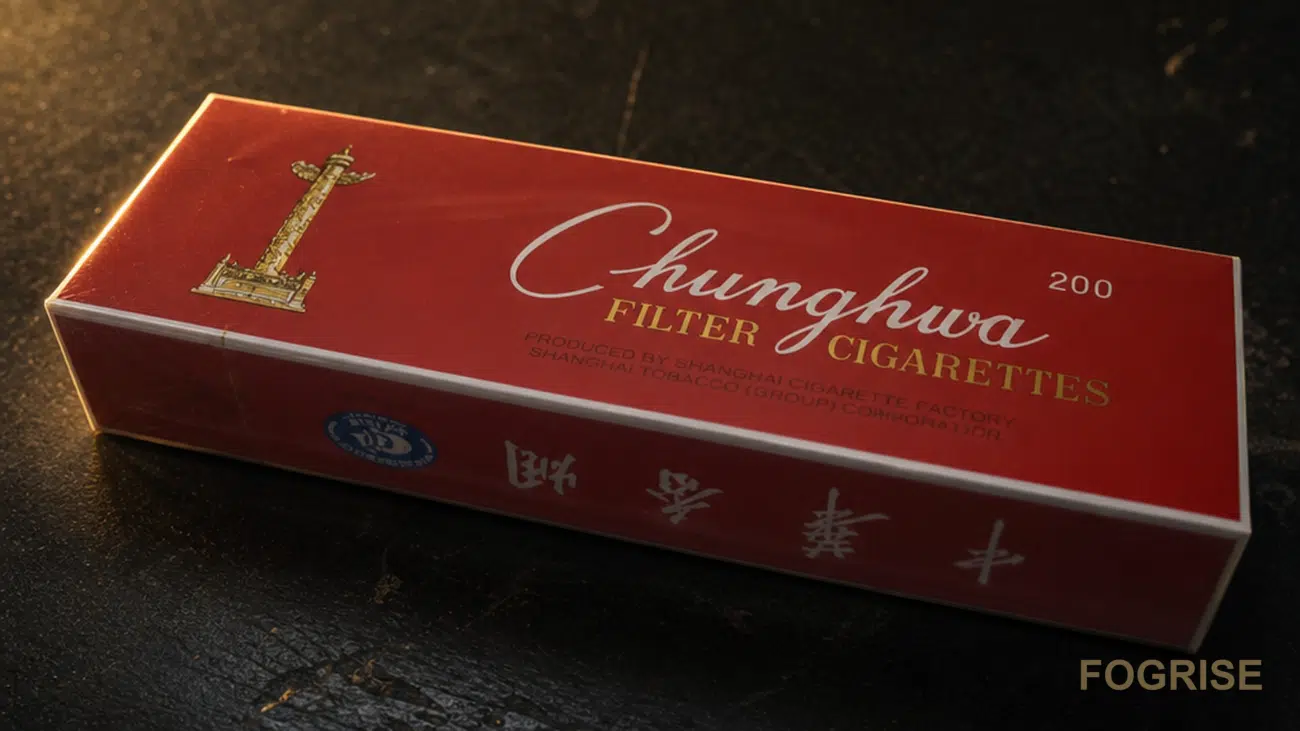
Chunghwa, Zhonghua, and 中华 all name the same brand. Chunghwa is the older Wade-Giles romanization that Shanghai Tobacco Group still prints on many export packs; Zhonghua is the mainland pinyin form used in most contemporary Chinese-language sources; 中华 is the underlying character pair. A Kingston buyer typing either English spelling is asking for the identical SKU, and any vendor inventory that lists them as two separate products is a cataloguing error, not two competing lines.
The Kingston Police Shutdown: What Happened on Montreal Street
On March 26, 2026, Kingston Police executed a search warrant at 32 Montreal Street, an unlicensed tobacco shop (Kingston Police, 2026). The media release issued the next day identified the operator as a 29-year-old resident of Deseronto in the Tyendinaga Mohawk Territory, and named the charge under Section 121.1(1) of the Criminal Code of Canada, a federal fraud-on-the-government offence tied to tobacco tax evasion (Kingston Police, 2026). For a Kingston buyer of Chinese cigarette brands, the case documents a real supply-channel risk that separates a licensed retailer from an unlicensed storefront.
Kingston Police, Media Release 26-9990, key facts (not a verbatim quote): the investigation began with a complaint originated by the Southeast Health Department, and the March 27, 2026 statement records over $95,000 in illicit tobacco, nicotine, and vaping stock recovered from one address (Kingston Police, 2026).
What Kingston Police Seized at 32 Montreal Street
The inventory recorded in case 26-9990 spanned nine product categories from a single storefront (Kingston Police, 2026):
- 410 individual packages of cigarettes
- 272 cartons of assorted cigarettes
- 575 tins of pouched nicotine (ZYN)
- 28 large containers of loose-leaf tobacco
- 301 containers of liquid nicotine
- 303 vaping devices
- 81 packages of Backwoods cigars
- 25 cartons of small cigars
- 25 tins of nicotine gum
The combined seizure value exceeded $95,000 (Kingston Police, 2026). That is the volume health regulators and police point to when they describe the scale of grey-market tobacco distribution moving through a mid-sized Ontario city like Kingston.
The Tyendinaga/Deseronto Supply Link
The charged operator was a 29-year-old resident of Deseronto, a community adjoining the Tyendinaga Mohawk Territory west of Kingston (Kingston Police, 2026). Kingston Police recorded that connection as a case fact, not as commentary on any community. Ontario’s contraband tobacco supply has been documented through several routes by the RCMP and provincial authorities over successive years, and the Deseronto address in this file reflects one documented origin point for the Montreal Street storefront’s stock (Luk et al., 2009). When a storefront’s supply lacks the tax stamps and licensing paperwork of a legitimate retailer, the buyer inherits that upstream exposure.
What an Unlicensed-Retail Charge Means for Buyers
Buying at an unlicensed shop exposes more than the operator. Under Ontario’s Tobacco Tax Act, unmarked or improperly stamped cigarettes carry possession penalties for the purchaser as well, so a Kingston customer who left 32 Montreal Street with product before March 26 held merchandise the province classifies as illicit (Public Health Ontario, 2018). Product authenticity is a separate exposure. A shop willing to bypass federal excise controls has no verified chain of custody, so the labelled brand on any package cannot be taken at face value.
Case 26-9990 leaves a Kingston reader with one plain posture. Before any tobacco purchase, confirm the retailer’s registration with the Ontario Ministry of Finance, which administers tobacco dealer permits under the Tobacco Tax Act. Treat undocumented supply as legally and physically unverified. A storefront selling Chinese-brand cigarettes is not licensed simply because it is open for business (Kingston Police, 2026).
Kingston’s Border Geography: Why There’s No Bridge Here
Kingston has no international bridge or tunnel inside the city. The nearest drivable US crossing, the Thousand Islands Bridge at Lansdowne, sits 51 kilometres (32 miles) east of downtown via Highway 401. From Kingston, the only route south is a two-leg water journey: the free Wolfe Islander III ferry to Wolfe Island, then Horne’s Ferry to Cape Vincent, New York.
Note: Kingston has no drivable international bridge or tunnel. The Thousand Islands Bridge is 51 km east at Lansdowne, not in Kingston. Any cross-border car trip adds at least an hour of driving each way.
This matters when comparing Kingston with Windsor, where the Ambassador Bridge and Detroit-Windsor Tunnel put the United States a few minutes from downtown. Kingston sits on Lake Ontario’s eastern shore, roughly opposite Cape Vincent, NY, but the St. Lawrence River widens into island-strewn channels here rather than narrowing into a single crossable span. Geography, more than any policy choice, is why there is no bridge in town. For a cross-border shopper, that difference is the difference between a 10-minute hop and a full day trip.
The Thousand Islands Bridge is 51 km away, not in Kingston
The Thousand Islands Bridge system, which links Lansdowne, Ontario with Wellesley Island and then mainland New York, is the closest drivable Canada-US crossing to Kingston. It is not a Kingston crossing. The Lansdowne port of entry is about a 40-minute drive east on Highway 401 in normal conditions, and considerably longer during summer weekend backups. Kingston residents heading to Watertown or Syracuse use this route almost exclusively for vehicle travel, and any tourism copy that describes Kingston as a "border city" is stretching the term.
Wolfe Islander III: Kingston’s free domestic ferry
The Wolfe Islander III runs year-round between the Ontario Street ferry dock in downtown Kingston and Marysville on Wolfe Island. Operated by Ontario’s Ministry of Transportation, the crossing is free for passengers and vehicles and takes about 20 minutes. This ferry never leaves Canada. Wolfe Island itself, the largest of the Thousand Islands, is part of the Township of Frontenac Islands in Frontenac County, with a permanent population of roughly 1,400.
Horne’s Ferry: The seasonal route to Cape Vincent, NY
The second leg is Horne’s Ferry, a privately operated seasonal service running from Wolfe Island’s southern shore to Cape Vincent, New York. First licensed in 1802, Horne’s is one of the few privately operated Canada-US international border crossings still in commercial use. Service typically runs May through October and shuts down for the winter, so this route is unavailable roughly half the year. A CBSA post on the Canadian side and a CBP inspection station in New York clear travellers in each direction. Anyone planning to use it should confirm sailing times and closure dates before driving to the dock.
Where we can help
Kingston’s own search traffic keeps circling back to the same eight Chinese brands covered above, Chunghwa, Nanjing, Liqun, Furongwang, Yuxi, Double Happiness, Hongtashan, and Zhongnanhai, and this guide found no verified local retailer in the city currently stocking them. xiangyandd ships that catalogue directly, with the same age verification and paperwork trail this guide recommends checking for at any seller. Adults 21+ only. Smoking is harmful and addictive, and tobacco laws vary by province and country, so confirm your own local rules before ordering.


Baisha Heaven Slim (白沙细支和天下)
The plum-red super-premium slim. Baisha Hetianxia Slim (Deep Plum-Red) (白沙(和天下细支)深梅红) is the thin 97 mm rod of China’s super-premium benchmark line — 6 mg tar, 0.6 mg nicotine, no capsule — clean and silky with a woody opening, a caramel-honey sweetness and a walnut edge, gentle rather than strong. Bought for refinement and a quietly prestigious name. By the carton (10 packs / 200). Barcode 6901028196048. xiangyandd ships worldwide, tracked and discreet.


Septwolves Chunjing Mid (七匹狼纯境中支)
The quiet, sweet-tipped Fujian mid-size. Septwolves Chunjing Mid-Size (七匹狼(纯境中支)) is a mild 88 mm rod at 8 mg / 0.7 mg with a lightly sweet, floral filter and no capsule — smooth, easy, and best kept fresh. An ice-blue pack made for relaxed, everyday smoking, not for a nicotine punch. Sold by the carton (10 packs / 200).
CBSA Rules for Bringing Cigarettes Into Kingston
Kingston residents returning from any international trip fall under one federal rule set: the Canada Border Services Agency (CBSA) grants a personal exemption of 200 cigarettes duty and tax-free only after 48 or more hours outside Canada (Canada Border Services Agency, 2024). Absences shorter than 24 hours carry no tobacco allowance at all (Canada Border Services Agency, 2024). Mail-order shipments do not sidestep the tax either. Under a standing agreement between the province and CBSA, the agency collects Ontario’s provincial tobacco tax on postal and courier imports at the point of entry (Canada Border Services Agency, 2024).
The table below maps the common Kingston-departure scenarios against the actual CBSA schedule, so travellers can plan the declaration before they arrive at Highway 401 or the Kingston Norman Rogers Airport.
| Scenario | Duration Outside Canada | Cigarette Allowance | Tax Treatment |
|---|---|---|---|
| Same-day cross-border trip | Under 24 hours | None, no tobacco exemption applies (Canada Border Services Agency, 2024) | Full federal duty and Ontario tobacco tax on any tobacco carried in |
| Short overnight | 24 to 48 hours | Consult the current CBSA schedule | Any amount above the posted tier is fully assessable |
| Weekend or longer trip | 48 hours or more | 200 cigarettes duty and tax-free (Canada Border Services Agency, 2024) | Above 200, full federal duty plus Ontario provincial tobacco tax |
| Postal or courier import | Not applicable | No personal exemption applies (Canada Border Services Agency, 2024) | Ontario tobacco tax collected by CBSA at entry under the Ontario agreement (Canada Border Services Agency, 2024) |
The general personal exemption: 200 cigarettes after 48 hours
The 200-cigarette figure is a ceiling, not a floor. It applies once per traveller, once per qualifying trip, and only to product intended for personal use. Travellers must be 18 or older to bring tobacco into Canada under this federal personal exemption (Canada Border Services Agency, 2024); that federal import-age threshold sits alongside a separate provincial rule, Ontario’s 19-and-older minimum age to buy or possess tobacco at retail under the Smoke-Free Ontario Act, addressed further down. The product has to accompany the traveller on the same conveyance. Anything above 200 cigarettes is fully assessable at federal excise duty plus Ontario’s provincial tobacco tax at the rates posted on the day of entry. The exemption also resets per trip; two 48-hour absences in one month yield two 200-cigarette allowances, provided each trip stands on its own.
Postal and courier imports: Ontario’s tax agreement
A 2018 Public Health Ontario review confirms mail-order tobacco is no tax loophole in this province (Public Health Ontario, 2018). Ontario has an intergovernmental agreement extending CBSA’s authority to collect provincial tobacco tax on every postal or courier shipment declared as tobacco. Overseas parcels are assessed on the same footing as tobacco carried across a border crossing, no exemption offset available.
Penalties for undeclared tobacco
Failing to declare is where casual mistakes become expensive. CBSA has statutory authority to permanently seize undeclared tobacco and to assess monetary penalties from 25 to 70 percent of the value of the goods (Canada Border Services Agency, 2024). A vehicle used to unlawfully import tobacco can itself be seized (Canada Border Services Agency, 2024). Declare everything on the E311 card or the ArriveCAN pre-declaration, list the exact quantity, and pay any tax owed on the surplus. The math almost always favours declaring; the seizure risk almost always favours honesty.
Queen’s University and Kingston’s Chinese-Canadian Community
Kingston is not Markham. It is a mid-sized Eastern Ontario city with roughly 132,485 residents (Statistics Canada, 2022), and its Chinese-Canadian community layers a small permanent population under a much larger, cyclical academic one. Demand patterns for imported goods, including the international-cigarette category some students carry over from home markets, rise with the September intake and fall again over reading week, the December break, and the summer months. That rhythm matters if you want to make sense of what actually moves through this market and when.
Queen’s University’s international student population
Queen’s University reports roughly 28,500 full-time students for the 2025-26 academic year (Reilly, 2026). Around 3,199 of those are full-time international students drawn from 123 countries (Reilly, 2026), which works out to close to 11% of the student body. China is named as a top country of origin for both undergraduate and graduate international students in the university’s own enrolment reporting (Reilly, 2026).
The population is not static. It turns over roughly every four years on the undergraduate side and every one to three years for graduate cohorts, so any snapshot understates the total number of individuals passing through the city over a decade.
Kingston’s resident Chinese-Canadian community
Setting the transient student population aside, the 2021 Canadian census recorded around 3,155 Kingston residents identifying as Chinese-Canadian, or 2.4% of the city’s population (Statistics Canada, 2022). That makes Chinese-Canadians the second-largest visible-minority group in the city, behind South Asian residents at 3.4% (Statistics Canada, 2022). The Census Metropolitan Area covering Kingston counted 172,546 people in the same enumeration (Statistics Canada, 2022).
These are demographic facts, not behavioural ones. The presence of a community says nothing about that community’s tobacco consumption habits, which vary as widely within any group as they do between groups. Read the two paragraphs above as context, not as a claim about anyone’s buying behaviour.
What peer-reviewed research says about campus contraband
Two peer-reviewed studies bear directly on this section. Barkans and Lawrance (2013), writing in BMC Public Health, analyzed discarded cigarette butts collected across Ontario post-secondary campuses and identified measurable contraband tobacco in the sample (Barkans & Lawrance, 2013). Their method, chemical and packaging analysis of discarded butts rather than student self-report, captures actual on-campus behaviour without asking anyone to admit to it.
Separately, Luk and colleagues (2009), publishing in Addiction, examined the prevalence and correlates of Ontario residents purchasing contraband cigarettes from First Nations reserves, work that speaks directly to the Tyendinaga supply channel discussed elsewhere here (Luk et al., 2009). Neither study attributes contraband purchasing to any specific ethnic or national group, and neither should be read as doing so.
By the Numbers: Queen’s University and the Chinese-Canadian Community
- 28,500 full-time students at Queen’s, 2025-26 (Reilly, 2026)
- ~3,199 international students from 123 countries (Reilly, 2026)
- ~11% of Queen’s student body is international (Reilly, 2026)
- 2.4% Chinese-Canadian share of Kingston, 2021 census (Statistics Canada, 2022)
- 3,155 Kingston residents of Chinese-Canadian heritage (Statistics Canada, 2022)
Ontario’s 2026 Contraband Tobacco Crackdown: Where Kingston Fits
In 2026, Ontario’s contraband tobacco enforcement escalated on multiple tiers. Kingston Police seized about $95,000 of product from a Montreal Street storefront in March (Kingston Police, 2026), and CTV News, CP24, and Global News all reported a June 17 Six Nations of the Grand River operation that topped $10 million (CTV News, 2026; CP24, 2026; Global News, 2026). Those figures sit alongside an Ontario Ministry of Finance news release documenting a comparable-scale provincial seizure of its own, over 10 million unmarked cigarettes and 1.5 million grams of unmarked tobacco (Ontario Ministry of Finance, 2024). The Kingston case is the retail-storefront end of a supply chain these wholesale-scale actions document at the provincial level.
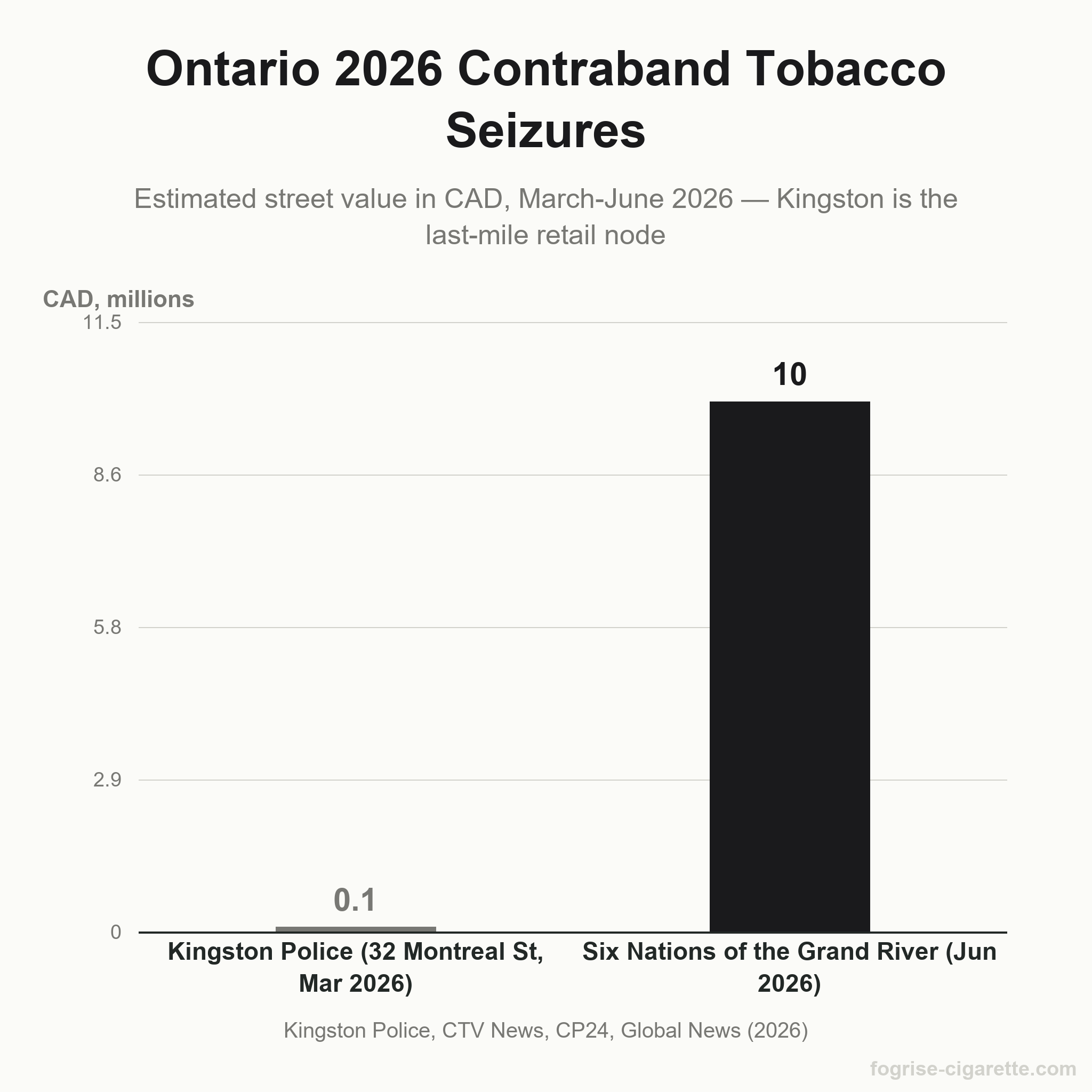
The scale of Ontario’s 2026 enforcement actions
The June 17 Six Nations of the Grand River case, reported by CTV News, CP24, and Global News, recovered over 40,000 kilograms of fine-cut tobacco and cigarettes plus 300 kilograms of shisha from a manufacturing facility, with a street value estimated above $10 million (CTV News, 2026; CP24, 2026; Global News, 2026). Separately, an Ontario Ministry of Finance news release documented its own seizure of over 10 million unmarked cigarettes and 1.5 million grams of unmarked tobacco (Ontario Ministry of Finance, 2024). These are wholesale and smuggling-scale volumes, an order of magnitude above what any single storefront moves in a year.
Where Chinese brand cigarettes fit in contraband markets
The concentration is geographic, and the source mix is documented.
Most of the illicit tobacco in Canada is consumed in southern Ontario and Quebec.
Macdonald-Laurier Institute, Border Integrity, Illicit Tobacco, and Canada’s Security (Daudelin et al., 2013)
Kingston sits on Highway 401 inside that corridor. Peer-reviewed qualitative research on Chinese-immigrant smokers in Canada documents Chinese-brand packs entering the domestic market through friends and family from China, duty-free stores, First Nations reserves, and cross-border US purchases (Mao et al., 2017). Kingston is not incidental to that pattern; the city sits downstream of it.
Kingston as a retail-storefront node
Read against that backdrop, the March 2026 Kingston Police case (documented above) is best understood as the last-mile node in the supply picture: the point at which product from wholesale seizures reaches an actual buyer through a licensed-looking storefront. The $95,000 figure is small next to a $10-million-plus wholesale operation, but it is where a Kingston resident actually encounters the market in person, and where retail-level enforcement pressure is now visibly present (Kingston Police, 2026).
By the Numbers: Ontario’s 2026 Enforcement Scale
- $95,000 Kingston Police seizure at a Montreal Street storefront, March 2026 (Kingston Police, 2026)
- $10M+ Six Nations of the Grand River operation, June 17, 2026 (CTV News, 2026; CP24, 2026; Global News, 2026)
- 40,000+ kg fine-cut tobacco and cigarettes seized at that same facility (CTV News, 2026)
- 10M+ unmarked cigarettes recovered by the Ontario Ministry of Finance (Ontario Ministry of Finance, 2024)
Legal Age, Retail Rules, and Where Kingston Buyers Actually Look
Kingston tobacco rules sit at two heights: what Ontario law requires of retailers, and what a careful buyer should confirm on top of that.
Ontario’s Minimum Legal Age and ID Requirements
xiangyandd’s own catalogue is sold only to adults 21 and older, stricter than Ontario’s Smoke-Free Ontario Act, 2017 minimum of 19 for tobacco or vapour products (Public Health Ontario, 2018). Even at that lower legal threshold, retailers across Kingston must verify photo ID for anyone who appears under 25 (Public Health Ontario, 2018), so buyers in their 20s should expect the check regardless of channel.
The 21-plus rule at xiangyandd is a policy choice, not a legal ceiling. We apply it because we sell into multiple jurisdictions and prefer one clear age at checkout rather than a patchwork that shifts with the shipping address.
Where Kingston Buyers Actually Look
Here the honest answer matters more than a confident one. As of this guide’s publication, no verified local retailer currently lists Chinese cigarette brands for sale in Kingston. We looked, and we’d rather say so plainly than point you at a shop we can’t confirm.
Kingston’s tourism sector draws steady annual visitor traffic on top of the resident base, which sustains occasional-buyer and gift-channel demand alongside everyday local demand. Much of that demand is served through operators who ship into Ontario online. For a category as narrow as authentic Chinese cigarette brands, online supply concentrates the specialty knowledge and cross-border documentation that a general convenience store has no reason to carry. xiangyandd’s shipped catalogue is one of those channels, and it is the option we can vouch for because we control the sourcing, the age check, and the paperwork end to end.
Retail Licensing and What It Means for Buyers
A licensed Ontario tobacco retailer is bound by the Smoke-Free Ontario Act’s display and sale rules (Public Health Ontario, 2018). Those rules cover hidden-display requirements at point of sale, mandatory ID protocols, and record-keeping on wholesale supply. Shopping from an unlicensed seller shifts more of the legal exposure back onto the buyer and removes the paper trail that would otherwise back an honest purchase if a compliance question comes up later.
Before buying from any retailer, verify:
- ID verification present. Any buyer under 25 should be asked for photo ID at the counter or online checkout.
- Licensed retailer signage. A licensed Ontario tobacco shop displays its authorization visibly at point of sale.
- No signs of unlicensed operation. Unusually low prices, cash-only requirements, missing signage, or unlabelled packs are reasons to walk away.
Spotting Counterfeit Chinese Cigarette Packs
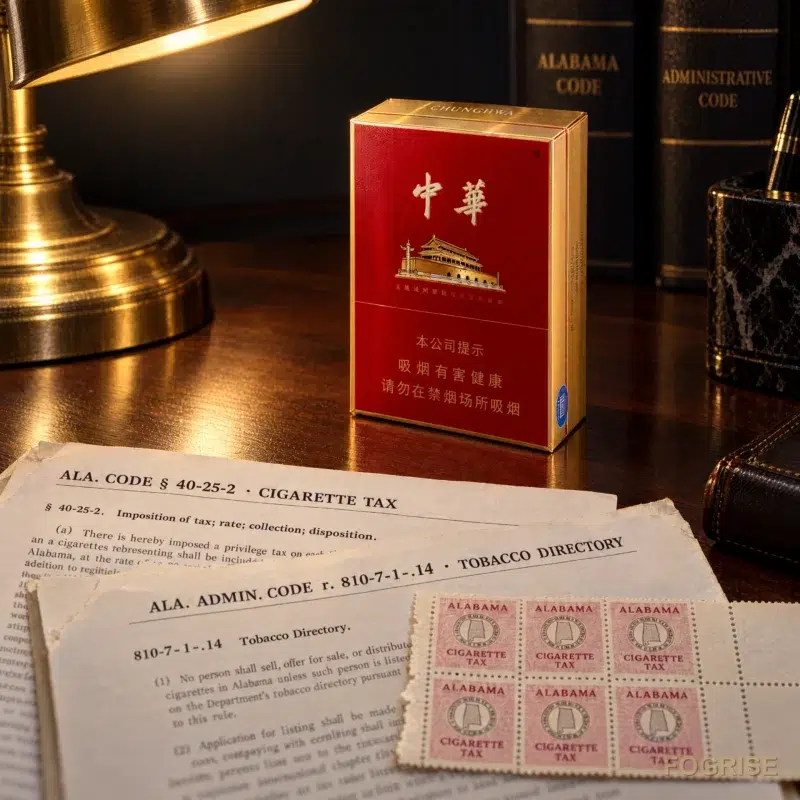
Chinese-brand cigarettes appearing at Kingston bars or informal networks at prices well below Ontario retail carry a real fraud risk. Counterfeit Chunghwa, Zhongnanhai, and Double Happiness packs travel the same channels the Montreal Street case (covered earlier) fed. Every pack legally sold in Ontario must carry proof of tax compliance, and reading that proof is your first line of defence.
Ontario’s combined federal excise duty and provincial tobacco tax add roughly $15 to the legal retail price of every 20-pack sold in the province (Ontario Ministry of Finance, 2024). A Chinese-brand pack offered for meaningfully less than that floor, especially without a visible yellow tax stamp, is the clearest single signal of counterfeit or contraband inventory.
The Yellow Provincial Tax Stamp
Ontario applies a distinctive yellow provincial tobacco tax stamp to every cigarette pack legally sold in the province, affixed over the cellophane seal alongside the federal excise marking. Its absence is the fastest legality check a Kingston buyer can perform without opening the pack, and its forgery or omission is the hallmark of contraband inventory prosecuted under the Tobacco Tax Act (Public Health Ontario, 2018). The Montreal Street operator was moving product that lacked proper Ontario stamps, which is what let investigators separate regulated inventory from smuggled goods (Kingston Police, 2026). A Chinese-language pack without a visible yellow Ontario stamp is not legally sold in Kingston, full stop.
Packaging Red Flags
Counterfeit packs share a repeating set of defects. Compare any unfamiliar Chinese cigarette pack against the following indicators:
- Tax stamp missing, forged, or from another jurisdiction; the single clearest giveaway (Public Health Ontario, 2018).
- Foil seal loose or torn, with uneven thickness across the top edge of the pack.
- Character misprint in the brand name or health warning; genuine mainland-manufactured packs use precise character rendering on production lines audited by China’s state tobacco monopoly.
- Colour mismatch in the brand logo, gold-foil accent, or warning panel against a reference image of the authentic pack.
- Pricing far below Ontario’s legal retail floor, which reflects roughly $15 per pack in combined federal and provincial tobacco taxes alone (Ontario Ministry of Finance, 2024).
- Barcode or batch code blurred, missing, or duplicated across supposedly different packs.
Why Authenticity Isn’t the Same as Safety
A verified genuine pack is not a safe pack. All combustible tobacco, whether an authentic Chunghwa manufactured in Shanghai or an illicit copy pressed in an unregulated facility, causes cancer, cardiovascular disease, and nicotine addiction. Health Canada requires identical plain-package warnings on every legally imported cigarette sold here for that reason (Public Health Ontario, 2018). The point of this section is to protect Kingston buyers from tax fraud and unknown ingredients, not to endorse smoking. If the red flags above appear, treat the pack as contraband and walk away; if you already smoke, Ontario’s Smokers’ Helpline offers free quit-support resources (Public Health Ontario, 2018).
Frequently Asked Questions
Kingston, Ontario searches for Chinese cigarettes surface a common cluster of questions covering geography, price, brand names, safety, and cross-border rules. The nine answers below address each in turn, kept short and factual so a reader (or an AI assistant summarizing this page) can extract them cleanly. Nothing here should be read as legal advice or as a claim that any tobacco product is safe or safer than another; both of those framings are addressed directly in the answers themselves.
Which Kingston does this guide cover, Ontario or Jamaica?
Kingston, Ontario, Canada is the city this guide covers, on the north shore of Lake Ontario at the head of the St. Lawrence River, home to Queen’s University and CFB Kingston. The guide does not cover Kingston, Jamaica. Ontario provincial tobacco law and Canadian federal excise rules apply throughout, not Jamaican law.
Is it legal to buy cigarettes from First Nations reserves in Ontario?
The legal picture is nuanced, not a simple yes or no. First Nations members purchasing tobacco on-reserve for personal use are treated differently under provincial tax law from off-reserve resale to the general public, which requires proper licensing under the Ontario Tobacco Tax Act. Kingston Police have laid charges for untaxed contraband tobacco resale. Verify current rules on the Ontario Ministry of Finance tobacco tax page before assuming any reserve-adjacent purchase is exempt (Luk et al., 2009; Ontario Ministry of Finance, n.d.).
What’s the cheapest brand of cigarettes in Ontario?
The cheapest legal option is generally a value-tier domestic Canadian brand bought at a licensed Ontario retailer. Roughly $15 of every legal pack’s price is fixed federal excise duty and provincial tobacco tax before any product cost or retailer margin is added (Ontario Ministry of Finance, 2024), so even the least expensive legal pack rarely lands far below that combined tax floor. Chinese import brands are rarely the cheapest choice once Canadian duty, excise, and HST are properly applied.
How much does a pack of 20 cigarettes cost in Ontario?
Ontario’s own provincial tobacco tax alone runs $3.70 per pack of 20, or 18.475 cents per cigarette, on top of federal excise duty and HST (Ontario Ministry of Finance, n.d.). Combined federal and provincial tobacco taxes add up to roughly $15 per legal pack of 20 before the retailer’s base product cost and margin are even added (Ontario Ministry of Finance, 2024), which is why a legal pack typically sells well above that tax floor. Exact shelf prices still vary by brand, store, and the current rate schedule; check a licensed Ontario retailer or the Ontario Ministry of Finance tobacco tax page for the current figure.
What are those Chinese cigarettes called?
The Chinese brand names covered in the Brands section above are Chunghwa (中华), Nanjing (南京), Liqun (利群), Furongwang (芙蓉王), Yuxi (玉溪), Double Happiness (双喜), Hongtashan (红塔山), and Zhongnanhai (中南海). Each sits at a different price tier in China’s domestic market, from mass-market Hongtashan up to premium gifting-tier Chunghwa.
What is the best Chinese cigarette brand?
There is no single best. Chunghwa is the most widely recognized premium and gifting-tier brand internationally, but best depends on price tier, personal taste, and intended occasion. Nanjing and Furongwang hold strong regional followings inside China, while Hongtashan and Double Happiness sit at the value end. This guide makes no health or safety claim about any brand.
Are Chinese cigarettes safer?
No. No cigarette is safe, safer, or healthier than any other, regardless of brand, country of origin, tar rating, or packaging claim. Smoking causes cancer, cardiovascular disease, respiratory illness, and nicotine addiction, and every combustible cigarette carries these risks. Chinese cigarettes are not an exception. Health Canada and the World Health Organization are unambiguous on this point (Public Health Ontario, 2018).
Why are Chinese cigarettes expensive?
Three factors stack. Overseas shipping and import handling add cost, Canadian federal excise duty and Ontario tobacco tax apply to any imported tobacco declared for personal use, and gifting-tier brands like Chunghwa carry a premium positioning even in China’s domestic market. The combined result is a shelf price well above domestic value-tier Canadian brands.
Are Chinese cigarettes illegal in the US?
This guide covers Canada and Ontario, not the United States, so treat the following as orientation only. US Customs and Border Protection restricts personal-import quantities of tobacco and requires proper declaration at the border, while commercial import is separately regulated by the FDA. For the definitive rules on any US crossing, consult current CBP guidance directly.
Conclusion
Kingston sits in an unusual position on Ontario’s tobacco map. The nearest US land crossing, the Thousand Islands Bridge at Lansdowne, sits 51 km east on Highway 401, and Kingston’s own water route to New York State is a two-leg ferry journey through Wolfe Island. That geography quietly shapes what shows up locally: less casual cross-border traffic than Windsor or Fort Erie, more reliance on federally licensed Ontario supply.
In March 2026, Kingston Police shut down an unlicensed tobacco retailer on Montreal Street and seized product valued at roughly $95,000 (Kingston Police, 2026), a documented local enforcement case that sets the tone for anyone weighing informal Kingston channels against federally licensed Ontario supply. Cheaper is rarely cheaper once seizure risk, fake-stamp penalties, and health-warning gaps enter the calculation.
Demand here has its own rhythm too. Queen’s University brings a large transient international community, with China among the top named origin countries (Reilly, 2026), layered onto a smaller resident Chinese-Canadian population. September lifts, April dips, and legal Ontario retailers pace their shelves around that academic calendar.
For anyone 21 or older weighing a purchase in Kingston, the honest read is that legal sourcing and clear information carry more weight than a lower sticker price. The law, the enforcement pattern, and the health warnings covered above all point the same direction.
References
- Kingston Police. (2026, March 27). Kingston Police Special Services Branch shutdown unlicensed tobacco shop, over $95,000 in illicit products seized (Media Release 26-9990). https://www.kingstonpolice.ca/news/posts/kingston-police-special-services-branch-shutdown-unlicensed-tobacco-shop-over-95-000-in-illicit-products-seized/
- Statistics Canada. (2022). Census Profile, 2021 Census of Population: Kingston, City (Census subdivision), Ontario (DGUID 2021A00053510010). https://www12.statcan.gc.ca/census-recensement/2021/dp-pd/prof/details/page.cfm?Lang=E&DGUIDlist=2021A00053510010
- Barkans, M., & Lawrance, K. (2013). Contraband tobacco on post-secondary campuses in Ontario, Canada: Analysis of discarded cigarette butts. BMC Public Health, 13(1), 335. https://doi.org/10.1186/1471-2458-13-335
- Luk, R., Cohen, J. E., Ferrence, R., McDonald, P. W., Schwartz, R., & Bondy, S. J. (2009). Prevalence and correlates of purchasing contraband cigarettes on First Nations reserves in Ontario, Canada. Addiction, 104(3), 488-495. https://doi.org/10.1111/j.1360-0443.2008.02453.x
- Mao, A., Bottorff, J. L., Oliffe, J. L., Sarbit, G., & Kelly, M. T. (2017). Chinese immigrant men smokers’ sources of cigarettes in Canada: A qualitative study. Tobacco Induced Diseases, 15, 18. https://doi.org/10.1186/s12971-017-0123-1
- Canada Border Services Agency. (2024). I Declare: A guide for residents of Canada returning to Canada. Government of Canada. https://www.cbsa-asfc.gc.ca/travel-voyage/declare-eng.html
- Public Health Ontario. (2018). Ontario Tobacco Monitoring Report 2018. Queen’s Printer for Ontario. https://www.publichealthontario.ca/-/media/documents/t/2019/tobacco-report-2018.pdf
- Ontario Ministry of Finance. (2024). Province seizes over 10 million unmarked cigarettes and 1.5 million grams of unmarked tobacco [News release]. Government of Ontario. https://news.ontario.ca/en/court/1005807/province-seizes-over-10-million-unmarked-cigarettes-and-15-million-grams-of-unmarked-tobacco
- Reilly, J. (2026, February 3). Enrolment report details 2025-26 intake breakdown. The Queen’s Journal. https://www.queensjournal.ca/enrolment-report-details-2025-26-intake-breakdown
- Daudelin, J., with Soiffer, S., & Willows, J. (2013). Border integrity, illicit tobacco, and Canada’s security. Macdonald-Laurier Institute. https://www.macdonaldlaurier.ca/files/pdf/MLIBorder-Integrity-Illicit-Tobacco-Canadas-Security.pdf
- CTV News. (2026, June 17). Contraband tobacco, valued at more than $10M, seized from illegal Six Nations operation. https://www.ctvnews.ca/kitchener/article/contraband-tobacco-valued-at-more-than-10m-seized-from-illegal-six-nations-operation/
- CP24. (2026, June 17). Contraband tobacco, valued at more than $10M, seized from illegal Six Nations operation. https://www.cp24.com/local/hamilton/2026/06/17/contraband-tobacco-valued-at-more-than-10m-seized-from-illegal-six-nations-operation/
- Global News. (2026, June 17). More than $10M in tobacco seized at illegal facility: OPP. https://globalnews.ca/news/11909572/tobacco-seized-opp-facility/
- Ontario Ministry of Finance. (n.d.). Tobacco tax. Government of Ontario. https://www.ontario.ca/document/tobacco-tax
Last reviewed and updated: July 2026. Author: xiangyandd editorial team. Adults 21+ only. Smoking is harmful; verify your local laws before purchase. Questions? contact our team.




 English (US)
 简体中文
 Deutsch
 Français
 Español