

Blog
Barrie Chinese Cigarettes: Highway 400 Seizures & 2026 Guide

Abstract
Barrie sits about 90km north of Toronto on Kempenfelt Bay, with a city population of 147,829 (Statistics Canada, 2022). It has no port, no CBSA land crossing, and no rail intermodal yard; the nearest CBSA land border is roughly 380km away (Statistics Canada, 2022). The city’s structural role in the Chinese cigarettes conversation is being the throat of Highway 400, the primary north-south freight artery between the GTA and Simcoe County/Muskoka cottage country. That role is documented on the record: CTV Barrie reported contraband cigarettes found during a commercial vehicle inspection on Highway 400 (CTV Barrie, 2016), and the OPP Contraband Tobacco Enforcement Team recorded seizure values climbing from $756,390 in 2022 to $18,736,593 in 2024, roughly a 24-fold jump (Ontario Provincial Police, 2024).
This guide is written for adults 21+ living in Barrie or Simcoe County who want to research Chinese cigarette brands, weigh the legal and authenticity risks involved, and make informed choices before spending money. Section 3 explains why searches for Chinese cigarettes concentrate on Barrie; section 4 details the Highway 400 supply-chain profile; section 5 covers the enforcement record from the OPP CTET’s 2024 annual report; section 6 walks through the applicable laws (CBSA personal exemptions, the federal Excise Act, 2001, plus the Ontario Tobacco Tax Act); section 7 addresses authenticity and counterfeit risk; sections 8 through 10 cover specific brands, real costs, and legal sourcing routes; and the FAQ closes with the questions Barrie readers ask most often. Every enforcement figure and legal rule cited below is drawn from a primary Government of Canada or Government of Ontario source, cross-referenced with peer-reviewed tobacco-policy research indexed in Crossref.
For adults 21+. Smoking is harmful and addictive. Tobacco laws, taxes, and import rules vary by country and province — verify your local regulations before purchasing. This article is informational, not legal or medical advice.
Key Takeaways
- Barrie has no port, border crossing, or rail yard. Highway 400 and Canada Post/CBSA mail routing are the supply channels.
- OPP CTET seizures jumped ~24x from 2022 to 2024 ($756,390 to $18,736,593), with $39.3M estimated 2024 provincial tax loss.
- A CTV Barrie report documented contraband cigarettes found during a Highway 400 commercial vehicle inspection, a genuine Barrie-specific enforcement signal.
- Genuine imports must carry the "DUTY PAID CANADA DROIT ACQUITTE" excise stamp. Packs without it are federally unlawful to sell.
- Barrie’s Chinese-Canadian population share sits near 1.6%, far too small to support a diaspora-demand explanation for local search volume.
- CBSA’s personal exemption is 200 cigarettes after a 48+ hour absence, within a CAN$800 goods allowance; above that, duties apply.
Table of Contents
- Abstract
- Key Takeaways
- Why ‘Chinese Cigarettes’ Searches Lead to Barrie
- Barrie’s Supply-Chain Profile: No Port, No Border Crossing, No Rail Yard
- The Enforcement Record: OPP CTET Seizures and the Highway 400 Inspection
- Is It Legal? Federal and Ontario Rules for Bringing In Chinese Cigarettes
- Authenticity and Counterfeit Risk: Reading the Excise Stamp
- Popular Chinese Cigarette Brands Explained
- What It Actually Costs: Pricing Context for High-End Chinese Cigarettes
- Legally Sourcing International Cigarette Brands from Barrie
- Common Mistakes to Avoid When Ordering Online
- Frequently Asked Questions
- Conclusion
- References
Why ‘Chinese Cigarettes’ Searches Lead to Barrie
Two facts frame this whole guide. The phrase "Chinese cigarettes" points to a very specific set of state-manufactured brands, and Barrie itself is not the community you would expect to drive that query at a Central Ontario scale. Both need a plain answer before the enforcement and sourcing sections make sense.
What ‘Chinese Cigarettes’ Means
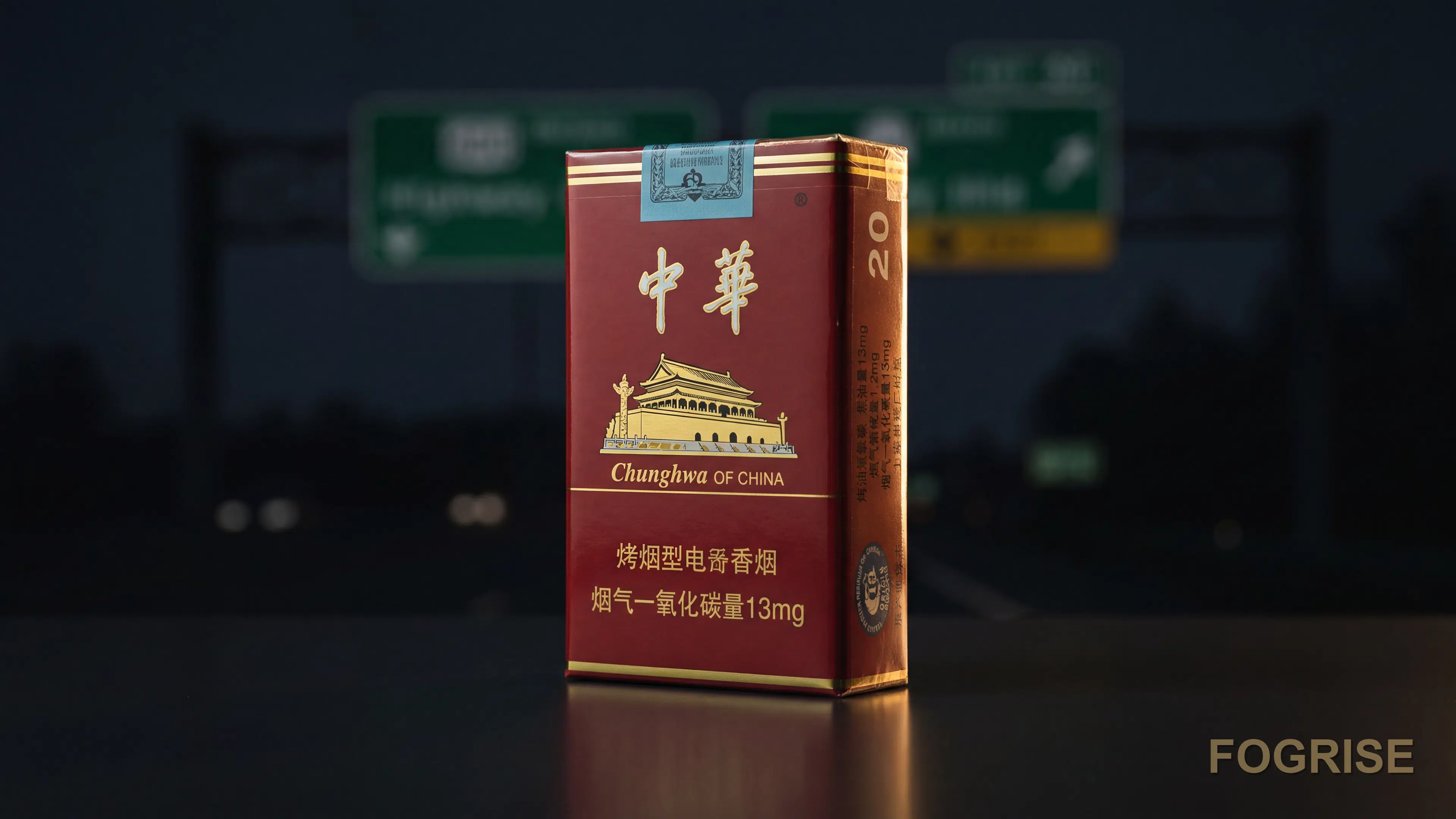
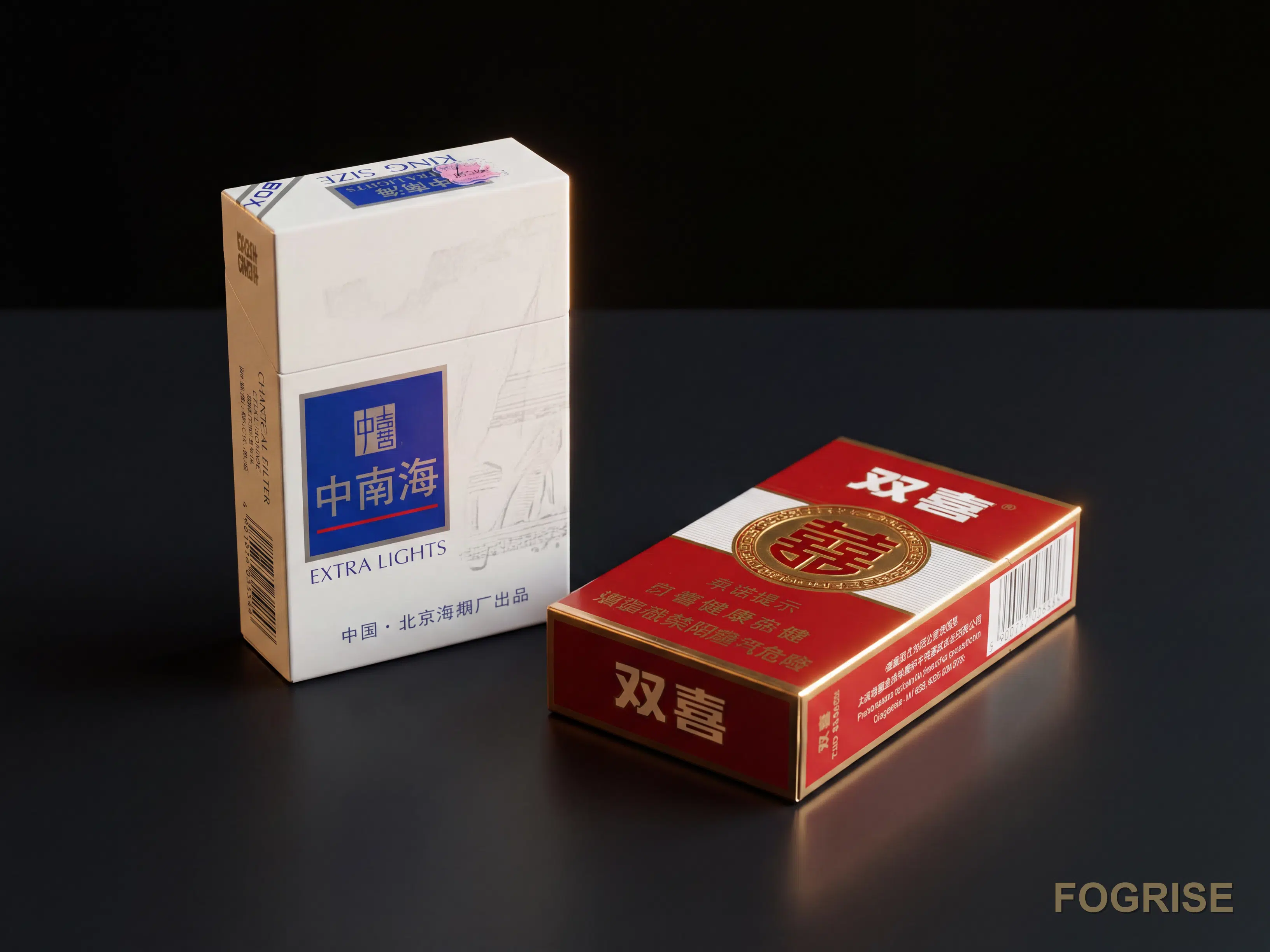
In Canadian search terms, "Chinese cigarettes" almost always means cigarette brands made by subsidiaries of the China National Tobacco Corporation (CNTC), the mainland state monopoly (Mao et al., 2017). The best-known names travelling into North America are Chunghwa (中华), Zhongnanhai (中南海), Double Happiness (双喜), Yuxi (玉溪), and Hongtashan (红塔山) (Mao et al., 2017). These products are sold and gifted internationally, which is why the term reliably surfaces three related questions in web searches: is it legal to bring or buy the pack in Canada, is a given pack authentic, and where can it be sourced without breaking the Excise Act, 2001.
Barrie’s Search Signal, Explained
Barrie is a city of 147,829 residents (212,856 in the census metropolitan area), sitting on Kempenfelt Bay roughly 90 km north of Toronto and functioning as the gateway to Muskoka cottage country (Statistics Canada, 2022). Only about 1.6% of the city’s population reports Chinese ancestry in the 2021 Census (Statistics Canada, 2022), so community demand alone cannot explain the search intensity behind "Chinese cigarettes" as a Barrie query. What can explain it is the Highway 400 corridor, the primary road link between the GTA and the north, plus the concentration of Central Ontario and Simcoe County tobacco-enforcement activity around the city. The rest of this guide details both.
Glossary
- Excise Act, 2001: federal law that sets the duty regime for tobacco in Canada, including the mandatory yellow "DUTY PAID CANADA DROIT ACQUITTE" excise stamp on every legal pack (Canada Border Services Agency, 2024a).
- CBSA (Canada Border Services Agency): the federal agency that enforces tobacco import limits and excise-stamp rules at airports, land crossings, and marine ports of entry (Canada Border Services Agency, 2024b).
- Ontario Tobacco Tax Act: provincial statute that layers Ontario tobacco tax on top of federal excise duty and governs on-reserve retail rules within the province (Ontario Ministry of Finance, 2024).
- Duty-paid excise stamp: the small yellow adhesive stamp on a Canadian legal pack that proves federal excise duty was paid at manufacture or import (Canada Border Services Agency, 2024a).
- Contraband tobacco: any tobacco product sold, moved, or held in Canada without the required duty-paid excise stamp, whether smuggled, counterfeit, or unstamped domestic product (Canada Border Services Agency, 2024a).
- China National Tobacco Corporation (CNTC): the People’s Republic of China’s state tobacco monopoly, whose provincial subsidiaries manufacture every major Chinese cigarette brand named across these sections, including Chunghwa (中华), Zhongnanhai (中南海), Double Happiness (双喜), Yuxi (玉溪), and Hongtashan (红塔山) (Mao et al., 2017).
- OPP CTET (Contraband Tobacco Enforcement Team): the Ontario Provincial Police provincial unit investigating illegal tobacco trade; its Central Region seizure value covering Barrie and Simcoe County rose from $756,390 in 2022 to $18,736,593 in 2024 (Ontario Provincial Police, 2024).
Barrie’s population reached 147,829 in the 2021 Statistics Canada Census, with roughly 1.6% of residents reporting Chinese ancestry (Statistics Canada, 2022). At that share the local Chinese-Canadian community numbers only in the low thousands, well below what would drive sustained "Chinese cigarettes" search volume in a single Central Ontario city on the Highway 400 corridor.
Barrie’s Supply-Chain Profile: No Port, No Border Crossing, No Rail Yard
Any city-level read on Barrie chinese cigarettes has to start with what the city does not have. Barrie has no marine port, no CBSA land border crossing, and no rail intermodal yard (Statistics Canada, 2022). It sits roughly 380 kilometres from the nearest CBSA land crossing, so any imported tobacco reaching a Barrie address has already passed through Greater Toronto Area gateways and then moved north (Statistics Canada, 2022). That single structural fact separates Barrie from every sibling city covered elsewhere in this series (Hamilton anchored on its port, Vaughan on its rail terminals, Windsor on the Detroit land border) and reshapes how the illicit market actually flows through town.
The Highway 400 Corridor
Barrie’s only structural advantage in the supply conversation is geography. The city sits on Kempenfelt Bay about 90 kilometres north of Toronto, directly on the Highway 400 corridor. Highway 400 is the primary north-south freight artery through the region, and the same asphalt carries GTA commuters into Barrie every morning and cottage traffic out of the GTA every Friday. For Barrie chinese cigarettes, the practical implication is narrow: commodity freight, family SUVs, contractor trucks, and any inbound tobacco share one channel. No port sits nearby to divert containers onto short-haul trucks, no rail siding lets a load be stripped inside city limits, and no border officer clears a shipment on arrival. Product either drives into Barrie on the 400, or it does not arrive at all.
Simcoe County and the Muskoka Cottage-Country Traffic Layer
The corridor is not static. Barrie is the Central Ontario gateway to Muskoka and points north, and seasonal cottage traffic layers on top of the year-round commuter and freight flow. Long weekends from May through October pull tens of thousands of GTA vehicles through the city on their way to Muskoka lakes and northern Ontario cottages. That seasonal human and vehicle churn is the specific feature no other city in this Ontario series shares. A port is fixed infrastructure with defined choke points, and so is a rail yard or a border booth. Cottage traffic is a moving population, and it makes any vehicle-based enforcement work harder, because the baseline volume of unfamiliar plates passing through Barrie rises sharply on peak-season weekends.
GO Transit’s Barrie Line and Governance Fragmentation
Barrie is also linked to the GTA by GO Transit’s Barrie commuter rail line, which adds a passenger channel on top of the highway. Governance is the quieter complication. Barrie is a single-tier municipality with a 2021 census population of 147,829 (CMA 212,856), politically independent from the Simcoe County that surrounds it (Statistics Canada, 2022). Enforcement, mail routing, and tobacco-tax administration therefore cut across two adjacent municipal layers, which is why Barrie Police Service partners with the OPP Contraband Tobacco Enforcement Team on cases that cross the city line into county roads and cottage-country townships (Ontario Provincial Police, 2024). Buyers rarely see this seam, but it shapes how any Barrie chinese cigarettes case is investigated, charged, and reported, and it becomes the operational backdrop for the enforcement record covered next.
Barrie sits about 90 kilometres north of Toronto on Highway 400 and roughly 380 kilometres from the nearest CBSA land crossing. Its 2021 city population was 147,829 (CMA 212,856), with Chinese ancestry near 1.6 percent. Barrie has no port, no border crossing, and no rail intermodal yard, so tobacco imports arrive via GTA gateways (Statistics Canada, 2022).
The Enforcement Record: OPP CTET Seizures and the Highway 400 Inspection
Ontario contraband tobacco enforcement in the Barrie corridor shifted from a background concern to a documented provincial priority between 2022 and 2024. The Ontario Provincial Police Central Region Contraband Tobacco Enforcement Team (OPP CTET) logged roughly a 24x jump in annual seizure value across that window, from $756,390 to $18,736,593 (Ontario Provincial Police, 2024). CTV Barrie has separately reported a contraband cigarette discovery during a Highway 400 commercial vehicle inspection, confirming the corridor as an active screening point for illicit tobacco moving through Simcoe County (CTV Barrie, 2016). Those two facts, taken together, are what an enforcement footprint looks like on the ground for a mid-sized Ontario city.
A Documented Highway 400 Contraband Discovery
CTV Barrie reported the contraband cigarette discovery during a commercial vehicle inspection on Highway 400, the primary north-south freight artery running through the city (CTV Barrie, 2016). As the supply-chain section already established, Barrie has no port, no CBSA land border crossing, and no rail intermodal yard, so the arterial highway itself is where interception happens. That the discovery occurred during a routine commercial vehicle stop, rather than a targeted raid, is the informative detail here. The corridor is under active, ongoing screening, and any shipment moving through it is a candidate for inspection at any hour, not only when a specific tip has been received.
The OPP CTET 2022-2024 Seizure Escalation
OPP CTET’s 2024 Annual Report shows the Central Region seizure value climbing from $756,390 in 2022 to $1,552,275 in 2023, then to $18,736,593 in 2024 (Ontario Provincial Police, 2024). Applying the province’s own tobacco tax rate to the 2024 total yields an estimated provincial tax loss of roughly $39,333,000 for that single year (Ontario Provincial Police, 2024). The pattern is not a one-off spike. Two consecutive years of expansion, with the 2024 figure representing an order-of-magnitude jump over the prior year, indicates a dedicated enforcement build-out rather than an anomaly. Barrie sits inside the Central Region, so the trend is directly relevant to shipments passing through the city.
| Year | Central Region Seizure Value (CAD) |
|---|---|
| 2022 | $756,390 (Ontario Provincial Police, 2024) |
| 2023 | $1,552,275 (Ontario Provincial Police, 2024) |
| 2024 | $18,736,593 (Ontario Provincial Police, 2024) |
Barrie Police Service and Multi-Agency Coordination
Barrie Police Service has partnered with OPP CTET on multi-agency contraband tobacco investigations in the Barrie and Simcoe area (Ontario Provincial Police, 2024). Multi-agency work matters because contraband files usually touch several jurisdictions at once. The highway stop is provincial, the retail point of sale is municipal, and an interprovincial supply route can pull in federal partners as well. For a Barrie resident, the practical result is that a single retail outlet or a single vehicle can trigger a coordinated response across three levels of enforcement, not just a local ticket, and the paper trail follows the product back through the corridor toward its origin.
By the Numbers
- $18.7M seized by OPP CTET Central Region in 2024 (Ontario Provincial Police, 2024)
- ~24x increase in annual seizure value from 2022 to 2024 (Ontario Provincial Police, 2024)
- ~$39.3M estimated 2024 provincial tax loss (Ontario Provincial Police, 2024)
- 5 Ontario Tobacco Tax Act convictions in February 2024 (Ontario Ministry of Finance, 2024)
OPP CTET’s Central Region seizure value climbed from $756,390 in 2022 to $18,736,593 in 2024, roughly a 24-fold increase, with an estimated $39,333,000 in provincial tobacco tax lost that year (Ontario Provincial Police, 2024). CTV Barrie has separately documented a Highway 400 commercial vehicle inspection surfacing contraband cigarettes in Simcoe County (CTV Barrie, 2016).
Get started here
Barrie’s own record makes the stakes clear: the Highway 400 corridor has drawn a documented contraband cigarette discovery, and the Ontario Provincial Police’s contraband tobacco enforcement team logged a roughly 24-fold jump in regional seizure value between 2022 and 2024. Reading the pack seal, not the price tag, is what separates a genuine import from a counterfeit one, per the framework the Canada Border Services Agency and the federal Excise Act, 2001 set out earlier in this guide. xiangyandd’s catalogue of Chinese cigarette brands is built around that same standard of verified, duty-paid product. Browse the lineup below to see what is currently listed. Adults 21+ only. Smoking is harmful and addictive; always verify your local laws before you buy.


Baisha Heaven Slim (白沙细支和天下)
The plum-red super-premium slim. Baisha Hetianxia Slim (Deep Plum-Red) (白沙(和天下细支)深梅红) is the thin 97 mm rod of China’s super-premium benchmark line — 6 mg tar, 0.6 mg nicotine, no capsule — clean and silky with a woody opening, a caramel-honey sweetness and a walnut edge, gentle rather than strong. Bought for refinement and a quietly prestigious name. By the carton (10 packs / 200). Barcode 6901028196048. xiangyandd ships worldwide, tracked and discreet.


Septwolves Chunjing Mid (七匹狼纯境中支)
The quiet, sweet-tipped Fujian mid-size. Septwolves Chunjing Mid-Size (七匹狼(纯境中支)) is a mild 88 mm rod at 8 mg / 0.7 mg with a lightly sweet, floral filter and no capsule — smooth, easy, and best kept fresh. An ice-blue pack made for relaxed, everyday smoking, not for a nicotine punch. Sold by the carton (10 packs / 200).
Is It Legal? Federal and Ontario Rules for Bringing In Chinese Cigarettes
The legal status of Barrie Chinese cigarettes sits inside three overlapping rulebooks: what the Canada Border Services Agency lets a returning traveller carry across the border, what the federal Excise Act, 2001 requires of any cigarette lawfully sold on Canadian soil, and what the Ontario Tobacco Tax Act adds on top for a Simcoe County resident. Nothing in this section is legal advice. Cross-check each figure with the relevant authority for your specific situation before you act, and remember that xiangyandd sells to adults 21 and over only.
CBSA Personal Exemption Limits
A traveller returning to Canada has personal exemption tiers based on how long they were away. After a 24-hour absence, the CAN$200 exemption applies but grants no tobacco or alcohol allowance (Canada Border Services Agency, 2024b). After a 48-hour or longer absence, the CAN$800 exemption applies and folds tobacco and alcohol into the total (Canada Border Services Agency, 2024b). Amounts above the exemption incur duties and taxes at declaration.
| Absence Length | Exemption Amount | Tobacco Allowance |
|---|---|---|
| 24 hours | CAN$200 | None permitted (Canada Border Services Agency, 2024b) |
| 48 hours or more | CAN$800 | 200 cigarettes, 50 cigars, 200g manufactured tobacco, 200 tobacco sticks (Canada Border Services Agency, 2024a) |
Even within the 48-hour tier, the product itself must carry the Canadian duty-paid marking or the traveller pays a special duty on top (Canada Border Services Agency, 2024a). Declare honestly at primary inspection; a missed declaration costs more than any duty owed.
The Excise Act 2001 and the Duty-Paid Stamp Requirement
Every cigarette lawfully sold at Canadian retail must carry the yellow-and-black "DUTY PAID CANADA DROIT ACQUITTE" excise stamp affixed under the federal Excise Act, 2001 (Canada Border Services Agency, 2024a). The stamp is the government’s proof that federal excise duty was paid at the manufacturer or importer stage. Product without that stamp, regardless of brand or country of origin, is federally unlawful to sell in Canada. Plain-packaging rules under Health Canada’s Tobacco and Vaping Products Act sit alongside the stamp requirement and govern the pack itself.
Ontario Tobacco Tax Act: the February 2024 Convictions
Provincial tax law adds a second layer over the federal framework. In February 2024, the Ontario Ministry of Finance announced five convictions for Tobacco Tax Act violations, with fines ranging from $1,500 to $2,250 per defendant and product seized and forfeited (Ontario Ministry of Finance, 2024). Enforcement is active, and Barrie sits inside the OPP’s Central Region.
A recurring reader question is whether it is legal for a non-Status buyer to purchase cigarettes at a First Nations on-reserve retailer in Ontario. The honest answer is that this is a genuinely unsettled area of Ontario tobacco law. On-reserve retail sales to Status or First Nations members carry different Ontario Tobacco Tax Act treatment than sales to non-Status buyers, and enforcement practice has shifted over the years. xiangyandd offers no definitive verdict on that scenario. Consult the Ontario Ministry of Finance’s tobacco tax guidance, and, where the stakes warrant it, a licensed Ontario lawyer.
Canada’s cigarette rules stack in three layers for a Barrie buyer. CBSA allows 200 cigarettes within a CAN$800 exemption after a 48-hour absence; the federal Excise Act, 2001 requires the "DUTY PAID CANADA DROIT ACQUITTE" stamp on every lawful retail pack; and Ontario’s February 2024 Tobacco Tax Act convictions carried fines of $1,500 to $2,250 per defendant.
Authenticity and Counterfeit Risk: Reading the Excise Stamp
Every legal pack sold in Canada carries one mark that separates it from illicit product. Learning to read that mark takes about ten seconds, and it does more to protect a buyer than any other single check.
What a Genuine Duty-Paid Stamp Looks Like
Under the federal Excise Act, 2001, every pack lawfully sold in Canada must carry the "DUTY PAID CANADA DROIT ACQUITTE" excise stamp, applied by an approved manufacturer and integrated into the pack seal (Canada Border Services Agency, 2024a). The stamp is bilingual, uses tamper-evident printing, and stays legible under normal handling. The Canada Border Services Agency treats it as the primary test at the personal-exemption threshold: a returning traveller’s cigarettes qualify for the exemption only if the stamp is present, and unstamped product attracts a special duty regardless of quantity (Canada Border Services Agency, 2024a). If a pack in your hand has no stamp, a smudged or peeling stamp, or a stamp that reads differently, treat that pack as a red flag regardless of the brand printed on the box.
Why Counterfeit Risk Is Elevated Right Now
Ontario enforcement records show that illicit tobacco is not a theoretical concern in this market. The Ontario Ministry of Finance announced five convictions for Tobacco Tax Act violations in February 2024 alone, with per-defendant fines of $1,500 to $2,250 and product forfeited to the Crown (Ontario Ministry of Finance, 2024). Provincial policing data tells the same story with sharper numbers.
According to the Ontario Provincial Police’s 2024 Annual Report, contraband tobacco seizures by the Central Region Contraband Tobacco Enforcement Team rose from $756,390 in 2022 to $18,736,593 in 2024, roughly a twenty-fourfold increase across three years (Ontario Provincial Police, 2024).
That escalation, documented by the OPP and echoed by the Ontario Ministry of Finance, is the reason an unverified online seller offering Barrie Chinese cigarettes carries real practical risk in 2026. Industry reporting has long noted that flagship and gift-tier brands attract the highest counterfeit volumes worldwide, so the higher the retail price bracket, the more careful stamp inspection needs to be.
Contraband tobacco seizures by the OPP Central Region Contraband Tobacco Enforcement Team climbed from $756,390 in 2022 to $18,736,593 in 2024, a roughly 24-fold increase across three years (OPP 2024 Annual Report), while the Ontario Ministry of Finance logged five Tobacco Tax Act convictions in February 2024 alone.
Popular Chinese Cigarette Brands Explained
Buyers searching Barrie chinese cigarettes usually arrive with three or four brand names in mind and expect a ranked list of "the best" one. There isn’t one worth publishing. Every brand named below is manufactured by the same state monopoly, China National Tobacco Corporation (CNTC), through its provincial subsidiaries (Mao et al., 2017), and every one carries the same fundamental health harms of any combusted tobacco product. Brand prestige inside China reflects gift culture and factory-tier positioning, not smoke quality, and not safety.
Chunghwa (中华)
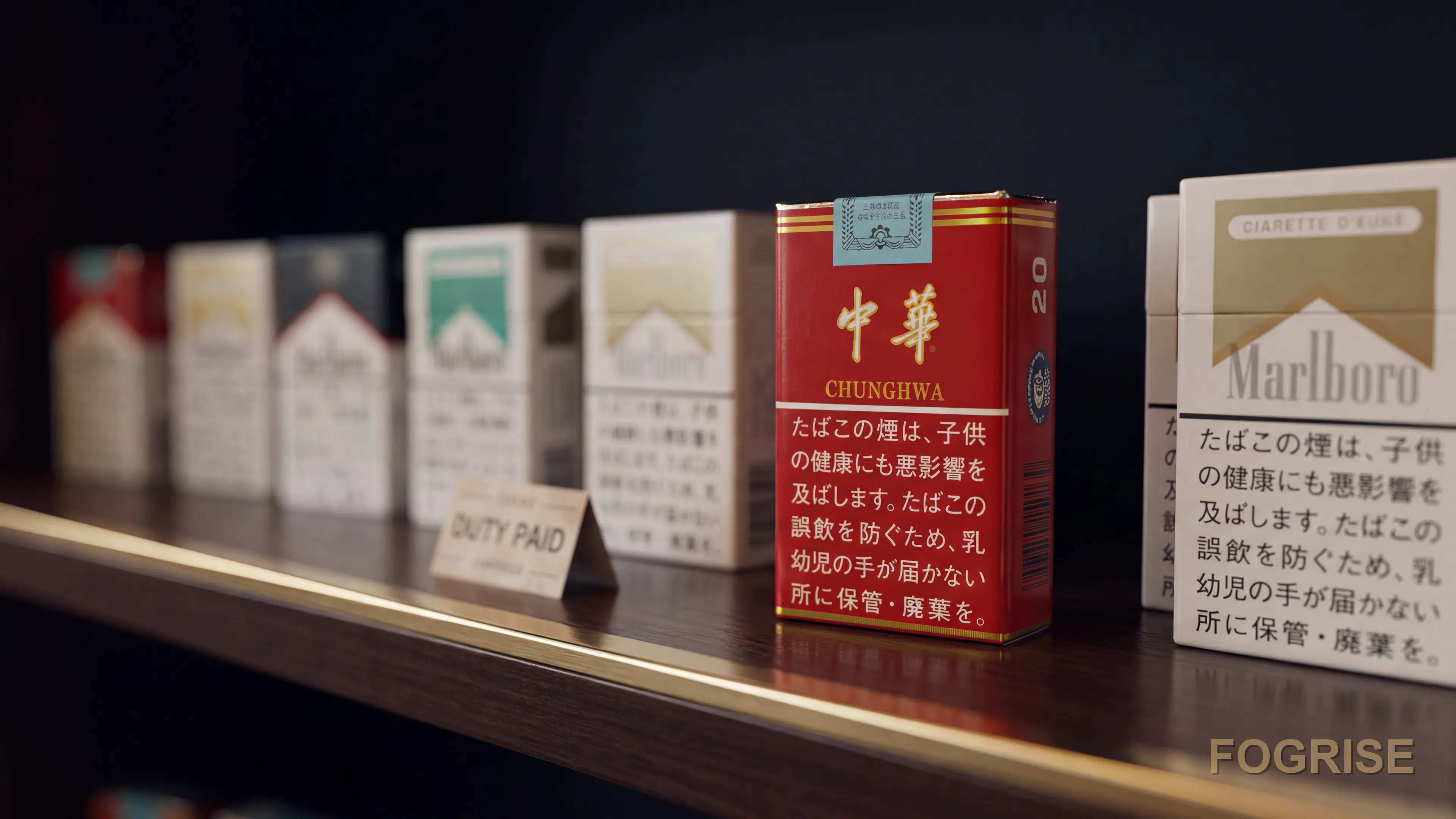
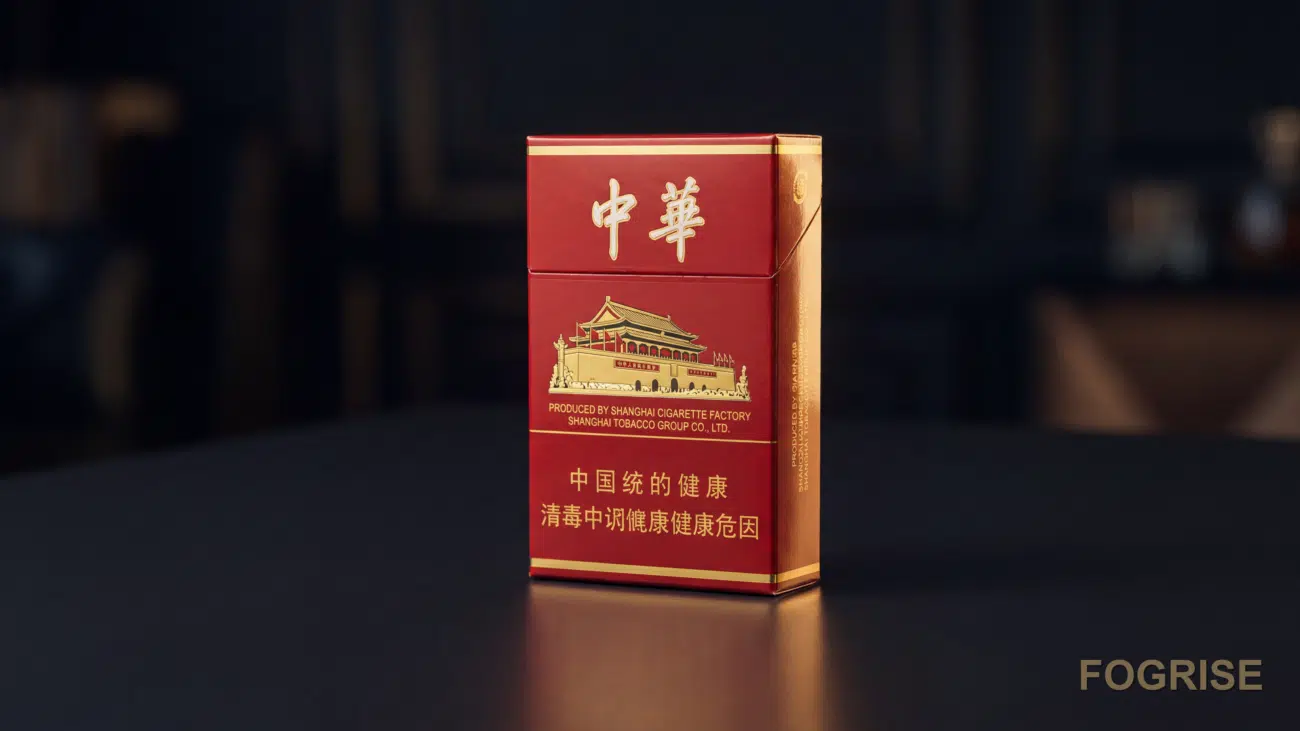
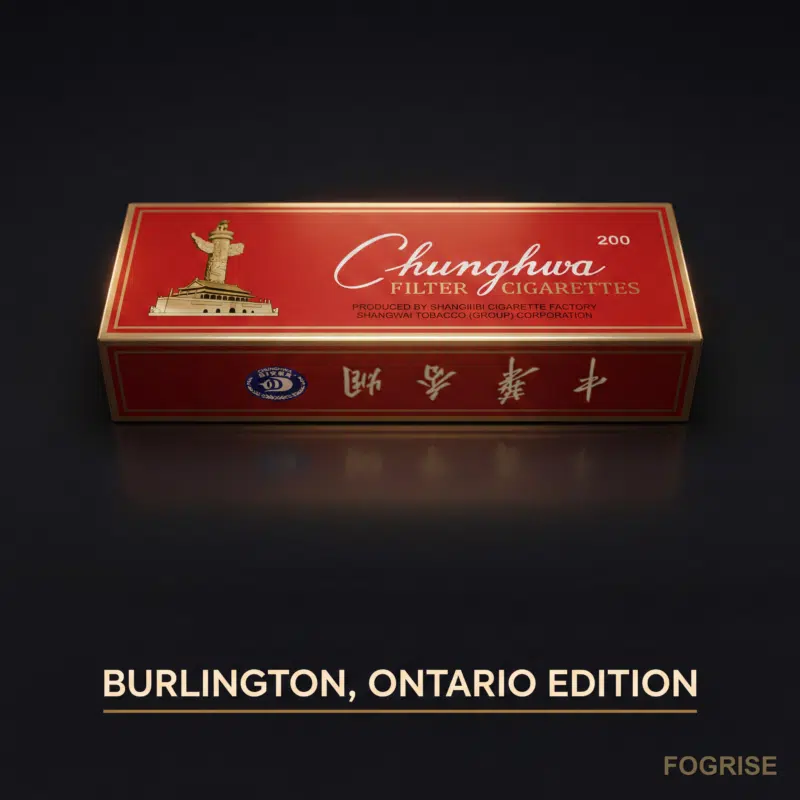
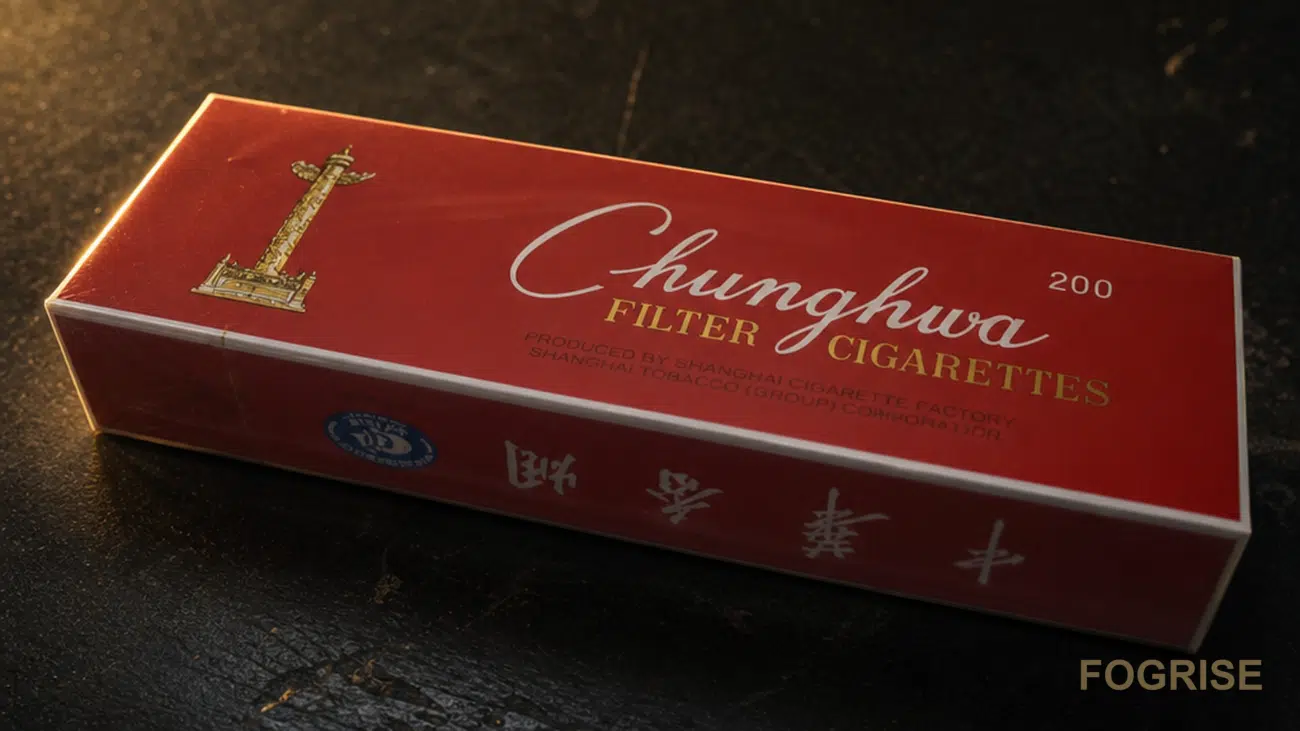
Chunghwa is CNTC’s flagship line and the single Chinese cigarette brand most international buyers can name without being prompted. Inside China it sits at the top of the gift-and-banquet tier, historically positioned as a top-shelf presentation product rather than an everyday pack. That recognition also has a specific downside: as a top-tier gift pack, Chunghwa red is widely reported as a frequent target for counterfeit production, which is why the excise-stamp check covered in the Authenticity section matters most for this brand.
Zhongnanhai (中南海)
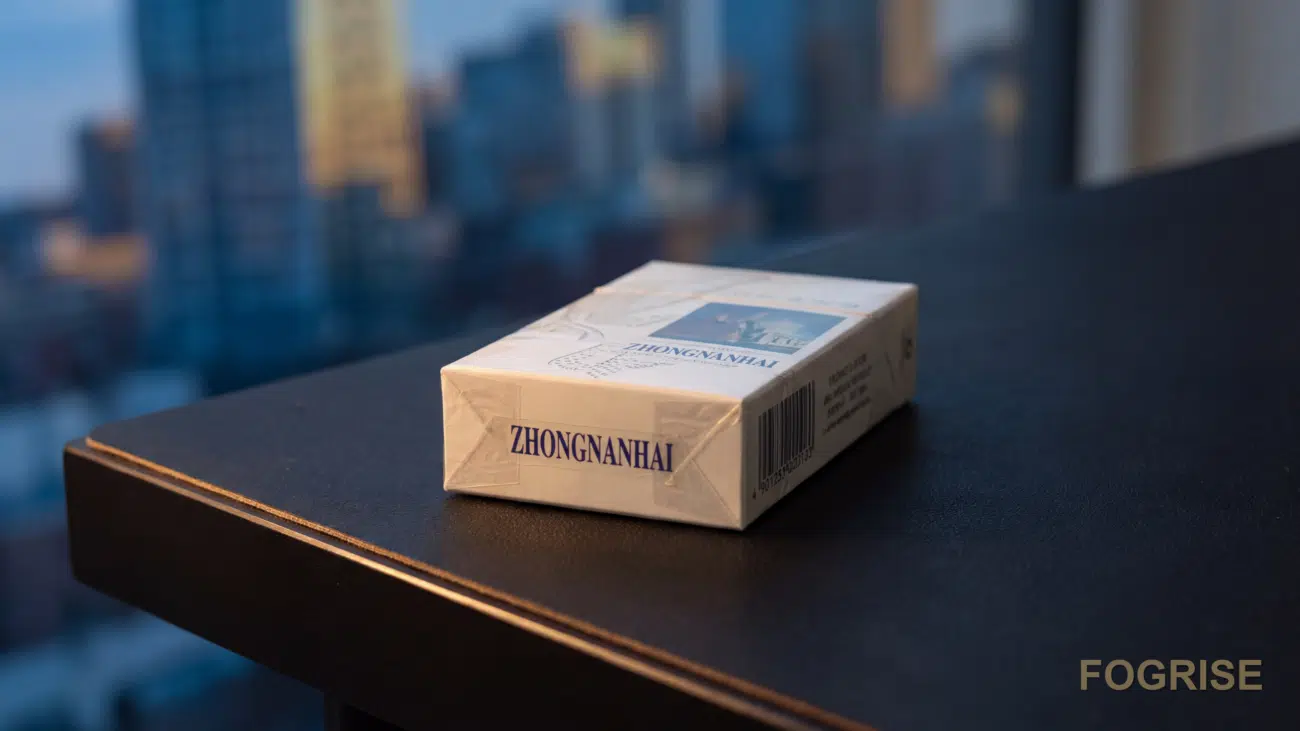
Zhongnanhai has strong name recognition among overseas Chinese buyers and travellers, particularly the blue and green pack variants that circulate widely across Northeast Asia. In China’s domestic market it sits below Chunghwa in the tier hierarchy, and its export packaging is often the version Barrie buyers encounter first when browsing online listings. Like every other brand in this list, it is a CNTC product; the name is a brand line, not an independent company.
Double Happiness (双喜) and Others
Double Happiness (双喜) is among the more internationally distributed Chinese brands, with a long history and several regional editions produced by different provincial CNTC subsidiaries. Other names a Barrie shopper may see referenced in overseas listings include Hongtashan (红塔山), Yuxi (玉溪), and Panda (熊猫), alongside Furongwang, Liqun, Nanjing, Huanghelou, Yunyan, Su Yan, Taishan and Hongta. All belong to the CNTC family.
There is no single "best" Chinese cigarette brand in any consumer-guidance sense. The prestige tiers quoted on collector forums map to Chinese domestic gift culture and provincial factory positioning, not to a safer smoke, and every tobacco product on that list carries the same nicotine-addiction and combustion-exposure harms regardless of pack colour or price.
China National Tobacco Corporation (CNTC) manufactures every major Chinese cigarette brand through its provincial subsidiaries, including Chunghwa, Zhongnanhai, Double Happiness, Yuxi and Panda. Brand-tier positioning inside China reflects gift-culture retail pricing and factory prestige, not product safety, and every listed brand carries the same combustion and nicotine-addiction harms of any tobacco product (Mao et al., 2017).
What It Actually Costs: Pricing Context for High-End Chinese Cigarettes
Buyers searching for Barrie Chinese cigarettes almost always ask about price first, and the honest answer starts with a caveat. This guide does not publish specific CAD figures for imported Chinese tobacco sold through the Canadian retail channel, because those numbers move with federal duty rate adjustments, Ontario tobacco tax changes, and where a pack sits in the brand tier. The structural picture, however, is stable, and it is the picture that matters when you are trying to sanity-check a listing you have already seen.
Duty-Free and Retail Price Ranges
Pricing follows the tier logic set out in the Brands section. Gift-tier brands such as Chunghwa sit materially above mainstream brands like Double Happiness or Hongtashan, and that gap mirrors their domestic Chinese retail positioning. A pack that changes hands as a business gift in Shanghai is priced accordingly, and Canadian import channels do not compress that hierarchy on the way across the Pacific. Layered on top of any base product cost, every legally sold pack in Ontario also carries federal excise duty plus the Ontario provincial tobacco tax (Canada Border Services Agency, 2024a). Those two levies are the structural reason a genuine, duty-paid imported pack is never inexpensive at the Canadian counter, whether it clears through a Pearson duty-free shop or a licensed convenience retailer inside Barrie city limits. A sticker that looks startlingly low is almost always a signal that one of those tax layers is missing, not that a bargain has surfaced.
Why Price Alone Cannot Confirm Authenticity
Price is not a proxy for authenticity, and treating it as one is how buyers walk into trouble. An unusually cheap listing from an unverified online seller often means the pack is counterfeit, contraband, or both, as the Enforcement Record and Authenticity sections already documented. The reliable signal is the duty-paid Ontario excise stamp affixed to the pack, not the number printed on the receipt (Canada Border Services Agency, 2024a). Buyers who reverse that logic and shop on price alone are precisely the demographic that Highway 400 enforcement, and the RCMP contraband investigations upstream of it, are designed to catch.
As of 2026, genuine imported Chinese cigarettes sold through duty-paid Canadian channels always carry federal excise duty layered with Ontario provincial tobacco tax, which is why authentic packs are structurally expensive at retail; an unusually low online price for a gift-tier brand like Chunghwa is a counterfeit or contraband indicator, and the provincial excise stamp remains the only reliable authenticity signal.
Legally Sourcing International Cigarette Brands from Barrie
For a Barrie adult (21+) sourcing Chinese cigarettes lawfully, the compliant paths sit inside three overlapping regimes: federal excise licensing, Ontario’s Tobacco Tax Act, and CBSA traveller rules. None of them treats an unstamped mail-order carton as legitimate.
Licensed Retail and Duty-Free Channels
Legitimate supply flows through convenience stores and tobacconists holding an Ontario Tobacco Tax Act retailer registration and stocking product that bears the yellow "DUTY PAID CANADA DROIT ACQUITTE" excise stamp (Ontario Ministry of Finance, 2024). Airport and land-crossing duty-free shops sell under CBSA exemption limits: the tobacco leaves the country and re-enters as the traveller’s declared personal allowance (Canada Border Services Agency, 2024b). Specialty importers handling niche international SKUs must operate under federal Excise Act, 2001 licensing and provincial wholesale registration before a carton lawfully changes hands.
Personal Import Within the CBSA Exemption
A Barrie resident returning after 48 hours or more may bring back 200 cigarettes, 50 cigars, 200 grams of manufactured tobacco and 200 tobacco sticks, all counted within the CAN$800 personal-goods exemption (Canada Border Services Agency, 2024a). Product must carry the Canadian duty-paid stamp; without it, a special duty applies on entry (Canada Border Services Agency, 2024a). The shorter 24-hour CAN$200 exemption excludes tobacco entirely (Canada Border Services Agency, 2024b). Declare everything, and remember: the CBSA officer, not the traveller, decides what counts.
On-Reserve Retail: What Ontario Tax Law Actually Says
Ontario’s Tobacco Tax Act treats First Nations reserve sales differently depending on the buyer’s status. A registered Status Indian purchasing for personal consumption on-reserve is generally exempt from provincial tobacco tax; a non-Status buyer, including most Barrie residents, is not, and is expected to pay the full Ontario tax regardless of where the sale happened. The area is genuinely nuanced (allocation quotas, retailer registration, and marked-product rules all interact) and enforcement has shifted since 2020. Verify the current position with the Ontario Ministry of Finance before treating any on-reserve purchase as a lawful workaround. Nothing here is legal advice.
Before You Order
Five habits carry most of the weight for a Barrie buyer trying to stay inside the rules.
- Confirm the excise stamp. "DUTY PAID CANADA DROIT ACQUITTE" must be present and legible on the pack before paying.
- Verify the retailer’s registration in Ontario’s Tobacco Tax Act provincial registry (that registration is public and searchable).
- Count against your CBSA allowance. The ceiling is 200 cigarettes per adult after a 48-hour absence, all of it sitting inside the CAN$800 personal-goods cap.
- Keep the dated receipt. Retail or duty-free, in case a later border question or provincial audit asks how the pack entered Canada.
- Phone before you cross. When the situation feels ambiguous, call CBSA’s Border Information Service line at 1-800-461-9999 rather than after.
Under CBSA rules a Canadian returning after 48 hours or more may bring in 200 cigarettes within a CAN$800 personal-goods exemption, and any cigarette entering Canadian retail must carry the "DUTY PAID CANADA DROIT ACQUITTE" excise stamp under the Excise Act, 2001; Ontario’s Tobacco Tax Act layers provincial rules on on-reserve sales (Canada Border Services Agency, 2024a; Ontario Ministry of Finance, 2024).
Common Mistakes to Avoid When Ordering Online
Buyers in Barrie run into the same handful of errors when they source Chinese cigarettes online. Each one traces back to skipping a check that takes under a minute to run.
Trusting Unverified Marketplace Sellers
Listings on general marketplaces, Facebook Groups, WeChat channels, and classified sites give you no way to confirm what actually ships. A stock photo is not proof of authenticity, and a seller rating does not tell you whether duties were paid at import. Legal tobacco supply into Canada requires an excise licence issued under the Excise Act, 2001 (Canada Border Services Agency, 2024a), and that licence number is not something a casual social-media seller can produce on request. If the storefront cannot show who is behind it, treat the listing price as the price of the risk you are taking on.
Ignoring the Duty-Paid Stamp
The Authenticity section covers the mechanics in full. The short version, and the most common mistake buyers make: opening the carton, skipping the check for the "DUTY PAID CANADA DROIT ACQUITTE" stamp, and assuming the goods cleared customs because the parcel arrived. That stamp is the visual proof CBSA relies on when applying the personal exemption threshold (Canada Border Services Agency, 2024a). Without it, a special duty applies to the shipment on top of any other consequences.
Assuming Reserve Pricing Applies Off-Reserve
Ontario’s Tobacco Tax Act treats on-reserve retail sales to Status cardholders differently from off-reserve sales to the general public (Ontario Ministry of Finance, 2024). A price a friend was quoted, or a rate cited on a forum, does not carry over the moment the product leaves the reserve for resale, and it does not apply to a non-Status buyer in Barrie. Verify the tax status of your own purchase before relying on it.
Canada Border Services Agency requires the "DUTY PAID CANADA DROIT ACQUITTE" excise stamp on tobacco brought in under the personal exemption, and a special duty applies to any parcel that lacks it. Ontario’s Tobacco Tax Act separates on-reserve retail from off-reserve resale, so a Status-based price a Barrie buyer heard about rarely transfers to their own order.
Frequently Asked Questions
Are Chinese cigarettes high quality? "Quality" in the Chinese domestic market is a retail-positioning and prestige signal, not a health-safety measure. Gift-tier brands like Chunghwa sit above mainstream lines like Double Happiness in status, packaging, and social-gift value, yet every tobacco product carries serious health harm regardless of tier, price, or perceived prestige.
Are Chinese cigarettes illegal in the US? The question is framed for a US audience, but Canadian buyers face different rules. Genuine imports are legal into Canada within CBSA personal exemption limits and must carry the "DUTY PAID CANADA / DROIT ACQUITTE" excise stamp under the federal Excise Act, 2001 (Canada Border Services Agency, 2024a). Ontario’s Tobacco Tax Act applies on top. Verify current rules before importing.
Which Chinese cigarette is best? There is no "best" brand. Prestige tiers reflect Chinese gift culture and retail positioning, not smoke quality or health safety. What actually matters for a Canadian buyer is authenticity: a genuine duty-paid excise stamp signals legally imported product, while unstamped or oddly cheap packs point to counterfeit or contraband supply.
What are those Chinese cigarettes called? Chinese cigarette brands commonly encountered by Canadian searchers include Chunghwa (中华), Zhongnanhai (中南海), Double Happiness (双喜), Hongtashan (红塔山), and Yuxi (玉溪). These names appear on packs in both simplified Chinese characters and Latin transliteration, and each maps to a different price tier inside China. The list is descriptive, not a ranking or recommendation.
What is the best Chinese cigarette brand? No "best" answer applies. Brand hierarchy in China tracks gift-giving custom and price positioning rather than any measurable smoke quality, and every product is harmful. The safer question for a Barrie buyer is whether a pack is authentic: check the Canadian duty-paid excise stamp and refuse unusually low prices.
Is it legal to buy cigarettes from Indian reservations in Ontario? Ontario’s Tobacco Tax Act treats on-reserve sales differently for Status First Nations members than for non-Status buyers, and the rules continue to evolve. The area is nuanced, with active enforcement disputes across recent years. Verify current guidance directly with the Ontario Ministry of Finance (Ontario Ministry of Finance, 2024) before assuming any purchase pattern is legal.
How much are high end Chinese cigarettes? Specific figures shift with tax cycles and supply, so no fixed CAD price applies. Gift-tier packs command materially higher shelf prices than mainstream lines, and Canadian federal excise duty plus Ontario provincial tobacco tax add substantially on top. Genuine imported product is never cheap, and unusually low prices are a counterfeit red flag.
Conclusion
Barrie’s supply picture is shaped by geography, not by port or border infrastructure. The city has no CBSA land crossing and no rail intermodal yard, so Highway 400 and the seasonal Simcoe County and Muskoka cottage traffic form the practical corridor for both legitimate retail and contraband movement.
The record confirms it. CTV Barrie’s Highway 400 inspection footage put those checks on camera, and the OPP Contraband Tobacco Enforcement Team’s own numbers climbed from $756,390 in 2022 to $18,736,593 in 2024, a scale that mirrors the corridor’s role.
For a Barrie buyer, three habits carry most of the weight. Check that the pack bears a valid duty-paid Ontario excise stamp. Read the current Tobacco Tax Act and CBSA personal-import rules for your own situation before you buy. Treat prices well below the licensed retail band, or sellers who avoid ID checks, as reasons to walk.
No cigarette is a safe product. Verify the Ontario and federal rules that apply to your situation today, because they change.
References
- Statistics Canada. (2022). Census Profile, 2021 Census of Population, Barrie, City (Census subdivision), Ontario [Data table]. Government of Canada. https://www12.statcan.gc.ca/census-recensement/2021/dp-pd/prof/details/page.cfm?Lang=E&SearchText=Barrie&DGUIDlist=2021A00053543042&GENDERlist=1,2,3&STATISTIClist=1&HEADERlist=0
- CTV Barrie. (2016, July 8). Contraband cigarettes discovered during inspection on Highway 400. CTV News. https://www.ctvnews.ca/barrie/article/contraband-cigarettes-discovered-during-inspection-on-highway-400/
- Ontario Provincial Police. (2024). OPP 2024 Annual Report: Investigations and enforcement. Government of Ontario. https://www.opp.ca/ar2024/work.html
- Ontario Ministry of Finance. (2024, February). Five convictions in February 2024 for Tobacco Tax Act violations. Government of Ontario. https://news.ontario.ca/en/court/1004414/five-convictions-in-february-2024-for-tobacco-tax-act-violations
- Canada Border Services Agency. (2024a). I Declare: A guide for residents returning to Canada — Personal exemptions mini guide. Government of Canada. https://travel.gc.ca/returning/customs/bringing-to-canada/personal-exemptions-mini-guide
- Canada Border Services Agency. (2024b). Declaring goods. Government of Canada. https://www.cbsa-asfc.gc.ca/travel-voyage/declare-eng.html
- Mao, A., Bottorff, J. L., Oliffe, J. L., Sarbit, G., & Kelly, M. T. (2017). Chinese immigrant men smokers’ sources of cigarettes in Canada: A qualitative study. Tobacco Induced Diseases, 15(1). https://doi.org/10.1186/s12971-017-0123-1
- Barkans, M., & Lawrance, K. (2013). Contraband tobacco on post-secondary campuses in Ontario, Canada: Analysis of discarded cigarette butts. BMC Public Health, 13(1), 335. https://doi.org/10.1186/1471-2458-13-335
- Callaghan, R. C., Veldhuizen, S., & Ip, D. (2011). Contraband cigarette consumption among adolescent daily smokers in Ontario, Canada. Tobacco Control, 20(2), 173-174. https://doi.org/10.1136/tc.2010.037507
Last reviewed and updated: July 2026. Author: xiangyandd editorial team. Adults 21+ only. Smoking is harmful; verify your local laws before purchase. Questions? contact our team.







 English (US)
 简体中文
 Deutsch
 Français
 Español