

Blog
Chinese Cigarettes in Canada: Brands, Customs Rules, and What Adult Buyers Should Know

Abstract
Chinese cigarettes are tobacco products manufactured primarily by the China National Tobacco Corporation, the state monopoly that controls roughly 98% of legal cigarette production inside mainland China. The category is defined less by a single house style than by regional leaf, with Yunnan-province flue-cured tobacco supplying the backbone of most upper-tier and mid-tier brands. Names like Chunghwa (中华), Double Happiness (双喜), Panda (熊猫), Yunyan (云烟), and Zhongnanhai (中南海) carry cultural weight that travels with the diaspora. Canada is home to more than 1.7 million people of Chinese heritage, concentrated heavily in the Greater Toronto Area, Metro Vancouver, and Montreal, and a portion of those adult consumers continue to seek the specific flavour, aroma, and gifting tradition associated with brands they knew before emigrating. Familiarity, not novelty, drives most of the demand.
This guide is written for adult Canadian readers who want a clear-eyed picture of how that demand intersects with Canadian law. It covers the main Chinese cigarette brands and their leaf profiles, the customs and excise rules enforced by the Canada Border Services Agency (CBSA) on both postal shipments and personal travel allowances, the provincial layer of tobacco regulation that varies across Ontario, British Columbia, Quebec, and Alberta, and the authenticity problem posed by counterfeits circulating in the grey market. It is informational only.
For adults 21+ only. Smoking is harmful and addictive. Tobacco laws, taxes, and import rules vary by province and change frequently. Verify your local regulations before any purchase. This article is informational, not legal or medical advice.
Key Takeaways
- Chinese cigarette brands like Chunghwa, Panda, and Yunyan each carry distinct Yunnan-leaf flavour profiles and cultural status among adult buyers.
- Importing tobacco into Canada by mail always incurs federal excise duty and GST/HST; there is no personal exemption for postal shipments.
- Returning travellers aged 18 or older may bring up to 200 cigarettes duty-free; amounts above that attract significant federal and provincial taxes.
- Provincial laws vary widely; minimum purchase age, retail display rules, and online-sale restrictions differ across Ontario, BC, Alberta, and Quebec.
- Counterfeit Chinese cigarettes circulate in the Canadian grey market, so authenticity verification (tax stamps, holograms, packaging codes) matters for adult buyers.
- Smoking is harmful and addictive. This guide is for adults 21+ only; verify your local tobacco and import laws before any purchase.
Table of Contents
- Abstract
- Key Takeaways
- Table of Contents
- What Are Chinese Cigarettes?
- Popular Chinese Cigarette Brands Available to Canadian Buyers
- Chinese cigarettes in Canada: why the demand exists
- Canadian customs and excise rules for tobacco
- Provincial Tobacco Regulations Across Canada
- Buying Chinese Cigarettes Online: What to Look For
- Health, Age, and Legal Responsibilities for Adult Smokers
- Frequently Asked Questions
- Conclusion
- Further Reading
- References
What Are Chinese Cigarettes?
Chinese cigarettes are tobacco products manufactured in mainland China, almost entirely by state-owned enterprises operating under the China National Tobacco Corporation (CNTC). CNTC is the world’s largest tobacco company by volume, and it controls every stage of the supply chain inside China, from leaf procurement and curing through cigarette rolling, packaging, distribution, and retail licensing. That vertical integration is a big part of why Chinese brands have a recognisable style. The leaf, the cut, the casing recipe, and the paper are all produced inside one coordinated system rather than sourced across competing multinationals.
The heartland of Chinese tobacco growing is Yunnan province in the southwest, where high altitude, mild winters, and red soil produce a flue-cured Virginia-style leaf prized for its mild, aromatic character and relatively low acidity. Guizhou, Henan, and Hunan are the next-largest growing regions, each contributing slightly different leaf profiles. Yunnan leaf shows up across most upper-tier brands covered below, and it is one reason Chinese cigarettes are often described as smoother or more floral than European or American blends.
Scale is the other defining feature. CNTC produces roughly 2.5 trillion cigarettes a year, or about 44% of total global output (O’Connor et al., 2010). That volume supports an unusual range of formats. Hard-box and soft-pack are both common. King-size 84mm sticks dominate, but shorter formats, slims, and super-slims have meaningful market share. Menthol and crushable-capsule variants, once rare in China, are now sold across most mid-tier brands. Chinese manufacturers, including a Philip Morris China joint venture, also produce heated tobacco sticks compatible with IQOS-style devices, and a handful of these have reached international duty-free and grey-market channels.

There is one more dimension that matters for any reader trying to understand why Chinese cigarettes attract such loyalty among diaspora buyers, and that is culture. Cigarettes are deeply embedded in Chinese social life. They are offered at weddings, given as red-envelope gifts during Lunar New Year, exchanged at business meetings, and stacked on tables at festival banquets. The brand on the pack carries social weight. Offering a top-tier brand signals respect for the recipient; offering a budget brand signals the opposite. For Chinese-Canadian buyers, that symbolic role is often a stronger driver of brand preference than flavour alone, which is why prestige names like Chunghwa keep their pull across borders.
All tobacco products, including Chinese cigarettes, are harmful and addictive. The cultural context described above is factual reporting for adult readers, not an endorsement of smoking.
Popular Chinese Cigarette Brands Available to Canadian Buyers
Of the hundreds of brands manufactured under CNTC, only a small set has built consistent overseas demand. The seven below are the names Canadian buyers ask for most often, either because they carry strong gift-giving prestige inside Chinese culture or because they represent the signature regional leaf profile of a major growing province (O’Connor et al., 2010). The descriptions are factual product notes, not recommendations.
-
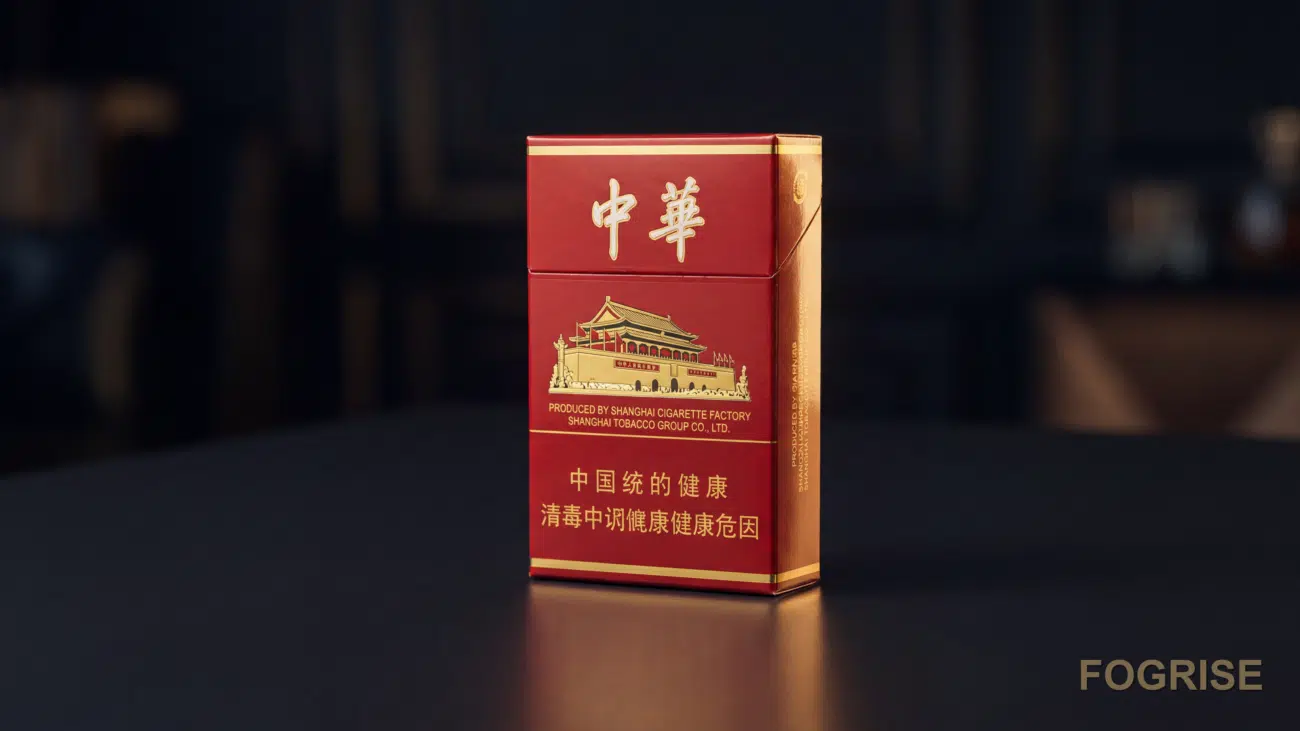
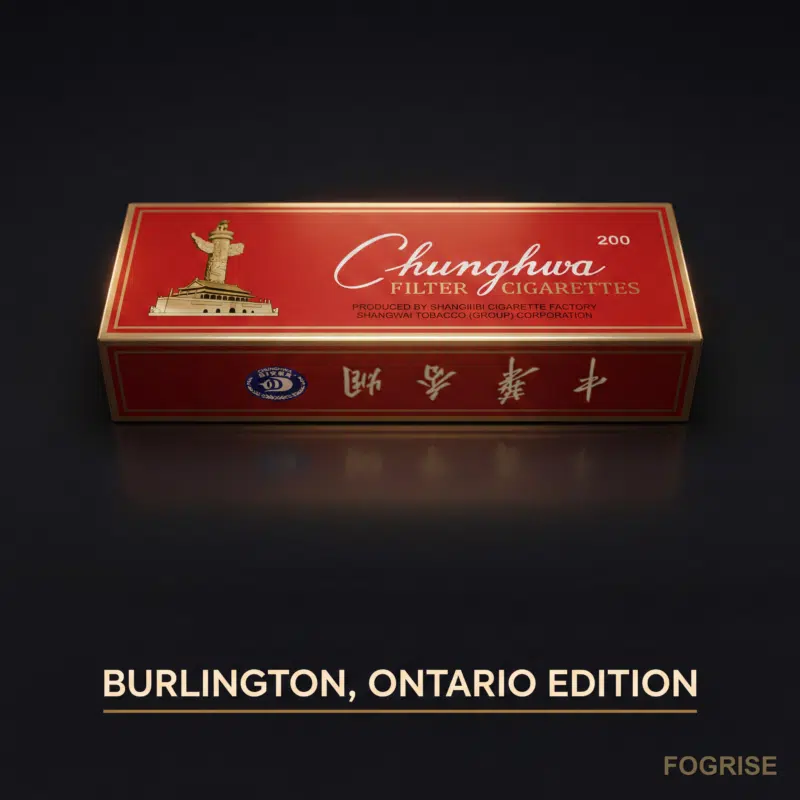
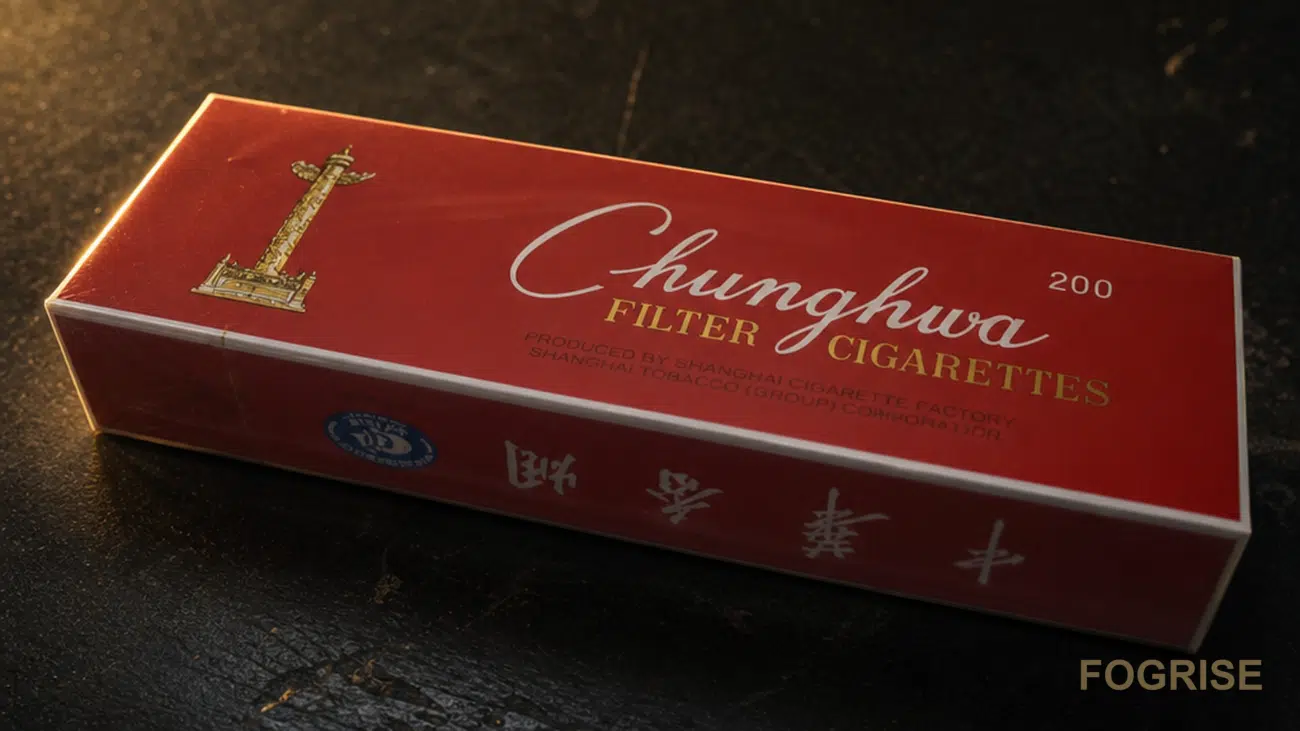
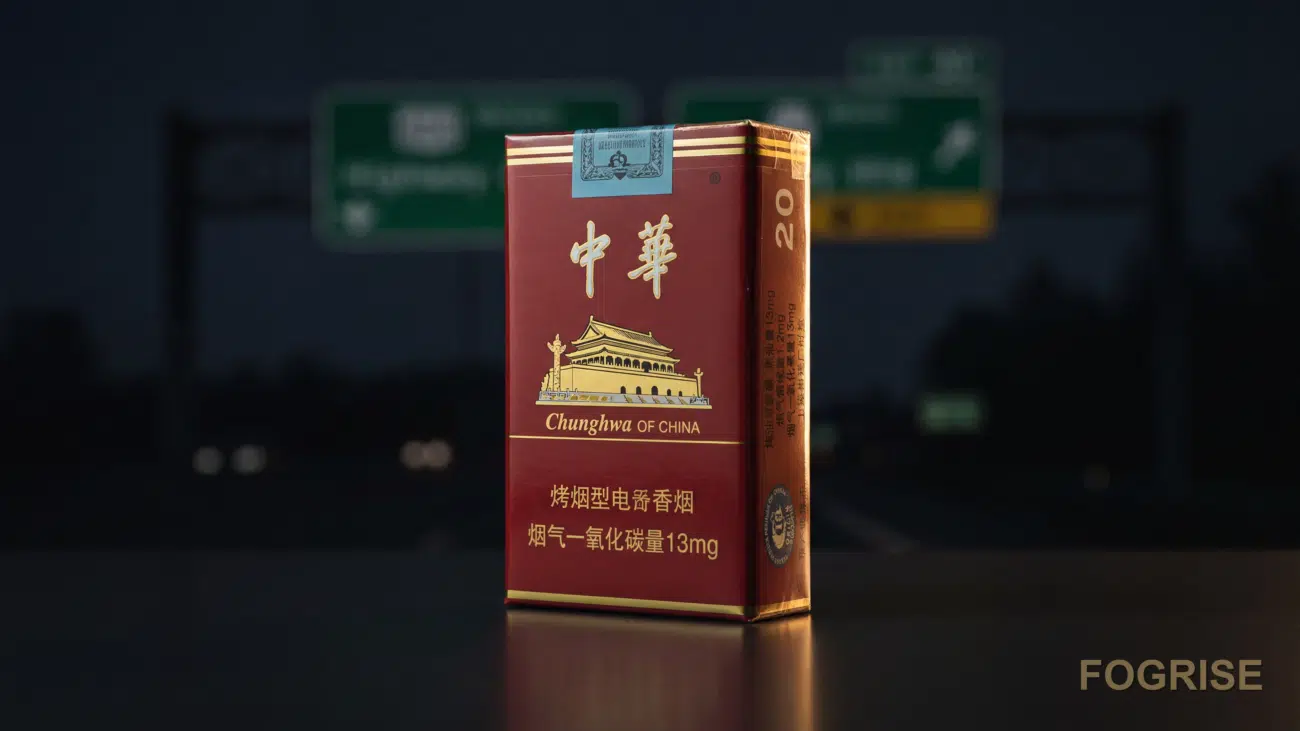
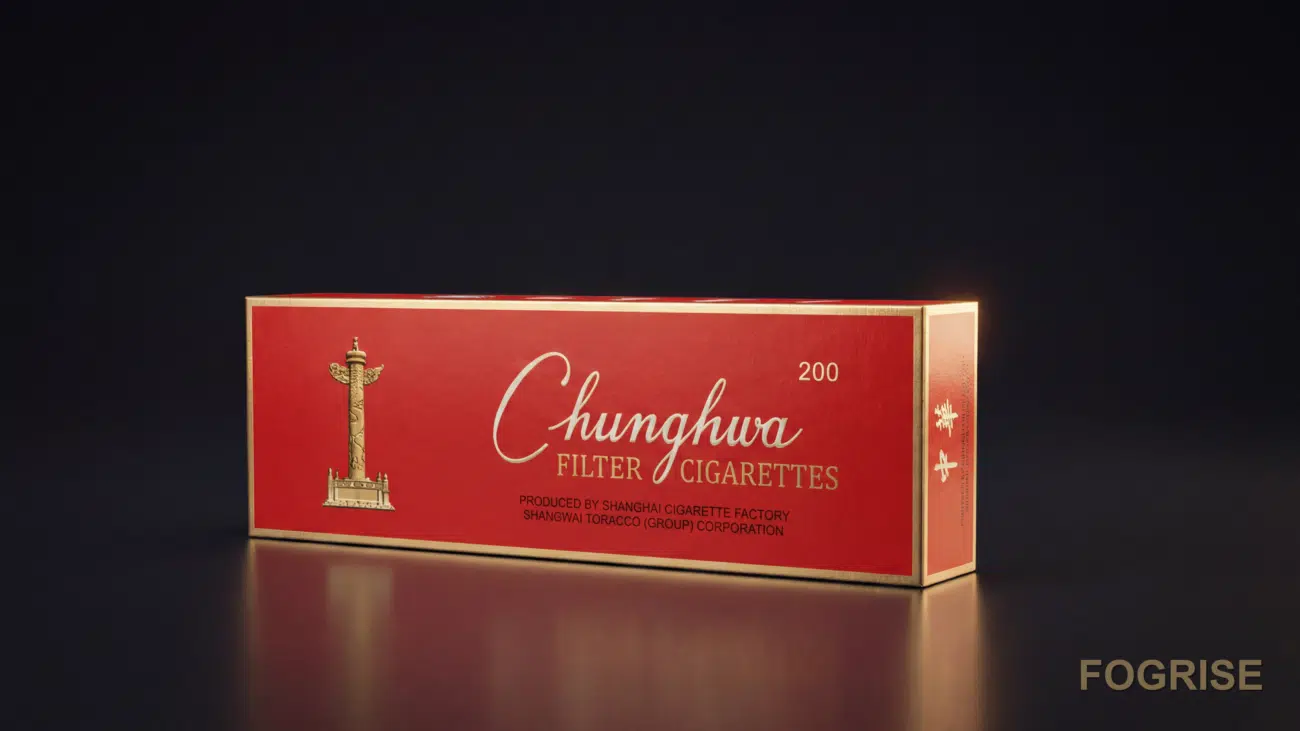
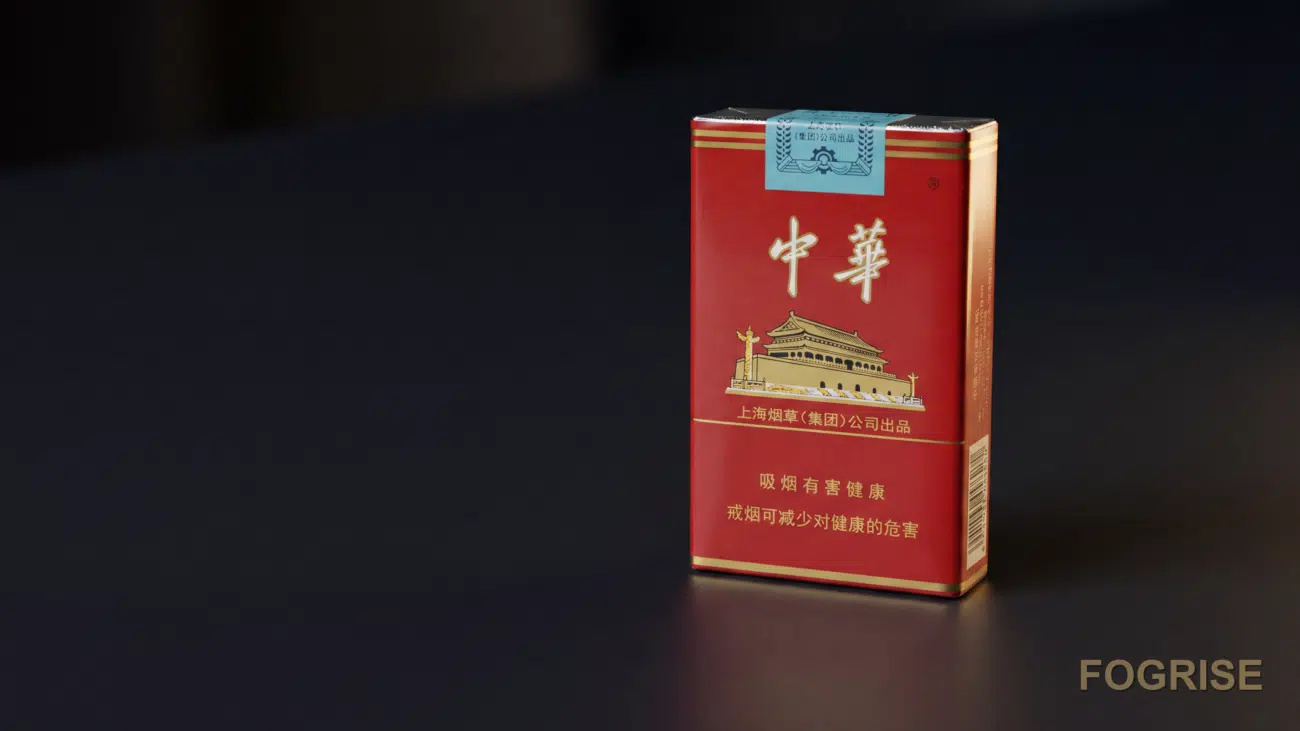
Chunghwa (中华). Manufactured by Shanghai Tobacco under CNTC, Chunghwa is the closest thing China has to a national flagship cigarette. The soft-box Chunghwa 5000 (the red pack) and the hard-box 8000 series are the two formats most often seen in export channels. The blend is built on Yunnan flue-cured leaf and produces a mild, lightly floral, low-acidity smoke. Chunghwa has long held a quasi-official role as a "diplomatic cigarette," historically presented as a state gift at high-level meetings. That status is the main reason demand among Chinese-Canadian buyers stays high. A pack of Chunghwa is a recognised gesture of respect at weddings, family reunions, and Lunar New Year visits.
-
Panda (熊猫). Also produced under the Shanghai Tobacco umbrella, Panda sits above Chunghwa as a collector-tier release. Production volumes are kept deliberately low, and the brand takes its name from China’s giant panda, which appears on the pack. The blend is built around the smoothest Yunnan leaf grades and reads as delicate and ultra-mild. Outside China, Panda is collected as often as it is smoked. Sealed cartons can command notable premiums in grey-market channels, and many buyers acquire it as a display piece or a collector’s gift rather than a daily smoke.
-
Double Happiness (双喜). Guangzhou Tobacco, also under CNTC, has produced Double Happiness since the early 1900s, making it one of the oldest continuously sold cigarette names in China. The double-happy character on the pack is the same one used on wedding decorations, which explains the brand’s strong association with celebrations. It comes in a full-flavour soft-box and several lighter hard-box variants. Canadian demand is heaviest in Guangdong-origin diaspora communities in Toronto, Vancouver, and Calgary, where the brand is a familiar fixture at family events.
-
Yunyan (云烟). Made by Hongta Group in Yunnan, Yunyan is the most direct expression of Yunnan tobacco’s aromatic character. It is sold in clearly tiered formats. Soft Red Yunyan sits at the affordable end, Soft Yellow occupies the mid-tier, and the purple-box releases sit at the top of the range. Smokers who find Chunghwa too restrained often gravitate to Yunyan for its richer, more aromatic profile and slightly heavier draw.
-
Nanjing (南京). Produced by the Jiangsu branch of CNTC (Nanjing Tobacco), Nanjing has a smoother, slightly sweeter Virginia profile than its central-Chinese peers. The blue and gold hard-boxes are the most recognised. Quality control has a strong reputation, and the brand carries a kind of quiet, regional pride rather than the loud prestige of Chunghwa or Panda.
-
Liqun (利群). Hangzhou Tobacco, the Zhejiang branch of CNTC, makes Liqun as a mid-range mainstay. It has a loyal following across Zhejiang and Jiangsu, and the white hard-box is the format that travels best internationally. The character is clean and light, with less of the aromatic weight that defines Yunyan.
-
Furongwang (芙蓉王). Changsha Tobacco in Hunan, also under CNTC, produces Furongwang for a southern Chinese audience that prefers a fuller-bodied smoke. The blue hard-box and red hard-box are the two formats most often exported. Compared with Chunghwa, the blend reads as slightly more complex and weightier on the palate, which is why it has a dedicated rather than universal overseas following.
| Brand | Chinese Name | Flavour Profile | Approx. Tar Range | Main Formats | Overseas Demand |
|---|---|---|---|---|---|
| Chunghwa | 中华 | Mild, floral, low-acid | 10-11 mg | Soft-box, hard-box | Very High (prestige/gift) |
| Panda | 熊猫 | Ultra-smooth, delicate | 8-10 mg | Hard-box only | High (collector/gifting tier) |
| Double Happiness | 双喜 | Full-flavour, smooth | 10-13 mg | Soft-box, hard-box | High (Guangdong diaspora) |
| Yunyan | 云烟 | Aromatic, rich Yunnan | 9-12 mg | Multiple tiers | Moderate-High |
| Nanjing | 南京 | Smooth, slightly sweet | 10-11 mg | Hard-box, soft-box | Moderate |
| Liqun | 利群 | Light, clean | 8-10 mg | Hard-box (white) | Moderate |
| Furongwang | 芙蓉王 | Fuller-bodied, complex | 11-12 mg | Hard-box (blue/red) | Moderate |
Tar and nicotine ranges above are typical factory-reported figures for Chinese domestic market labelling. Actual deliveries vary with smoking behaviour. All tobacco products are harmful regardless of stated tar level. Adult buyers who want to see which of these brand families are stocked for verified international purchase can explore our selection directly.
Chinese cigarettes in Canada: why the demand exists
Demand for Chinese cigarette brands in Canada is not a fringe curiosity. It tracks one of the largest diasporas in the country. Statistics Canada’s 2021 Census recorded more than 1.7 million people of Chinese origin living in Canada, the third-largest overseas Chinese population in the world, concentrated in the Greater Toronto Area, Metro Vancouver, and Montreal (Statistics Canada, 2022). That demographic footprint shapes everything from grocery aisles to specialty tobacco shelves.
For adult immigrants who grew up in mainland China, brands like Chunghwa (中华) and Double Happiness (双喜) carry a specific cultural weight. A Chunghwa pack appears at wedding banquets, opens a Spring Festival visit, and travels between business partners during a first meeting. The brand is shorthand for hospitality, seniority, and "giving face" (给面子). For Cantonese-speaking communities with roots in Guangdong and Hong Kong, Double Happiness fills a similar role at family gatherings. The demand is rarely about nicotine alone. It is about a familiar object showing up in a familiar ritual, half a world from where the ritual began.
Secondary demand comes from outside the core demographic. Tobacco collectors track regional Chinese sub-brands the way wine buyers track grower-producer Champagnes. Gift buyers, including non-Chinese Canadians with business or family ties in China, look for sealed authentic packs to send back. A smaller cohort of enthusiasts is simply curious about Virginia-Oriental blends and the lighter, sweeter Chinese tobacco character that differs from Canadian and American manufactured cigarettes. Adult buyers in this group often browse our catalog to compare brand profiles before committing to a purchase.
The scale of this market has been documented publicly. A 2018 CBC News investigation traced organized Chinese-cigarette resale networks operating across British Columbia, including bulk inbound shipments and grey-market storefronts. The reporting made clear that demand was substantial enough to support a logistics chain, not just casual personal imports.
This demand is real and culturally grounded, and it does not change the fact that all tobacco products carry serious health risks. Awareness of cultural demand is not an endorsement of smoking. Health Canada classifies cigarettes, regardless of country of origin, as a leading preventable cause of cancer, cardiovascular disease, and respiratory illness. Chinese cigarettes are not safer, milder in any health-relevant sense, or exempt from those harms. They are the same product, in different packaging, sold into the same human body.
What makes Canada’s case distinct is the next question: once the demand is acknowledged, how does Canadian law actually treat someone who wants to bring these products in? That sits squarely in customs and excise territory, which is where the next section goes.
Canadian customs and excise rules for tobacco
Canadian tobacco import rules are layered. Federal excise law sits on top of provincial tobacco tax, which sits on top of CBSA enforcement at the border and in the mail stream. The rules differ sharply depending on whether you are walking across a border with a carton in your suitcase or having one shipped to your door. This section is informational, not legal advice. Verify current figures with CBSA and your provincial tobacco tax authority before you act.
Returning traveller personal exemption
Adults returning to Canada after 48 hours or more outside the country may include tobacco in their personal exemption. The CBSA allowance is 200 cigarettes, 50 cigars, 200 grams of manufactured tobacco, and 200 tobacco sticks, and all of it must be declared on arrival (Canada Border Services Agency, 2024). The allowance is duty-free in the sense that no federal excise duty or GST/HST is charged on that quantity, but a "special duty" may still apply if the tobacco does not bear a Canadian excise stamp, which most foreign-purchased product will not. Anything above the personal allowance is subject to full federal excise duty plus the tobacco tax of the province where you enter.
Importing by mail or courier
The personal exemption does not apply to postal or courier imports. There is no "I’m just bringing in a few packs for myself" carve-out once the cigarettes are travelling without you. Mailed tobacco crossing into Canada is assessed federal excise duty under the Excise Act, 2001, applicable GST or HST, and provincial tobacco tax where the parcel is delivered (Government of Canada, 2002). Canada Post also restricts tobacco in most inbound international mail streams under Universal Postal Union dangerous-goods rules and its own customer service guide, which is why parcels are frequently intercepted or returned at the international processing centre rather than delivered.
Federal Excise Act, 2001
The Excise Act, 2001 is the statutory backbone for tobacco duty in Canada. It sets the excise duty rate on cigarettes manufactured in or imported into Canada and is administered by the Canada Revenue Agency. Federal budgets in 2023, 2024, and 2025 each increased the cigarette duty rate, and Budget 2024 introduced an automatic inflation-adjusted escalator. Because the rate moves on the federal budget cycle, any specific dollar figure quoted online ages quickly. The CRA’s Excise Duty Rates page is the authoritative current source.
Health warning labels and plain packaging
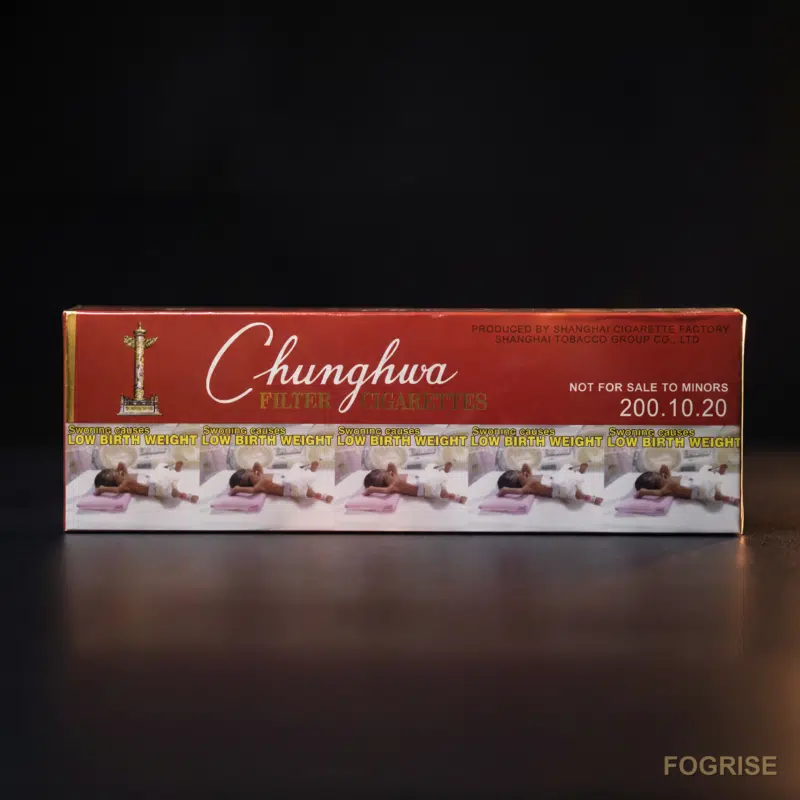
Since the Tobacco Products Appearance, Packaging and Labelling Regulations (SOR/2019-107) came into force, every cigarette package legally sold in Canada must use the standardized plain-packaging format with bilingual English-French health warnings covering a prescribed share of the pack surface. As of August 2023, individual cigarettes themselves must also carry a printed health warning. Imported Chinese-market packs, which carry Chinese-language warnings in their original SAC-mandated layout, do not satisfy the Canadian labelling regime. CBSA may treat non-compliant packaging as a separate ground for seizure independent of duty status.
Personal use versus commercial
Small personal quantities are treated administratively differently from commercial volumes, but "personal" is not a defined free-pass. Importing cigarettes for resale (even informal sale to friends or community members) is commercial activity, full stop. Commercial importation requires a tobacco licence under the Excise Act, 2001, an excise-stamping arrangement, and provincial wholesale registration. Operating without those is illegal. Penalties include seizure, monetary assessments, and possible prosecution.
| Scenario | Duty/Tax Applied | Personal Exemption? | Key Regulation |
|---|---|---|---|
| Returning traveller (48h+, ≤200 cigarettes) | Nil within allowance; special duty may apply if no Canadian stamp | Yes | CBSA Pub. BSF5056 |
| Returning traveller (>200 cigarettes) | Federal excise + provincial tobacco tax on excess | Partial (first 200 free) | Excise Act, 2001 |
| Mail or courier import | Federal excise + GST/HST + provincial tobacco tax | No | Excise Act, 2001; CBSA |
| Undeclared at border (any amount) | Seizure and monetary penalties possible | N/A | CBSA enforcement |
| Commercial import (unlicensed) | Illegal | N/A | Excise Act, 2001 |
These rules are complex and change with federal budgets. Always verify current duties and allowances on the CBSA website (cbsa-asfc.gc.ca) and consult provincial tobacco tax authorities for your province before purchasing or importing tobacco.
Provincial Tobacco Regulations Across Canada
Federal law sets the floor. Provinces set the actual rules adult smokers run into at point of sale. Canada’s Tobacco and Vaping Products Act (TVPA) establishes 18 as the federal minimum age and mandates plain packaging nationwide, but each province layers its own purchase age, retail rules, and online-sale restrictions on top. Buyers of Chinese cigarettes need to read the provincial rule, not the federal one.
Most provinces sit at 19. Quebec and Alberta remain at 18, mirroring the federal floor. No Canadian province currently mandates 21, though several municipalities have raised local minimums for retail sales (Health Canada, 2024). Retail display bans are universal: every province requires tobacco to be kept out of customer sight, behind opaque cabinetry or under-counter. That rule applies equally to mainstream Canadian brands and to imported Chinese cigarettes legally stocked by specialty importers.
Plain packaging is also federal-mandated and provincially enforced. Any cigarette sold legally in Canada, regardless of country of origin, must arrive in the standardized drab brown packaging with the federal pictorial health warning covering 75 percent of the front and back. A pack of Chunghwa or Zhongnanhai legally cleared through Canadian customs and sold by a licensed retailer carries the same bilingual health warnings as a pack of du Maurier. Product arriving in original Chinese-market livery, full-color, with Chinese-language warnings, has not cleared Canadian retail compliance and may indicate grey-market or counterfeit channels.
Comparing the eight largest provinces at a glance
| Province | Min. Purchase Age | Online Sale from Out-of-Province? | Plain Packaging | Key Provincial Law |
|---|---|---|---|---|
| Ontario | 19 | Restricted (OPSEU agreements restrict delivery) | Required | Smoke-Free Ontario Act, 2017 |
| British Columbia | 19 | Restricted (TVPCA) | Required | Tobacco and Vapour Products Control Act |
| Quebec | 18 | Restricted under QCT Act | Required | Tobacco Control Act (QC) |
| Alberta | 18 | Limited restrictions | Required | Tobacco, Smoking and Vaping Reduction Act |
| Manitoba | 19 | Restricted | Required | Non-Smokers Health Protection Act |
| Saskatchewan | 19 | Restricted | Required | Tobacco Control Act |
| Nova Scotia | 19 | Restricted | Required | Smoke-free Places Act |
| New Brunswick | 19 | Restricted | Required | Smoke-free Places Act (NB) |
What "online sale restricted" actually means
Online tobacco sale rules vary in mechanism, not in outcome. British Columbia’s TVPCA explicitly restricts mail-order delivery of tobacco products to residents. Ontario operates through retail licensing: the province licenses physical retailers, and most provincial wholesalers refuse to ship to consumer addresses. Quebec’s Tobacco Control Act requires age verification at delivery, which most general carriers cannot perform. The practical effect is the same. A Canadian adult cannot reliably order Chinese cigarettes from a domestic online retailer and have them shipped legally within most provinces.
Direct personal import from outside Canada follows a different path, governed by the federal Customs Act, not provincial law. We cover that in the previous section on personal-use imports. Adult buyers with questions about how a specific province’s rules interact with an international order can get in touch before they buy.
Provincial laws change. Bill amendments, enforcement guidance, and tax-rate updates land each fiscal year. Verify current rules with your provincial health ministry or the relevant tobacco-control directorate before purchasing. xiangyandd tracks the federal layer; provincial layers are your responsibility to confirm at the point of decision.
Buying Chinese Cigarettes Online: What to Look For
Adult buyers in Canada who decide to import Chinese cigarettes for personal use will run into sellers across a very uneven field. Some operate as transparent international retailers, like our online shop. Others sit firmly in the grey market or worse. The distinction matters because the consequences of the wrong choice include counterfeit product, seized shipments, undisclosed duties on delivery, and in some cases unregulated filler materials inside the cigarettes themselves. The checklist below is how we read a tobacco retailer at Fogrise.
Age verification that actually verifies
A legitimate retailer requires documented proof of age, not a tick-box at checkout. Look for upload-based ID verification, third-party age-gate services (AgeChecker, VerifyMyAge, similar), or a delivery-side adult-signature requirement. A site that lets you confirm "Yes, I am 19+" with one click is selling to anyone with a credit card, including minors. That is not a legal posture an importer can defend if Customs queries the shipment (CBC News, 2018).
Jurisdiction disclosure and import-restriction transparency
The retailer’s terms of service should state plainly which countries they ship to and which jurisdictions they will not ship to. They should warn buyers that import laws vary and that customs authorities in the destination country, not the seller, set what enters. A retailer that promises "guaranteed delivery worldwide" or "no customs hassle" is misrepresenting how international tobacco shipping works. Customs hassle is the default; the seller cannot suspend it.
Duty, excise, and tax honesty at checkout
Legitimate retailers tell adult buyers upfront that import duties, federal excise duty on tobacco, and GST or HST may be owed on delivery. They do not bundle a "duty included" claim that turns out to be false. They do not undervalue the customs declaration to dodge the assessment, a practice that puts the buyer on the hook for the unpaid duty plus penalty when CBSA reviews the parcel. Transparent duty language is the single clearest signal of an honest operator.
Authenticity markers on the actual product
Genuine China-domestic-market Chinese cigarettes carry CNTC (China National Tobacco Corporation) holographic seals on the cellophane or carton, Chinese-language health warnings printed on the pack as required by China’s domestic regulations, and a tax-paid stamp from the originating province. Counterfeit Chinese cigarettes have been documented entering Canada in volume. CBC’s 2018 investigation and subsequent Health Canada advisories identified fake Chunghwa, fake Double Happiness, and other counterfeit brand-name packs containing unregulated filler. The fakes look convincing in photographs. The seals, the print quality of the Chinese characters, and the carton glue patterns are where they fail.

What a properly cleared Canadian shipment should arrive looking like
If a parcel reaches your door with original Chinese-market full-color livery and no Canadian bilingual health warnings, it has either bypassed Canadian customs entirely or been declared incorrectly. Legally cleared tobacco for the Canadian retail or personal-import channel arrives with the federal plain-packaging treatment applied at some point in the chain, even on personal import for adult use. The absence of bilingual warnings is not a feature. It is a signal that something in the import path did not work as it should have.
No online purchase of cigarettes eliminates the health risks of tobacco. This information is for adult buyers making informed decisions. Verify your local import laws and your provincial regulations before purchasing. Adult buyers who want to ask a specific authenticity or shipping question are welcome to contact our team before placing any order.
Health, Age, and Legal Responsibilities for Adult Smokers
This section is direct on purpose. Chinese cigarettes are not safer than Canadian cigarettes. They are not safer than American or European cigarettes. All combustible tobacco products are harmful and addictive, regardless of brand prestige, declared tar level, or country of origin.
What the medical evidence actually says
Smoking causes lung cancer, cardiovascular disease, stroke, chronic obstructive pulmonary disease, and a long list of additional serious conditions documented by the World Health Organization and Health Canada. The risk profile of a Chunghwa pack is not materially different from a domestic Canadian pack. Declared tar values on Chinese-market packs reflect machine-measured yields under standardized conditions. That number is not what a human smoker actually receives. Compensatory behavior (deeper inhalation, blocked filter vents, more cigarettes per day) can erase any nominal "low tar" advantage (World Health Organization, 2023).
Nicotine and addiction
The tobacco in Chinese cigarettes contains nicotine. Addiction develops rapidly, often within weeks of regular use, regardless of brand or declared yield. Adults who currently smoke imported Chinese brands are subject to the same dependence physiology as adults smoking any other combustible tobacco product. Brand romance does not change pharmacology.
Age requirements and legal duties
In Canada, adults aged 19 and over (or 18 in Quebec and Alberta) may legally purchase tobacco from licensed provincial retailers. xiangyandd recommends 21 and over as a conservative minimum, consistent with United States federal Tobacco 21 norms. The recommendation is editorial, not legal: Canadian provincial law is the binding floor for purchase eligibility.
Importing tobacco for personal use requires a customs declaration at the border. Failing to declare imported tobacco is an offence under the federal Customs Act and exposes the traveler or recipient to seizure, penalty, and possible prosecution. The federal excise duty on tobacco applies on personal import above the duty-free allowance. Declare honestly. The penalty assessment for a missed declaration substantially exceeds the duty itself.
Quitting resources
Health Canada maintains a dedicated cessation portal at canada.ca/en/health-canada/services/smoking-and-tobacco/quit-smoking.html with free evidence-based tools, provincial quitline numbers, and counselor referrals. The Canadian Cancer Society also operates free smoking-cessation programs, including the Smokers’ Helpline (1-877-513-5333), which offers telephone, text, and online coaching. Both services are confidential and available to adults at any stage of readiness, including those who are not yet ready to set a quit date.
If you are considering quitting tobacco, Health Canada and the Canadian Cancer Society offer free, evidence-based cessation resources. Adults who smoke should consult their healthcare provider about cessation options, including nicotine replacement therapy, varenicline, bupropion, and behavioral counseling. The decision to quit is yours. The support is already paid for by the Canadian public health system.
Frequently Asked Questions
Are Chinese cigarettes legal in Canada?
Chinese cigarettes are not banned in Canada, but their import and sale are regulated. Adults may import a limited quantity as personal-use duty-free allowance when returning from abroad. Purchasing online and having them shipped to Canada attracts federal excise duty and GST/HST. Selling Chinese cigarettes without proper excise registration is illegal. Always verify current CBSA rules before purchasing.
Can you import Chinese cigarettes into Canada by mail?
Mailing cigarettes to Canada is restricted. Canada Post prohibits most inbound international tobacco mail. If a shipment clears customs, federal excise duty, GST/HST, and provincial tobacco taxes apply, and there is no personal exemption for postal imports. Many shipments are intercepted by CBSA. For adults seeking Chinese tobacco, compliant purchasing from licensed retailers with proper duty handling is the safest route.
How many cigarettes can I bring into Canada from abroad?
Adults returning to Canada after 48 or more hours abroad may bring up to 200 cigarettes (one carton of 10 packs), 50 cigars, 200 grams of manufactured tobacco, and 200 tobacco sticks, all duty-free, provided you declare the items. Amounts above the personal exemption incur federal excise duty plus applicable provincial tobacco taxes and GST/HST.
Are Chunghwa cigarettes available in Canada?
Chunghwa cigarettes are not sold in licensed Canadian tobacco retailers. They may be found in grey-market settings or via international online retailers that ship to Canada. Adults who purchase them from such sources remain responsible for any applicable import duties and must verify they are complying with CBSA regulations. Authenticity is also a concern, as counterfeit Chunghwa packaging has been documented.
What is the most popular Chinese cigarette brand?
Chunghwa (中华) is widely regarded as the most prestigious Chinese cigarette brand internationally, particularly within overseas Chinese communities. It is Shanghai Tobacco’s national flagship, built around formal gifting and hospitality. Ask any adult buyer in the GTA what brand they look for at Lunar New Year and Chunghwa comes up first. Other brands with consistent overseas demand include Double Happiness (双喜), Panda (熊猫), and Yunyan (云烟).
How do I tell if a Chinese cigarette is authentic?
Authentic Chinese cigarettes carry holographic CNTC tax/authenticity seals, Chinese-language health warnings on the packaging, and consistent printing quality. Grey-market or counterfeit product may lack holograms, have blurry printing, inconsistent pack weight, or different tobacco character than genuine product. Health Canada has warned that counterfeit cigarettes may contain undisclosed additives. Adults should purchase from verifiable sources.
Why are Chinese cigarettes generally less expensive than Canadian brands?
Chinese cigarettes are manufactured at very large scale by state-owned enterprises in a market with lower production and labour costs. Federal excise duty in Canada adds approximately $28 to $32 per carton on top of any purchase price, so even a lower-cost Chinese cigarette becomes comparable in total cost to domestic brands once duty and taxes are applied to a postal import.
Conclusion
Chinese cigarettes represent a culturally significant product category for Canada’s large Chinese-Canadian adult community. The major brands (Chunghwa, Double Happiness, Yunyan, and Panda) each carry distinct flavour identities rooted in China’s tobacco-growing heritage, from Yunnan’s high-altitude leaf to Shanghai’s blending traditions. They are valued as much for their place in gifting and hospitality as for the smoke itself.
Importing them into Canada, however, comes with real legal and tax obligations. CBSA personal exemptions have strict limits, postal imports attract full federal excise duty and GST/HST, and provincial rules add further layers depending on where you live. Authenticity is a separate concern, with counterfeit Chunghwa packaging documented in grey-market channels. Adult buyers who want to make informed decisions should verify current CBSA allowances and provincial regulations before purchasing, and stick to verifiable sources.
xiangyandd carries a curated selection of Chinese and international cigarettes for verified adult buyers, explore our shop. For questions, contact our team.
Smoking is harmful and addictive. Adults 21+ only. Always verify your local tobacco import laws.
Further Reading
For adult buyers who want to go deeper, explore more guides in our Chinese Cigarettes category for curated product information, flavour notes, and brand comparisons. On the regulatory side, the Government of Canada CBSA traveller tobacco allowances page lays out current personal-import limits and duty rates in plain language, and is the authoritative reference to check before any cross-border purchase. For the broader public-health picture, the World Health Organization tobacco fact sheet provides global data on tobacco-related mortality, addiction, and policy trends, useful context for any adult making an informed personal choice.
References
- Canada Border Services Agency. (2024). Travellers: Paying duty and taxes. Government of Canada. https://www.cbsa-asfc.gc.ca/travel-voyage/pdt-pdt-eng.html
- Government of Canada. (2002). Excise Act, 2001 (S.C. 2002, c. 22). Justice Laws Website. https://laws-lois.justice.gc.ca/eng/acts/E-14.1/
- Health Canada. (2024). Tobacco and Vaping Products Act (TVPA). Government of Canada. https://www.canada.ca/en/health-canada/services/smoking-and-tobacco/legislation.html
- Government of Canada. (2019). Tobacco Products Appearance, Packaging and Labelling Regulations (SOR/2019-107). Justice Laws Website. https://laws-lois.justice.gc.ca/eng/regulations/SOR-2019-107/
- CBC News. (2018, July 30). Illegal online sale of Chinese cigarettes widespread in B.C., says expert. Canadian Broadcasting Corporation. https://www.cbc.ca/news/canada/british-columbia/bc-cigarettes-resale-china-1.4745113
- World Health Organization. (2023). Tobacco [Fact sheet]. https://www.who.int/news-room/fact-sheets/detail/tobacco
- Statistics Canada. (2022). Immigration and ethnocultural diversity: Key results from the 2021 Census (Catalogue No. 98-200-X). Government of Canada. https://www12.statcan.gc.ca/census-recensement/2021/as-sa/98-200-x/2021004/98-200-x2021004-eng.cfm
- Health Canada. (2024). Quit smoking. Government of Canada. https://www.canada.ca/en/health-canada/services/smoking-and-tobacco/quit-smoking.html
- O’Connor, R. J., Li, Q., Stephens, W. E., Hammond, D., Elton-Marshall, T., Cummings, K. M., Giovino, G. A., & Fong, G. T. (2010). Cigarettes sold in China: Design, emissions and metals. Tobacco Control, 19(Suppl 2), i47-i53. https://doi.org/10.1136/tc.2009.030163
Last reviewed and updated: June 2026. Author: xiangyandd editorial team. For tailored guidance, contact our team.




 English (US)
 简体中文
 Deutsch
 Français
 Español