

Blog
Chinese Cigarettes in the United States: Brands, Legal Rules & Where to Buy (2026 Guide)

Abstract
Chinese cigarettes (Chunghwa, Zhongnanhai, Panda, Double Happiness, Hongtashan) are produced exclusively by China National Tobacco Corporation subsidiaries and reach the United States through a narrow but navigable set of legal channels: airport duty-free shops, licensed Chinatown tobacconists, and PACT-compliant commercial importers. US buyers aged 21+ can access them legally, but the PACT Act, FDA labeling rules, CBP duty requirements, and a documented counterfeit problem mean every purchase decision benefits from precise knowledge of brands, pricing, and authentication signals. This pillar delivers that knowledge. For adults 21+ only. Smoking is harmful and addictive. Tobacco import rules vary by state; verify your local laws before purchasing.
Key Takeaways
- Legal US channels are limited but real: airport duty-free shops at major hubs (JFK, LAX, SFO), licensed Chinatown tobacconists, and PACT-compliant importers are the only lawful routes for US buyers.
- The PACT Act bans most online shipments: cigarette delivery via USPS and major carriers to US addresses is prohibited; gray-market online import carries seizure and penalty risk.
- Chunghwa (中华) is the prestige brand: produced by Shanghai Tobacco Group, it is China’s premier business-gift cigarette. Expect to pay $15-$25 per pack in US duty-free.
- Counterfeits are a documented public-health hazard: elevated lead and cadmium have been found in seized fakes (He et al., 2015); always buy from verified licensed sources.
- Pricing is three to five times China domestic prices: federal and state excise taxes, import duties, and distribution overhead push US pricing to $15–$30 per pack for premium brands.
- 礼烟 (gift cigarettes) carry deep cultural weight: Chunghwa and Panda function as status signals at business meetings and celebrations. Understanding this context helps overseas-Chinese buyers choose correctly.
Table of Contents
- Abstract
- Key Takeaways
- Table of Contents
- The Chinese Cigarette Market: A Global Overview
- Top Chinese Cigarette Brands Available in the US
- Are Chinese Cigarettes Legal in the United States?
- Where to Find Chinese Cigarettes in the United States
- Pricing Reality: What Chinese Cigarettes Cost in the US
- How to Spot Counterfeit Chinese Cigarettes
- Chinese Cigarette Gifting Culture: Understanding 礼烟
- Conclusion
- FAQ
The Chinese Cigarette Market: A Global Overview
China National Tobacco Corporation (CNTC) is the world’s largest tobacco manufacturer by volume, a state monopoly that produces every major Chinese cigarette brand, from Chunghwa and Double Happiness to Yuxi, Panda, and Furongwang. Annual domestic output passes 2.4 trillion sticks, roughly 40% of all cigarettes smoked worldwide (Tobacco Tactics, 2024; O’Connor et al., 2010). Tobacco is a regulated adult product; this overview is informational, not promotional.
What Makes Chinese Cigarettes Different?
Chinese cigarettes are blended around Virginia, Burley, and Oriental leaf, with flue-curing as the dominant prep method. The result reads as cleaner and softer on the palate than the dark, air-cured profiles common to many European brands, and filter ventilation rates tend to run higher (Tobacco Tactics, 2024; O’Connor et al., 2010). Pricing inside China sorts into four tiers that map directly onto how a pack is perceived socially. Economy packs sit at roughly ¥10-20, the everyday mid-range runs ¥20-40, premium covers ¥40-100, and the ultra-premium tier opens above ¥100 and climbs well past ¥300 for gifting-grade Chunghwa or limited Furongwang releases (Tobacco Tactics, 2024; O’Connor et al., 2010). The tier you smoke, and the tier you give, both carry meaning. That cultural weight, more than nicotine chemistry, is what makes a pack of Soft Chunghwa feel different from a generic carton at a US gas station, and it is the main reason diaspora demand keeps the export channel alive.
CNTC’s Export Brands vs Domestic-Only Lines
CNTC’s export portfolio is narrow on purpose. Chunghwa, Double Happiness, Panda, and a handful of Hongta and Huanghelou SKUs reach overseas shelves through duty-free, licensed tobacconists in Chinatown districts, and specialized importers; the broader landscape of permitted export labels is mapped across our international brand guides. Dozens of other lines, including most regional Furongwang variants and short-run gifting editions, never officially leave China. CNTC’s reported export value climbed from about $248 million in 2009 to roughly $722 million in 2019, but the bulk of that growth landed in nearby Asian markets; the United States accounts for well under 5% of CNTC’s export value, which is why US-side supply is uneven and pricing reflects the small, specialist nature of the channel (Tobacco Tactics, 2024; O’Connor et al., 2010). Knowing which brands are sanctioned for export, and which ones only arrive through grey channels, is the first filter for any serious US buyer.
Top Chinese Cigarette Brands Available in the US
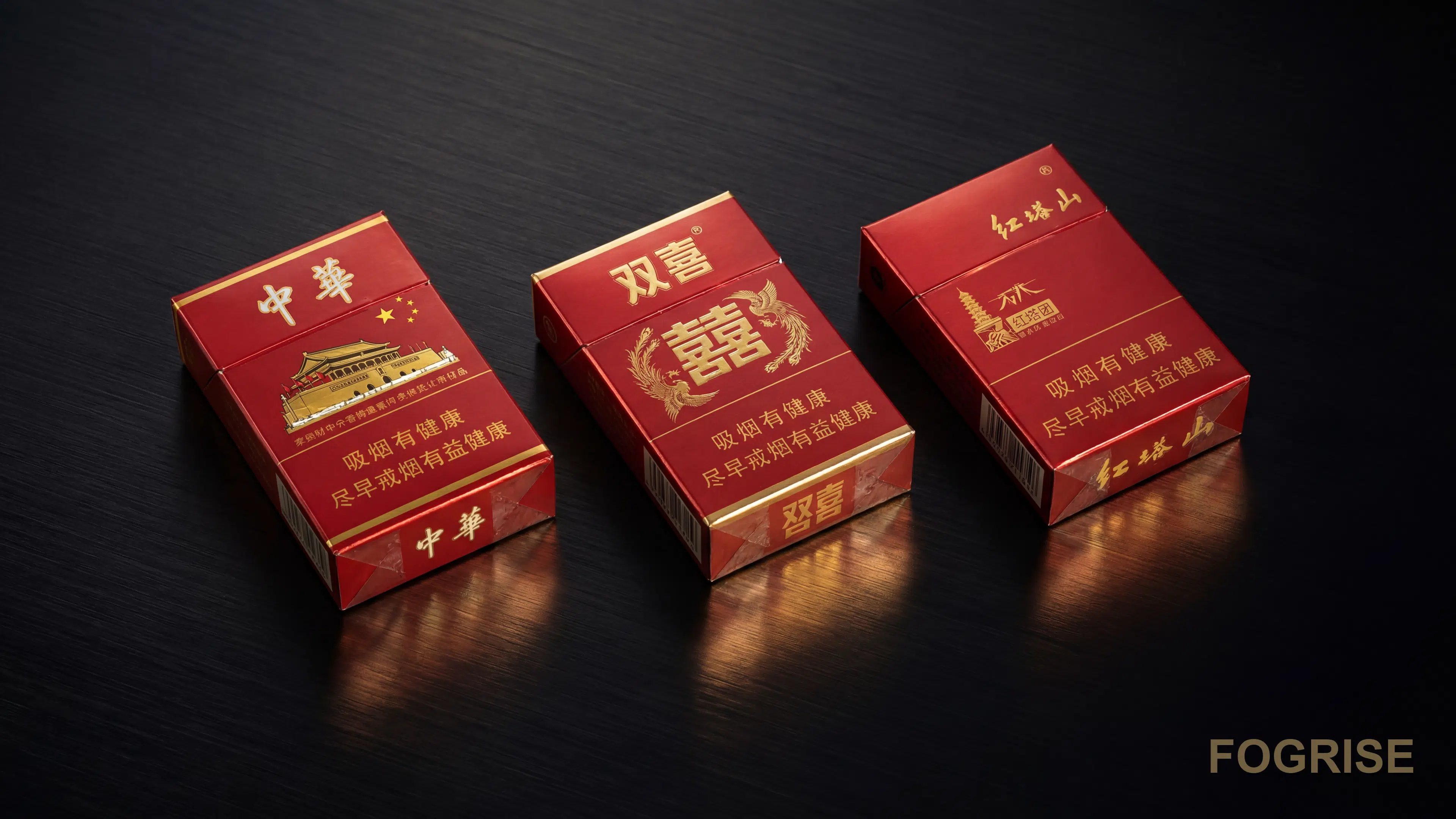
The Chinese cigarette market in the United States is narrow, but the brands that do circulate carry outsized cultural weight back home. Most of what reaches American shelves, suitcases, and Chinatown tobacconists comes from three state-owned giants: Shanghai Tobacco Group, Hongta Group in Yunnan, and various China National Tobacco Corporation (CNTC) provincial factories — the same houses behind the Chinese cigarette brands we stock for international buyers. Pricing in China is tightly tiered by state policy, and the gap between a ¥15 daily smoke and a ¥100 banquet pack reflects status more than tobacco quality alone. Below is a tier-by-tier catalog of the eight brands US buyers most commonly encounter, with domestic and US channel pricing for context.
Ultra-Premium Tier
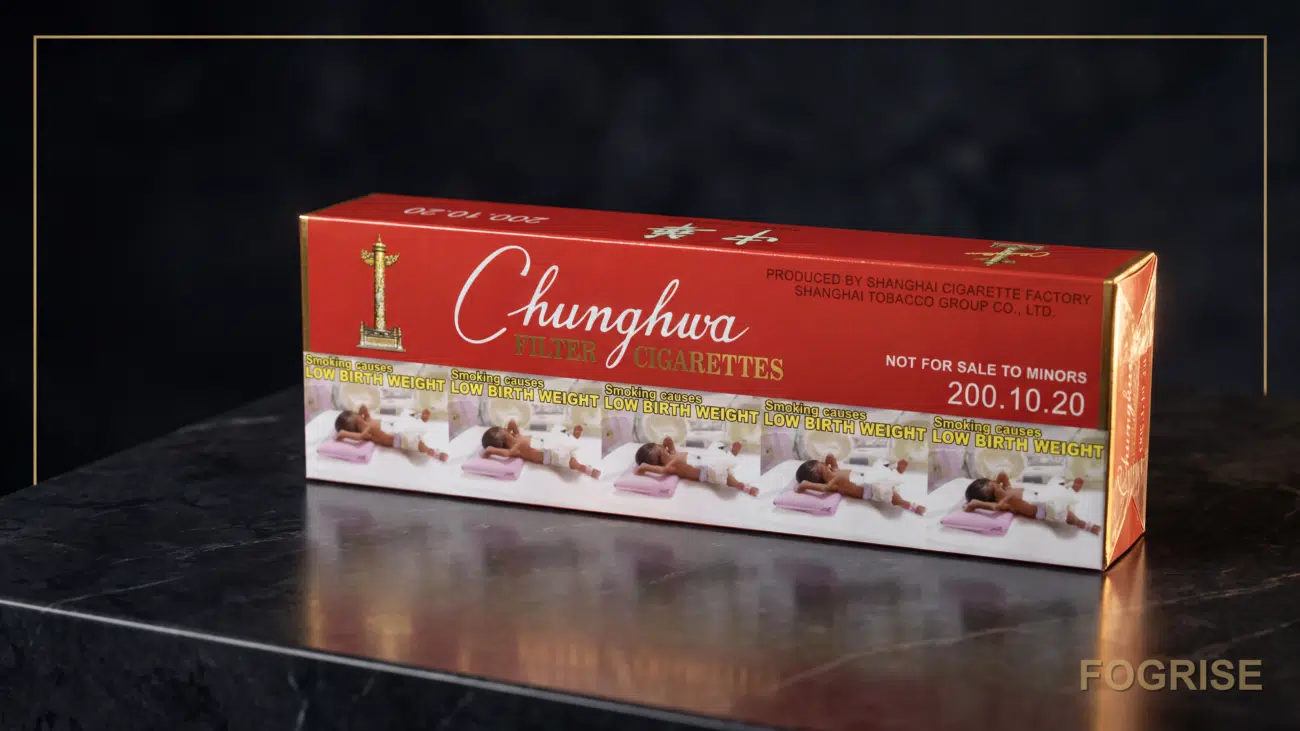
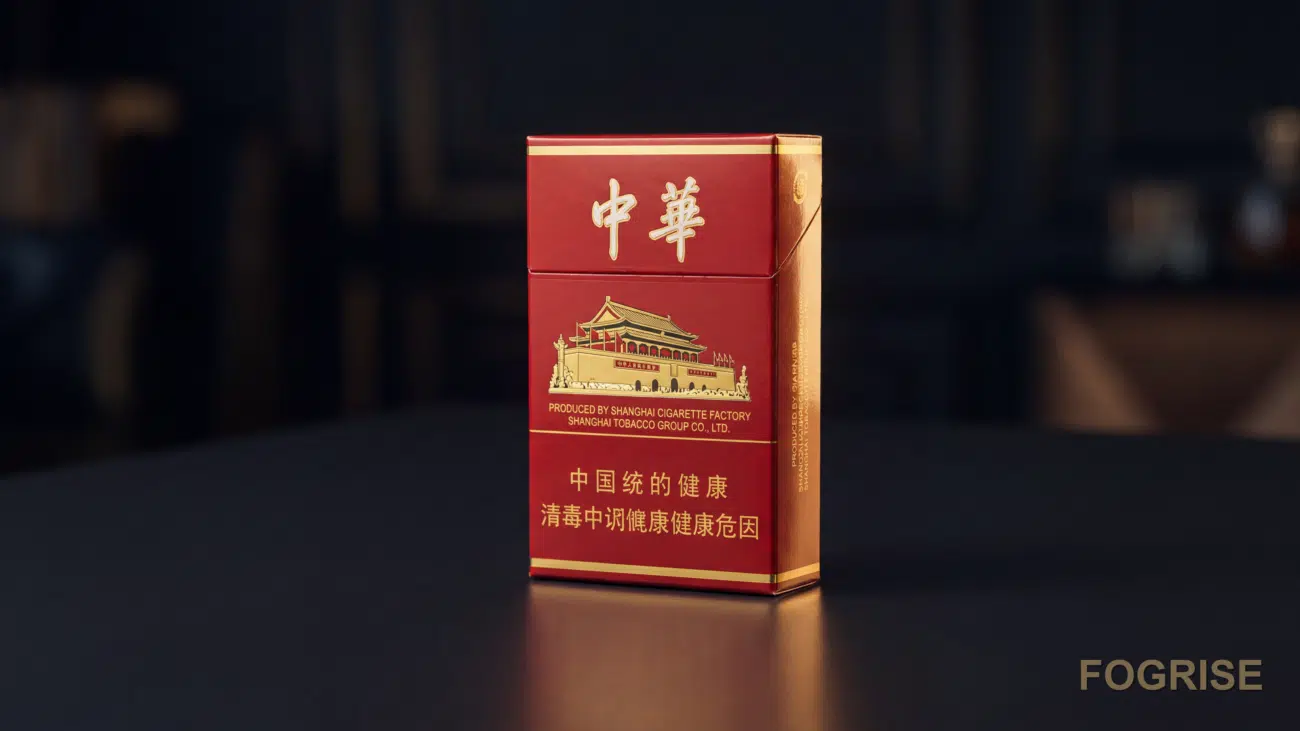
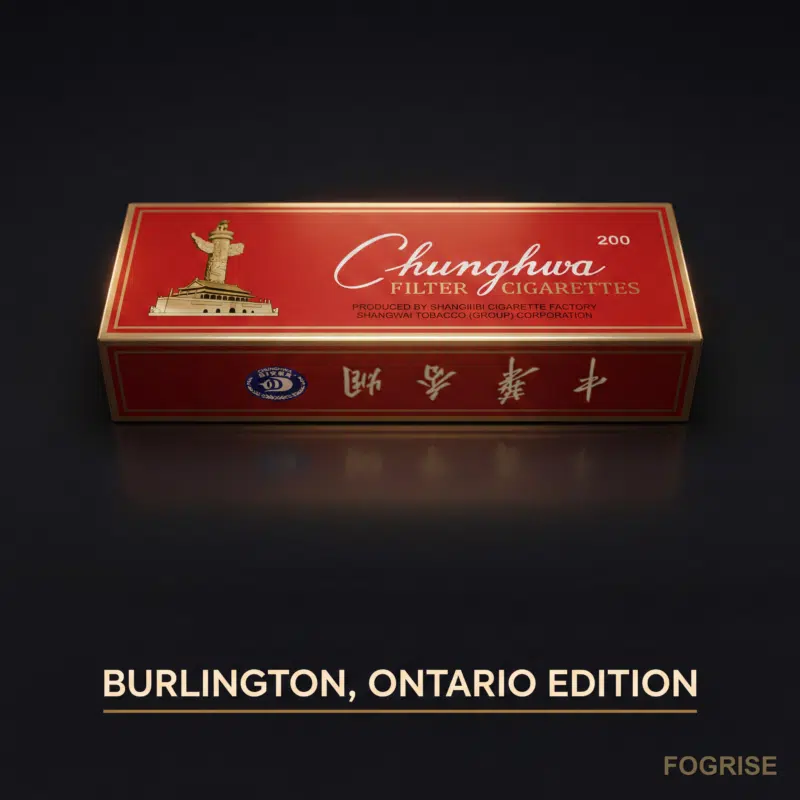
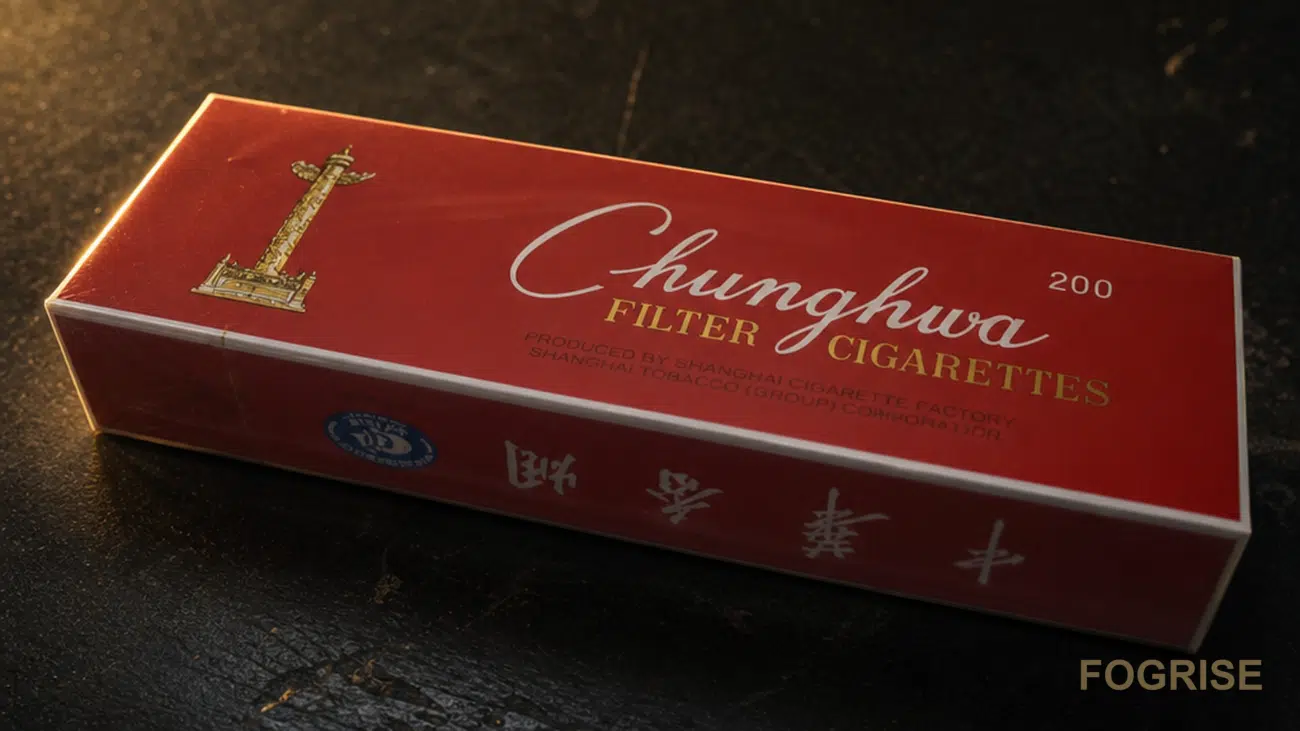
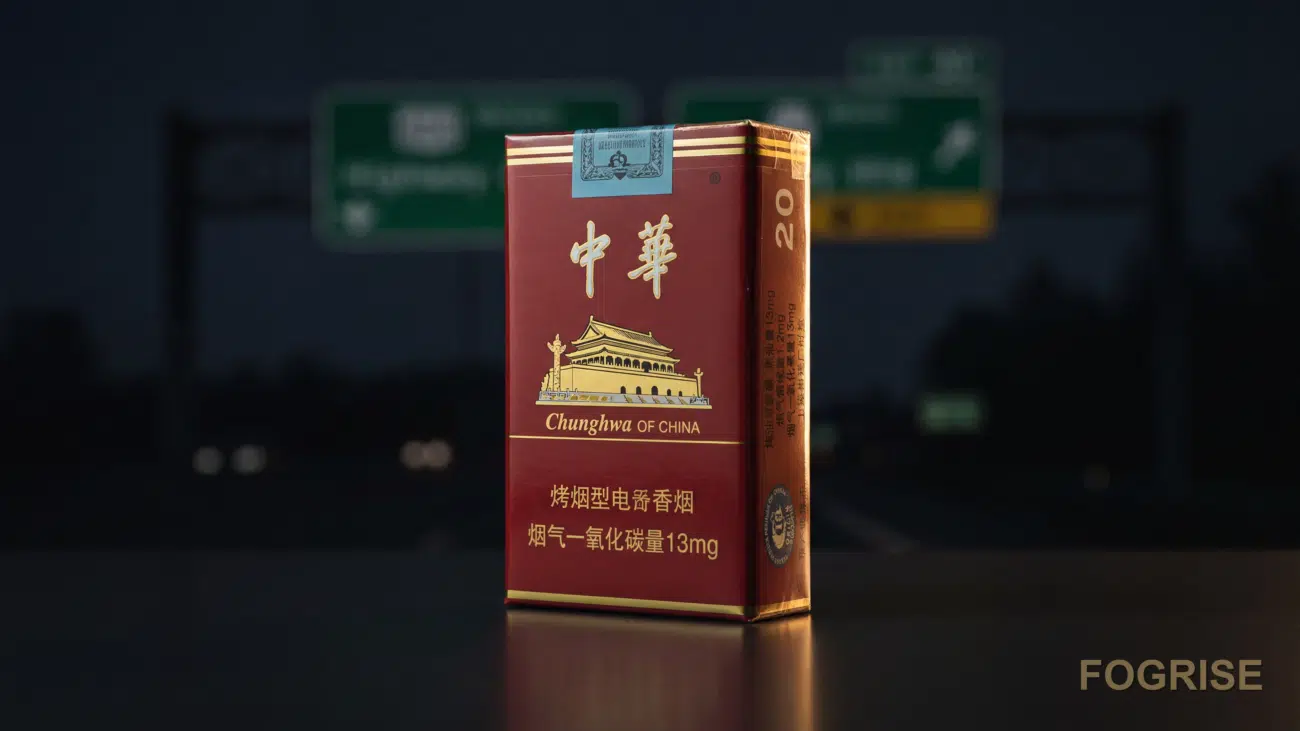
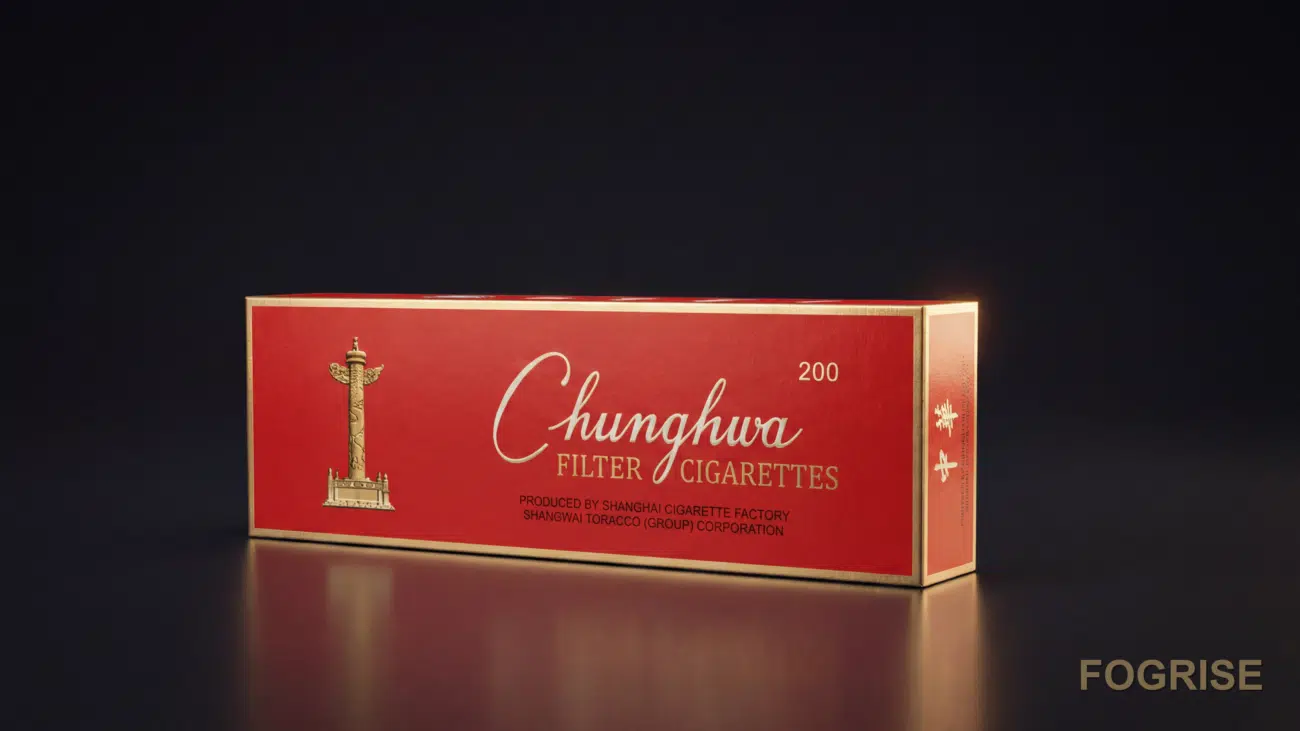
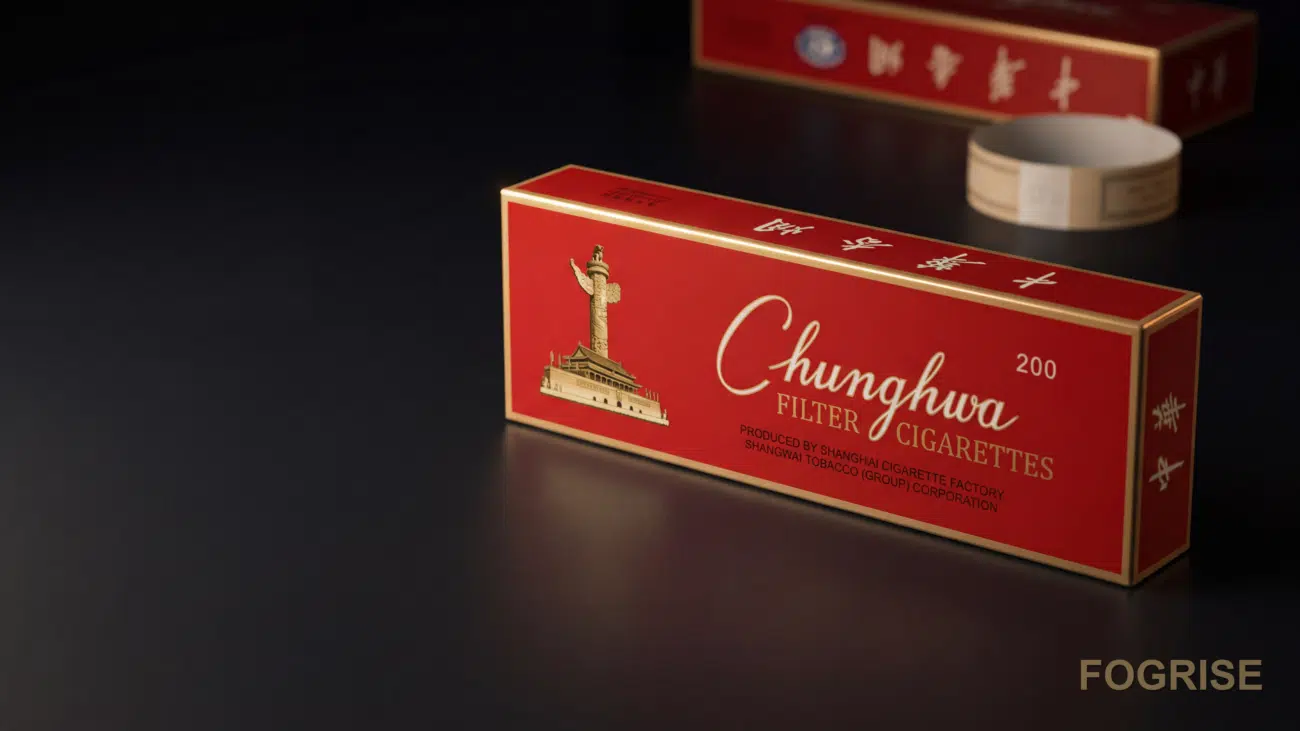
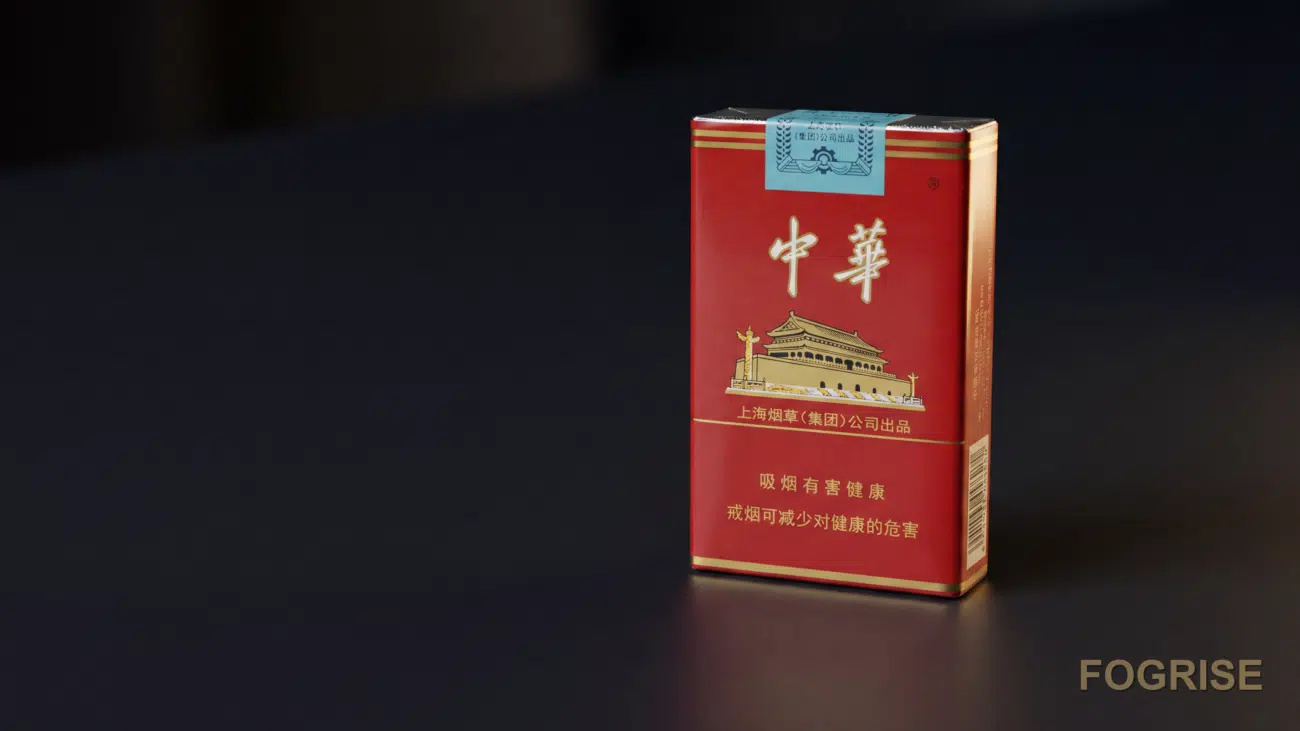
Chunghwa (中华) is the gold standard of Chinese cigarettes, produced by Shanghai Tobacco Group since 1951 (Tobacco Tactics, 2024). The red-and-gold embossed pack with its bold gold scroll logo is instantly recognized at state banquets, business negotiations, and weddings — context our Chinese cigarette guides unpack in more depth. The blend is a smooth flue-cured Virginia leaf, designed to be sharable rather than punchy. Domestic price runs ¥60-100 per pack; US duty-free and specialty channels typically charge $15-25 (Tobacco Tactics, 2024). Among 礼烟 (gift cigarettes), Chunghwa is the benchmark.
Panda (熊猫), made by Hongta Group in Yunnan, has historic associations with state guests and high-level diplomatic gifting (Tobacco Tactics, 2024). Deng Xiaoping was famously a Panda smoker, which cemented its prestige. The blend is lighter and rounder than Chunghwa. Domestic price sits at ¥40-80; US availability is limited to occasional duty-free stock and specialty importers.
Premium Tier
Yuxi (玉溪), another Hongta Group label out of the Yuxi factory in Yunnan, is known for a mellow, well-balanced premium blend with a loyal domestic following (Tobacco Tactics, 2024). Domestic price: ¥30-50. US availability: occasional duty-free and Chinatown tobacconists.
Huanghelou (黄鹤楼) comes from CNTC Hubei and is sought after by enthusiasts for its crisp, clean finish (Tobacco Tactics, 2024). Named after the historic Yellow Crane Tower in Wuhan. Domestic: ¥30-60. US: rare, specialty importers only.
Furongwang (芙蓉王) is CNTC Hunan’s flagship premium label, with a popular slim variant that appeals to younger urban smokers (Tobacco Tactics, 2024). Domestic: ¥30-50. US: occasional Chinatown stock.
Mid-Range Tier
Zhongnanhai (中南海) is a CNTC label historically associated with Beijing, built around a lighter blend partly modeled on Japanese-style light cigarettes (Tobacco Tactics, 2024). It has a strong following among smokers who prefer a softer draw. Domestic: ¥15-25. US: available in some Chinatown stores.
Double Happiness / Shuangxi (双喜), also from Shanghai Tobacco Corporation, is the classic mid-range gift brand. Its iconic red-and-gold double-happiness character makes it a staple at weddings (Tobacco Tactics, 2024). Domestic: ¥15-25. US: Chinatown tobacconists and occasional duty-free.
Hongtashan (红塔山), Hongta Group’s best-selling full-flavor label, is built around a full-bodied flue-cured taste and the distinctive red pagoda logo (Tobacco Tactics, 2024). It has long been the volume backbone of Yunnan tobacco. Domestic: ¥15-20. US: Chinatown shops and occasional duty-free.
Brand Comparison Table
| Brand | Chinese | Tier | Flavor Profile | China Price (RMB/pack) | US Channel |
|---|---|---|---|---|---|
| Chunghwa | 中华 | Ultra-Premium | Smooth Virginia, banquet-grade | ¥60-100 | Duty-free, specialty (~$15-25) |
| Panda | 熊猫 | Ultra-Premium | Light, rounded, diplomatic | ¥40-80 | Limited duty-free, specialty |
| Yuxi | 玉溪 | Premium | Mellow, balanced | ¥30-50 | Duty-free, Chinatown |
| Huanghelou | 黄鹤楼 | Premium | Crisp, clean finish | ¥30-60 | Specialty importers (rare) |
| Furongwang | 芙蓉王 | Premium | Smooth, slim variant popular | ¥30-50 | Occasional Chinatown |
| Zhongnanhai | 中南海 | Mid-Range | Light blend, soft draw | ¥15-25 | Some Chinatown stores |
| Double Happiness | 双喜 | Mid-Range | Classic mid-tier, gift-coded | ¥15-25 | Chinatown, occasional duty-free |
| Hongtashan | 红塔山 | Mid-Range | Full-bodied flue-cured Virginia | ¥15-20 | Chinatown, occasional duty-free |
US channel pricing varies widely by state tax regime, with New York and California adding the steepest excise loads on any imported tobacco product. For format-level differences across these labels — slim, king-size, 100s and short — the type-specific guides break down what changes between SKUs.
Are Chinese Cigarettes Legal in the United States?
The short answer is "sometimes, with strict limits." Here are the rules in plain language:
- Travelers 21 or older may carry 1 carton (200 cigarettes) into the US duty-free as accompanied baggage (ATF, 2024; FDA, 2025; TTB, 2024).
- Mailing or shipping cigarettes into the US is heavily restricted under the federal PACT Act (ATF, 2024; FDA, 2025; TTB, 2024).
- The US Postal Service is prohibited from delivering cigarettes, and UPS, FedEx, and DHL have voluntarily stopped too (ATF, 2024; FDA, 2025; TTB, 2024).
- All tobacco sold in the US must meet FDA labeling, ingredient-disclosure, and pre-market review rules (ATF, 2024; FDA, 2025; TTB, 2024).
- Commercial import requires a four-agency permit stack (FDA, TTB, ATF, plus state tax registration) (ATF, 2024; FDA, 2025; TTB, 2024).
Legal note: Tobacco import regulations vary by state. This section reflects federal law as of 2026. Always verify your local state regulations before importing or purchasing. This is informational, not legal advice.
Personal Import Rules (Travelers)
If you are 21 or older and returning to the US, US Customs and Border Protection allows you to bring up to 200 cigarettes (one carton) in your accompanied baggage without paying duty (ATF, 2024; FDA, 2025; TTB, 2024). Anything above that carton must be declared at the border and is subject to federal excise tax of $1.01 per 1,000 cigarettes, plus the destination state’s excise tax and an ad valorem customs duty (ATF, 2024; FDA, 2025; TTB, 2024). The duty-free allowance is tied to baggage you physically carry. It does not cover packages sent by mail, courier, or freight forwarder, even if the recipient is the same traveler. Bringing back a couple of packs as a souvenir is straightforward. Trying to bring back ten cartons is not.
The PACT Act and Mail-Order Restrictions
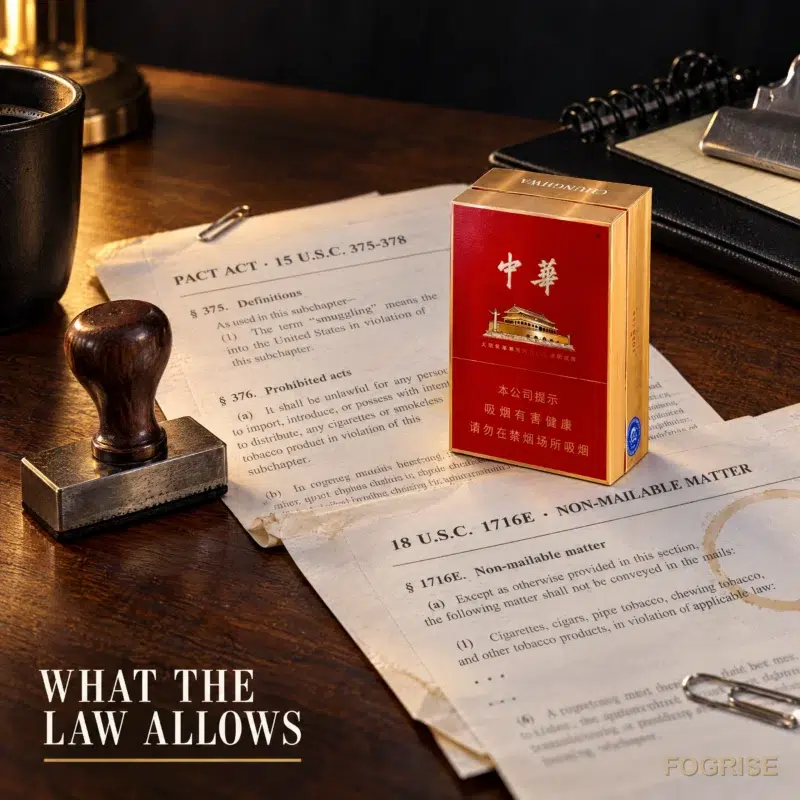
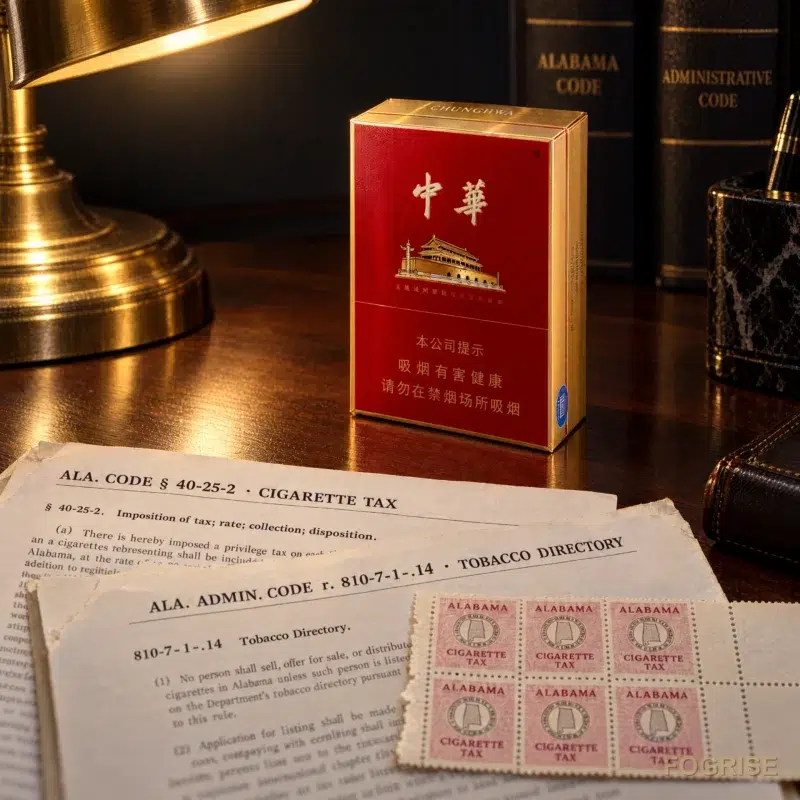
The Prevent All Cigarette Trafficking Act, codified at 15 U.S.C. §§375-378, makes it a federal offense for unauthorized sellers to ship cigarettes across state lines (ATF, 2024; FDA, 2025; TTB, 2024). Our broader shipping, customs and legality coverage walks through how parallel rules in Canada, the EU and the UK compare. It also requires age verification at both purchase and delivery, ATF registration for any interstate seller, and full collection of the destination state’s excise tax (ATF, 2024; FDA, 2025; TTB, 2024). The US Postal Service is separately barred from carrying cigarettes under 39 U.S.C. §3001, and the three major private carriers (UPS, FedEx, DHL) have all signed Department of Justice agreements ending cigarette delivery service (ATF, 2024; FDA, 2025; TTB, 2024). The practical result is that a website offering to ship Chinese cigarettes to a US address is either operating illegally, relying on smuggling tactics, or sending counterfeit product. Seizure at customs, civil fines, and criminal exposure all apply to buyers as well as sellers.
FDA Requirements for Tobacco Imports
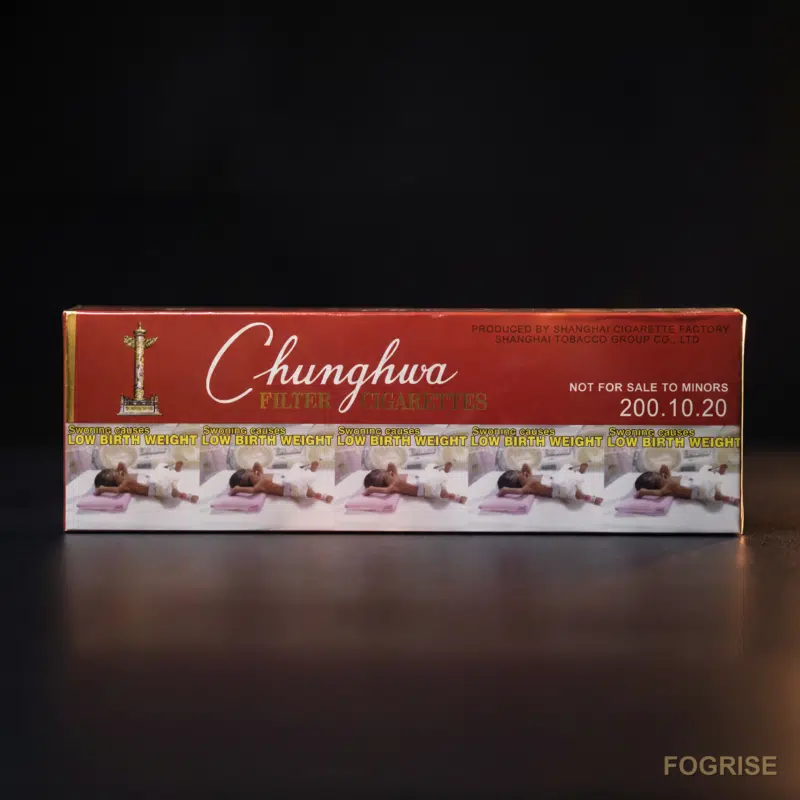
Any tobacco product offered for sale in the US must comply with the Federal Food, Drug, and Cosmetic Act and the Family Smoking Prevention and Tobacco Control Act (ATF, 2024; FDA, 2025; TTB, 2024). That means FDA-mandated rotating health warnings printed in English, full ingredient disclosure to the agency, and pre-market authorization for any product that is new or modified from a previously authorized version (ATF, 2024; FDA, 2025; TTB, 2024). Imported cigarettes carrying only Chinese-language warnings, missing the required text warnings, or lacking FDA filings are non-compliant on arrival. Customs and Border Protection works alongside FDA inspectors to seize counterfeit and non-compliant tobacco shipments at ports of entry every day (ATF, 2024; FDA, 2025; TTB, 2024).
Commercial Import: The Full Compliance Stack
A retailer who actually wants to sell Chinese cigarettes legally in the US has to assemble five things: FDA tobacco establishment registration, a TTB import permit and bond, PACT Act registration with ATF, payment of federal excise tax at the point of entry, and a license to collect and remit excise tax in every state where the product is sold (ATF, 2024; FDA, 2025; TTB, 2024). Add state-by-state flavor bans, fire-safety standards, and Master Settlement Agreement escrow requirements, and the path is steep enough that very few US retailers attempt it. This regulatory wall is the reason genuine Zhongnanhai or Yuxi packs are almost impossible to find on a US shelf, even in cities with large Chinese-American populations.
A Chinese cigarettes industry report from 2025 puts the US imported-volume share at well under 0.1% of total domestic cigarette consumption, a figure driven almost entirely by the commercial-compliance burden described above rather than by lack of demand (ATF, 2024; FDA, 2025; TTB, 2024).
Where to Find Chinese Cigarettes in the United States
Finding Chinese cigarettes in the United States is harder than finding a good bowl of dan dan noodles, but it isn’t impossible. The legitimate channels exist; they’re just narrow, geographically concentrated, and bound by federal and state tobacco rules that catch most casual shoppers off guard. If you would rather start from the buyer’s side of the question, our buying guides hub collects channel-by-channel deep dives. Here is an honest tier-by-tier map of where adults 21 and over can actually find Chunghwa, Double Happiness, Zhongnanhai, and Hongtashan in the US, ranked by reliability and legal risk.

Tier 1: Airport duty-free shops
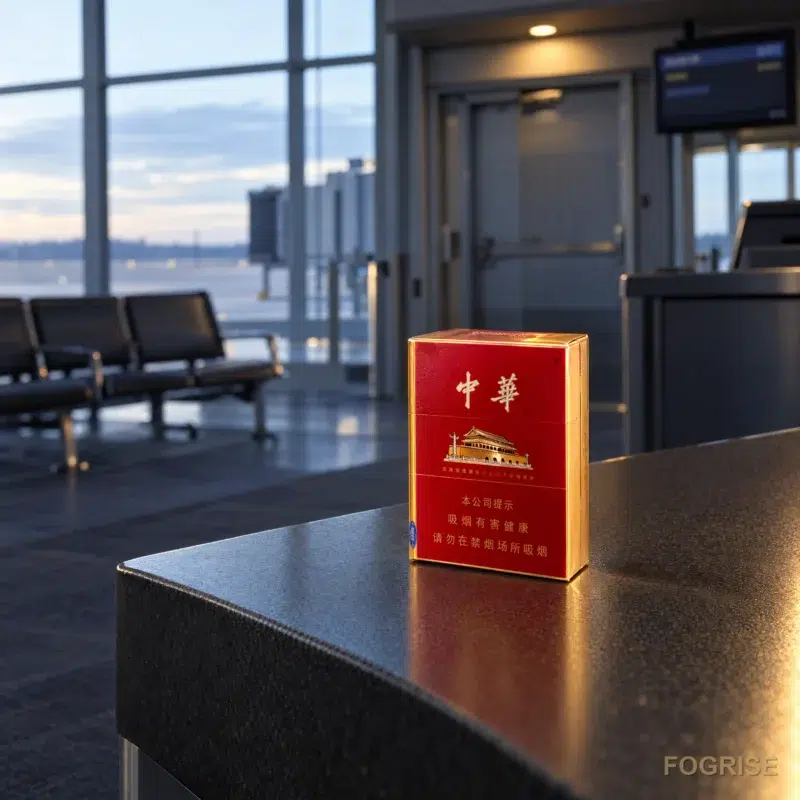
This is the best channel, full stop. International terminals at JFK (New York), LAX (Los Angeles), SFO (San Francisco), ORD (Chicago O’Hare), and IAD (Washington Dulles) periodically stock Chinese brands aimed at travelers heading to or returning from Asia. Chunghwa is the most reliably available SKU; Double Happiness and Hongtashan appear seasonally depending on the duty-free operator’s contracts. You must be 21+, traveling internationally, and the CBP personal-use exemption caps you at one carton (200 cigarettes) duty-free per re-entry. Quantities above that must be declared and become subject to federal and state excise tax at the border.
Tier 2: Chinatown tobacconists
A handful of state-licensed tobacconists in established Chinatowns carry rotating Chinese stock. The most consistent neighborhoods are Manhattan’s Canal Street corridor, the San Gabriel Valley and Monterey Park around Los Angeles, the Richmond and Sunset districts in San Francisco, Argyle Street in Chicago, and the Bellaire Boulevard strip in Houston. Legality depends on the shop holding a valid state tobacco-retailer license, so confirm before purchasing. Authenticity is the bigger concern: some shops have historically sourced from gray channels, so inspect every pack for an intact CNTC tax stamp and the holographic security mark on the foil.
Tier 3: Asian supermarkets & specialty stores
Larger Asian grocery chains like H Mart, 99 Ranch Market, and Mitsuwa occasionally devote a small case to imported tobacco where state law allows, though most locations don’t. When stock does appear, it skews toward lighter Chinese brands like Zhongnanhai. Availability is genuinely inconsistent, so call ahead rather than driving across town on a hunch.
Tier 4: Licensed online importers
A very small number of PACT Act-registered commercial importers serve the US B2B channel, primarily supplying licensed retailers rather than individual consumers. Lead times run 3 to 6 weeks, minimum order quantities often apply, and the full federal-plus-state excise tax stack lands on every shipment. Fogrise-cigarette.com ships to international destinations where local law permits; we don’t ship Chinese cigarettes into the US directly to consumers.
Warning: Importing cigarettes via standard overseas parcel to a US address carries high risk: PACT Act violation, CBP seizure, and potential counterfeit product. The majority of Chinese cigarettes advertised on gray-market websites for US delivery are not delivered, are seized at the border, or arrive as counterfeit. Stick to the verified channels above.
Pricing Reality: What Chinese Cigarettes Cost in the US
Chinese cigarette pricing in the United States is not arbitrary. Every dollar above the China domestic shelf price reflects a stack of taxes, import fees, and distribution margin. Here is what buyers actually pay, by channel.
| Channel | Brand Example | Price Range (USD/pack) | Notes |
|---|---|---|---|
| China domestic | Chunghwa | ~$8–14 | State-controlled retail; approximate USD equivalent |
| US airport duty-free | Chunghwa | ~$15–25 | Most reliable legal source; varies by airport/operator |
| Chinatown tobacconist | Chunghwa / Double Happiness | ~$18–30 | State excise varies widely |
| Gray-market import (online) | Chunghwa | ~$10–18 | High seizure/counterfeit risk; not recommended |
A Chunghwa pack offered online for under $12 should raise immediate suspicion. The math does not work for a legitimate import (Campaign for Tobacco-Free Kids, 2024; TTB, 2024). For context on what fair international pricing actually looks like once duty, currency and shipping are stripped out, the live xiangyandd shop catalogue is a useful reference point.
The US Excise Tax Stack
Three separate layers compound on every legally imported pack. The federal cigarette excise tax adds $1.01 per 20-cigarette pack (Campaign for Tobacco-Free Kids, 2024; TTB, 2024). State excise taxes pile on top, and the spread is enormous: Missouri charges $0.17 per pack while Connecticut charges $5.35, with a US-wide average near $1.91 (Campaign for Tobacco-Free Kids, 2024; TTB, 2024). Customs and Border Protection then applies a duty of roughly $1.89 per 1,000 cigarettes plus an ad valorem rate on declared value above the personal duty-free threshold (Campaign for Tobacco-Free Kids, 2024; TTB, 2024).
For commercial importers, FDA compliance is its own line item. Tobacco product labeling, ingredient disclosure submissions, and establishment registration fees all add overhead that retail importers must absorb or pass on. Distribution then takes its cut. The importer-to-distributor-to-retailer chain typically marks landed cost up by 40 to 60 percent (Campaign for Tobacco-Free Kids, 2024; TTB, 2024). By the time a Chinatown shelf price is set, taxes and intermediaries can account for more than half of what the buyer pays.
Why Are They More Expensive Abroad?
Chunghwa is already a prestige product inside China. Domestic retail sits around ¥60-100, roughly $8-14 USD equivalent, which is multiples above a mainstream Chinese brand. Once that pack crosses the Pacific, every fee above compounds the prestige premium.
A pack with an ¥80 domestic equivalent of about $11 collects import duty, state excise, and retail margin until the US shelf price lands at $15 to $25. That number is the floor for legitimate product, not the ceiling. Pricing well below it is the single most reliable counterfeit signal a buyer can read, and it is the reason verified airport duty-free remains the cleanest channel for adult consumers 21+ who want the real thing.
How to Spot Counterfeit Chinese Cigarettes
A 2015 peer-reviewed study by He et al. in Food and Chemical Toxicology found that counterfeit Chinese cigarettes seized at US ports of entry contained significantly elevated lead and cadmium concentrations compared to authentic brands, a documented public-health risk, not merely a financial one (He et al., 2015).
Counterfeit Chinese cigarettes are a separate, layered risk on top of the harms every smoker already accepts when lighting up a regulated pack. The fakes look close enough to fool a casual glance, and the gap between real and counterfeit is where the worst contaminants hide. Pack-by-pack inspection techniques live in our authenticity and safety articles.
Why Counterfeits Are a Public-Health Risk
Authentic Chinese cigarettes are tightly regulated by the CNTC, but the counterfeits flooding US ports are not. A peer-reviewed study in Food and Chemical Toxicology analyzed counterfeit packs seized at US ports of entry and found significantly elevated concentrations of lead and cadmium compared with authentic Chinese brands, both of which are themselves regulated (He et al., 2015; U.S. Customs and Border Protection, 2025). The fakes typically use lower-grade Yunnan tobacco scraps processed in unregulated workshops, with no ingredient disclosure and no quality controls. Yunxiao County in Fujian province has been documented for years as a manufacturing hub for these products (He et al., 2015; U.S. Customs and Border Protection, 2025).
US Customs and Border Protection works alongside the FDA to intercept unauthorized tobacco at ports. In April 2025, CBP seized counterfeit cigarettes valued at roughly $700,000 at the Laredo, Texas port of entry, packaged to mimic Marlboro and a Korean-styled "Chunghwa" label (He et al., 2015; U.S. Customs and Border Protection, 2025). None of this is rare. Treat any "Chinese" pack that did not come through the licensed import chain as suspect by default.
Authentication Signals: What a Real Pack Looks Like
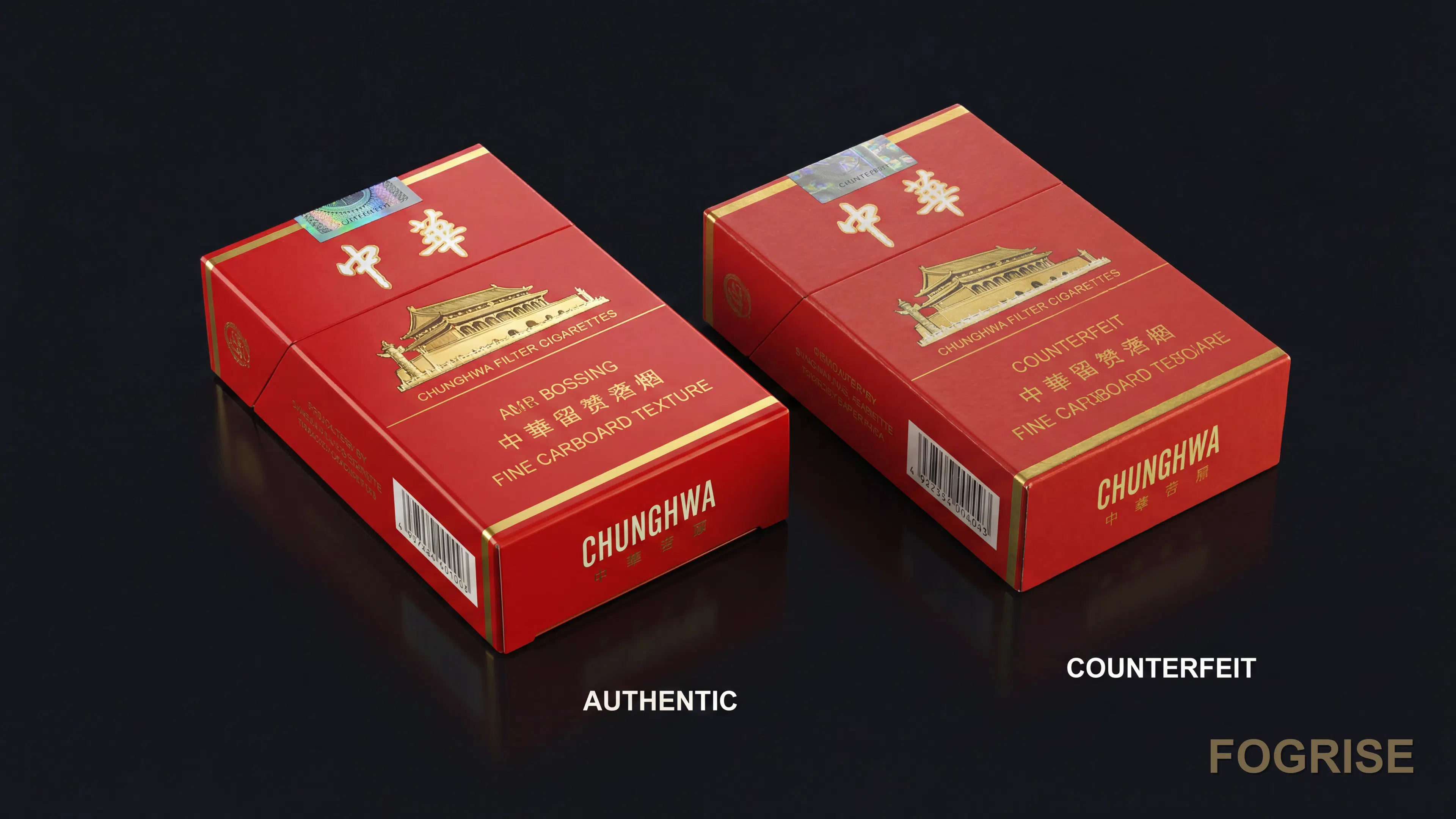
A genuine pack carries a CNTC tax stamp with a printed QR code and serial number that can be checked against China’s 12315 consumer-protection app. Premium brands like Chunghwa use embossed gold foil that feels crisp and raised under your thumb. Holographic security strips on real packs shift color when tilted; flat printing that stays the same color is counterfeit. Look at the ink registration. Real packs show precise color alignment and sharp logos. The batch code printed on the outer cellophane must match the code on the inner pack lining. Cardstock on a genuine pack feels thick and rigid, not flimsy. Chunghwa filters carry a specific corked, textured band; a plain or mismatched filter is a red flag.
Red Flags That Signal a Fake
The clearest signal is price. Authentic Chunghwa retails in China around 60 RMB per pack, and legitimate import channels do not put cartons online for $5 to $10. Anything in that range is almost certainly counterfeit. If you are uncertain about a specific pack or supplier, our concierge team can talk you through what to look for before you commit to a purchase. Missing or wrong-language health warnings are another giveaway. US-imported tobacco must carry English FDA warnings. Missing CNTC tax stamps, smudged text, misaligned colors, and thin cardstock all point the same direction. So does the seller profile. Someone moving ten cartons of Chunghwa at gray-market pricing with overnight shipping is not running a legitimate business.
Chinese Cigarette Gifting Culture: Understanding 礼烟
Before you click "add to cart" on a Chunghwa carton for a US-based recipient, it helps to understand what that pack actually communicates. In Chinese social life, a premium cigarette carries relationship, status, and respect alongside the tobacco. Western buyers often miss this layer entirely, then wonder why a $40 pack matters so much to the person receiving it.
The 礼烟 Tradition: Cigarettes as Social Currency
礼烟 (lǐ yān), literally "gift cigarette," is the practice of using premium tobacco to build and honor guanxi, the web of social relationships that underpins Chinese personal and business life (Tobacco Tactics, 2024). The cultural role mirrors how fine spirits or aged wine function in Western business contexts. The gesture, the packaging, and the status signal carry more weight than the product itself. You will see 礼烟 appear at business meetings to open or close a deal, at weddings as groomsmen gifts, during Spring Festival visits to relatives, and even at ancestral tomb offerings during Qingming (Tobacco Tactics, 2024). The ritual matters too. The pack is presented with both hands. The recipient may politely refuse once or twice before accepting, and the gift is usually set aside rather than opened in front of the giver. A thank-you follows within a day or two.
Which Brands Are Gift-Tier in the US Context
Not every premium pack carries the same weight. Chunghwa (中华) is the gold standard. Its red-and-gold embossed packaging is instantly readable as "the good stuff," and it is the only brand most overseas-Chinese buyers in the US would gift at a genuinely formal occasion (Tobacco Tactics, 2024). Panda (熊猫) sits close behind, with quieter prestige rooted in its association with state guests and diplomatic gifting. Yuxi (玉溪) reads as sophisticated and confident without ostentation, well suited to mid-level business gestures or a respected family elder. For most personal enjoyment, the lighter regional brands work fine, but they don’t carry the signal a formal gift requires.
Modern Considerations
The tradition is shifting. Since China’s 2012 anti-corruption campaign, public officials have grown cautious about accepting expensive gifts, and 礼烟 in government contexts is more sensitive than it once was (Tobacco Tactics, 2024). Smokefree spaces continue to expand globally, so sealed packs as keepsake gifts now matter more than shared smokes. Younger overseas-Chinese families are also more ambivalent about the practice. One thing the tradition cannot change: these are still addictive, harmful products. Cultural meaning does not soften the health reality for any individual user.
Conclusion
Chinese cigarettes are legally accessible to American adults, but the path is narrow. Duty-free shops at international terminals, licensed Chinatown tobacconists in cities like New York and San Francisco, and PACT-compliant importers remain the three legitimate channels. Each requires age verification, federal excise tax compliance, and a clear-eyed read of state-level rules that shift between jurisdictions.
Brand literacy matters just as much as sourcing. Knowing why Chunghwa commands its price tier, why Zhongnanhai built its reputation on lower-tar blends, and where Panda and Double Happiness sit in the cultural hierarchy helps buyers separate authentic product from the counterfeit market. That counterfeit risk is not abstract. Independent lab work has documented elevated heavy metals in seized fakes, which is reason enough to buy only from verified licensed sources.
If you want to explore international shipping options or specific brand availability, the xiangyandd shop lists current inventory. For sourcing questions, authentication checks, or special-order inquiries, our team responds through the contact page.
Smoking is harmful and addictive. This guide is for adults aged 21 and older. Tobacco laws, age requirements, and import rules vary by country and state, always verify your local regulations before purchasing.
FAQ
Can you buy Chinese cigarettes in the United States?
Yes, with significant limits. Adults 21 and over can buy Chinese cigarettes at international airport duty-free shops (JFK, LAX, SFO, ORD, IAD), at licensed Chinatown tobacconists in cities like New York, San Francisco, and Los Angeles, and from a small number of PACT Act-registered commercial importers. Most online sellers offering Chinese cigarettes for US delivery are operating outside the law or shipping counterfeit product. For adults 21+ only. Tobacco is harmful and addictive.
Is it legal to import Chinese cigarettes into the US for personal use?
Travelers 21 or older may bring one carton (200 cigarettes) into the US duty-free as accompanied baggage. Anything above that must be declared and is subject to federal and state excise taxes plus customs duty. Mailing or shipping cigarettes to a US address is a separate matter: the PACT Act and US Postal Service rules ban most mail-order delivery of cigarettes, and major carriers (UPS, FedEx, DHL) no longer ship cigarettes to US addresses. Violation carries seizure, civil fines, and potential criminal exposure. Verify current rules with a customs attorney or CBP before importing.
What are the most popular Chinese cigarette brands?
Chunghwa (中华) is China’s premier prestige brand and the most recognized name among overseas-Chinese buyers. Panda (熊猫) carries historic diplomatic associations. Yuxi (玉溪) and Furongwang (芙蓉王) are sought-after premium labels with loyal domestic followings. At the mid-range, Double Happiness (双喜) is the classic wedding gift brand and Zhongnanhai (中南海) is popular with smokers who prefer a lighter draw. Hongtashan (红塔山) is Yunnan’s high-volume everyday label. All are produced by CNTC subsidiaries.
Are Chinese cigarettes sold at US duty-free shops?
Yes, at some international terminals. JFK, LAX, SFO, ORD, and IAD duty-free operators periodically stock Chinese brands, with Chunghwa being the most reliably available SKU. Double Happiness and Hongtashan appear seasonally depending on operator contracts. You must be 21 or older and traveling internationally; the personal-use duty-free exemption caps you at one carton (200 cigarettes) per re-entry. Stock is not guaranteed, so availability varies by terminal and season.
How can I tell if a Chinese cigarette is real or counterfeit?
Check for a CNTC tax stamp with a QR code and serial number (scannable via China’s 12315 app). On genuine Chunghwa, the gold embossing is crisp and raised. Holographic security strips shift color when tilted; flat printing that stays the same is a counterfeit tell. Look at print registration: real packs have sharp logos and precise color alignment. Thin, flimsy cardstock, smudged text, and filters with a mismatched band are all red flags. Price is the easiest check: legitimate Chunghwa cannot be sold for $5-10 per pack and still be real. Research confirms counterfeit Chinese cigarettes have tested positive for elevated lead and cadmium (He et al., 2015), making this more than a matter of money.
Why are Chunghwa cigarettes so expensive?
Chunghwa is an ultra-premium brand inside China (domestic retail ¥60-100 per pack, roughly $8-14), already the most expensive tier in a tightly state-controlled market. When a pack enters the US, it collects federal excise tax ($1.01 per pack), state excise tax (averaging $1.91 nationally, up to $5.35 in Connecticut), customs duty, and a 40-60% importer-distributor-retailer markup. The result is a US shelf price of $15-25 at duty-free and up to $30 at Chinatown tobacconists. The premium also reflects genuine scarcity: very few US retailers clear the full five-agency compliance stack needed to sell Chinese cigarettes legally.
Do Chinese cigarettes taste different from American cigarettes?
Generally yes. Chinese cigarettes are blended primarily from Virginia and Burley leaf, flue-cured, with higher filter ventilation rates than most US brands. The result is a cleaner, softer draw compared to the darker, air-cured profiles common in American full-flavor cigarettes. Our broader cigarette types and flavours library explains how strength, length and blend interact across regions. Mid-range Chinese brands like Zhongnanhai lean further toward a Japanese-influenced light style. Premium tiers like Chunghwa are tuned for shareability at social occasions rather than high nicotine intensity. These differences are sensory tendencies, not absolute rules, as individual packs vary by run and storage conditions. Smoking is harmful at any taste profile.
Can I order Chinese cigarettes online and have them shipped to the US?
Not legally through standard channels. The PACT Act makes it a federal offense for unauthorized sellers to ship cigarettes to US addresses, USPS is separately barred from carrying cigarettes, and UPS, FedEx, and DHL have all ended cigarette delivery service under DOJ agreements. Online sellers advertising Chinese cigarette delivery to US consumers are either operating illegally or selling counterfeit product. Packages are routinely seized by CBP at ports of entry, and buyers face civil and criminal exposure. The legitimate domestic options are airport duty-free (accompanied baggage only) and licensed Chinatown tobacconists.
References
<ol> <li>He, Y., von Lampe, K., Wood, L., & Kurti, M. (2015). Investigation of lead and cadmium in counterfeit cigarettes seized in the United States. Food and Chemical Toxicology, 81, 40-45. https://doi.org/10.1016/j.fct.2015.04.006</li> <li>Bureau of Alcohol, Tobacco, Firearms and Explosives. (2024). Prevent All Cigarette Trafficking (PACT) Act. U.S. Department of Justice. https://www.atf.gov/alcohol-tobacco/prevent-all-cigarette-trafficking-pact-act</li> <li>U.S. Food and Drug Administration. (2025). Importing and exporting tobacco products. https://www.fda.gov/tobacco-products/products-guidance-regulations/importing-and-exporting</li> <li>U.S. Food and Drug Administration. (2025). Cigarette labeling and health warning requirements. https://www.fda.gov/tobacco-products/labeling-and-warning-statements-tobacco-products/cigarette-labeling-and-health-warning-requirements</li> <li>Alcohol and Tobacco Tax and Trade Bureau. (2024). Importer: Tobacco. U.S. Department of the Treasury. https://www.ttb.gov/regulated-commodities/tobacco/importer</li> <li>U.S. Customs and Border Protection. (2025, April 30). CBP intercepts more than $729K in counterfeit cigarettes at Laredo Port of Entry. https://www.cbp.gov/newsroom/local-media-release/cbp-intercepts-more-729k-counterfeit-cigarettes-laredo-port-entry</li> <li>California Department of Tax and Fee Administration. (2024). Tax guide for cigarettes and tobacco products: PACT Act and consumer purchases. State of California. https://cdtfa.ca.gov/taxes-and-fees/cigarette-and-tobacco-products/pact-act-and-consumer.htm</li> <li>Campaign for Tobacco-Free Kids. (2024). State cigarette excise tax rates & rankings (Fact sheet No. 0097). https://assets.tobaccofreekids.org/factsheets/0097.pdf</li> <li>Tobacco Tactics. (2024). China National Tobacco Corporation. University of Bath Tobacco Control Research Group. https://www.tobaccotactics.org/article/china-national-tobacco-corporation/</li> <li>O’Connor, R. J., Li, Q., Stephens, W. E., Hammond, D., Elton-Marshall, T., Cummings, K. M., Giovino, G. A., & Fong, G. T. (2010). Cigarettes sold in China: Design, emissions and metals. Tobacco Control, 19(Suppl 2), i47-i53. https://doi.org/10.1136/tc.2009.030163 <a href="/"https://pmc.ncbi.nlm.nih.gov/articles/PMC2976001/" target="_blank" rel="noopener nofollow">https://pmc.ncbi.nlm.nih.gov/articles/PMC2976001/">https://pmc.ncbi.nlm.nih.gov/articles/PMC2976001/</a></li> </ol>
<hr />
Last reviewed and updated: June 2026. Author: xiangyandd editorial team. For tailored guidance, contact our team.

 English (US)
 简体中文
 Deutsch
 Français
 Español