

Blog
Chinese Cigarettes in Luxembourg: 7 Top Brands & Buying Guide

TL;DR
Online tobacco delivery to Luxembourg is banned under Bill 8333 (2025). Personal import: 200 cigs from non-EU duty-free; 800-cig EU personal-use guideline. Top Chinese brands: Chunghwa, Panda, Double Happiness, Furongwang, Yuxi, Hongtashan, Zhongnanhai. Formal China→LU imports = US$8/year (grey-market only). Adults 21+ only; verify local laws.
Abstract
Luxembourg occupies an unusual seat in Europe’s tobacco map. Excise duty sits near €6 per pack, roughly half of what Dutch or French smokers pay, and that gap has built the Grand Duchy into a long-running cross-border shopping stop for tobacco buyers from neighboring countries. Yet for anyone hunting Chinese brands specifically, the picture shifts. UN COMTRADE data records formal cigarette imports from China at roughly US$8 in 2021, meaning Chunghwa, Double Happiness, and Furongwang barely enter the country through official wholesale channels. On top of that, Bill 8333 passed in 2025 closed the online distance-sales route that some buyers had relied on, leaving physical tobacconists, duty-free shops, and personal-import allowances as the remaining legitimate paths.
What Luxembourg buyers can actually do in 2025 is narrower than most expect. Below: the new online ban and its day-to-day effects, duty-free allowances for imports from outside and inside the EU, profiles of seven Chinese brands (high-end through everyday), where physical availability is realistic versus wishful thinking, and the wider market context. A clear, lawful reference, not a sales pitch.
Adults 21 and over only. Smoking causes serious harm to health and is addictive. Always verify current Luxembourg and EU tobacco laws with official sources such as the Administration des douanes et accises before acting. Nothing here is legal, medical, or financial advice.
Key Takeaways
- Online tobacco sales banned in 2025. Luxembourg’s Bill 8333 prohibits distance selling of tobacco to consumers, closing the e-commerce route.
- Personal duty-free limits are strict. Travelers from outside the EU may bring 200 cigarettes; intra-EU indicative limits sit around 800 sticks.
- Formal China imports are negligible. UN COMTRADE recorded roughly US$8 in Chinese cigarette imports to Luxembourg in 2021.
- Luxembourg keeps Europe’s lowest excise. A pack sits near €6, well below the €11 typical of Netherlands or France.
- Chunghwa leads the high-end tier, Double Happiness the mid-tier. These two define how Chinese brand recognition tends to filter into European buyer awareness.
- Adults 21 and over only. Smoking is harmful and addictive; verify current Luxembourg law before any cross-border purchase.
Table of Contents
- TL;DR
- Abstract
- Key Takeaways
- Table of Contents
- Are Chinese Cigarettes Legal in Luxembourg? The Direct Answer
- Luxembourg’s Tobacco Tax Advantage: Why It Matters for Chinese Brand Buyers
- Luxembourg’s 2025 Online Tobacco Ban: Bill 8333 Explained
- Personal Import: Duty-Free Tobacco Allowances Into Luxembourg
- The 7 Chinese Cigarette Brands Luxembourg Buyers Should Know
- Where to Find Chinese Cigarettes in Luxembourg
- Luxembourg’s Tobacco Market: Consumption, Illicit Share & Policy Context
- Frequently Asked Questions
- Conclusion
- Further Reading
- References
Are Chinese Cigarettes Legal in Luxembourg? The Direct Answer
Possessing and personally consuming Chinese cigarettes in Luxembourg is legal, provided the product was acquired through lawful channels and stays within personal-use quantities. Ordering them online for delivery into Luxembourg is not. Bill 8333, which entered into force in 2025, prohibits the distance sale of tobacco products to consumers in the Grand Duchy (European Parliament & Council, 2014; European Commission DG SANTE, 2023).
The answer depends entirely on how you intend to obtain the product, and confusing the two routes is the most common mistake among buyers searching for brands like Chunghwa, Furongwang, or Yuxi. The legal status of the cigarette itself (a regulated tobacco product) is separate from the legal status of the transaction that puts it in your hands. Luxembourg, like every other EU member state, has aligned its tobacco rules with the EU Tobacco Products Directive 2014/40/EU, which governs labeling, ingredients, and cross-border commerce (European Parliament & Council, 2014; European Commission DG SANTE, 2023). Bill 8333 closed a previously grey area around mail-order tobacco by explicitly banning distance sales, including from non-EU sellers shipping into Luxembourg.
Two Questions, Two Different Rules
The first question is about the product. A genuine Chinese-market cigarette, in its original packaging, is a lawful tobacco product. Luxembourg does not maintain a blacklist of foreign cigarette brands, and there is no rule that singles out Chinese manufacturers. What matters is that the pack carries health warnings consistent with the EU TPD and that it is not counterfeit. Personal-use quantities brought in from outside the EU sit under standard customs allowances (200 cigarettes for travelers arriving from a non-EU country, duty-free).
The second question is about how the product reaches you. Bill 8333 reshaped the rules here. Any vendor (Chinese, European, or other) that ships tobacco directly to a Luxembourg-resident consumer is operating outside the law as of 2025. Customs interception is the typical enforcement mechanism, and seizure plus fines are the standard outcomes. Buyers who carry product personally across a border (within allowances) are not affected; buyers who place an online order for home delivery are.
For most readers the legal question reduces to one thing: the brand on the pack is not the issue. The shipping label is.
Luxembourg’s Tobacco Tax Advantage: Why It Matters for Chinese Brand Buyers
Luxembourg applies approximately €2.86 per pack in excise duty (among the EU’s lowest), producing a retail price of roughly €6.00 per pack in 2025, versus €11.00 in the Netherlands and €12.00 in France (Tax Foundation, 2024). Despite this price advantage, formal cigarette imports from China totalled only US$8 in 2021, confirming Chinese brands reach Luxembourg exclusively through grey-market channels (Trading Economics & UN COMTRADE, 2022).
Luxembourg has, for years, been the cheapest place in Western Europe to buy a pack of cigarettes, and the gap with its neighbours is not small. The Grand Duchy’s excise rate sits well below every immediate neighbour, which is why cross-border tobacco shopping is a recognized feature of the regional retail economy (Tax Foundation, 2024; Trading Economics & UN COMTRADE, 2022). For anyone tracking Chinese-brand availability, this tax structure matters because it shapes which channels are economically viable and which are not.
How Luxembourg’s Excise Rates Compare Across Europe
The pricing gap is visible at a glance. The table below compares 2025 indicative excise, VAT, and retail figures across Luxembourg and its four immediate neighbours.
| Country | Excise per pack | VAT | Approx. retail price (2025) |
|---|---|---|---|
| Luxembourg | €2.86 | 16% | ~€6.00 |
| France | ~€5.50 | 20% | ~€12.00 |
| Belgium | ~€4.50 | 21% | ~€10.50 |
| Germany | ~€4.20 | 19% | ~€9.50 |
| Netherlands | ~€5.80 | 21% | ~€11.00 |
A Luxembourg pack costs roughly half what the same product costs across the border in France. The spread against Belgium, Germany, and the Netherlands is wide enough that border-town tabacs in Luxembourg routinely serve commuters from all three neighbours. Long-standing feature, not recent anomaly.
Cross-Border Shopping vs Online Shopping: A Critical Distinction
The tax advantage applies to product sold domestically inside Luxembourg, through licensed tobacconists, supermarkets, and border-zone retailers. It is captured by the buyer who walks in, pays in cash or card, and walks out. The advantage does not transfer to online orders. As covered in the previous section, Bill 8333 prohibits distance sale of tobacco into Luxembourg, so a vendor offering to ship a carton of a Chinese brand to a Luxembourg address at the local tax rate is offering something that is not lawful to deliver. The cheap-pack reality and the online-order reality are two different things, and conflating them is the easiest way to waste money on a seizure.
What US$8 in Formal Imports Tells Us
The clearest evidence that Chinese cigarettes do not flow into Luxembourg through formal trade is the trade record itself. According to UN COMTRADE data for 2021, total reported imports of cigarettes (HS 240220) from China into Luxembourg amounted to approximately US$8 for the entire calendar year (Tax Foundation, 2024; Trading Economics & UN COMTRADE, 2022). That is not a typo. Eight dollars. For context, a single retail carton at Luxembourg prices exceeds that figure. A number this small is statistically indistinguishable from zero and tells us, with high confidence, that no Chinese-brand cigarettes reach the Luxembourg market through normal customs-declared channels. Every pack of Chunghwa, Yuxi, or Furongwang circulating in the country has therefore arrived through a personal-carry route, a duty-free purchase, or an informal channel. Combined with the Bill 8333 ban on online tobacco sales, this is why genuine Chinese brands are not stocked at your local Cactus or Delhaize, and why anyone telling you otherwise is selling something you should examine carefully before purchasing.
The Luxembourg tax advantage is real and it is large, but it is a domestic-retail advantage. For Chinese brands specifically, it has almost no practical effect on supply.
Luxembourg’s 2025 Online Tobacco Ban: Bill 8333 Explained
If you have spent any time searching for Chinese cigarettes online and noticed that Luxembourg checkout addresses suddenly stop working, this is why. The Chamber of Deputies adopted Bill 8333 in October 2025, and the practical effect is simple: no compliant online retailer, anywhere, is allowed to ship tobacco or nicotine products to a Luxembourg address. Understanding what the law actually says (and what it does not) helps you plan a lawful route to the brands covered in the sections above.
What Bill 8333 prohibits
Bill 8333 prohibits cross-border distance sales of tobacco products and related nicotine products to consumers located in Luxembourg (European Parliament & Council, 2014; European Commission DG SANTE, 2023). That includes traditional cigarettes, hand-rolling tobacco, cigars, heated-tobacco units, e-liquids, and nicotine pouches. The ban covers the full chain: a seller based in another EU member state, or in a non-EU country, may not market, sell, or deliver these products directly to a private buyer in Luxembourg. Order confirmations, shipping labels, and payment flows aimed at Luxembourg consumers all fall inside the prohibition.
Luxembourg’s Chamber of Deputies adopted Bill 8333 in October 2025, transposing EU Directive 2022/2100 and exercising the member-state option under TPD Article 18 to ban cross-border distance sales of tobacco and nicotine products to Luxembourg-resident consumers, with enforcement coordinated by the Customs and Excise Administration (European Parliament & Council, 2014; European Commission DG SANTE, 2023).
How this implements EU TPD Article 18
Article 18 of the EU Tobacco Products Directive (Directive 2014/40/EU, as amended) gives each member state two choices. A state may permit cross-border distance sales under a registration regime, or it may prohibit them outright. Luxembourg has now chosen the prohibition route, joining roughly fifteen other EU countries that took the same path. The October 2025 vote also transposed Directive 2022/2100, which extended TPD-style controls to heated-tobacco products and closed several loopholes around novel nicotine formats. So the legal architecture is layered: the EU framework sets the option, and Bill 8333 is Luxembourg’s national instrument that exercises it. The Customs and Excise Administration (Administration des douanes et accises) handles enforcement at the border and through postal screening, and consumer-side penalties focus on the seller rather than the buyer.
What it means for international cigarette retailers
The message from Luxembourg for any overseas merchant is unambiguous. Ship to a LU postal address after the ban took effect and you are operating outside the law, regardless of warehouse location. Reputable sellers have already updated their checkout systems to block LU country codes; parcels that slip through face interception at Findel and the postal sorting centres. If a site still promises delivery to Luxembourg, treat that as a red flag for non-compliance or outright fraud.
The lawful options narrow to two practical channels. You can buy in person at Luxembourg’s licensed retail network (the bureaux de tabac and supermarket counters covered earlier), or you can rely on personal-import allowances when you travel. The next section walks through those duty-free thresholds in detail, because that is where most adult buyers will find a workable path.
Personal Import: Duty-Free Tobacco Allowances Into Luxembourg
With direct online shipment closed off, personal import on a real trip is the cleanest legal route for bringing Chinese-brand cigarettes into Luxembourg. The rules differ sharply depending on where you fly in from and how the goods travel, so it pays to know the three regimes before you pack. Below is the simplest framing of how customs treats each route at Findel and at the land borders.
| Route | Quantity Limit | Legal Basis | Key Condition |
|---|---|---|---|
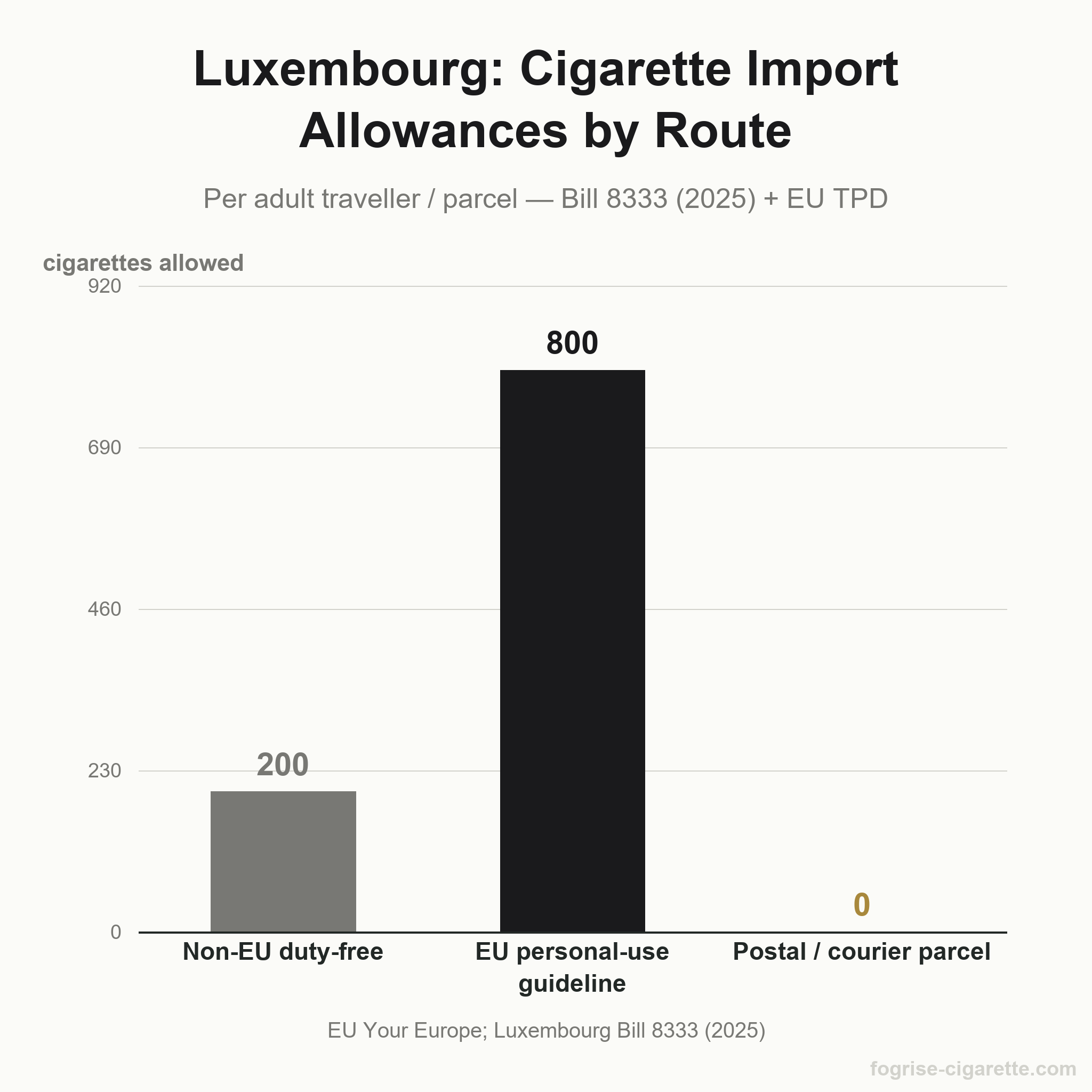
| Personal travel, non-EU origin (e.g. Beijing to Luxembourg) | 200 cigarettes per adult traveller | Council Directive 2007/74/EC, Art. 8 | Goods carried in personal baggage, for own use, not resold |
| Personal travel, EU internal (e.g. Frankfurt to Luxembourg) | 800 cigarettes guideline for personal use | Council Directive 2008/118/EC, Art. 32 | Excise paid in origin country; quantity weighed against personal-use indicators |
| Postal or courier parcel (any origin) | Zero allowance for private buyers | Bill 8333 (2025) + TPD Art. 18 | Treated as commercial import; parcels seized, no de minimis |
Non-EU arrivals: 200-cigarette duty-free limit
If you are flying into Findel Airport from China, the relevant rulebook is Council Directive 2007/74/EC on travellers’ allowances. Each adult passenger arriving from a non-EU country may bring 200 cigarettes (one carton) duty-free, alongside the standard alcohol and gift allowances (European Commission, 2024; European Parliament & Council, 2014). The carton must be in your personal baggage, intended for your own consumption, and declared honestly at the red channel if you exceed the limit. For a traveller landing in Luxembourg from Beijing with a single carton of Zhongnanhai or Furongwang, that scenario sits squarely inside the duty-free envelope. Bring more than 200 sticks and you are expected to declare the excess and pay Luxembourg excise plus VAT at the airport.
EU Council Directive 2007/74/EC sets the 200-cigarette duty-free allowance for adult travellers arriving from non-EU origins, while Directive 2008/118/EC Article 32 frames the 800-cigarette indicative threshold for intra-EU personal-use movements; Luxembourg’s Customs and Excise Administration applies both regimes at Findel and the land borders (European Commission, 2024; European Parliament & Council, 2014).
EU internal travel: 800-cigarette personal-use guideline
Driving in from a neighbouring EU country is a different regime. Under Council Directive 2008/118/EC, goods on which excise has already been paid in another EU country move freely for personal use, with 800 cigarettes set as the indicative threshold customs officers use to weigh personal versus commercial intent. The figure is a guideline, not a hard cap, and the test is whether the goods are genuinely for your own consumption. Officers look at frequency of trips, packaging, transport method, and any other indicators of resale. Cigarettes bought duty-paid in a neighbouring member state and carried home in your car for personal use typically clear without issue at or below the 800-stick mark.
Postal and courier parcels: still banned
This is the channel readers most often hope to find a workaround in, and the honest answer is that there isn’t one. Bill 8333 closed cross-border distance sales, and customs treats any tobacco parcel addressed to a private Luxembourg buyer as a commercial import without a valid licence. There is no personal-use de minimis for postal cigarettes, no traveller-allowance equivalent, and no exception for small carton-sized shipments. Parcels are seized, the buyer may be billed for destruction costs, and repeat consignments draw further scrutiny. Before you travel, the Administration des douanes et accises publishes current guidance at do.gouvernement.lu, and a quick check of the latest notices is sensible whenever rules around novel nicotine products are evolving.
The 7 Chinese Cigarette Brands Luxembourg Buyers Should Know
Seven brands cover roughly every reason a Luxembourg buyer ends up shopping for Chinese cigarettes. Two sit at the diplomatic-gift end, two anchor a mid-range that still travels well, and three handle everyday purchases at prices closer to a normal European pack. All seven come out of subsidiaries of the China National Tobacco Corporation (CNTC), the state monopoly that produces close to 40% of the world’s cigarettes by volume and is, by output, the largest tobacco company on the planet (Tobacco Atlas, 2024; World Health Organization, 2023). Knowing which CNTC subsidiary made a pack (Shanghai, Yunnan, Hunan, Guangdong, Beijing) is the fastest way to read the tier before you read the price.
Smoking is harmful to health. Sales are restricted to adults aged 21 and over in most markets, including Luxembourg. The word "mild" used below describes flavour and draw, not a health benefit.
Premium Tier: Chunghwa (中华) — China’s Diplomatic Cigarette
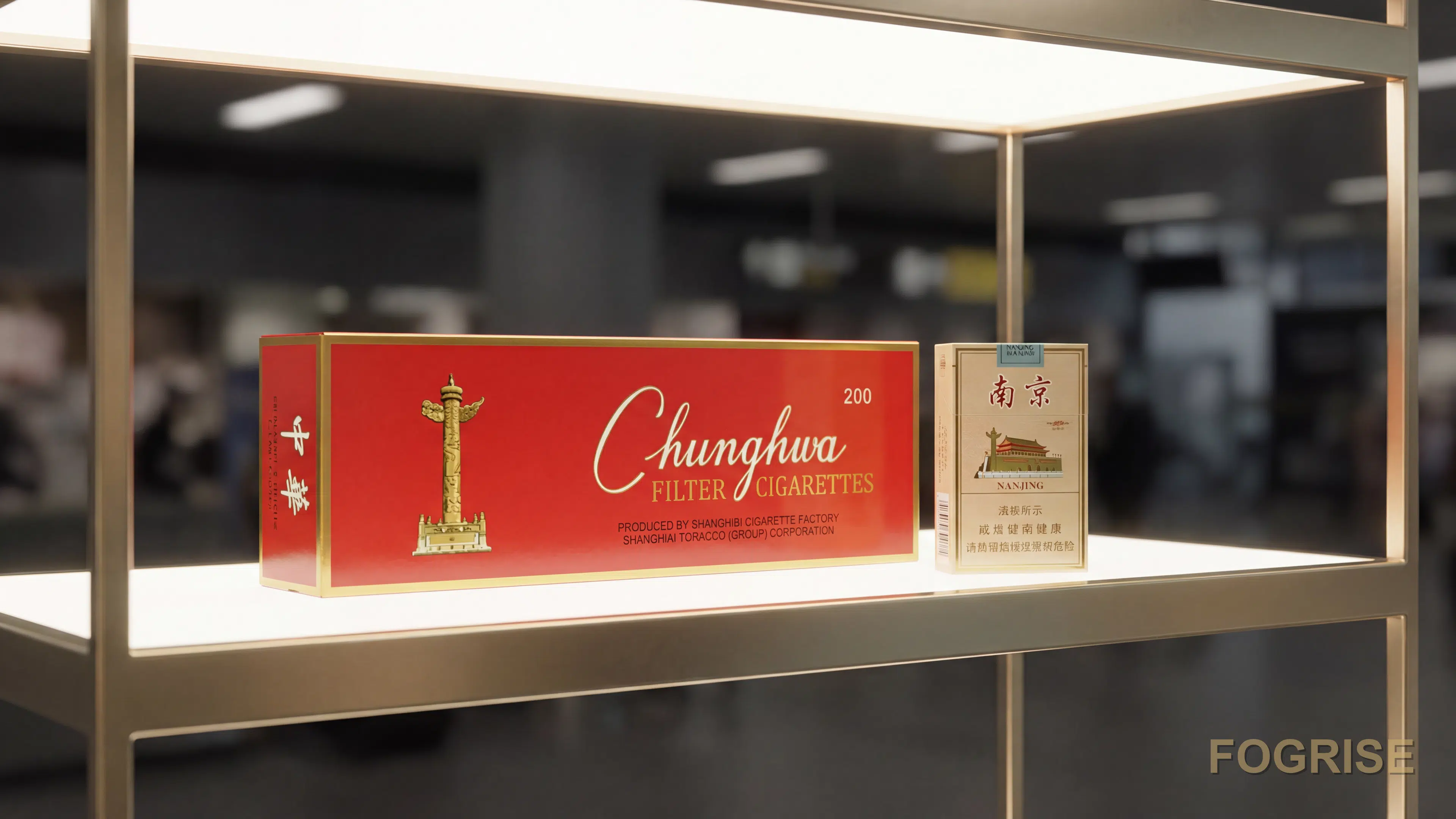
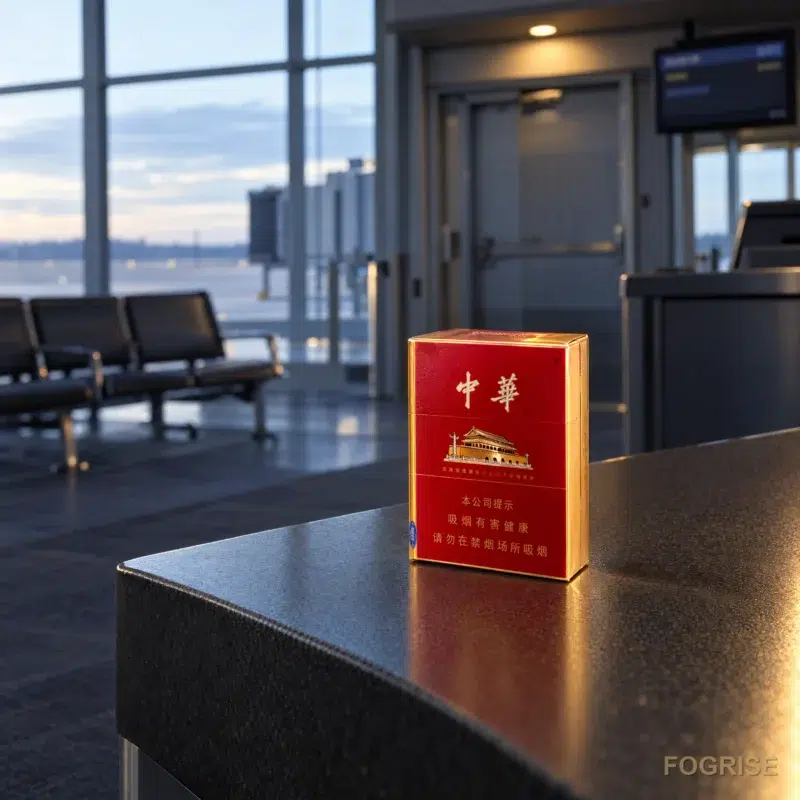
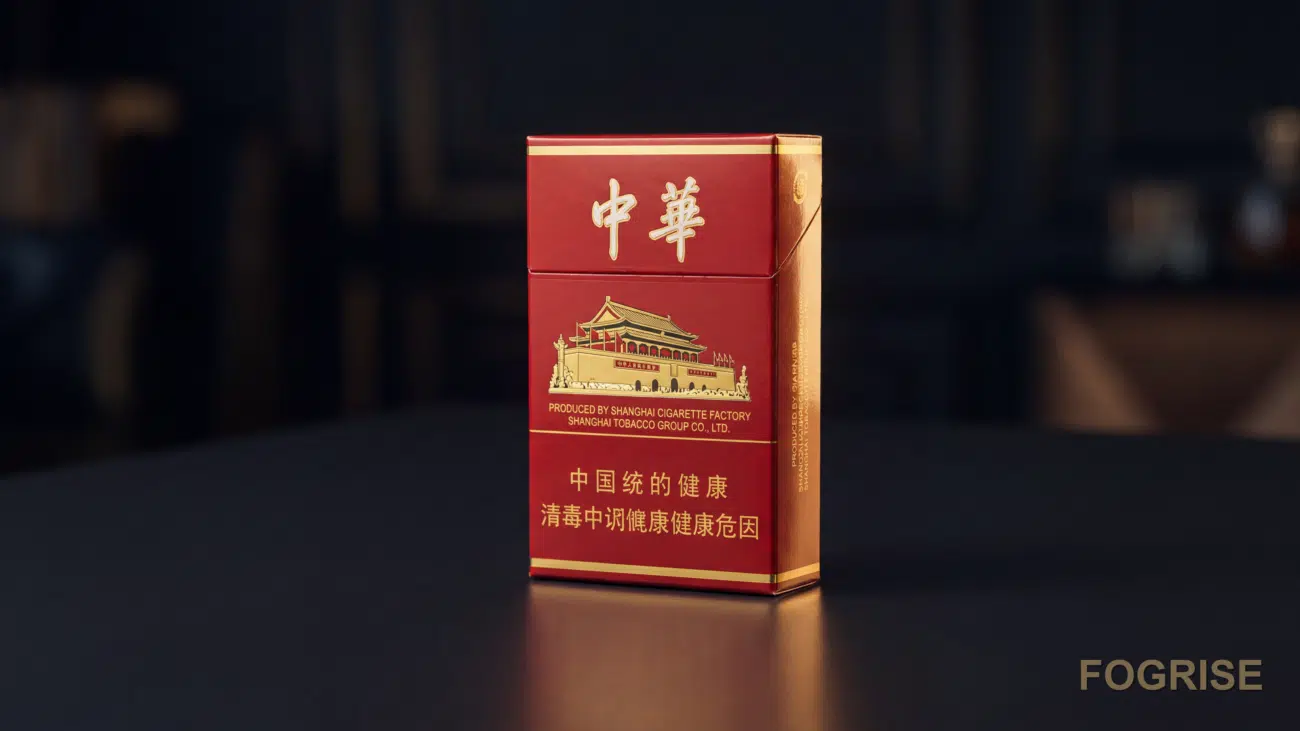
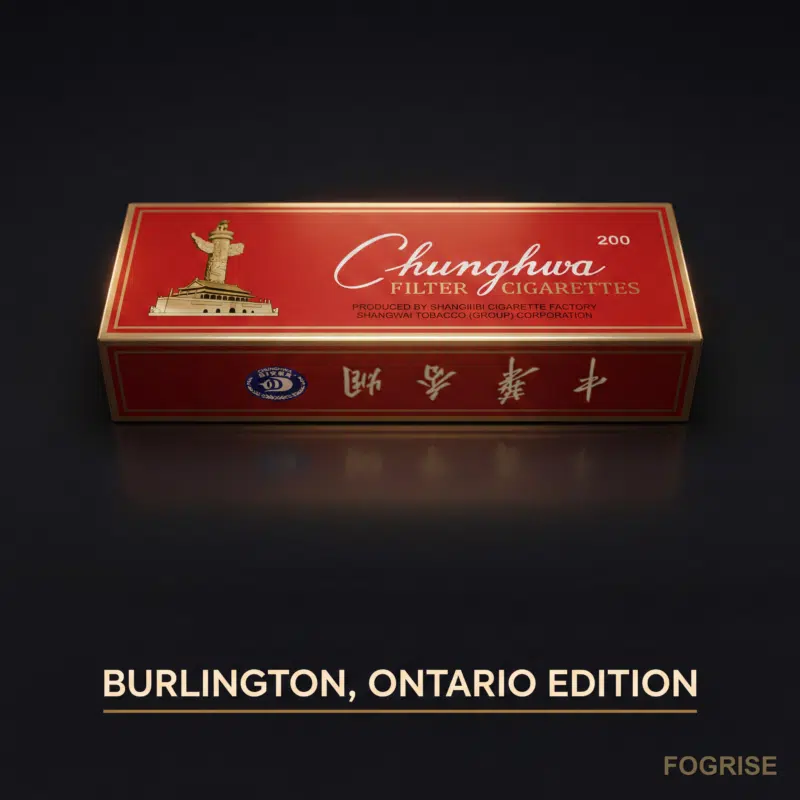
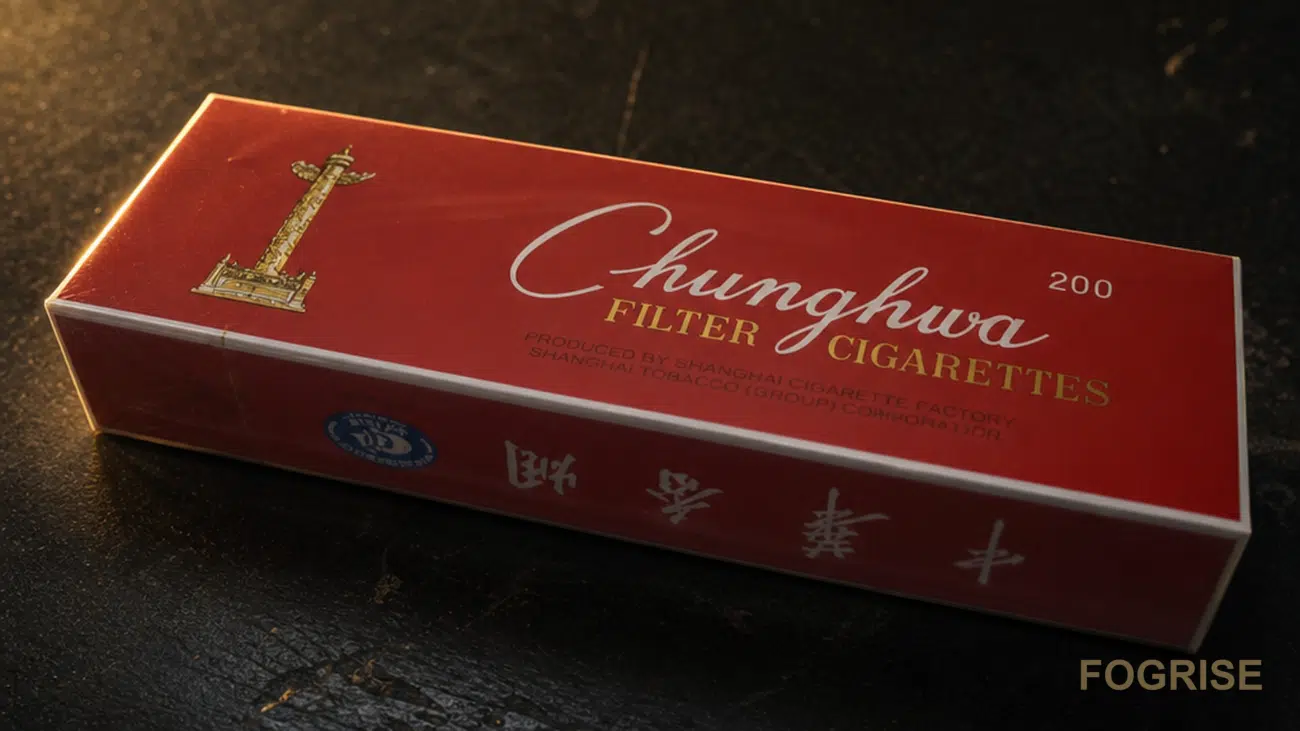
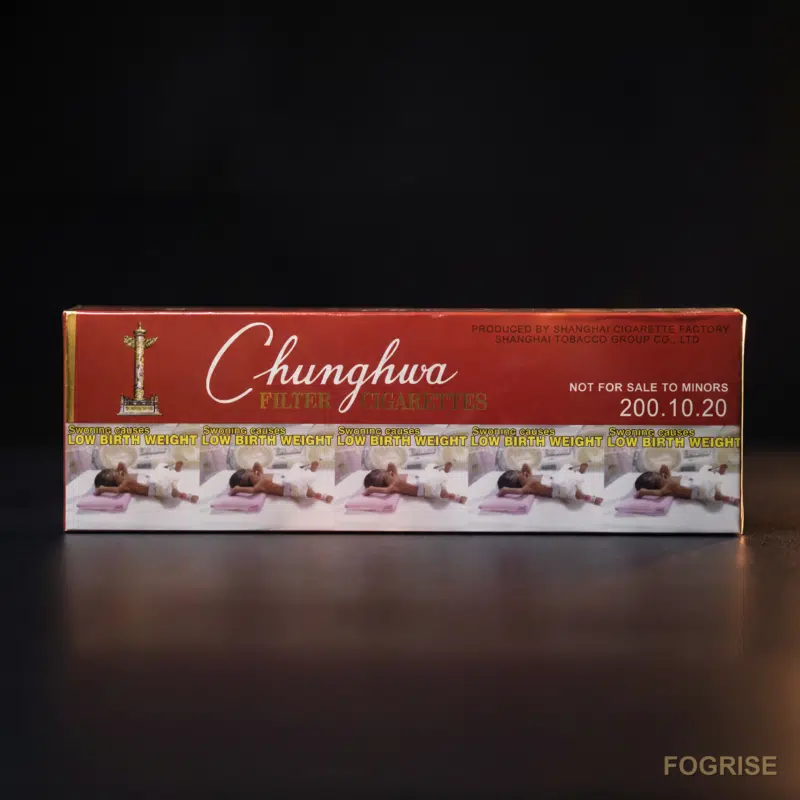
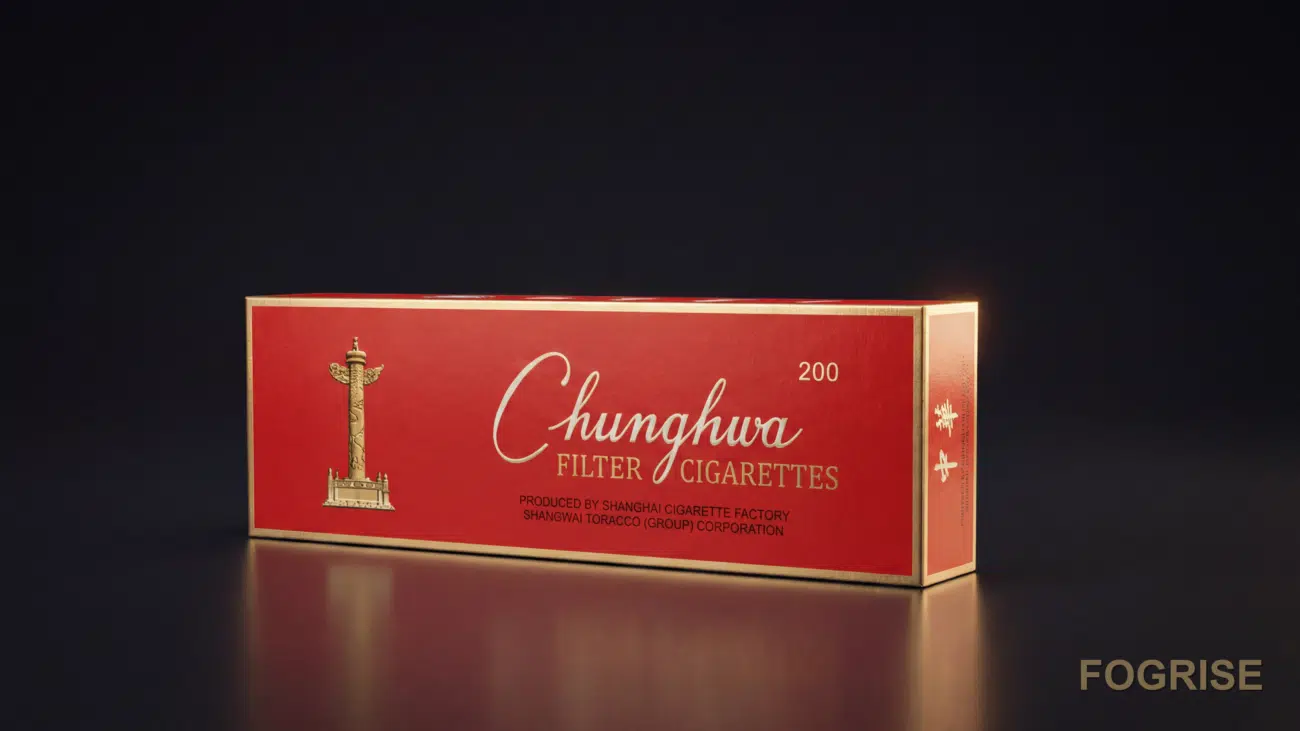
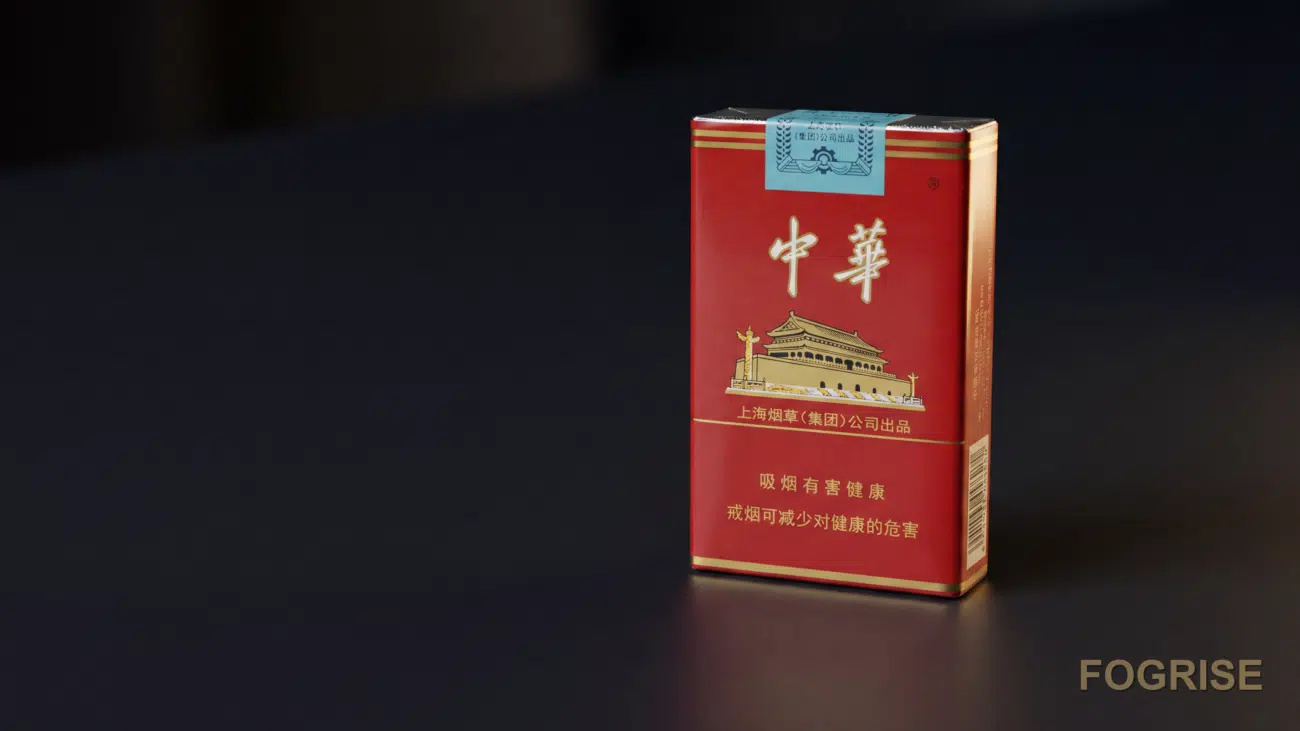
Chunghwa, written 中华 and pronounced roughly "jong-hwa," is the Shanghai Tobacco Group’s flagship. The red-and-gold pack carries the Tiananmen Gate motif and has been served at Chinese state banquets for decades, which is where the "diplomatic cigarette" tag comes from. Internationally it lands somewhere in the $25 to $50+ per pack range depending on the variant (soft pack, hard pack, the slim 5000 line). It’s a full-flavour Virginia-style blend, and for most Luxembourg buyers it’s a gift purchase rather than a daily smoke.
Premium Tier: Panda (熊猫) — The Rarest Chinese Export Brand
Also from Shanghai Tobacco, Panda (熊猫) is the rarest of the seven. The story most cited is that it was Deng Xiaoping’s preferred brand, and production volumes have stayed deliberately small. The pack is white with a panda graphic and almost no other decoration. Internationally Panda runs $30 to $60+ per pack, and supply is the real constraint, not price. If a Luxembourg retailer has it in stock at all, expect limited variant choice and frequent gaps between restocks.
Mid-Range: Double Happiness (双喜) — Widely Recognised Abroad
Double Happiness (双喜, the doubled 囍 character used at weddings) is made by Guangdong Tobacco and is probably the Chinese brand most non-Chinese smokers recognise by sight. Red pack, large gold 囍 logo, broad export footprint. It typically sells for $8 to $20 per pack internationally, which puts it in normal European premium territory rather than gift territory. It’s the brand most often asked for by name in Luxembourg shops by buyers who tried it on a trip through Asian transit hubs like Singapore.
Mid-Range: Furongwang (芙蓉王) — Hunan’s Premium Export
Furongwang (芙蓉王, "Lotus King") comes out of Hunan CNTC and is the regional answer to Chunghwa: gold-accented pack, full body, positioned as a high-end smoke without the diplomatic-gift price tag. International prices generally sit in the $15 to $25 range. Among Chinese expats in Europe it has a noticeable following, and Luxembourg specialty importers usually stock at least one Furongwang variant alongside the Shanghai brands.
Everyday Tier: Yuxi (玉溪) — Yunnan Leaf at Mid-Price
Yuxi (玉溪) is produced by Yunnan CNTC in Yuxi City and trades on Yunnan’s reputation as China’s leading tobacco-growing province. The pack is teal-blue, restrained, and the blend leans toward Yunnan’s softer character. Expect $10 to $18 per pack internationally. It sits in the everyday tier on price, but the leaf provenance is what drives repeat purchases.
Everyday Tier: Hongtashan (红塔山) — Yunnan’s Best-Seller
Hongtashan (红塔山, "Red Pagoda Mountain") is the other Yunnan CNTC heavyweight and historically one of the highest-volume single brands in China. The pack is red and white with the mountain pagoda logo. International pricing runs $8 to $15 per pack. It’s a workhorse brand: dependable, widely produced, easy to find through Asian-focused importers, and a sensible first try for anyone curious about Chinese cigarettes without committing to premium-tier money.
Everyday Tier: Zhongnanhai — The Mild Tier International Pick
Zhongnanhai is Beijing CNTC’s mild-flavour line and the one with the strongest international following outside Chinese expat circles, particularly in Germany where it has been imported for years, and with a measurable presence among adult buyers across Northern European markets like Sweden. Pack design is teal and minimalist. International prices generally land in the $8 to $15 band. The blend is lower-tar and noticeably lighter on the draw than the Shanghai or Hunan brands, which is the flavour profile most European buyers describe as "easier" on first try.
Brand comparison table
| Brand | Chinese Name | Tier | Origin Province (CNTC subsidiary) | Strength | Approx. International Price | Availability in Luxembourg |
|---|---|---|---|---|---|---|
| Chunghwa | 中华 | Premium | Shanghai | Full | $25–$50+ | Specialty importers; gift channel |
| Panda | 熊猫 | Premium | Shanghai | Full | $30–$60+ | Rare; intermittent stock |
| Double Happiness | 双喜 | Mid-range | Guangdong | Medium-Full | $8–$20 | Regularly stocked |
| Furongwang | 芙蓉王 | Mid-range | Hunan | Full | $15–$25 | Specialty importers |
| Yuxi | 玉溪 | Everyday | Yunnan | Medium | $10–$18 | Specialty importers |
| Hongtashan | 红塔山 | Everyday | Yunnan | Medium-Full | $8–$15 | Regularly stocked |
| Zhongnanhai | 中南海 | Everyday | Beijing | Mild (low-tar) | $8–$15 | Regularly stocked |

The pattern is consistent: tier tracks origin almost as cleanly as it tracks price. Shanghai for diplomatic-grade, Hunan and Guangdong for mid-range full-flavour, Yunnan for everyday Yunnan-leaf character, Beijing for the mild international pick. Use the table as a shortlist, then narrow by what you actually want the cigarette to do: gift it, share it, or smoke it through the week.
Where to Find Chinese Cigarettes in Luxembourg
Formal cigarette imports from China into Luxembourg totalled US$8 in 2021 per UN COMTRADE data, effectively zero, confirming that no established import channel for Chinese brands exists in Luxembourg’s domestic retail market (Trading Economics & UN COMTRADE, 2022). Personal travel remains the only reliably lawful sourcing route for an adult buyer in Luxembourg.
Sourcing Chinese cigarettes inside Luxembourg is harder than most first-time buyers expect. The Grand Duchy’s retail tobacco network was built around the brands French, Belgian, and German commuters actually buy. Chinese SKUs sit outside that demand curve, so distributors rarely stock them. Adults 21 and older who want to try a Chunghwa or a Zhongnanhai usually end up using one of three paths, and only one of them is reliably lawful. Verify current Luxembourg customs rules before any purchase, because tobacco law in the EU changes year to year.
Airport duty-free at Luxembourg Findel (LUX)
Luxembourg’s only commercial airport carries a duty-free tobacco shop after security in the departures hall. The shelf there runs heavily toward Western brands that move volume with European and transatlantic travellers: Marlboro, Camel, Davidoff, Gauloises. Chinese brands appear, when they appear at all, as one-off seasonal listings, not as a standing range. Travellers who specifically want Chunghwa or Zhonghua should not plan a trip through Findel as their sourcing method. Even when an Asian SKU is in stock, only outbound passengers to non-EU destinations get the duty-exempt price, which makes the airport route useful for departures, not for stocking up at home.
Personal import: the only reliable lawful route
For Luxembourg residents who want genuine Chinese cigarettes, personal carry from China or another Asian hub is the cleanest path. EU customs rules permit a non-commercial personal allowance when entering from outside the EU, currently 200 cigarettes (one carton) per adult traveller, declared and duty-paid above that. The 2024 EU Tobacco Excise framework is under active revision, so confirm the per-passenger threshold and any pending updates with Luxembourg’s Administration des douanes et accises before you fly. Quantities beyond the personal allowance require commercial import licensing, which individual buyers cannot obtain. Mail-order and courier imports of tobacco into Luxembourg from non-EU origins are subject to seizure and excise penalties.
The cross-border shopping reality
Luxembourg sits inside one of Europe’s busiest cross-border tobacco corridors. French tobacconists in Thionville and Longwy, and Belgian buralistes around Arlon, draw daily traffic because their shelf price beats home-market pricing across the border. None of this network meaningfully stocks Chinese brands. The product mix is EU-manufactured, with local tax stamps that reflect French or Belgian excise. A buyer hoping that a short drive will turn up a pack of Double Happiness will leave empty-handed.
For adults outside Luxembourg, or in transit through Asia, our team at fogrise-cigarette.com/shop/ maintains a curated catalogue of authenticated Chinese cigarette brands shipped under destination-country laws. Always confirm your local rules first. Smoking causes serious disease. This page is informational and assumes adult readers of legal age.
Luxembourg’s Tobacco Market: Consumption, Illicit Share & Policy Context
Luxembourg’s tobacco data tells two different stories depending on which number you read first. The headline per-capita consumption figure makes the country look like one of Europe’s heaviest-smoking populations. The actual resident smoking rate puts it among the lightest. The gap is not a measurement error. It is the signature of a small open economy whose retail tobacco sector is shaped almost entirely by cross-border buyers, and that single fact reshapes what a Chinese-cigarette seeker should expect on the ground. Adults 21 and older reading this for purchase planning should treat the section as market context, not health guidance. Smoking causes serious disease.
According to KPMG and Philip Morris International’s 2024 illicit-trade study, Luxembourg’s illicit cigarette share was approximately 0.2% of total consumption, among the lowest recorded in the EU-27, with sales-to-non-residents inflating apparent per-capita consumption to roughly 10.7 litres of pure tobacco equivalent per inhabitant per year against an EU average near 8.5 litres (KPMG & Philip Morris International, 2025; OECD, 2025; Eurostat, 2024). The same dataset records Luxembourg’s actual daily-smoker prevalence at around 11.7% for adult males, well below the EU mean.
Why Luxembourg’s per-capita stats look inflated
Consumption is measured by legal sales inside the country, divided by resident population. Luxembourg’s resident population is roughly 670,000. The daily working-age population is materially larger once you count the cross-border commuters who flood in from France and Belgium and Germany each morning, and weekend petrol-station traffic adds another buyer cohort on top. Every carton those non-residents buy at a Luxembourg station counts in the national consumption statistic. The 10.7 L per-capita figure is therefore a sales artefact, not a behavioural fact about Luxembourgers.
Illicit tobacco in Luxembourg: 0.2 percent, one of the EU’s lowest
A 0.2% illicit share is unusual. Greece, Ireland, and France routinely report illicit shares between 15% and 30%, and even Germany sits around 18%. Luxembourg escapes that pattern because its legal retail price is already the cheap option in the region, so cross-border demand absorbs the price pressure that would otherwise push buyers toward contraband. Counterfeiting networks have weak incentive to compete with a market where the lawful pack beats their prices.
What this means for Chinese cigarette seekers
| Metric | Luxembourg | EU Average |
|---|---|---|
| Tobacco consumption (L pure-tobacco-equivalent per capita per year) | 10.7 | 8.5 |
| Adult daily smoker rate | ~15% (male 11.7%) | ~18% |
| Illicit cigarette share | 0.2% | ~10% |
| Approx. retail pack price | ~€6 | €8 to €10 |
For a buyer trying to source genuine Chinese cigarettes in Luxembourg, the 0.2% illicit share is the most useful number on the table. It means the contraband risk a Luxembourg buyer faces is materially lower than in markets like Lithuania, where illicit share has exceeded 20% and counterfeit Chinese-brand product circulates aggressively. A pack labelled Chunghwa offered through informal channels in Vilnius warrants strong suspicion; the same offer in Luxembourg is statistically rarer but still warrants the same authentication checks covered earlier. Buy through declared channels, verify tax stamps, and confirm current customs rules before any purchase.
Frequently Asked Questions
Q: Is it legal to buy cigarettes online in Luxembourg?
No. Luxembourg’s Bill 8333, adopted in 2025, bans cross-border distance sales of tobacco and nicotine products to Luxembourg consumers (European Commission DG SANTE, 2023). That includes orders placed with EU and non-EU online retailers shipping into the country. Buyers must be adults (21+ per xiangyandd editorial policy; 18+ under national law) and should always verify current legislation, as enforcement and customs rules change. Smoking is harmful to health.
Q: What is Bill 8333 and how does it affect tobacco purchases in Luxembourg?
Bill 8333 is the 2025 Luxembourg law that transposes EU Directive 2022/2100 into national legislation (European Parliament & Council, 2014). It prohibits the distance sale (online, mail-order, telephone) of tobacco products, herbal smoking products, and nicotine-containing items to consumers located in Luxembourg. The practical effect: lawful purchase happens face-to-face at licensed retailers, or through personal import within travel allowances. Postal parcels of cigarettes are treated as commercial imports and risk seizure.
Q: How many cigarettes can I bring into Luxembourg from outside the EU?
Under EU duty-free rules applied at Luxembourg’s borders, one adult traveller arriving from a non-EU country may bring 200 cigarettes duty-free (European Commission, 2024). Alternative allowances cover 100 cigarillos, 50 cigars, or 250 grams of smoking tobacco. Exceeding these triggers excise duty, VAT, and possible documentation requirements. Allowances cannot be combined across tobacco categories beyond the per-category limits. Always check Luxembourg Customs guidance before travelling.
Q: How many cigarettes can I bring into Luxembourg from another EU country?
There is no fixed quantitative limit on tobacco moved between EU member states, provided it is for genuine personal use (European Commission, 2024). The European Commission’s indicative guideline treats up to 800 cigarettes per adult as presumed personal use. Volumes well above that invite questioning at the border, and resale of personally-imported tobacco is illegal. Luxembourg authorities can reclassify excessive quantities as commercial imports, triggering duty and penalties.
Q: Are Chinese cigarettes available in Luxembourg shops?
Rarely. Formal cigarette imports from China to Luxembourg ran at roughly US$8 in a recent COMTRADE year, which is statistically zero commercial volume (Trading Economics & UN COMTRADE, 2022). Specialist tobacconists in Luxembourg City or Esch-sur-Alzette occasionally stock one or two Chinese SKUs, and the airport duty-free shop carries mainly Western brands. Travellers heading through Asian transit hubs, or routing through Southeast Asian markets like Malaysia, usually find the widest legitimate selection.
Q: Why are cigarettes cheaper in Luxembourg than France, Belgium and the Netherlands?
Luxembourg’s tobacco excise sits among the lowest in the EU, and the all-in shelf price for a standard pack is materially below neighbouring countries (Tax Foundation, 2024). The gap has historically pulled cross-border shoppers from France, Belgium, and the Netherlands as well. Important caveat: that price advantage applies only to product sold in Luxembourg’s brick-and-mortar retailers. It does not extend to online purchases, which Bill 8333 prohibits regardless of stated origin.
Q: What is the legal smoking age in Luxembourg?
Luxembourg law sets the minimum age for tobacco purchase at 18 (European Commission DG SANTE, 2023). xiangyandd applies a stricter 21+ editorial floor across all markets, in line with our health-first stance and several adjacent jurisdictions’ age-21 movements. Whatever the local statute, smoking causes cancer, cardiovascular disease, and chronic respiratory illness. National health authorities recommend cessation; this article is informational and does not encourage initiation.
Q: Where can I find Chunghwa cigarettes in the EU?
Chunghwa (中华) is most reliably found in duty-free at Asian transit airports, then personally carried within travel allowances (Tobacco Atlas, 2024). Within the EU, specialist Asian tobacconists in cities with large Chinese diaspora communities (Paris, London, Frankfurt, Milan) sometimes stock authentic packs; our United Kingdom buying guide covers what to expect in London specifically. For buyers in eligible markets outside Luxembourg, xiangyandd lists current availability on the xiangyandd shop page. Bill 8333 still blocks shipment into Luxembourg itself.
Q: How much do Chinese cigarettes cost outside China?
Outside China, Chunghwa typically retails for US$25-50 per pack; Panda runs US$30-60 at the high end (Tobacco Atlas, 2024). Our United States guide covers comparable American retail pricing and FDA rules. Mid-range names like Double Happiness and Furongwang land at roughly US$8-25, and everyday brands such as Yuxi, Hongtashan, and Zhongnanhai sit around US$8-15. All figures are approximate, vary by channel and tax jurisdiction, and exclude any applicable Luxembourg excise on personally-imported product.
Q: Can I ship cigarettes from China to Luxembourg?
No compliant retailer will ship cigarettes from China to Luxembourg (European Commission DG SANTE, 2023). Bill 8333 prohibits distance sale of tobacco to Luxembourg consumers, and Luxembourg Customs treats inbound postal parcels of cigarettes as commercial imports subject to seizure, full excise, VAT, and potential penalties. Sellers advertising "discreet" or "guaranteed delivery" routes are operating illegally. The only lawful path remains personal import within EU/non-EU duty-free allowances at the border.
Conclusion
Luxembourg’s tobacco rules changed materially in 2025. Bill 8333 closed the online-delivery door for tobacco and nicotine products (European Commission DG SANTE, 2023), leaving two lawful routes for adults who choose to smoke: face-to-face purchase at licensed Luxembourg retailers, or personal import within the duty-free allowances (200 cigarettes from non-EU origins, presumed personal-use guidance of 800 within the EU) (European Commission, 2024). Formal cigarette imports from China to Luxembourg sit at roughly US$8 in recent trade data, which confirms that the grey-channel and personal-carry reality has not been displaced by a legitimate import pipeline (Trading Economics & UN COMTRADE, 2022).
The seven brands profiled above (Chunghwa, Panda, Double Happiness, Furongwang, Yuxi, Hongtashan, Zhongnanhai) cover the realistic shortlist for any traveller curious about Chinese tobacco. Price points differ widely, packaging signals the tier, and counterfeit risk is real (Chunghwa and Panda especially).
For eligible markets, our current selection lives on the xiangyandd shop, and the contact page is the right place for sourcing questions. Smoking causes serious harm to health. This article is for adults aged 21 and over; readers should verify current Luxembourg law before any purchase decision.
Further Reading
For readers who want to dig deeper into the legal and practical detail behind these topics, the European Commission’s Your Europe travellers’ page on alcohol, tobacco and cash is the canonical reference for EU duty-free allowances and the personal-use guideline at internal borders. It is updated regularly and supersedes most third-party summaries. The OECD’s Health at a Glance country notes give useful context on Luxembourg’s smoking prevalence and tobacco-related health spending, and the Tobacco Atlas China factsheet sketches the upstream market that produces every brand profiled here. Adults in eligible markets curious about xiangyandd’s current Chinese-brand availability can review the xiangyandd shop, and our sibling guides for Spain and Sweden offer parallel reads for two other EU jurisdictions with different tobacco-tax structures and customs postures. Smoking is harmful to health. Adults 21+ only.
References
- European Parliament & Council. (2014). Directive 2014/40/EU on the approximation of the laws, regulations and administrative provisions of the Member States concerning the manufacture, presentation and sale of tobacco and related products (EU TPD). https://eur-lex.europa.eu/legal-content/EN/TXT/?uri=CELEX:32014L0040
- European Commission. (2024). Alcohol, tobacco and cash when travelling in the EU. Your Europe. https://europa.eu/youreurope/citizens/travel/carry/alcohol-tobacco-cash/index_en.htm
- OECD. (2025). Health at a Glance 2025 — Luxembourg country note. https://www.oecd.org/content/dam/oecd/en/publications/reports/2025/11/health-at-a-glance-2025-country-notes_2f94481e/luxembourg_85d687b0/0499c2be-en.pdf
- Eurostat. (2024). Tobacco consumption statistics. European Commission. https://ec.europa.eu/eurostat/statistics-explained/index.php?title=Tobacco_consumption_statistics
- KPMG & Philip Morris International. (2025). Illicit cigarette consumption in Europe: 2024 results. https://www.pmi.com/content/dam/pmicom/global/docs/itp/kpmg-illicit-cigarette-consumption-europe-2025-results.pdf
- European Commission DG SANTE. (2023). Tobacco products directive. https://health.ec.europa.eu/tobacco/product-regulation_en
- Tobacco Atlas. (2024). China factsheet. Vital Strategies. https://tobaccoatlas.org/factsheets/china
- World Health Organization. (2023). Tobacco [Fact sheet]. https://www.who.int/news-room/fact-sheets/detail/tobacco
- Tax Foundation. (2024). Tobacco taxes in Europe. https://taxfoundation.org/data/all/eu/tobacco-taxes-europe-2024/
- Trading Economics & UN COMTRADE. (2022). Luxembourg cigarette imports from China. https://tradingeconomics.com/luxembourg/imports/china/cigarettes
Last reviewed and updated: June 2026. Author: xiangyandd editorial team. For tailored guidance, contact our team.





 English (US)
 简体中文
 Deutsch
 Français
 Español