

Blog
Chinese Cigarettes in Italy: Brands, Prices & 2026 Rules

Abstract
Italy hosts one of Europe’s largest Chinese diaspora communities, with the Prato textile district, plus Milan and Rome, together home to an estimated 300,000 or more residents of Chinese origin (IDOS & Ministero del Lavoro, 2023). Returning travellers and Italy-based tobacco enthusiasts add to the informational demand for clarity on Chinese cigarette brands inside the Italian market. Two legal facts come first. Every cigarette legally sold in Italy moves through the state-monopoly tabaccherie network supervised by Agenzia delle Dogane e dei Monopoli (ADM) (Agenzia delle Dogane e dei Monopoli, 2025), and Italian Legislative Decree 6/2016, transposing EU Tobacco Products Directive 2014/40/EU, prohibits distance (online or mail-order) sales of tobacco to Italian consumers (Italian Republic, 2016). A parcel of cigarettes addressed to a private Italian residence is therefore not a normal shipping scenario, no matter how the seller frames it.
Italy’s 2025 cigarette taxation stack, specific excise of roughly €37 per 1,000 sticks, ad-valorem excise near 47.5%, and 22% VAT, sets an average legal pack price close to €6.37, which is the realistic floor any imported Chinese pack must clear once duty applies (Campaign for Tobacco-Free Kids, 2025). Independent illicit-trade monitoring shows counterfeit Chinese cigarettes are now the largest single segment of the EU illicit-tobacco market (KPMG & Philip Morris International, 2025), so suspiciously cheap offers almost always signal fake product. What follows covers the brands that matter, the customs allowances, the lawful import route, and how to spot an authentic pack.
For adults 21+. Smoking is harmful and addictive. Italy’s statutory minimum age to buy tobacco is 18, but xiangyandd writes for a 21+ audience as a stricter editorial standard. Tobacco laws, taxes and import rules vary by country, so verify your local regulations (in Italy, the Agenzia delle Dogane e dei Monopoli, ADM) before purchasing; this article is informational, not legal or medical advice.
Key Takeaways
- Italy bans distance (online) sales of tobacco to consumers: D.Lgs. 6/2016 and the EU TPD reserve legal retail for licensed tabaccherie (Italian Republic, 2016).
- Chunghwa (中华) and Double Happiness (双喜) lead Italian demand: both surface in Milan and Rome airport travel retail, not ordinary shops (Moodie Davitt Report, 2019).
- Customs allowances are 200 cigarettes duty-free from outside the EU and 800 intra-EU as a personal-use guide: never exceed (European Commission, 2025).
- Italy’s 2025 cigarette excise is about €37 per 1,000 sticks plus ~47.5% ad valorem and 22% VAT: averaging ~€6.37 per pack (Campaign for Tobacco-Free Kids, 2025).
- Counterfeit Chinese cigarettes are the largest single segment of EU illicit tobacco: authenticate any pack and verify your local law first (KPMG & Philip Morris International, 2025).
Table of Contents
- Abstract
- Key Takeaways
- Table of Contents
- Why Adults in Italy Seek Chinese Cigarettes
- Chinese Cigarette Brands That Matter for the Italian Market
- Is It Legal to Buy or Ship Chinese Cigarettes to Italy?
- Italy’s Customs Allowances and 2025 Cigarette Excise
- How Italian Prices Compare to Chinese-Brand Pricing
- Spotting Counterfeit Chinese Cigarettes in Italy
- Public-Health Reality: What WHO and Italy’s Ministry of Health Say
- Frequently Asked Questions
- Conclusion
- References
Why Adults in Italy Seek Chinese Cigarettes
Search interest for Italy chinese cigarettes is unusually durable for a niche query, and the reasons are demographic and cultural, with a commercial dimension too, rather than promotional. This section maps that demand for adult readers (21+) without endorsing it. Tobacco is harmful and addictive regardless of brand, origin, or price, and nothing about the market profile that follows changes that fact.
Italy’s Chinese Community: Prato, Milan, Rome
Italy hosts one of the largest Chinese diasporas in the European Union. The Chinese-national resident population is widely reported at roughly 300,000 people, with concentration in a small number of urban poles (IDOS & Ministero del Lavoro, 2023). Prato, the Tuscan textile district, holds Italy’s densest per-capita Chinese population, a legacy of three decades of garment-supply migration from Wenzhou and Fujian, and is often cited as the largest Chinese community in mainland Europe. Milan’s Via Paolo Sarpi quarter and Rome’s Esquilino neighbourhood anchor northern and central communities tied to wholesale, hospitality, and import-export trades. Many of these residents return to China several times a year, and they bring back a steady, informed demand for familiar consumer products, tobacco brands included. That demographic base alone explains a large share of why Italy chinese cigarettes searches stay flat-to-rising year over year.
Gifting Culture and Flavour Profile
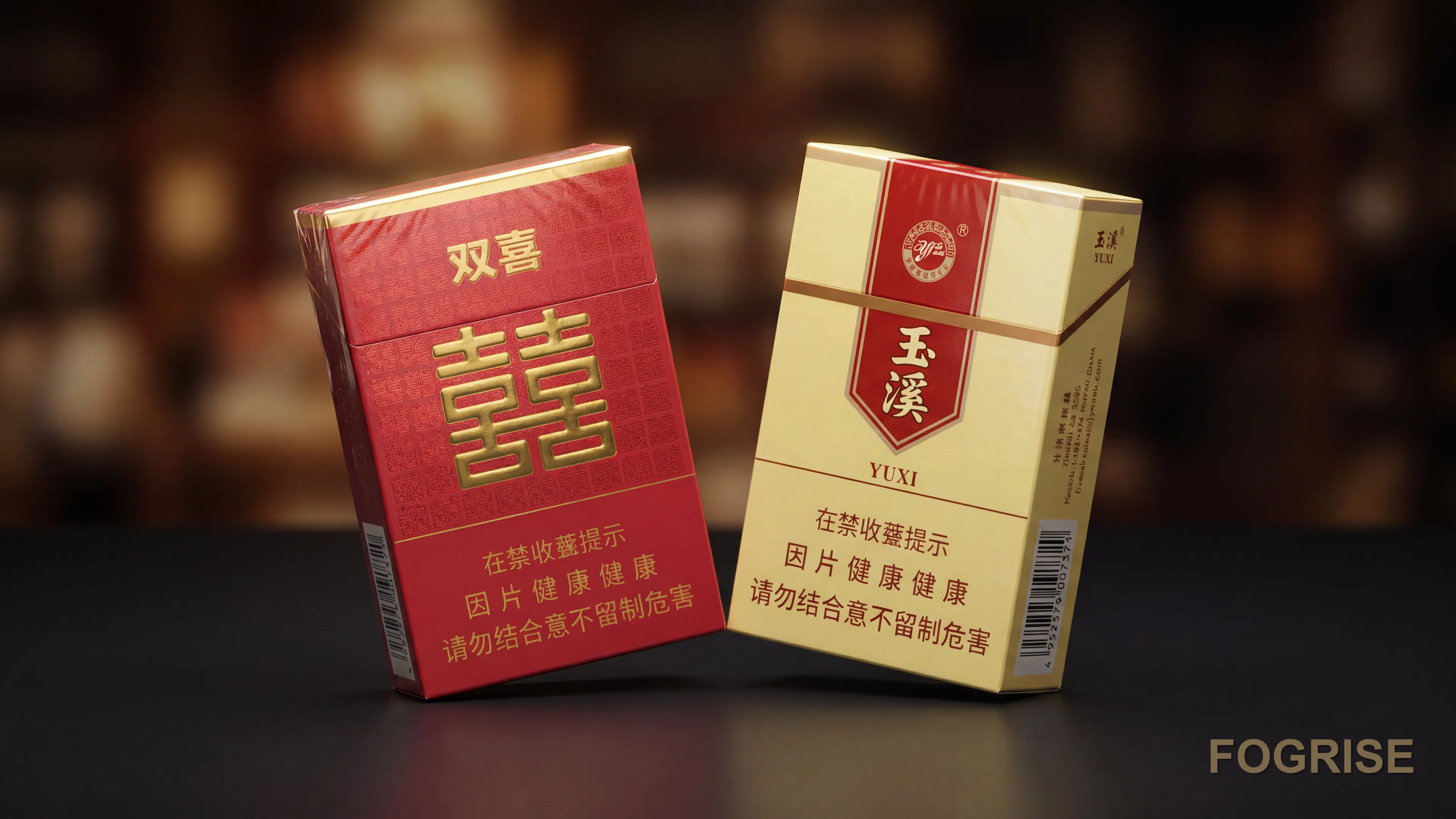
Chinese cigarette culture is gift-coded in a way that has no direct Italian retail equivalent. A carton of Chunghwa (中华) or Yuxi (玉溪) is a recognised business courtesy at weddings and banquets, and during Spring Festival exchanges, and the brand hierarchy carries status signals that imported European packs simply do not replicate. Sensory expectations differ as well. Premium Chinese blends lean toward lower-tar, higher-aroma profiles, often with sweeter casings and a softer draw than the Virginia-heavy mixtures dominant in Italian tabaccherie. For returning travellers and diaspora households, that flavour memory is the single largest pull factor behind the persistent search interest in Chinese cigarettes in Italy, and the reason brand-tier knowledge (covered in the next section) matters more here than for a casual Italian buyer.
The Travel-Retail Demand Signal
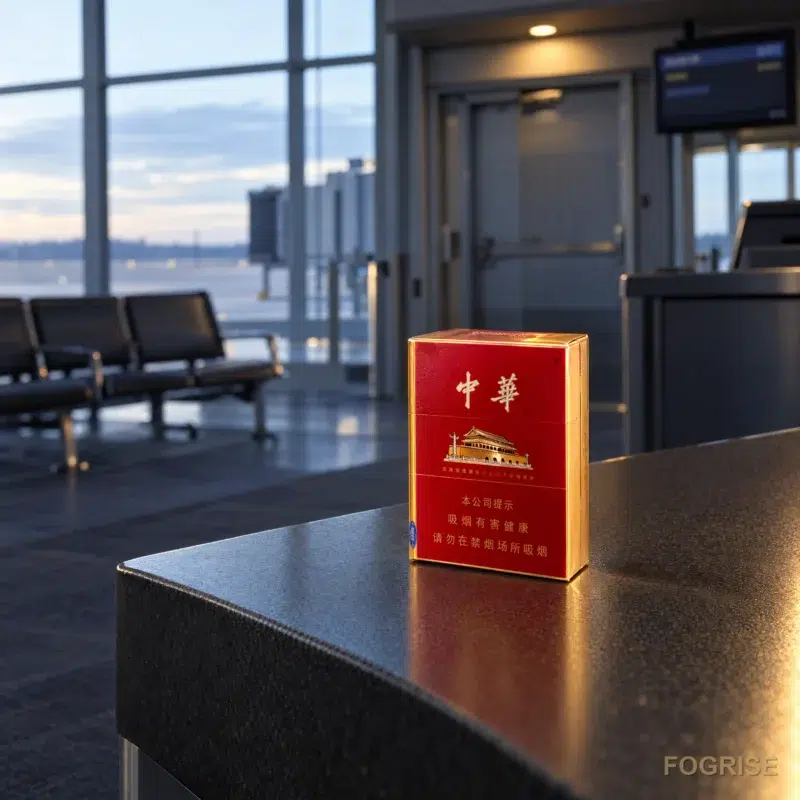
The clearest commercial fingerprint of this demand lives in airport duty-free. Chunghwa, the flagship brand of Shanghai Tobacco Group, holds more than 50% of China’s high-end cigarette market and has been formally introduced into European travel-retail outlets, including duty-free shelves at airports serving Milan and Rome, the two Italian hubs with the largest Chinese-diaspora and inbound-tourism volumes (Moodie Davitt Report, 2019). Industry coverage by Moodie Davitt around that period tracked double-digit sales growth for Chinese brands in European travel retail as Chinese outbound tourism expanded (Moodie Davitt Report, 2019). None of this means Chinese cigarettes in Italy are casually available in ordinary neighbourhood tabaccherie, and the following sections explain why the legitimate routes are narrow. Demand is real; legal supply is tightly regulated, and the gap between the two is the subject of the rest of this guide.
Chinese Cigarette Brands That Matter for the Italian Market
Chinese tobacco runs on a three-tier prestige hierarchy that mirrors the country’s gift culture: state-gift flagships at the top, regional premium brands in the middle, and mainstream value packs at the base. Italian tabaccherie do not stock any of these Chinese cigarettes. The packs that do reach Italy arrive through Milan and Rome airport travel retail, returning travellers’ personal allowances, or personal-import channels, and the brand a buyer asks for usually signals which tier matters to them.
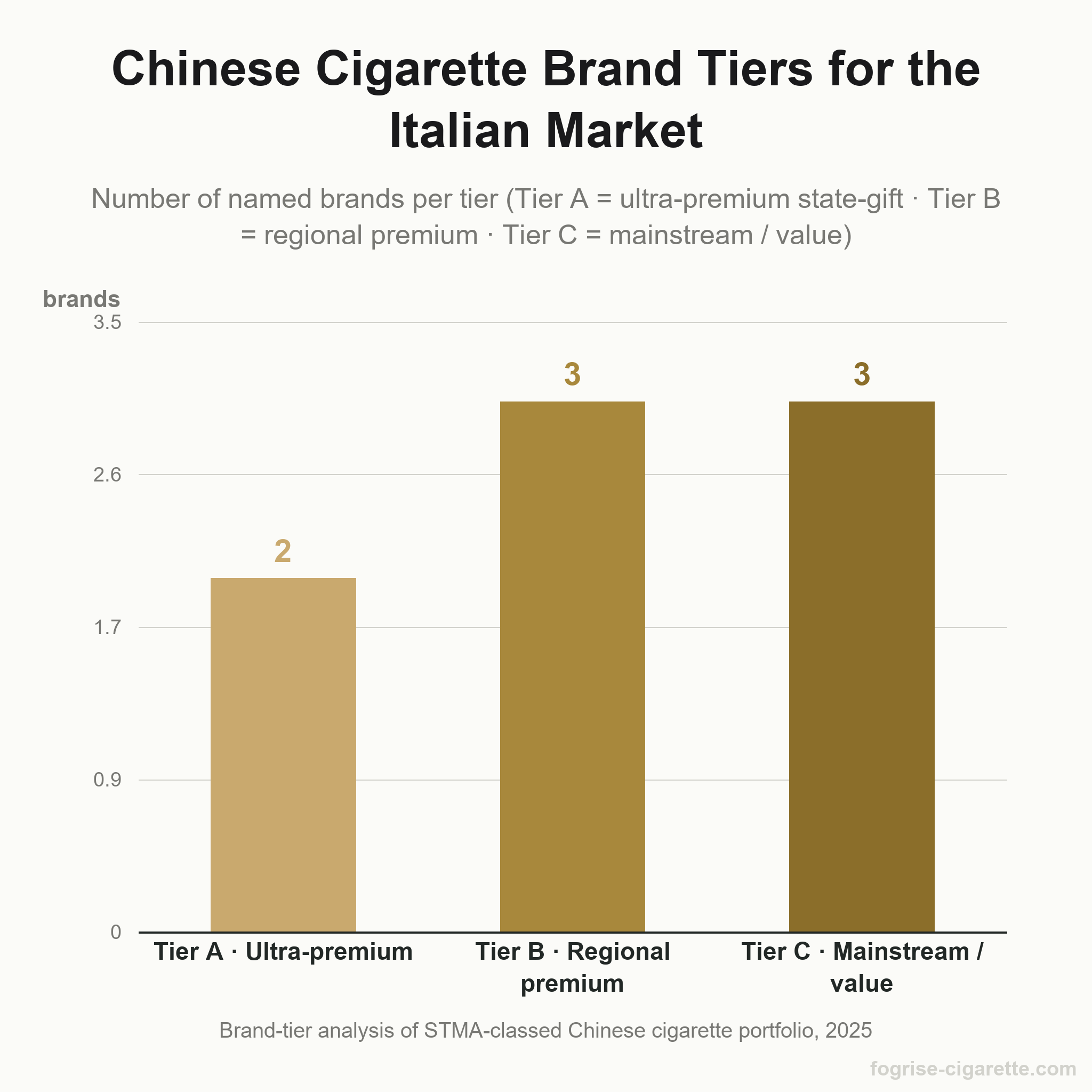
The Italian context flips the Chinese tier logic on its head. Brands that signal serious face inside Shanghai (Chunghwa, Panda) rarely appear in Rome retail, while pragmatic mid-tier packs like Double Happiness show up at Fiumicino duty-free more reliably because they move real volume through diaspora travellers buying Chinese cigarettes in Italy on layovers.
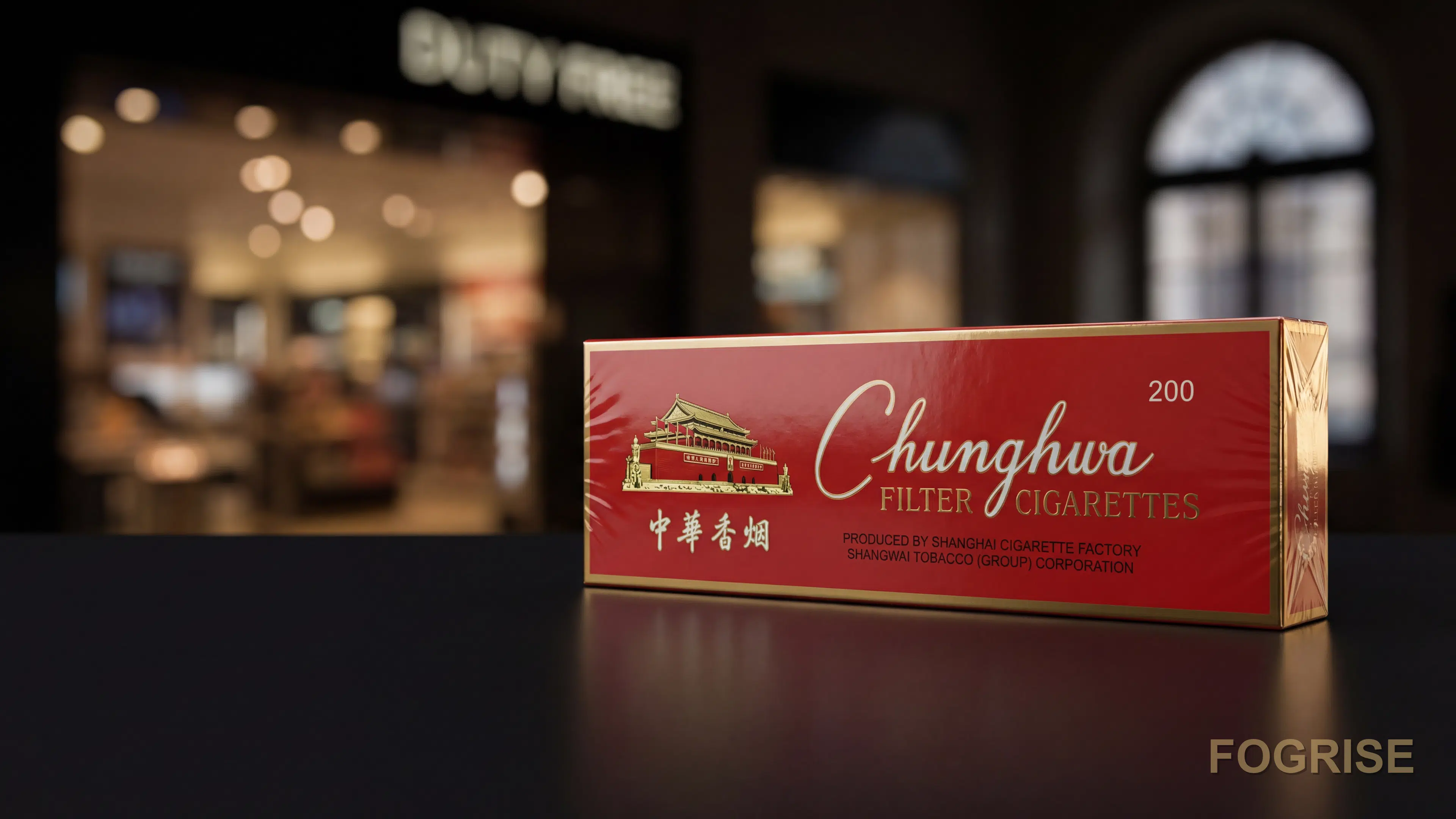
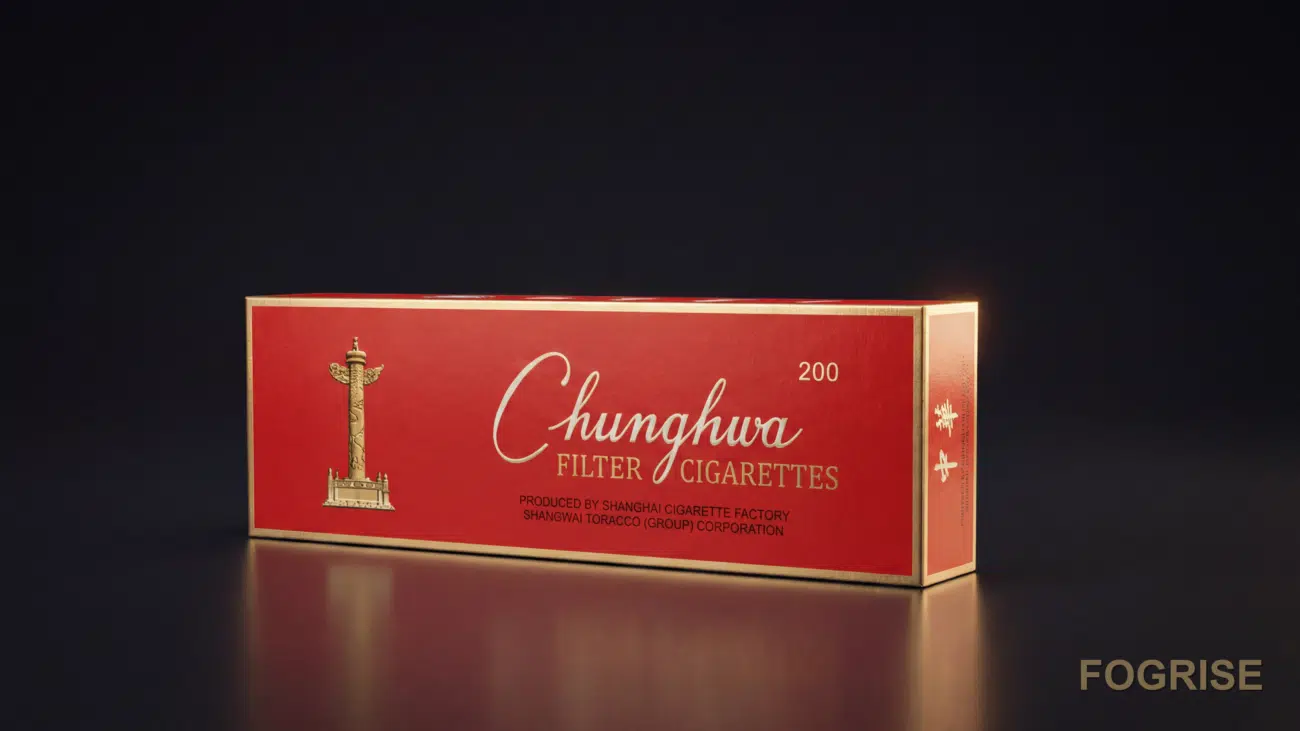
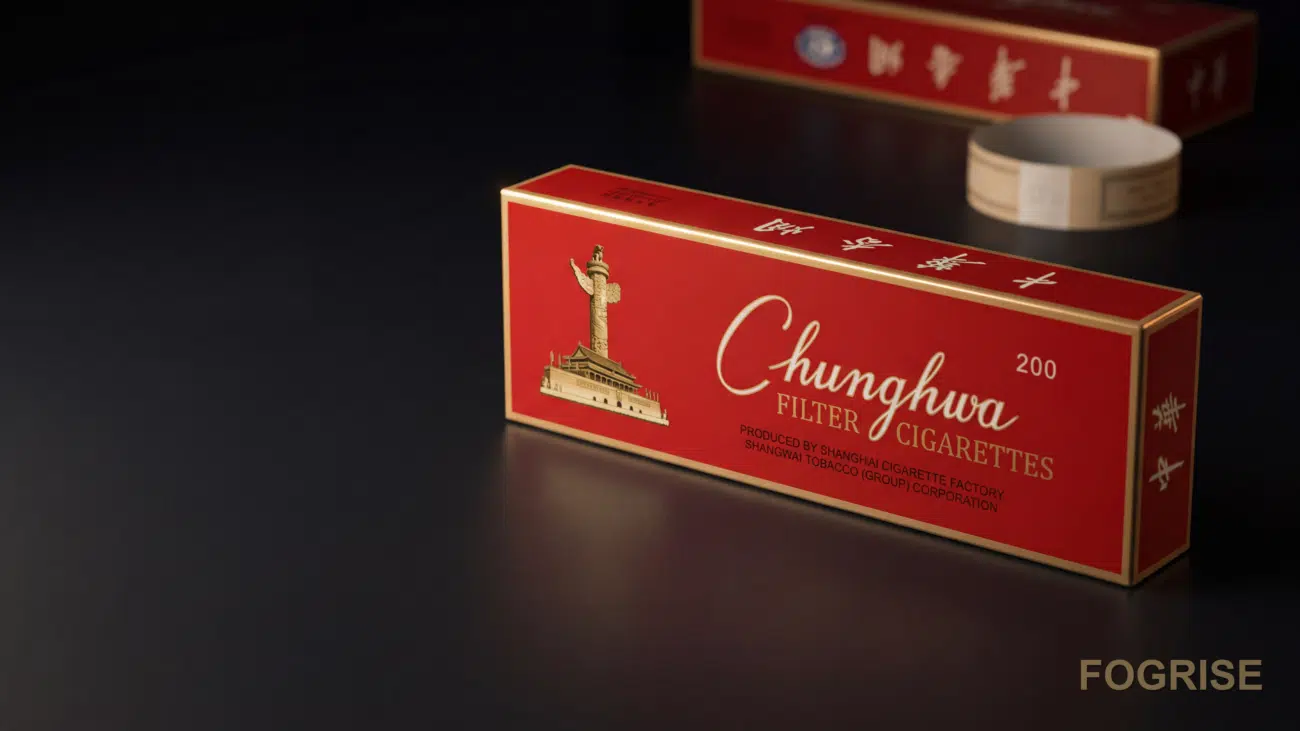
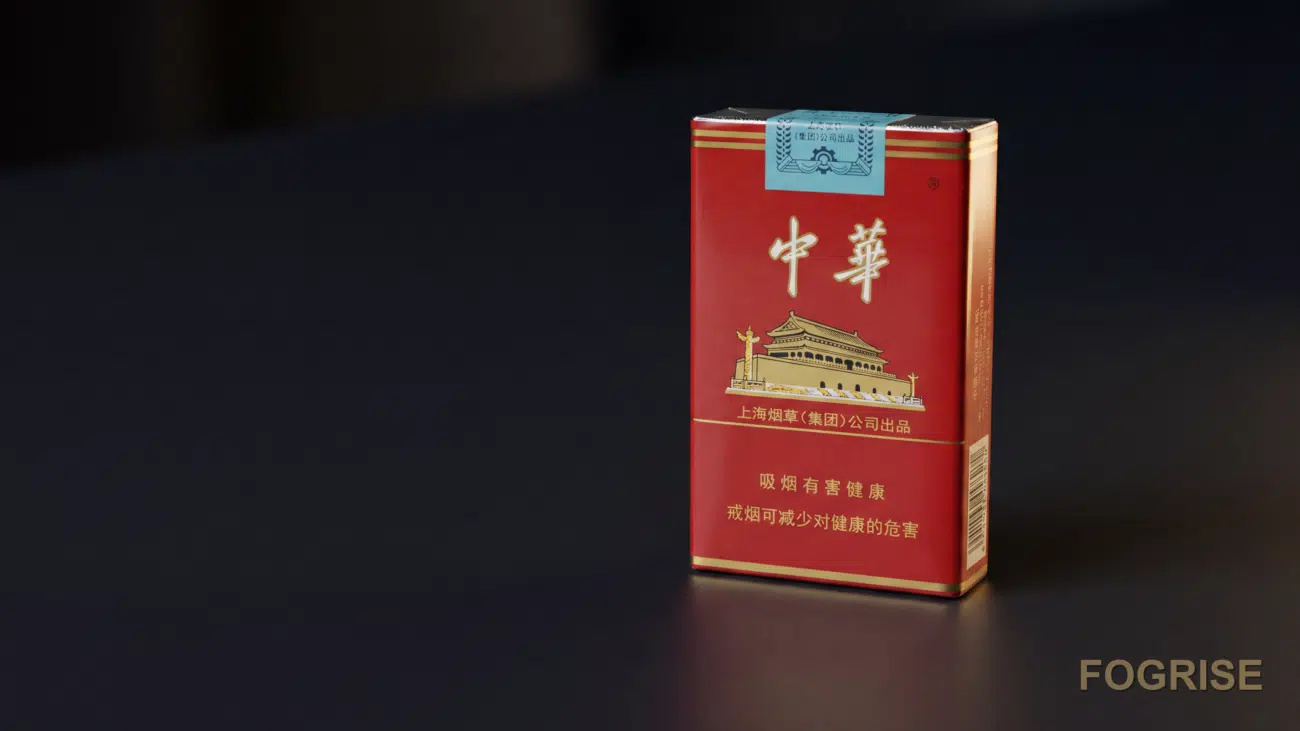
Chunghwa (中华), the Shanghai Tobacco Group flagship, holds more than 50% of China’s premium cigarette market and was formally introduced to European travel-retail outlets including Milan Malpensa and Rome Fiumicino airports after years of double-digit growth in EU duty-free sales (Moodie Davitt Report, 2019). That listing is the single most reliable Italy-side touchpoint for any Chinese cigarette brand.
Tier A: ultra-premium state-gift brands
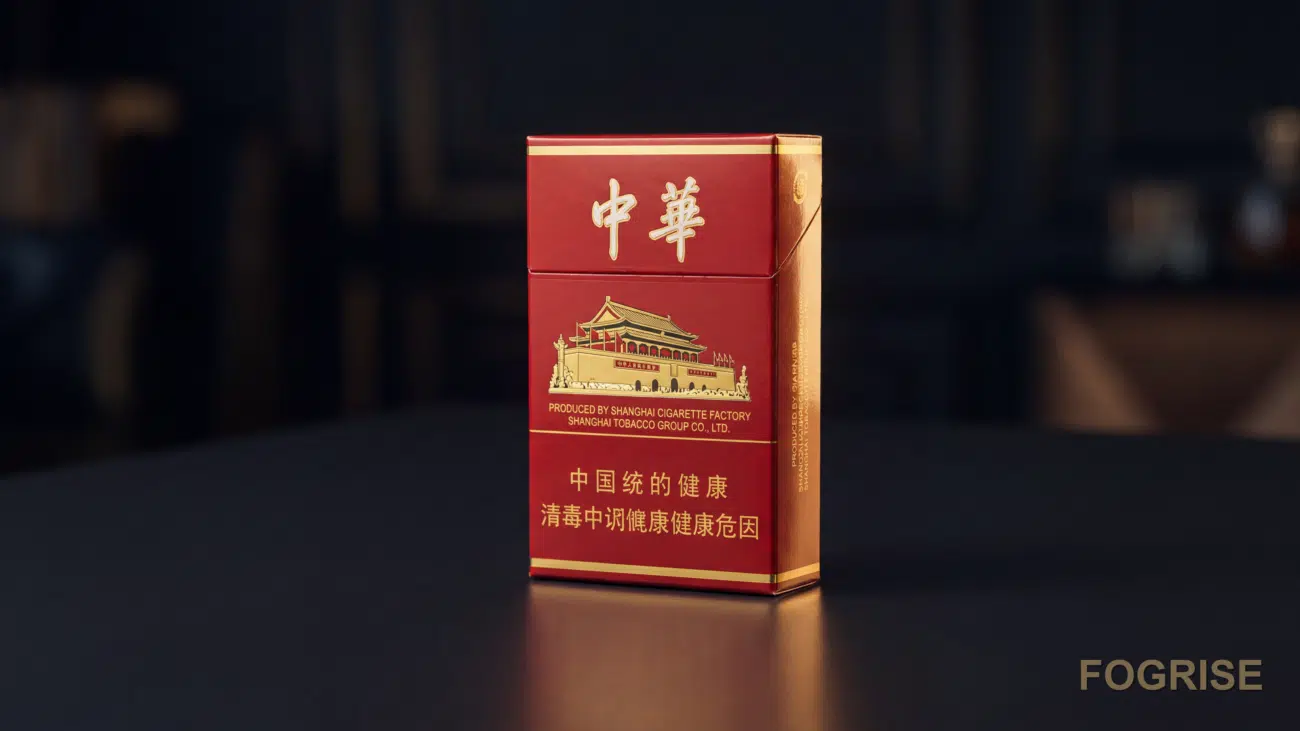
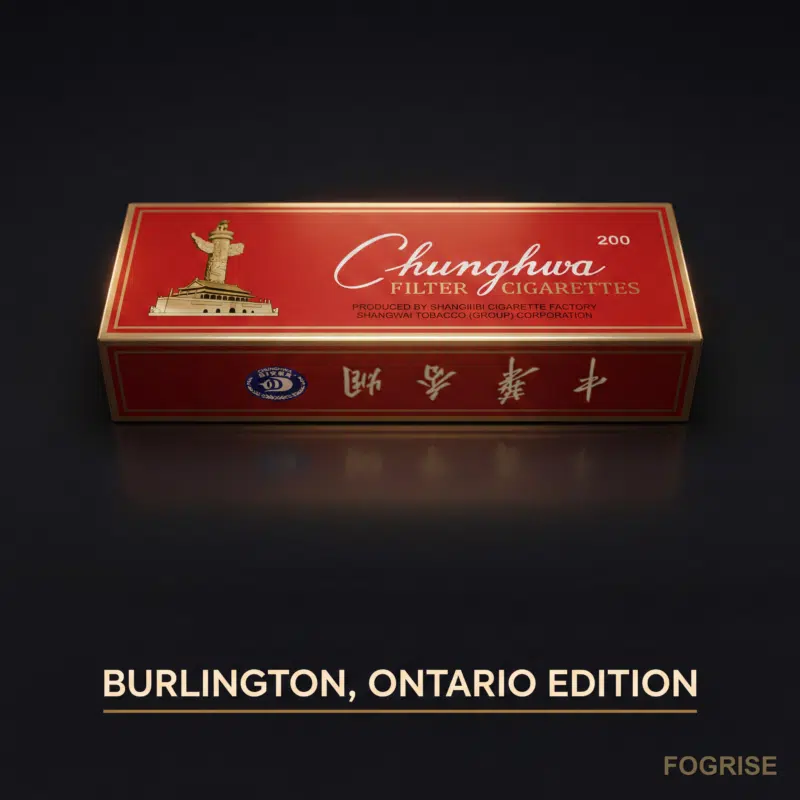
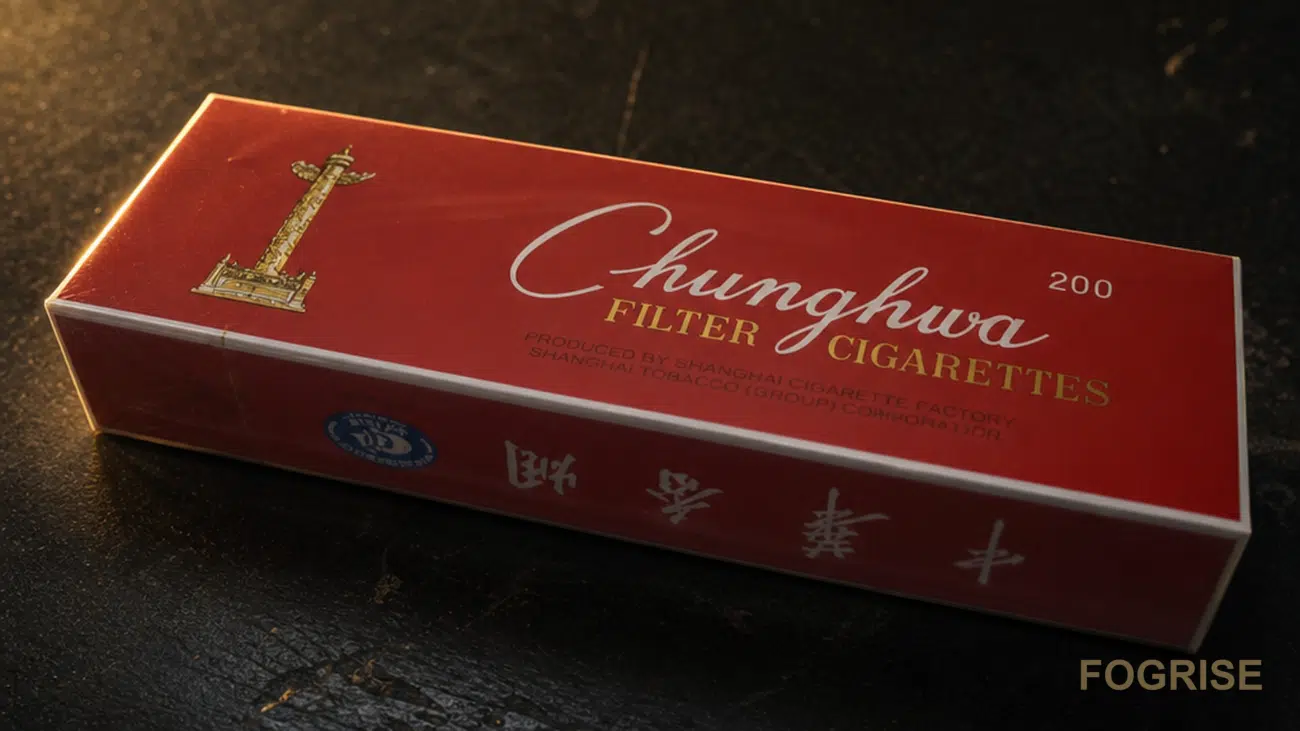
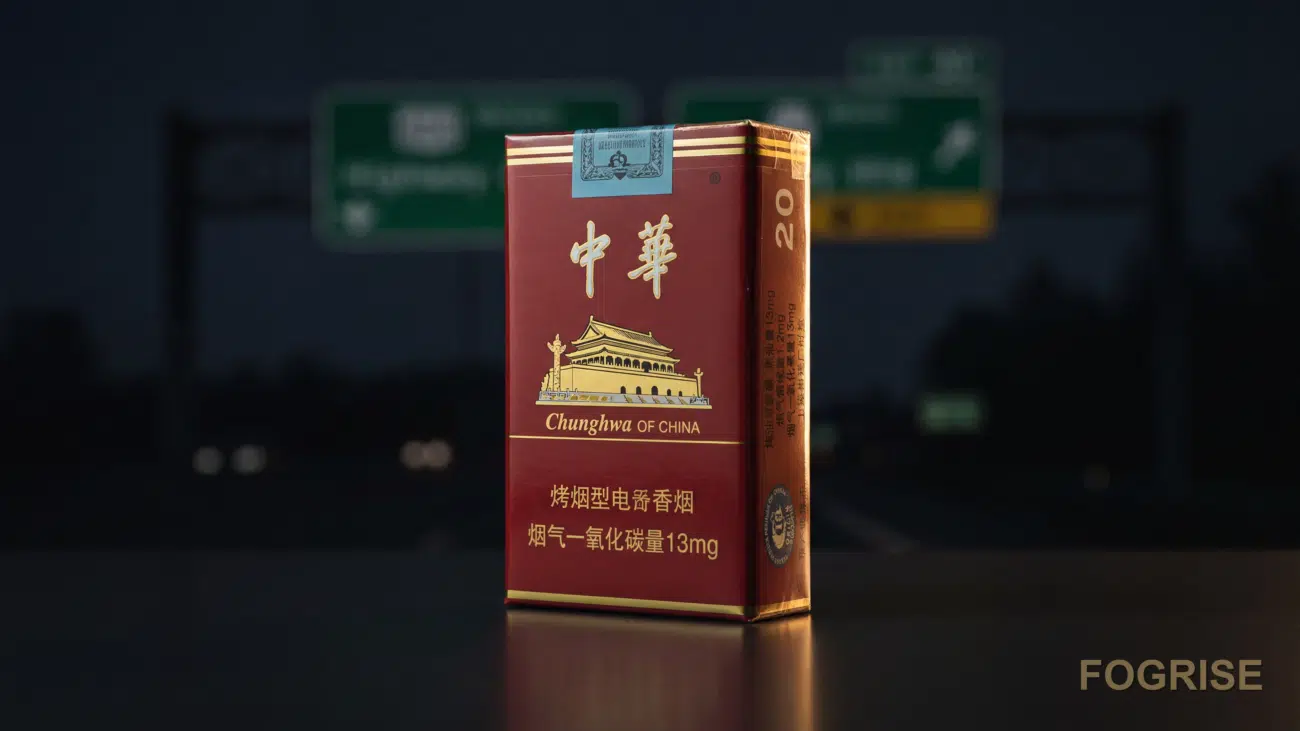
Tier A is where most enquiries about Chinese cigarettes in Italy start. Chunghwa (中华) is made by Shanghai Tobacco Group (Moodie Davitt Report, 2019), and is the canonical business-gift pack across the mainland; the red-and-gold hard box at roughly 11 mg printed tar is the version Italian travellers usually recognise (Moodie Davitt Report, 2019). Panda (熊猫) also belongs to Shanghai Tobacco Group (Moodie Davitt Report, 2019), famously favoured by Deng Xiaoping, and is positioned as a state-banquet brand. Neither sits on ordinary Italian retail shelves; both surface intermittently in Milan and Rome airport travel retail or arrive as personal gifts from China.
Tier B: regional premium brands
Tier B carries serious prestige inside China but rarely makes the Italian travel-retail set. Yuxi (玉溪) is the premium flagship of Hongta Group in Yunnan (Moodie Davitt Report, 2019), built around high-elevation tobacco leaf and a smoother profile around 10-11 mg printed tar. Furongwang (芙蓉王), the "Hibiscus King" from Hunan China Tobacco (Moodie Davitt Report, 2019), is a business-meeting staple across central China. Nanjing (南京), manufactured by Jiangsu Tobacco (Moodie Davitt Report, 2019), anchors the Yangtze River Delta and ships in slimmer formats popular with younger urban smokers. For Italian buyers, these three almost always mean personal import within travel allowances.
Tier C: mainstream and value brands
Tier C is where the everyday Chinese smoker actually lives. Double Happiness (双喜), from Guangdong Tobacco (Moodie Davitt Report, 2019), is the celebratory pack: wedding-red branding, broad availability, and the brand most likely to appear alongside Chunghwa in Milan or Rome airport travel retail. Hongtashan (红塔山), the historic mass-market premium from Hongta Group in Yunnan (Moodie Davitt Report, 2019), remains the heritage workhorse. Zhongnanhai (中南海), made by the Beijing Cigarette Factory (Moodie Davitt Report, 2019), occupies a distinct slot as the recognised lower-tar option around 5-8 mg printed tar and is the brand long popular among Japanese smokers, who account for much of its export demand.
| Brand (EN / CN) | Tier | Manufacturer | Typical printed tar | Italy availability |
|---|---|---|---|---|
| Chunghwa / 中华 | A | Shanghai Tobacco Group | ~11 mg | Milan/Rome airport travel retail; not in tabaccherie |
| Panda / 熊猫 | A | Shanghai Tobacco Group | ~11 mg | Gift or personal import only |
| Yuxi / 玉溪 | B | Hongta Group (Yunnan) | ~10-11 mg | Personal import only |
| Furongwang / 芙蓉王 | B | Hunan China Tobacco | ~11 mg | Personal import only |
| Nanjing / 南京 | B | Jiangsu Tobacco | ~10-11 mg | Personal import only |
| Double Happiness / 双喜 | C | Guangdong Tobacco | ~10-11 mg | Occasional travel retail; personal import |
| Hongtashan / 红塔山 | C | Hongta Group (Yunnan) | ~11 mg | Personal import only |
| Zhongnanhai / 中南海 | C | Beijing Cigarette Factory | ~5-8 mg | Personal import only |
None of these Chinese cigarettes for the Italian market sit on ordinary tabaccherie shelves; the state monopoly licenses EU and domestic SKUs only. Smoking is harmful and addictive regardless of tier or origin, and any pack reaching Italy outside the official duty-free or licensed-retail routes should be authenticated before purchase. The next section walks through what Italian law actually permits.
Is It Legal to Buy or Ship Chinese Cigarettes to Italy?
The short answer for Italy Chinese cigarettes splits a question readers usually merge. Picking up a pack at a licensed Italian tabaccheria is straightforward and entirely lawful. Receiving cigarettes by post or courier to a private Italian address from an online seller, foreign or domestic, is not. Italian law treats tobacco as a state-controlled commodity, and the rules around who may sell it, and where and through which channel, are unusually strict.
xiangyandd is a worldwide cigarette retailer. Whether tobacco can be lawfully delivered to a private address in your country depends on your local law. Italian readers in particular should verify the current rules with the Agenzia delle Dogane e dei Monopoli (ADM) before placing any order. The paragraphs below explain why the question of Italy Chinese cigarettes and lawful supply is not a single yes-or-no, and what the one clearly-lawful channel actually looks like.
Italy transposed the EU Tobacco Products Directive 2014/40/EU into national law as Legislative Decree No. 6 of 12 January 2016, which prohibits cross-border distance sales of tobacco products to Italian consumers and reserves retail to the state-licensed monopoly network supervised by ADM (Italian Republic, 2016). Personal-import travel allowances remain a separate, narrower lawful channel.
Italy’s State Tobacco Monopoly and the Tabaccherie System
Italy keeps one of Europe’s most centralised tobacco regimes. Retail of tobacco products is reserved by statute to the state monopoly, administered by ADM, the customs and monopoly authority that absorbed the former AAMS (Agenzia delle Dogane e dei Monopoli, 2025). Day-to-day sales happen through ADM-licensed tabaccherie, the corner tobacco shops marked with the distinctive black-and-white "T" sign, present in nearly every Italian town. Each shop holds an individual concession, pays excise into the state system, and stocks only products authorised for the Italian market.
That structure has two consequences for the buyer. First, ordinary Italian retail does not stock most Chinese brands. Chunghwa, Double Happiness, and Yuxi surface in Milan and Rome airport travel-retail, but not in a typical Roman or Milanese tabaccheria. Second, any seller offering Italy Chinese cigarettes outside the licensed monopoly network is operating outside the channel Italian law recognises, which sets up the distance-sale question below.
The Distance-Sale Ban (D.Lgs. 6/2016 + EU TPD)
The legal anchor is Legislative Decree No. 6 of 12 January 2016, the Italian transposition of the EU Tobacco Products Directive 2014/40/EU. Article 18 of the Directive required member states to either tightly regulate or prohibit cross-border distance sales of tobacco to consumers, and Italy chose the prohibition route. The Italian decree goes further and bans domestic distance sales as well (Italian Republic, 2016). In practice, an Italian resident cannot lawfully order tobacco online for delivery to a private Italian address, whether the seller sits in another EU country, in China, or anywhere else.
Enforcement is shared between ADM and the Guardia di Finanza. Consequences for breaching the distance-sale ban can include seizure, administrative fines, and, in aggravated cases, criminal liability under Italy’s illicit-tobacco statutes. This article is informational; it is not legal advice, and the outcome of any specific case turns on quantity and intent, and on how an Italian court reads it. Anyone considering buying or shipping Italy Chinese cigarettes should confirm the current position with ADM or a qualified Italian lawyer first.
The Legal Route: Personal Import Within Allowances
There is one clearly lawful channel for an Italian resident who wants to bring Chinese-brand cigarettes home: personal import as a traveller, carried in your own luggage, within the customs allowances. The standard duty-free allowance from outside the EU is 200 cigarettes (one carton), and the EU’s indicative intra-EU personal-use threshold sits at 800 cigarettes (European Commission, 2025). Most articles about Italy Chinese cigarettes conflate this traveller channel with online ordering; Italian law treats them as two different legal acts.
Two boundaries matter. The allowances are not invitations to exceed, and they apply only to genuine personal use; resale or volume gifting falls outside them. Nothing in the personal-import route changes the distance-sale ban either, so posting or couriering cigarettes back to Italy after a trip carries the same legal exposure as ordering them online would have. The next section sets out the 2025 customs and excise figures that determine what a pack actually costs a buyer in practice.
Italy’s Customs Allowances and 2025 Cigarette Excise
Numbers do most of the work in this section. Italy chinese cigarettes draw a tax wedge that combines an EU directive baseline, an Italian-specific excise, and the standard national VAT, and the customs allowance you cross the border with depends on whether your departure point sits inside the Single Market or outside it. The figures below come from europa.eu‘s Your Europe travel guidance, the Agenzia delle Dogane e dei Monopoli (ADM), and recent Italian price-update reporting.
Customs Allowances: EU vs Non-EU Entry
Per europa.eu‘s Your Europe travel reference, an adult traveller arriving in Italy from outside the EU may bring up to 200 cigarettes (one carton) duty-free, while the indicative personal-use threshold between EU member states is 800 cigarettes (four cartons); both numbers are widely cited in ADM travel notices and Italian customs guidance (European Commission, 2025). Above the 800-stick mark, officers may ask you to show the tobacco is genuinely for personal consumption rather than for resale (European Commission, 2025).
Both figures are guidance the traveller is expected to know in advance, not entitlements to maximise. The 800-stick number, in particular, is an indicative ceiling EU customs use as a starting point for questioning, not a green light. Anyone researching Italy chinese cigarettes and planning to bring product back from a trip to China should treat the non-EU 200-stick cap as the binding personal-baggage figure.
Italy’s 2025 Excise Structure and VAT
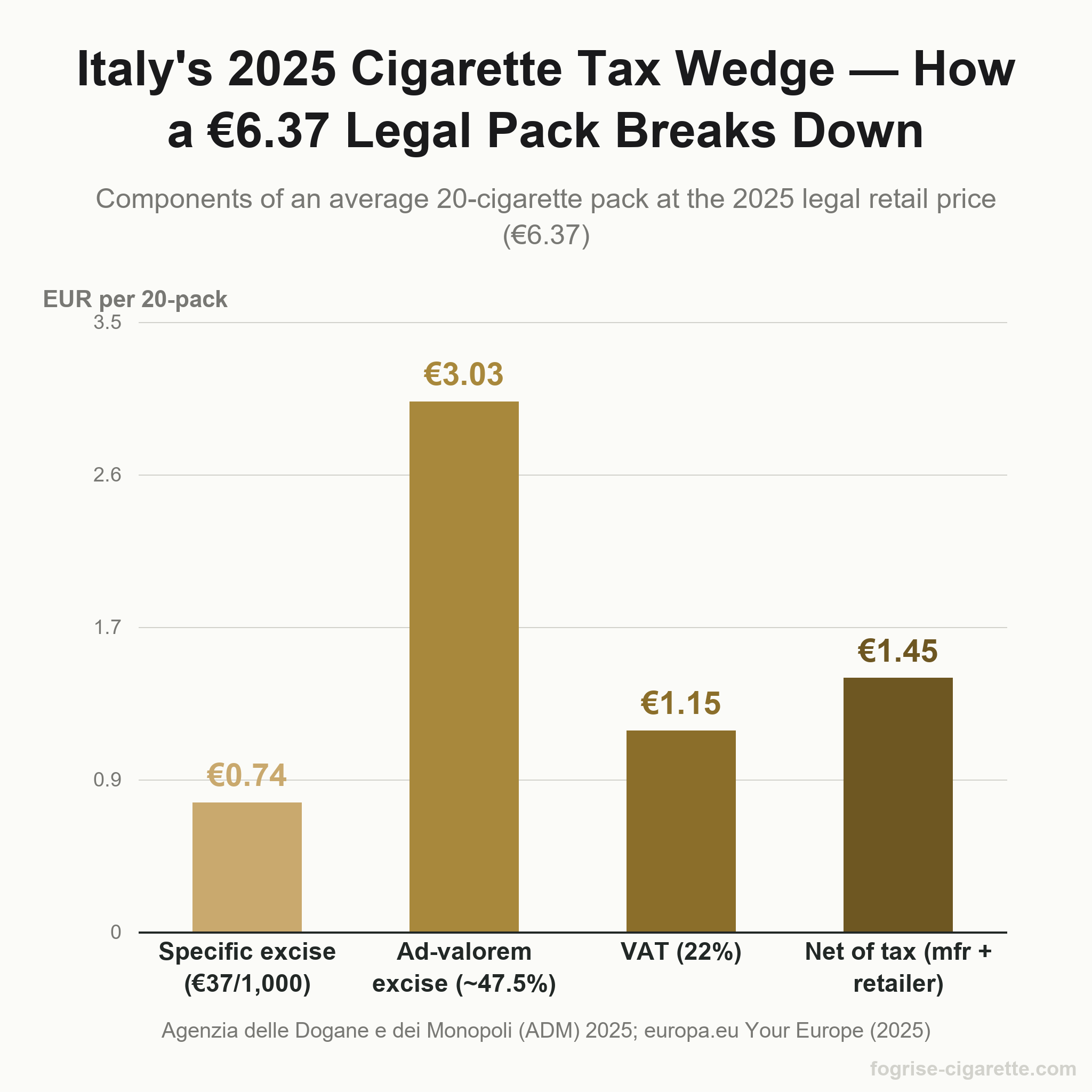
Italian excise on a 20-stick pack stacks three components: a fixed per-stick specific excise, an ad-valorem percentage of retail price, and a statutory minimum-excise floor that catches the cheapest end of the market. For 2025, the specific component rose to roughly €37 per 1,000 cigarettes, up from about €36.5 per 1,000 in 2024 (Campaign for Tobacco-Free Kids, 2025). The ad-valorem layer sits near 47.5% of retail price (Campaign for Tobacco-Free Kids, 2025), and the statutory minimum floor (Campaign for Tobacco-Free Kids, 2025) guarantees a baseline tax-take per pack even when nominal prices dip. On top of that, Italy applies its standard 22% VAT to tobacco (Campaign for Tobacco-Free Kids, 2025). The average legal pack price in 2025 settles near €6.37 (Campaign for Tobacco-Free Kids, 2025).
| Component (per 20-stick pack) | 2025 figure | Note |
|---|---|---|
| Non-EU traveller duty-free | 200 cigarettes (1 carton) | Adult, arriving from outside the EU |
| Intra-EU personal-use indicative | 800 cigarettes (4 cartons) | Guidance, not entitlement |
| Specific excise | ≈ €0.74 (€37 per 1,000 sticks) | Up from €36.5 per 1,000 in 2024 |
| Ad-valorem excise | ≈ 47.5% of retail | Applied to recommended selling price |
| Minimum excise floor | Statutory | Backstop on lowest-priced packs |
| VAT | 22% | Standard Italian rate |
| Average legal retail price | ≈ €6.37 | 2025 reference |
The takeaway buyers tend to miss is that well over two-thirds of what changes hands at a tabaccheria is tax, and the 2024-to-2025 specific-excise step compounds with the ad-valorem and minimum-floor layers in a way single-figure comparisons never capture. Any Italy chinese cigarettes offer pitched dramatically below the €6 mark per 20-stick pack carries an implausible tax base and is almost certainly outside the official Italian supply chain.
What Exceeding the Allowance Means
Going over the customs allowance is not a soft line. Anything beyond the 200-stick non-EU duty-free figure can be assessed for excise and VAT, plus a customs surcharge at the border, and goods presented as personal use beyond the 800-stick intra-EU guidance can be reclassified as commercial; at that point, seizure of the tobacco and administrative penalties under ADM enforcement become live possibilities (European Commission, 2025). This article does not advise on how to exceed those figures. For travel-specific casework, the canonical references are the Agenzia delle Dogane e dei Monopoli and Your Europe’s allowance pages, both of which should be checked before any trip involving Italy chinese cigarettes.
How Italian Prices Compare to Chinese-Brand Pricing
For anyone weighing Chinese cigarettes in Italy as a category, the price math sets the floor for what is realistic and what should look suspicious. Italy’s legal retail price is anchored by one of Europe’s heavier tax wedges, while Chinese domestic retail sits in a different currency, on a different supply chain, and under a different excise regime. Once those two worlds meet inside an Italian tabaccheria, the apparent gap collapses.
The Italian Price Floor and Tax Wedge
Italy’s average legal cigarette pack ran near €6.37 in 2025 (Campaign for Tobacco-Free Kids, 2025). A specific excise of about €37 per 1,000 sticks, a roughly 47.5% ad-valorem component, and the standard 22% VAT together absorb close to three-quarters of the retail price, leaving genuine tobacco a minority of the till receipt (Campaign for Tobacco-Free Kids, 2025). Every legally imported pack, whatever its origin, has to clear that same wedge.
Chinese domestic retail tells a very different story. Mainland packs are priced in RMB and sit under Chinese excise rather than Italian excise, so a Tier C value brand like Double Happiness retails inside China at a small fraction of any Italian pack. We don’t quote a per-brand Italian euro price for Chunghwa, Yuxi, or Zhongnanhai here, because no authoritative Italian retail tariff for those SKUs exists. The few legitimate Italian touchpoints are Milan and Rome airport travel retail plus whatever a returning traveller carries within the customs allowance, and those sit outside ordinary tabaccheria shelves.
The takeaway is plain: when Chinese cigarettes in Italy reach the consumer legally, they have already absorbed the same excise-plus-VAT structure that lifts a domestic Marlboro Gold to roughly €6. The pack will not be cheap. The premium-brand experience inside Italy is therefore best read as a duty-free or returning-traveller experience, not as a sustained retail saving on the Italian high street.
Why Cheap Offers Are a Red Flag
This is where buying Chinese cigarettes in Italy becomes a safety question, not just a wallet question. OCCRP’s investigation into China-origin smuggling into Italy reported street-level pricing around €2 to €3 per pack for cartons distributed through Camorra channels, against the near-€6.37 legal average (OCCRP, 2022). Counterfeit product is now the single largest segment of the EU illicit tobacco market by recent industry estimates (KPMG & Philip Morris International, 2025). The combination matters: when an offer prices a Chunghwa or Zhongnanhai pack far below the Italian legal floor, the most likely explanations are illicit import, counterfeit production out of hubs such as Fujian’s Yunxiao county, or both.
A premium Chinese pack sold through a compliant Italian channel will read as premium on the receipt. If it doesn’t, treat the price itself as the warning sign and verify your local rules before buying anything else. Smoking is harmful and addictive regardless of brand, country, or shelf price.
Spotting Counterfeit Chinese Cigarettes in Italy
Authenticity is the single biggest risk facing any adult who buys Chinese cigarettes in Italy outside the licensed tabaccheria channel. Counterfeit packs now flood Europe at industrial scale, and a "cheap Chunghwa" found in a Naples backstreet is statistically more likely to be a Fujian fake than a genuine Shanghai Tobacco export. This section is buyer protection only, never a guide to evading ADM customs or police.
The Counterfeit Reality in the EU and Italy
The 2024-25 KPMG illicit-trade study commissioned by Philip Morris reported that illicit cigarette consumption crossed 10% of total EU consumption for the first time since 2014, and that counterfeit product, much of it Chinese-origin, is now the largest single segment of that illicit market (KPMG & Philip Morris International, 2025). Italy sits inside that pattern, and demand for Chinese cigarettes in Italy gives counterfeiters a high-margin segment to imitate. For an Italian buyer, "suspiciously cheap" is the strongest authenticity signal money can buy: a real Chunghwa pack landed legally past Italian excise will never retail anywhere near €3.
Authentication Checklist for a Chunghwa Pack
A genuine Chunghwa (中华) pack carries production tells that low-end counterfeits routinely miss. Run through this before you accept any pack:
- Print and registration. Genuine packs show crisp four-colour offset registration on the gold pagoda, the red rampart wall, and the small Tiananmen vignette. Halos, ghosting, or visible dot patterns on the figures indicate a counterfeit press.
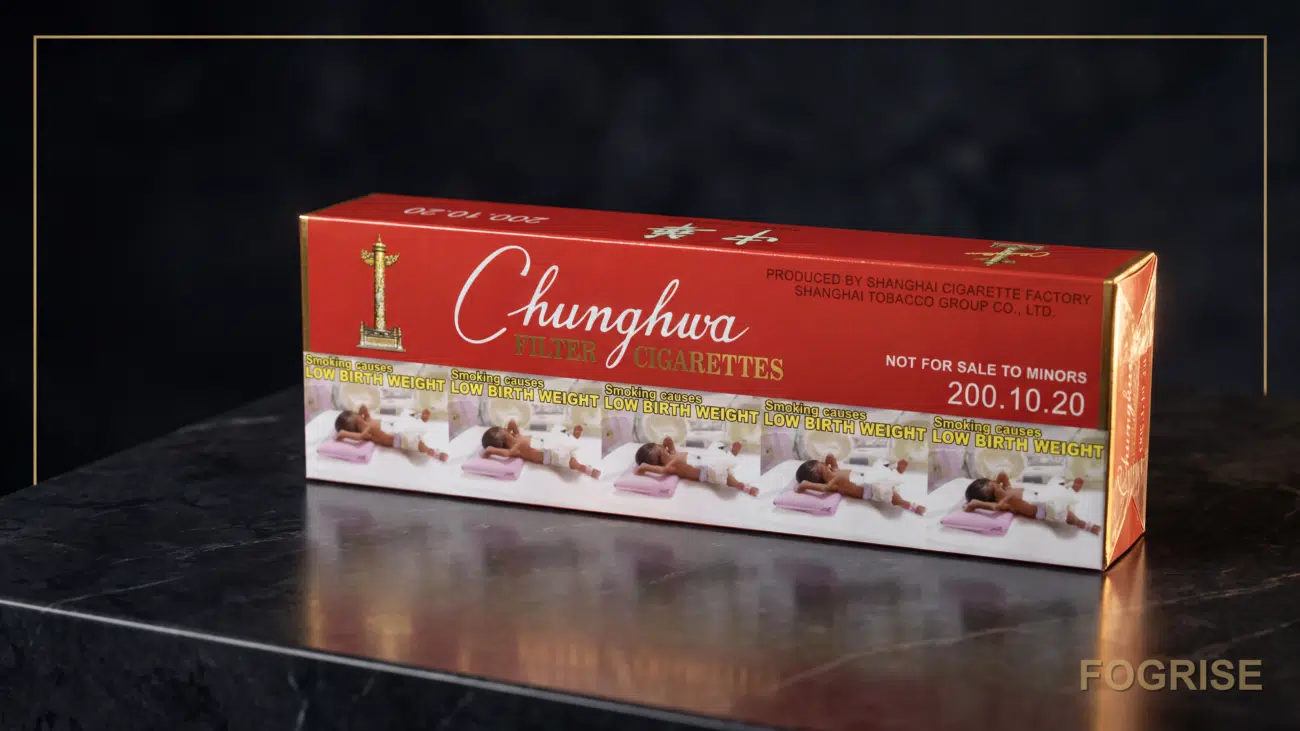
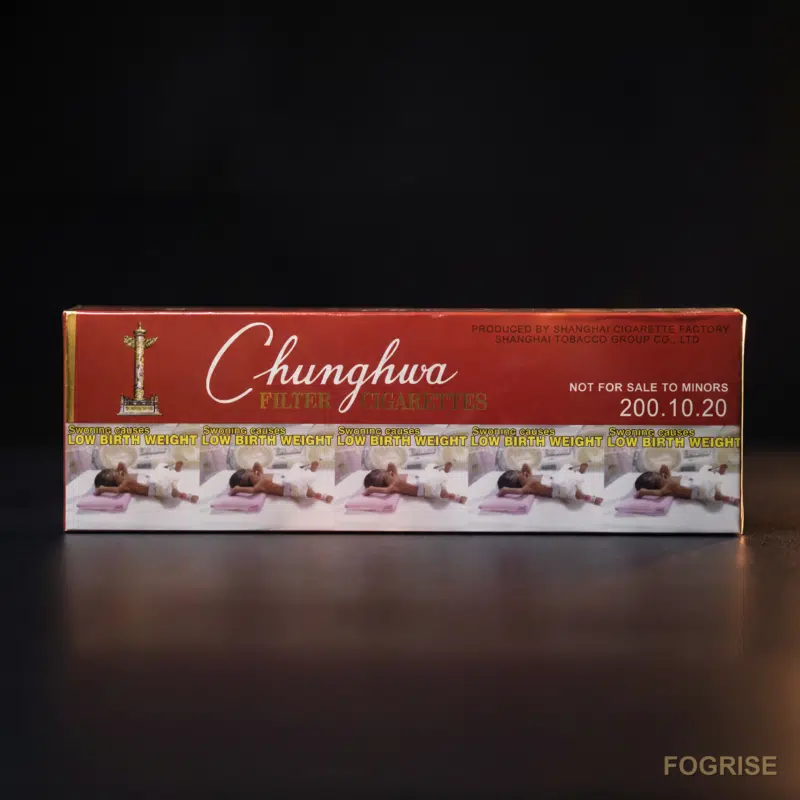
- Italian and EU health warning. Any pack legally placed on the Italian market must carry the combined picture-and-text health warning covering at least 65% of front and back, per the EU Tobacco Products Directive. A "clean" pack carrying only Chinese-language warning text was not intended for sale in Italy.
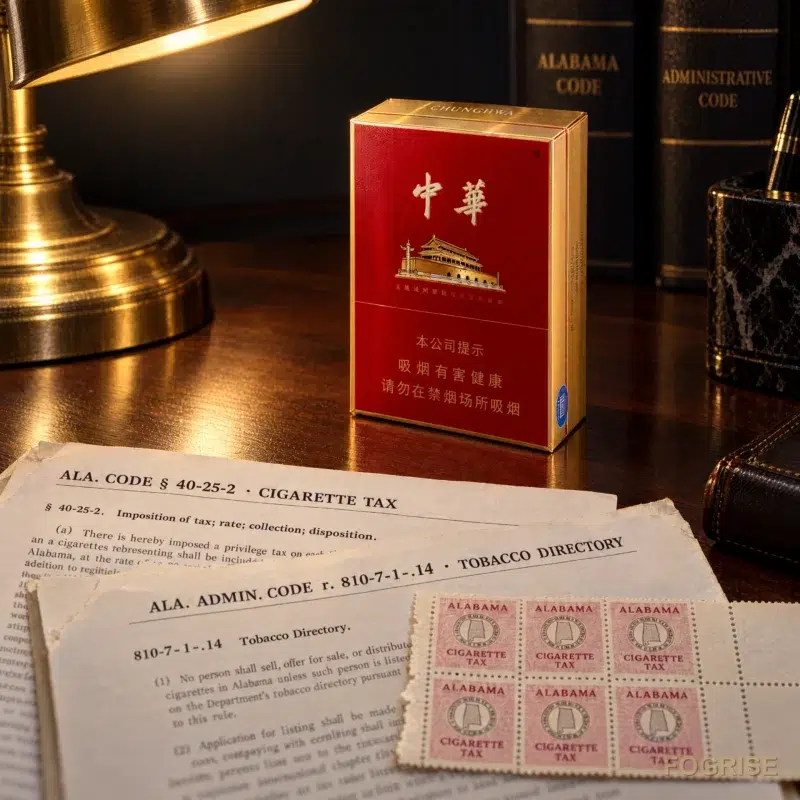
- Tax stamp. A pack sold through an Italian tabaccheria carries the ADM fiscal mark (contrassegno fiscale). No fiscal mark on a pack offered to you locally is a hard red flag.
- Holographic and foil details. The inner foil should be tight, evenly creased, and free of glue smears. The pagoda hologram, where present on export SKUs, should shift colour smoothly with viewing angle.
- Glue lines and cellophane. Counterfeit cellophane often shows uneven seams, off-centre tear strips, or a pull-tab on the wrong edge for the SKU.
- Font consistency. Compare the Chinese characters and pinyin against reference photos from Shanghai Tobacco’s official material. Stroke weights and kerning drift visibly on fakes.
- Channel. Buy Chinese cigarettes in Italy only through a verified channel, whether that is a licensed Italian tabaccheria, an airport travel-retail counter in Milan or Rome, or a vendor whose provenance you can independently confirm.
Where Counterfeits Enter the Supply Chain
OCCRP’s investigative reporting documented a single shipping-container seizure of roughly 8.9 million counterfeit sticks routed from China to Italy, with street distribution attributed to the Camorra and an observed illicit retail price of €2 to €3 per pack (OCCRP, 2022). The production end is concentrated in Fujian province, with Yunxiao county identified as the documented hub of Chinese counterfeit-cigarette manufacturing, where investigative estimates have reached the hundreds of billions of sticks annually reaching global markets (OCCRP, 2022). None of this changes Italian law, and none of it is a route any reader should attempt. The takeaway is simpler: if a pack of Chinese cigarettes in Italy is sold off-channel and priced below the legal tax floor, treat the bargain itself as the warning.
Public-Health Reality: What WHO and Italy’s Ministry of Health Say
Smoking is harmful and addictive. According to the World Health Organization, tobacco kills up to half of its long-term users and is responsible for more than 8 million deaths each year worldwide, including roughly 1.3 million from second-hand smoke exposure (World Health Organization, 2025). That reality applies to every cigarette in every tier, including the Chinese cigarettes some readers in Italy are searching for.
The Health Burden of Smoking
Italy’s Ministero della Salute aligns with the EU Tobacco Products Directive (TPD 2014/40/EU), which mandates combined picture-and-text health warnings covering at least 65% of pack surfaces and prohibits characterising flavours such as menthol (Italian Republic, 2016). The framework reflects the same evidence base WHO uses: tobacco smoke contains thousands of chemicals, dozens of which are known carcinogens, and is causally linked to lung cancer, cardiovascular disease, COPD and stroke (World Health Organization, 2025). No brand, tier, or country of origin removes this risk. A premium Chinese state-gift pack, a mainstream EU brand, and a counterfeit copy all deliver tar, carbon monoxide, and nicotine, and all create the same dependence.
Any "reduced-risk" language belongs only to the regulator that issued it. Where the U.S. Food and Drug Administration has authorised specific modified-risk wording for a named heated-tobacco product, that statement applies only to that product and only on the terms the FDA defined; it is not a general claim about cigarettes (U.S. Food and Drug Administration, 2024). xiangyandd does not make health, cessation, or risk-comparison claims in its own voice.
Resources for Readers Who Want to Quit
If you are thinking about stopping, please rely on authoritative public-health services rather than commercial advice. In Italy, the Istituto Superiore di Sanità operates the Telefono Verde contro il Fumo, a free national quitline staffed by trained operators; the Ministero della Salute lists it alongside regional Centri Antifumo on its tobacco-prevention pages (World Health Organization, 2025). The World Health Organization also runs a global Quit Tobacco hub with evidence-based guidance and a digital cessation assistant available in multiple languages (World Health Organization, 2025). Asking your medico di famiglia for a referral, or contacting a hospital-based Centro Antifumo through the local ASL, is another low-friction option. The fastest health gains begin within hours of the last cigarette: blood pressure and heart rate fall within a day, and reductions in cardiovascular and cancer risk continue for decades after quitting.
Frequently Asked Questions
Can I buy Chinese cigarettes in Italy?
In Italy, all legal tobacco retail goes through licensed state-monopoly tabaccherie, supervised by Agenzia delle Dogane e dei Monopoli (ADM) (Agenzia delle Dogane e dei Monopoli, 2025). Ordinary Italian shops rarely stock Chinese brands, though Chunghwa (中华) has been formally listed in Milan and Rome airport travel retail for Chinese-diaspora travellers and visiting enthusiasts (Moodie Davitt Report, 2019). For most adult readers in Italy, the realistic answer is a duty-free pack on inbound international travel within the customs allowance, not an ordinary high-street purchase from a corner tabaccheria.
Is it legal to ship Chinese cigarettes to Italy?
Legislative Decree 6/2016, transposing EU Directive 2014/40/EU, prohibits both domestic and cross-border distance sales of tobacco products to Italian consumers (Italian Republic, 2016). That means mail-ordering a pack to a private Italian address is not legal under Italian law, regardless of where the seller is based or how the offer is worded. Verify your specific situation with ADM before ordering anything. xiangyandd ships worldwide, but we are not your legal advisor on Italian tobacco law.
How many cigarettes can I bring into Italy from outside the EU?
Travellers aged 17 or over arriving from a non-EU country may import up to 200 cigarettes (one carton) duty-free, per the EU’s Your Europe traveller guidance and matching Italian customs practice (European Commission, 2025). Exceeding that triggers duty, VAT, and potential confiscation or fines under Italian customs rules. Never plan a trip around carrying more than the allowance; declare anything above it on arrival and accept that ADM officers have discretion at the border.
How many cigarettes can I bring into Italy from another EU country?
For movement between EU member states for personal use, the EU’s indicative threshold is 800 cigarettes (4 cartons); above that, ADM may ask you to prove the tobacco is for personal use and not for resale (European Commission, 2025). This is a guideline, not a hard cap or a free pass to load up. Commercial-scale quantities are treated as smuggling under Italian and EU enforcement, with confiscation and criminal exposure on the table.
How much do cigarettes cost in Italy in 2025?
The average legal 20-stick pack costs roughly €6.37 in 2025 (Campaign for Tobacco-Free Kids, 2025). That price reflects specific excise of about €37 per 1,000 sticks, an ad-valorem component near 47.5% of retail, and the standard 22% VAT layered on top (Campaign for Tobacco-Free Kids, 2025). Premium and niche imports run higher still. Any "Chinese cigarettes in Italy" offered street-side or via messaging apps at €2 to €3 a pack are almost certainly counterfeit or smuggled (OCCRP, 2022).
Are Chunghwa cigarettes sold in Milan or Rome?
Chunghwa (中华) has been formally introduced into European travel-retail outlets, including airports in Milan and Rome, primarily to serve Chinese travellers transiting through duty-free (Moodie Davitt Report, 2019). Ordinary Italian tabaccherie outside the airport network do not stock the brand routinely. Availability varies by terminal, allowance rules still apply on exit, and stock changes without notice. Confirm with the specific duty-free operator at your terminal before relying on it for a planned purchase.
How can I tell if Chinese cigarettes are counterfeit?
Counterfeit sticks are now the largest single segment of EU illicit tobacco (KPMG & Philip Morris International, 2025). Check print sharpness, hologram and tax-stamp alignment, foil seal integrity, and pack-bottom batch codes against the brand’s official authentication guidance. Suspiciously low prices, missing Italian-language health warnings, no Italian tax stamp, or sourcing outside a licensed tabaccheria or airport duty-free are major red flags. When in doubt, do not smoke it; counterfeit cigarettes carry unknown contaminants.
Conclusion
If you came looking for Chinese cigarettes in Italy, the honest picture has four parts. First, the brands that actually matter for this market are a short list: Chunghwa (中华) and Panda at the state-gift tier, Yuxi, Furongwang and Nanjing in the regional premium tier, and Double Happiness, Hongtashan and Zhongnanhai as mainstream and value picks. Second, Italy sells tobacco only through its state-monopoly tabaccherie under ADM oversight, and D.Lgs. 6/2016, transposing EU TPD 2014/40/EU, prohibits cross-border distance (online) sales of tobacco to consumers at an Italian address. Third, the customs and excise reality is non-negotiable: 200 cigarettes duty-free from outside the EU, an 800-stick intra-EU indicative threshold, and an average legal pack near €6.37 once 2025 excise and 22% VAT load in. Fourth, counterfeit Chinese packs now dominate EU illicit tobacco, so suspiciously cheap "Chinese cigarettes in Italy" offers should be treated as a red flag, not a bargain.
Smoking remains harmful and addictive at every price point. This article is informational only, not legal or medical advice. Before you order anything, verify your local law with the Agenzia delle Dogane e dei Monopoli (ADM) or the customs authority in your jurisdiction, and check whether your destination permits private tobacco import.
If you have done that homework and you are an adult buyer (21+), you can browse our Chinese-brand selection at fogrise-cigarette.com/shop/, or reach the team via our contact page with brand-authenticity or shipping questions.
References
- European Commission. (2025). Alcohol, tobacco and excise duties: Your Europe. European Commission. https://europa.eu/youreurope/citizens/travel/carry/alcohol-tobacco-cash/index_en.htm
- Agenzia delle Dogane e dei Monopoli. (2025). The mission: Customs. ADM. https://www.adm.gov.it/portale/en/ee/customs/the-mission
- Italian Republic. (2016). Legislative Decree No. 6 of 12 January 2016: Italian transposition of Directive 2014/40/EU on the manufacture, presentation and sale of tobacco products [PDF]. Campaign for Tobacco-Free Kids / Tobacco Control Laws. https://assets.tobaccocontrollaws.org/uploads/legislation/Italy/Italy-Leg.-Decree-No.-6-of-Jan.-12-2016.pdf
- Campaign for Tobacco-Free Kids. (2025). HTP Tax Gap Map: Italy. Cigarette and heated-tobacco excise structure and 2025 rates. Tobacco-Free Kids. https://www.tobaccofreekids.org/what-we-do/global/taxation-price/tax-gap-italy
- World Health Organization. (2025). Tobacco: Fact sheet. WHO. https://www.who.int/news-room/fact-sheets/detail/tobacco
- Organized Crime and Corruption Reporting Project. (2022). A fake shipping container leads to Chinese cigarettes and Italy’s Camorra crime group: China tobacco goes global investigation. OCCRP. https://www.occrp.org/en/project/china-tobacco-goes-global/a-fake-shipping-container-leads-to-chinese-cigarettes-and-italys-camorra-crime-group
- KPMG, & Philip Morris International. (2025, June 5). Counterfeit cigarettes drive illicit tobacco trade to highest level in a decade: KPMG / Project SUN 2024 illicit-tobacco study. PMI Media Centre. https://www.pmi.com/media-center/press-releases/press-details?newsId=30176
- Moodie Davitt Report. (2019, October 4). Chunghwa sales soar as more Chinese travel: Shanghai Tobacco Group flagship brand introduced into European travel retail. The Moodie Davitt Report. https://moodiedavittreport.com/chunghwa-sales-soar-as-more-chinese-travel-191004/
- IDOS Study and Research Centre, & Ministero del Lavoro e delle Politiche Sociali. (2023). The Chinese community in Italy: Annual report on the presence of migrants [PDF]. Italian Ministry of Labour. https://integrazionemigranti.gov.it/AnteprimaPDF.aspx?id=6361
- U.S. Food and Drug Administration. (2024). Modified risk tobacco products: Authorized orders for Swedish Match General snus and Philip Morris IQOS / HEETS. FDA Center for Tobacco Products. https://www.fda.gov/tobacco-products/advertising-and-promotion/modified-risk-tobacco-products
Last reviewed and updated: June 2026. Author: xiangyandd editorial team. For tailored guidance, contact our team.


 English (US)
 简体中文
 Deutsch
 Français
 Español