

Blog
Chinese Cigarettes in Hungary: Brand Guide, Import Rules & Buyer Reference 2026

TL;DR
Hungary chinese cigarettes: Chinese brands like Chunghwa are not in standard Hungarian retail (Nemzeti Dohánybolt monopoly + EU Tobacco Products Directive (TPD) compliance required); EU traveller allowance from non-EU is 200 cigarettes by air or 40 by land; NAV (Nemzeti Adó- és Vámhivatal, the National Tax and Customs Administration) enforces excise rules; Budapest duty-free and specialist online retailers are the legal access routes; all tobacco products are harmful and addictive.
Abstract
Hungary chinese cigarettes are nearly invisible in standard Hungarian retail, and the reason is structural. Since 2013, all tobacco sales in Hungary have flowed through the Nemzeti Dohánybolt system, a network of state-licensed concession shops that stock only EU TPD-compliant products with Hungarian-language warnings and excise tax stamps. Mainland Chinese brands, packaged for the domestic Chinese market, do not meet that compliance bar and therefore do not appear on national tobacconist shelves. Adult interest persists nonetheless, driven by Budapest’s Chinese-Hungarian diaspora in the Józsefváros district, returning travellers from Asia, and selective duty-free availability at Ferenc Liszt International Airport.
This guide maps the practical picture for adult readers. It catalogues the major Chinese cigarette brands an adult buyer is likely to encounter, explains Hungary’s NAV (Nemzeti Adó- és Vámhivatal) customs and excise framework, walks through EU Tobacco Products Directive rules as they apply to Chinese-origin packs, and clarifies traveller allowances, where the air-versus-land-border split (200 sticks versus 40) catches many people off-guard. It closes with a harm-honest section on the health context every smoker should weigh.
For adults 21+ only. Smoking is harmful and addictive. Hungary follows EU and national tobacco law, verify your local regulations before purchasing. This article is informational, not legal or medical advice.
Key Takeaways
- Chinese cigarettes are absent from standard Hungarian retail: Nemzeti Dohánybolt concessions sell only EU-compliant brands.
- EU traveller allowance is 200 cigarettes by air, only 40 by land border, above those limits, full Hungarian excise and VAT apply.
- Chunghwa and select premiums appear at Budapest Ferenc Liszt airport duty-free and other major EU hubs.
- NAV (National Tax and Customs Administration) enforces strict excise rules, mainland Chinese packs without Hungarian tax stamps are contraband.
- Budapest’s Józsefváros district has Asian import stores that occasionally carry authentic Chinese tobacco brands.
- All cigarettes are harmful and addictive, Chinese brands carry identical health risks to any tobacco product.
Table of Contents
- TL;DR
- Abstract
- Key Takeaways
- Table of Contents
- The Hungarian Tobacco Market: How State Licensing Shapes Everything
- Top Chinese Cigarette Brands: A Guide for Adult Buyers in Hungary
- Hungary’s Legal Framework for Tobacco: NAV, EU TPD, and What It Means for Chinese Brands
- Traveller Allowances: Bringing Chinese Cigarettes into Hungary
- Where to Find Chinese Cigarettes in Hungary Legitimately
- Illicit Trade and Counterfeits: What Hungarian Buyers Should Know
- Health and Harm: What Every Smoker Needs to Know
- Frequently Asked Questions
- Conclusion
The Hungarian Tobacco Market: How State Licensing Shapes Everything
Walk into a Tesco, Spar, or MOL petrol station in Budapest looking for cigarettes and you will leave empty-handed. Since 1 July 2013, tobacco can only be sold through a state-licensed Nemzeti Dohánybolt (National Tobacco Shop). That single rule decides which brands Hungarian smokers ever see on a shelf, and it is the reason Chinese cigarettes occupy such an unusual position in this market.
The Nemzeti Dohánybolt Concession System
Act CXXXIV of 2012 vested full retail monopoly authority in the 100% state-owned Nemzeti Dohánykereskedelmi Nonprofit Zrt., and around 5,000 Nemzeti Dohánybolt concession shops operate nationwide as of 2024 (Wikipedia contributors, 2025). Each is run by a private licence-holder paying an annual fee that scales with settlement size, roughly HUF 100,000 to 240,000. Product cannot be displayed from the street, smoking inside the premises is forbidden, and entry is age-gated at 18.
The brands stocked are exactly those importers have cleared through EU Tobacco Products Directive compliance: the four multinationals (Philip Morris International, British American Tobacco, JTI, Imperial Brands), plus domestic labels such as Sopianae and Multifilter. Chinese mainland brands sit outside this lane entirely. Packs produced for the Chinese domestic market do not carry the Hungarian-language combined picture-and-text health warnings covering 65% of the front and back, nor the EU unique-identifier traceability codes mandatory on every cigarette unit pack since 20 May 2019. Without that compliance dossier, no concessionaire is permitted to shelve them, whether the brand is Chunghwa, Yuxi, or anything else in the China National Tobacco Corporation (CNTC) catalogue (Wikipedia contributors, 2025). CNTC is the world’s largest tobacco company by volume, yet its formal European retail footprint is, in practice, zero.
Why Chinese Brands Are on Hungarian Smokers’ Radar
Demand exists despite supply being awkward. Three drivers stand out. First, Budapest’s 8th district (Józsefváros) has hosted the country’s largest Chinese commercial community since the early 1990s, anchored historically by the Four Tigers Market (Négy Tigris piac) on Kőbányai út. A small number of ethnic shops in that quarter handle parallel-legal pack imports for diaspora customers and the occasional collector. Second, Hungarian residents returning from business trips to Shanghai or Beijing routinely bring a carton or two back inside their personal allowance. Third, Chunghwa carries a diplomatic-reception halo: pour it at a state banquet for fifty years and people remember the name.
Here is how the price stack actually compares for a buyer based in Hungary.
| Brand | Country | Tier | EU Price/Carton | Hungarian Retail |
|---|---|---|---|---|
| Sopianae (Pécs tobacco) | Hungary | Mid | €25-40 | Nemzeti Dohánybolt |
| Marlboro (PMI) | USA/HU | High-tier | €50-65 | Nemzeti Dohánybolt |
| Chunghwa (中华) | China | High-tier | €80-100 | Budapest duty-free only |
| Double Happiness (双喜) | China | Mid-market | €40-55 | Specialist online only |
The monopoly does not ban Chinese brands. It structurally excludes them, and the resulting scarcity drives the markup overseas-curious Hungarian buyers pay.
Top Chinese Cigarette Brands: A Guide for Adult Buyers in Hungary
China’s state tobacco monopoly (the China National Tobacco Corporation, CNTC), operating under the State Tobacco Monopoly Administration (STMA), produced approximately 2.4 trillion cigarettes in 2023, accounting for roughly 44% of global output (World Health Organization, 2024). All seven brands catalogued below originate from CNTC provincial subsidiaries. None are independently manufactured. Deeper individual profiles for each label live in our Chinese cigarette brand guides library.
A note before the brand list. Nothing here is a safety claim. Tar and nicotine numbers printed on Chinese packs are smoking-machine yields, not human exposure measurements, and the WHO has stated repeatedly that machine data is misleading as a guide to actual risk (World Health Organization Scientific Advisory Committee on Tobacco Product Regulation, 2003). No Chinese cigarette is safer than its Western equivalent. Every product below carries the same fundamental harm profile, just delivered through different blend traditions, packaging tiers, and price brackets.
Chunghwa (中华): Hungary’s Most Recognisable Chinese Premium
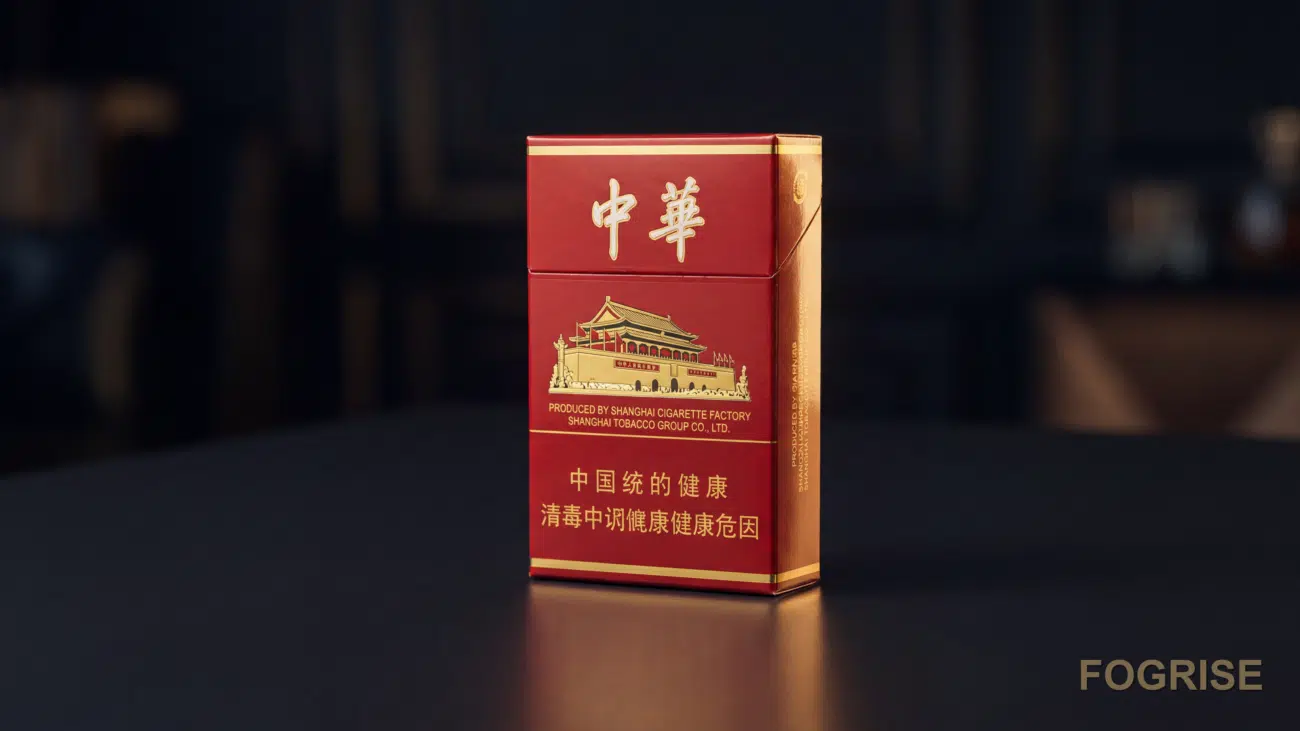
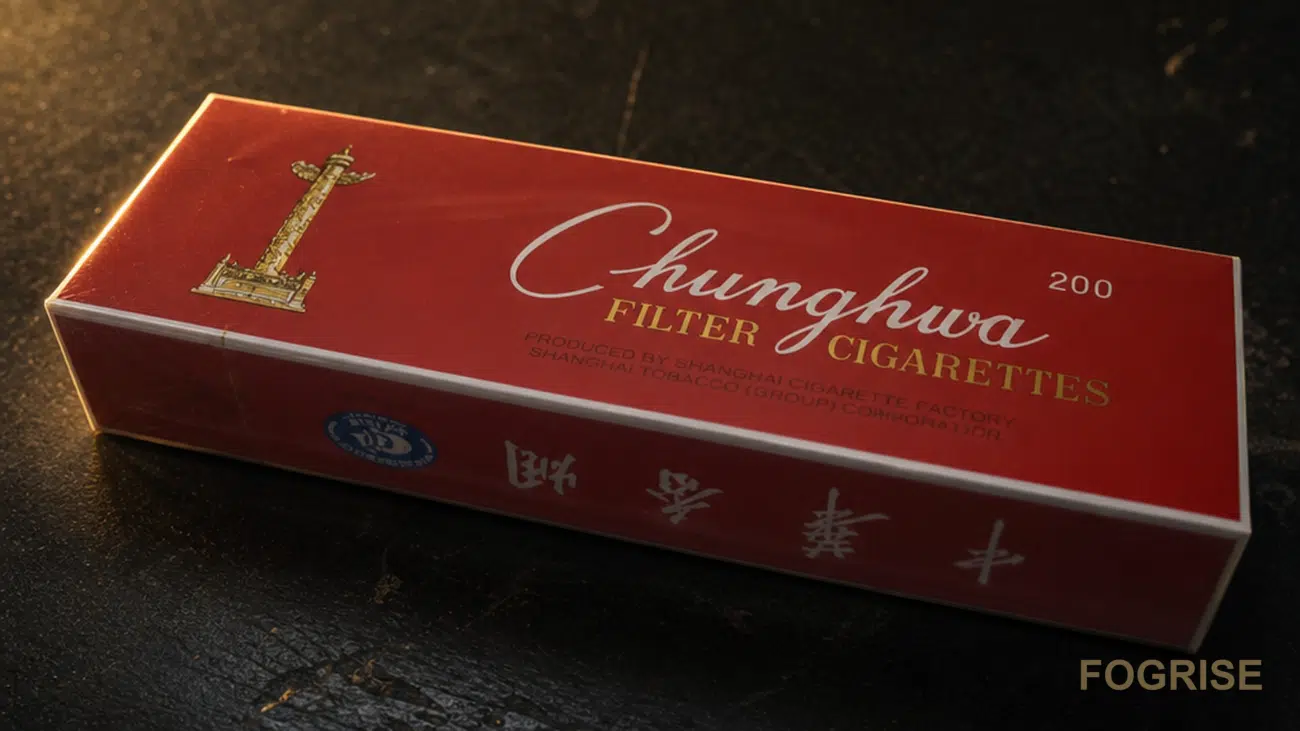
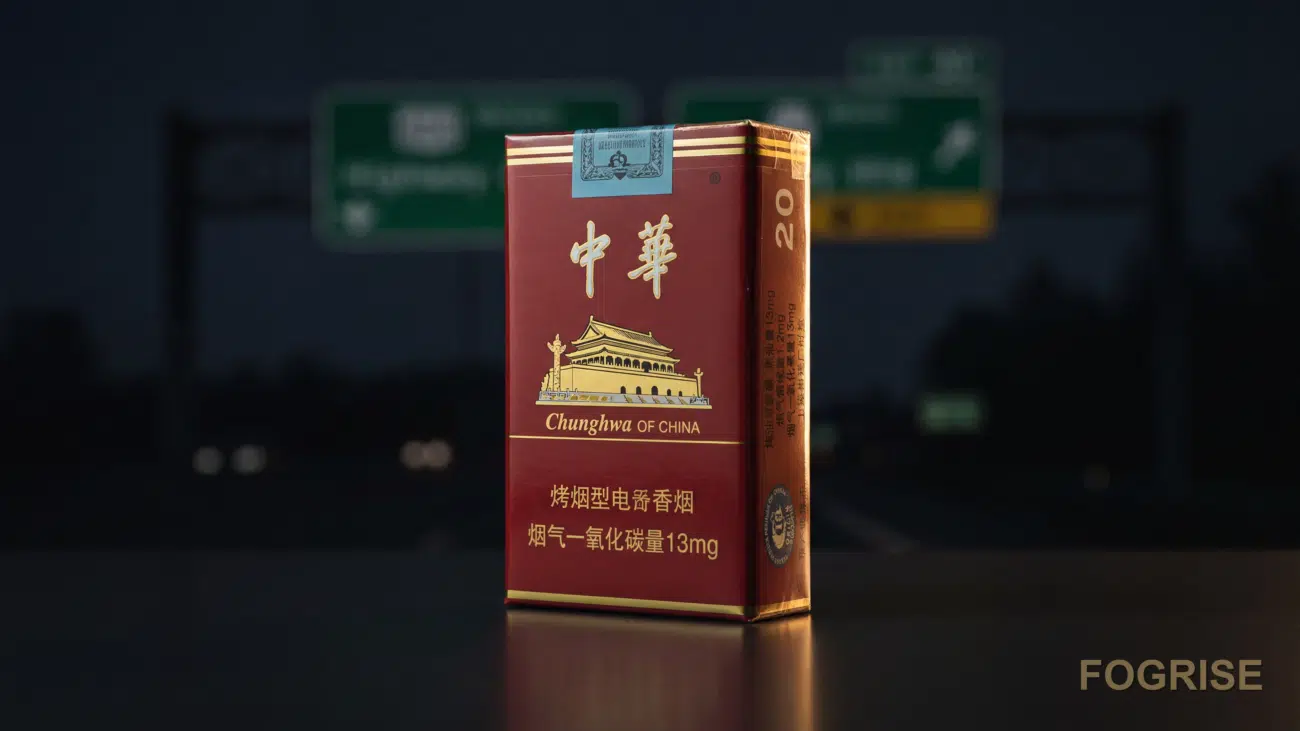
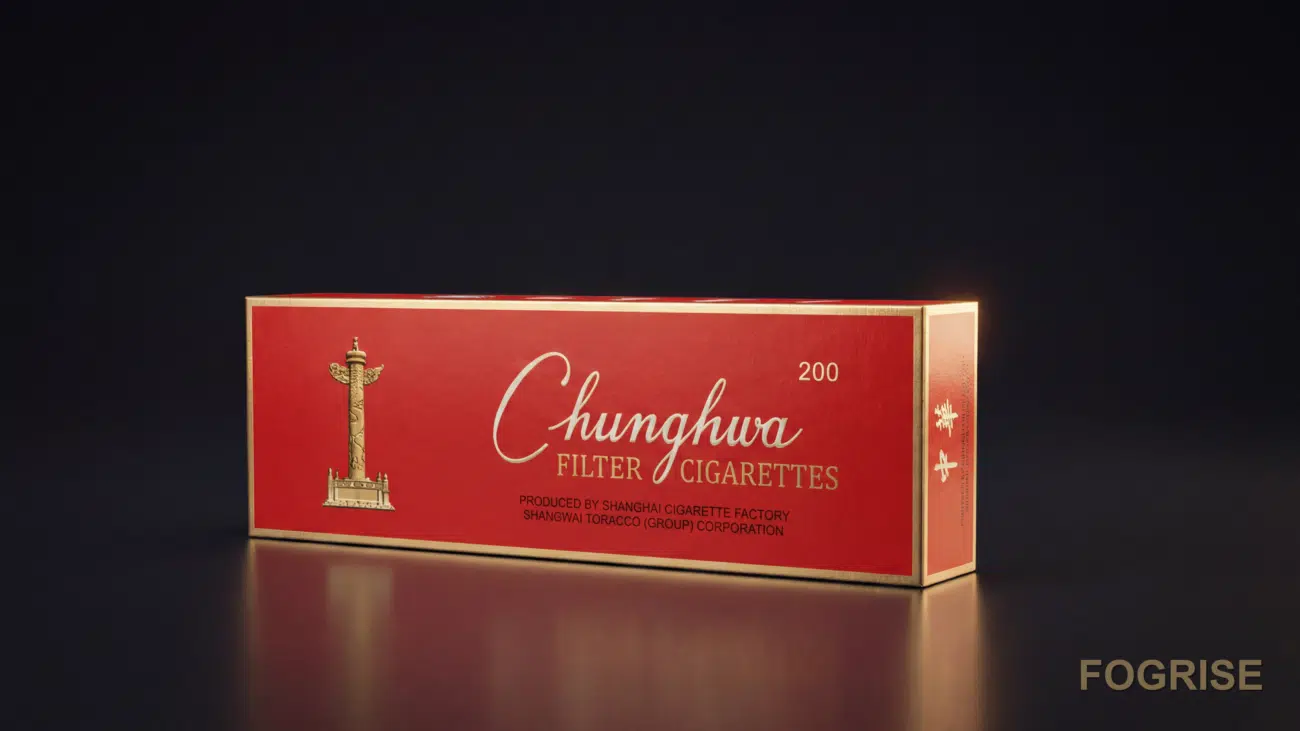
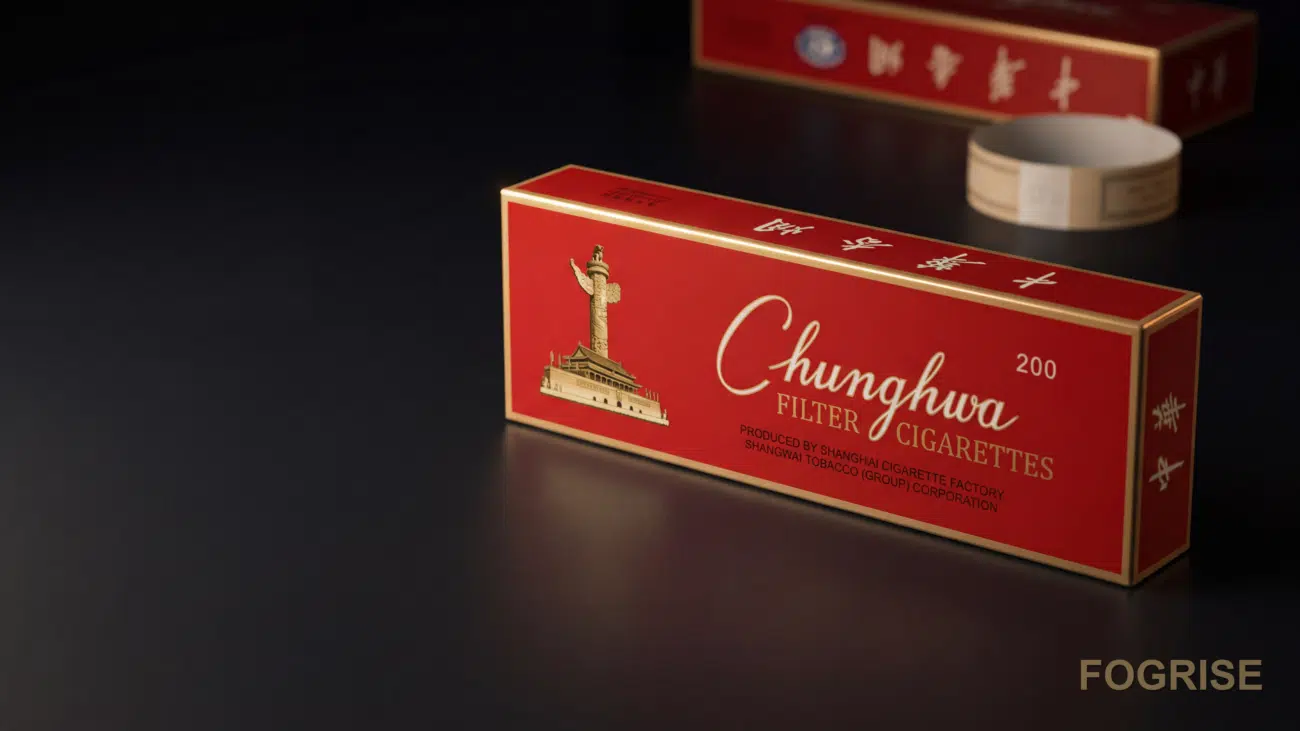
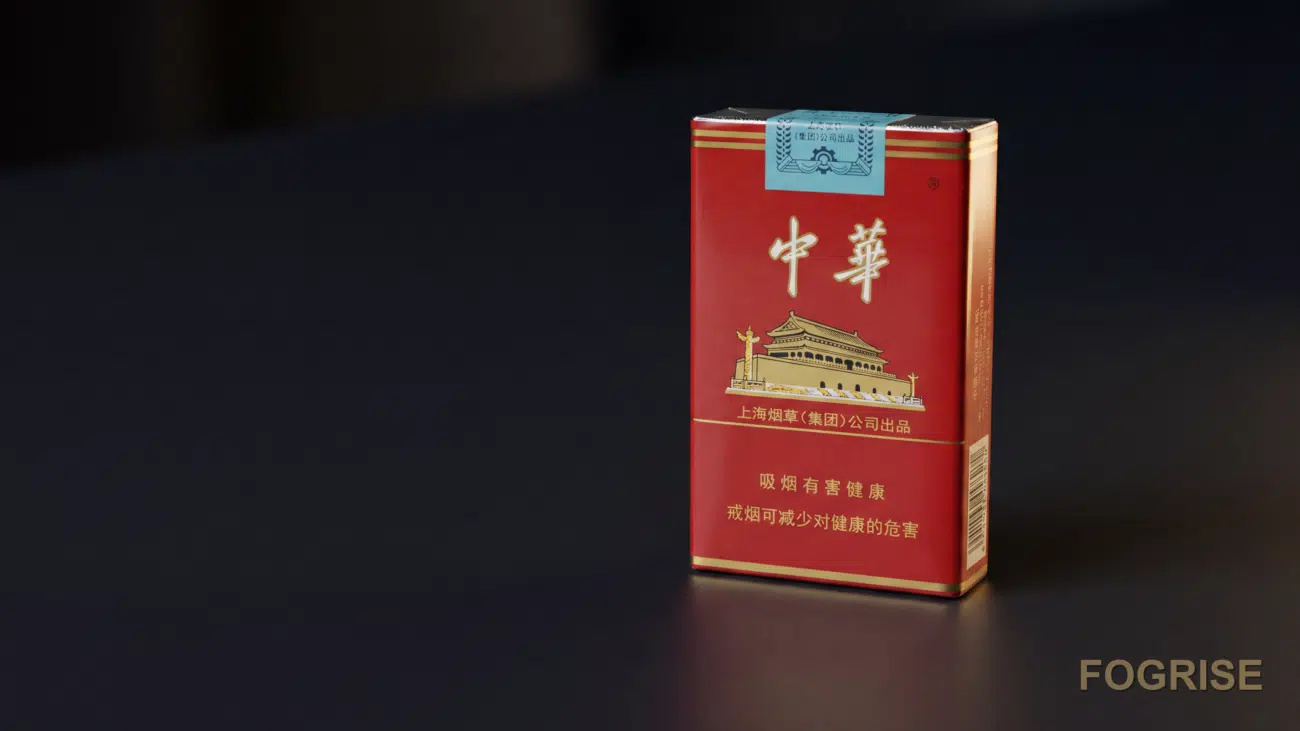
Chunghwa is the brand most Hungarian buyers ask about by name. Produced by Shanghai Tobacco Group (a CNTC subsidiary) since 1951, it has spent decades as the standard cigarette of Chinese state banquets and Politburo receptions, which gave it both its prestige and its international recognition (Wikipedia contributors, 2025). The line splits into Hard Chunghwa (硬中华, red and gold flip-top) and Soft Chunghwa (软中华, deeper red soft pack), with sub-variants beneath each tier.
At the EU duty-free counters where it appears on rotation, the price typically sits in the €80 to €100 per carton range, several times what an equivalent volume of Sopianae would cost at a Nemzeti Dohánybolt. Hungarian smokers who actually obtain a Chunghwa carton most often do so at Budapest Ferenc Liszt International Airport on a non-EU arrival, through Heinemann’s airside concession, or via a friend returning from Shanghai who comes in under the 200-cigarette personal allowance.
Double Happiness (双喜), Yuxi (玉溪) and the Mid-Tier Brands
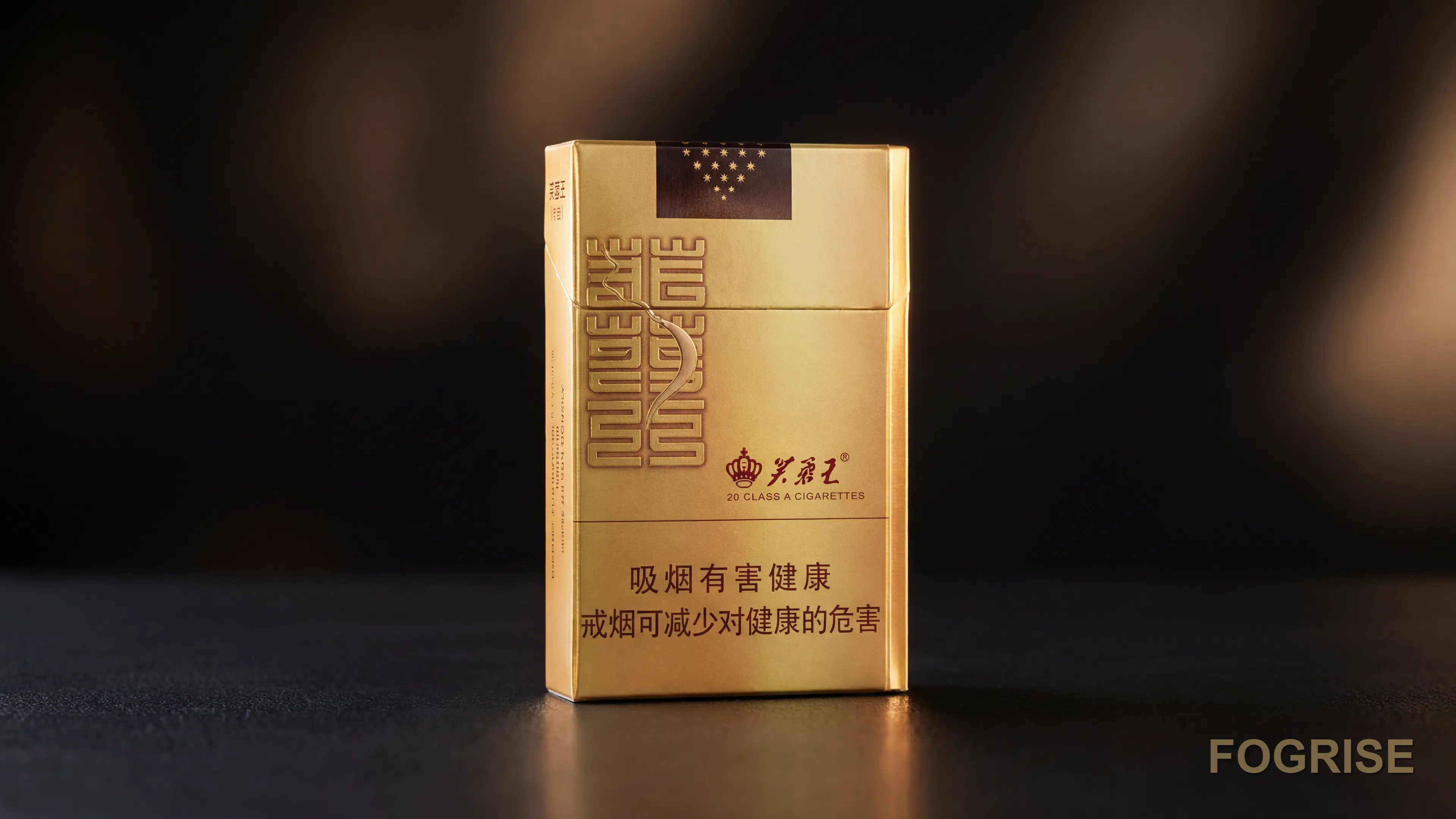
Below the flagship sit a cluster of mid-tier names that any Chinese smoker would recognise but most Hungarians have never heard of. Double Happiness, made by Guangdong China Tobacco, is the wedding-and-celebration brand, named after the doubled 喜 character traditionally pasted on wedding doors. It is everyday-affordable in Guangzhou but virtually absent from Hungarian shelves of any kind. Yuxi, produced by Hongta Tobacco Group in Yunnan, is the Virginia-leaf-dominant pack most often described for a smoother draw. It is also one of the most counterfeited brands inside China itself, which is one reason genuine packs are virtually never offered through informal Hungarian channels. Furongwang from China Tobacco Hunan and Hongtashan, the other major Hongta label, round out this segment. None of them have authorised EU retail distribution.
Economy and Specialty Brands: Liqun, Zhongnanhai, Nanjing, Panda
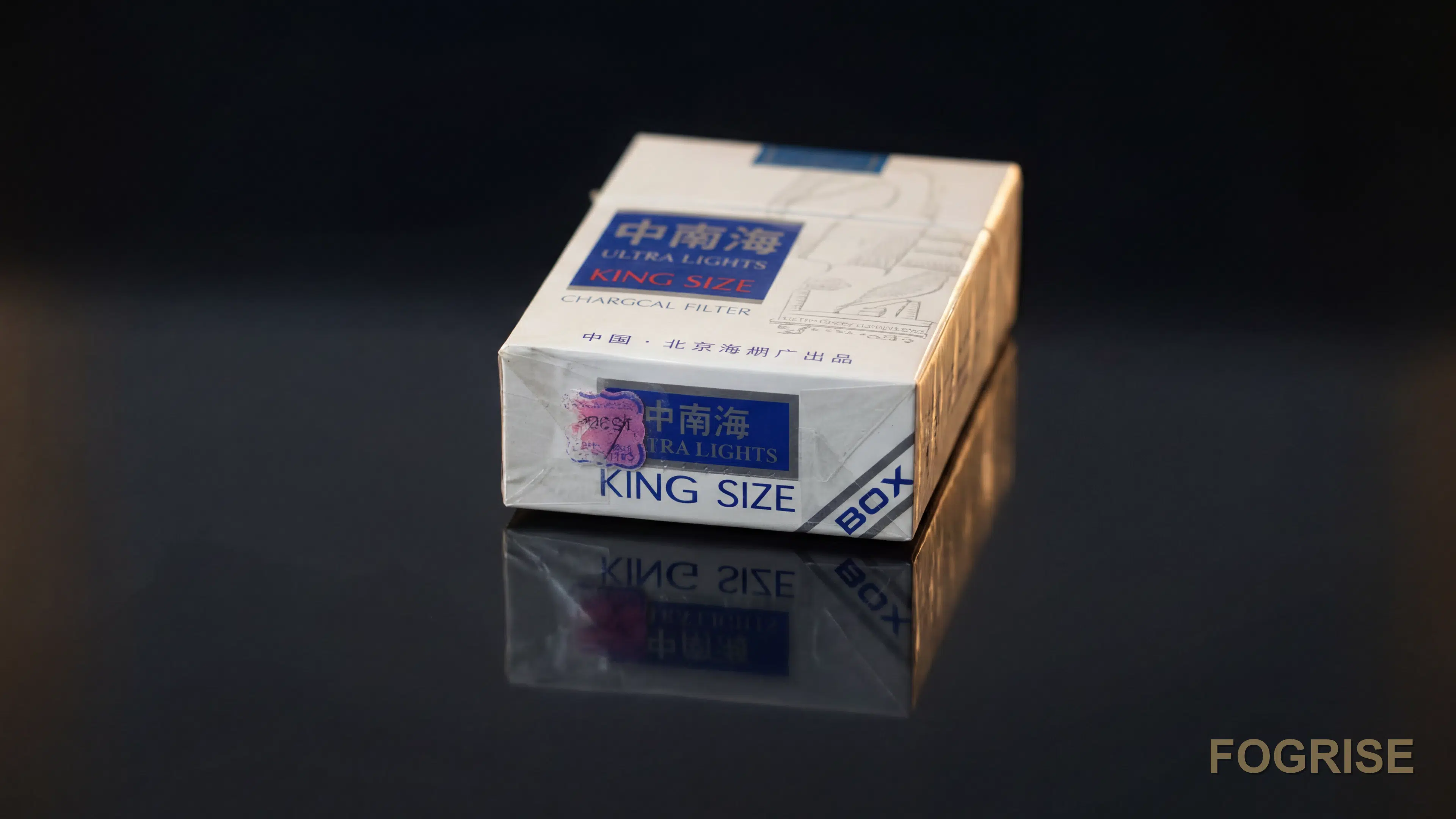
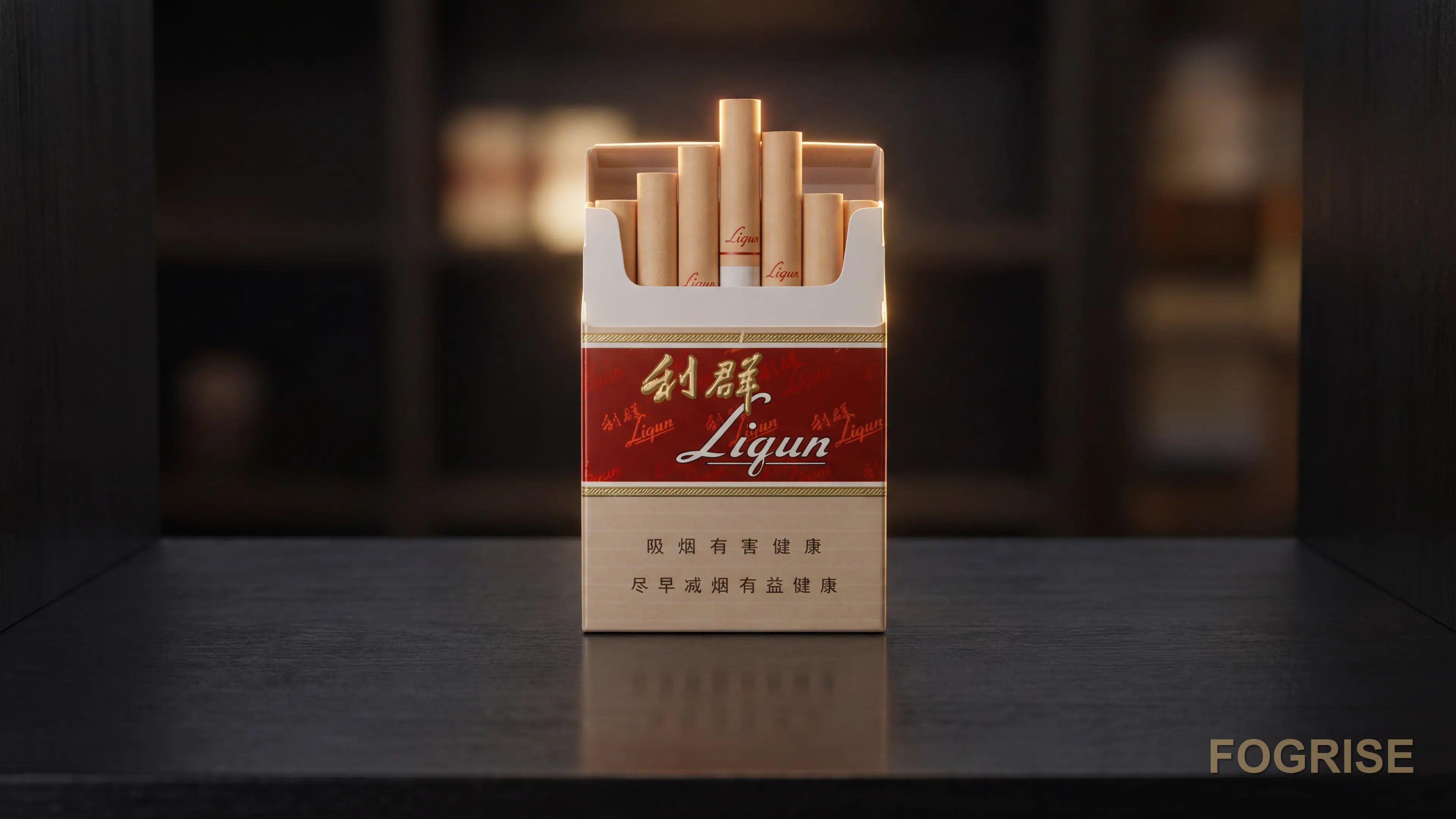
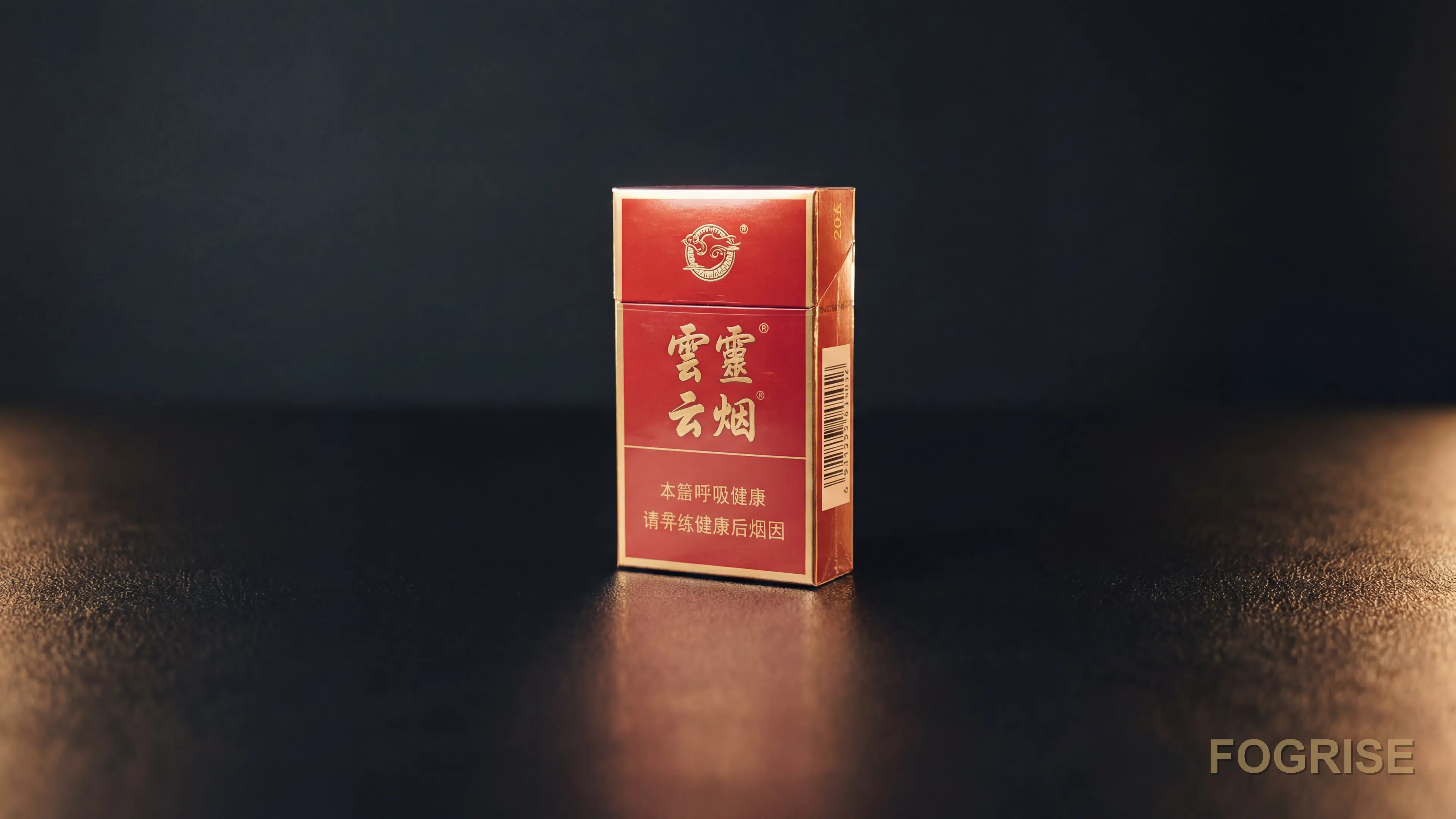
The remaining names sit at the volume base and at the rarity ceiling. Liqun (利群), Zhejiang China Tobacco’s everyday workhorse, is one of China’s best-selling brands by volume and a budget-to-mid choice for ordinary smokers there. Zhongnanhai (中南海), Beijing Tobacco’s contribution, is distinctive for its ultra-low-tar variants advertised at 1 mg and 3 mg machine yields. Worth stating clearly: low-tar labelling does not mean lower harm. The WHO has been explicit that smokers compensate by inhaling more deeply or smoking more sticks, and no member-state regulator treats "light" yields as health-protective. Nanjing, the Nanjing Tobacco Factory line, is collectible for its gold and red tier packaging and is sometimes sold to Hungarian collectors as a curiosity rather than for daily use. Panda (熊猫) closes the catalogue. Originally produced as a state-reserve cigarette and historically associated with Deng Xiaoping, it remains the rarest commercial Chinese brand, with very limited production runs and asking prices that can run into the hundreds of euros per carton on collector channels.
The table below is a fast reference for the same buyer who would scan a Hungarian wine list before ordering. Availability is graded against actually-existing distribution paths inside Hungary, not against the e-commerce sites of dubious legality that dominate the search results.
| Brand | Operator | Tier | Hungarian Availability |
|---|---|---|---|
| Chunghwa (中华) | Shanghai Tobacco Group | High-tier | BUD airport duty-free rotation; rare Józsefváros ethnic shops |
| Yuxi (玉溪) | Hongta Group, Yunnan | High-tier | Absent from regulated retail |
| Furongwang (芙蓉王) | China Tobacco Hunan | High-tier | Absent from regulated retail |
| Hongtashan (红塔山) | Hongta Group | Mid | Absent from regulated retail |
| Double Happiness (双喜) | Guangdong Tobacco | Mid | Absent from regulated retail; occasional Józsefváros parallel imports |
| Liqun (利群) | Zhejiang Tobacco | Mid-Economy | Absent from regular channels |
| Zhongnanhai (中南海) | Beijing Tobacco | Low-tar specialty | Absent from regular channels |
| Nanjing | Nanjing Tobacco Factory | Mid-Collector | Collector channels only |
| Panda (熊猫) | Shanghai Tobacco Group | Ultra-rare | Historical reserve; auction channels only |
One quiet pattern is worth flagging for the curious buyer: the brands hardest to find in Hungary are not necessarily the most expensive in China. They are the ones whose domestic Chinese demand is high enough that no surplus reaches export channels at all.
Hungary’s Legal Framework for Tobacco: NAV, EU TPD, and What It Means for Chinese Brands
Hungary’s rules for retailing a cigarette pack rest on three statutes acting in series: the EU Tobacco Products Directive, the Hungarian Excise Act, and the Nemzeti Dohánybolt monopoly law. For a buyer asking whether a Chunghwa or Yuxi pack carried home from Shanghai can be sold in a Budapest tobacconist, the short answer is no, and the long answer below explains why each layer says no for a different reason. Understanding which rule applies where also clarifies why niche Chinese-brand availability in Hungary is confined to the duty-free airside zone and a handful of ethnic-import addresses rather than the 5,000-odd licensed Dohánybolt outlets nationwide.
EU Tobacco Products Directive (TPD) 2014/40/EU in Hungary
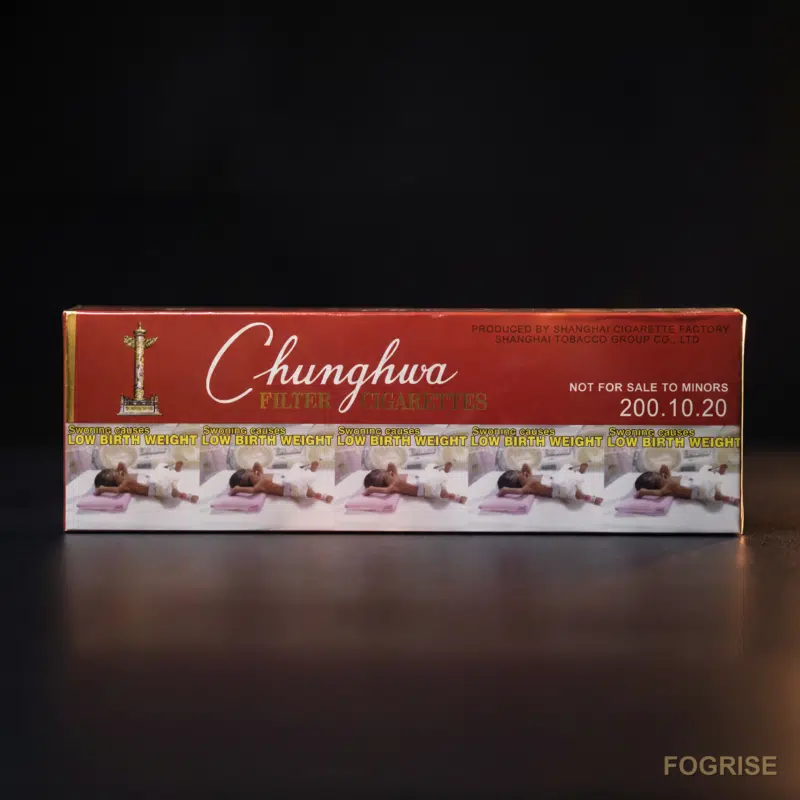
The TPD was transposed into Hungarian law through Government Decree 39/2013 (II. 14.) on the manufacturing, placement on the market and labelling of tobacco products, with subsequent amendments aligning Hungary with each TPD review cycle (European Parliament & Council of the European Union, 2014; European Commission, 2018). The same directive shapes Chinese-brand availability in neighbouring Visegrád markets, with comparable retail realities documented in our Chinese cigarettes in Poland and Chinese cigarettes in Slovakia guides. The directive’s most visible requirement is the combined health warning: a photographic image plus text covering 65% of both the front and back of every unit pack, in the official language of the member state (European Parliament & Council of the European Union, 2014). A Chinese mainland pack of Chunghwa, by contrast, carries only the State Tobacco Monopoly Administration text warning in Chinese characters, which fails the EU pictorial-coverage rule on day one. Add the TPD’s characterising-flavour ban, in full force since 20 May 2020, and the menthol-leaning variants common in Chinese mass-market lines are blocked from EU retail outright.
Since 20 May 2019, every cigarette pack legally sold in Hungary must also carry a unique track-and-trace identifier and tamper-proof security feature under TPD Article 15 plus Commission Implementing Regulation 2018/574, with the same rule extended to all other tobacco products from 20 May 2024 (European Parliament & Council of the European Union, 2014; European Commission, 2018).
Hungarian Excise Tax Structure (NAV)
Excise sits in Act CXXVII of 2003 on Excise Duty (Jövedéki adó tv.), repeatedly amended to track the EU minimum floor (European Commission, Directorate-General for Taxation and Customs Union, 2025; Nemzeti Adó- és Vámhivatal, 2025). Hungary applies the standard EU pattern: a specific component levied per 1,000 sticks, plus an ad valorem percentage applied to the retail selling price, then 27% VAT layered over both. The 27% VAT rate is the highest standard rate in the EU (European Commission, Directorate-General for Taxation and Customs Union, 2025; Nemzeti Adó- és Vámhivatal, 2025). Combined incidence on a legal pack reaches roughly three-quarters of the shelf price.
| Component | Rate | Applied To |
|---|---|---|
| Specific Excise | ~HUF 29,800 / 1,000 cigarettes | Per unit |
| Ad Valorem Excise | ~24% | Retail selling price |
| VAT | 27% | RSP including excise |
| Tax incidence | ~75-80% | Final retail price |
NAV, the Nemzeti Adó- és Vámhivatal, administers the system. Every legal pack carries a Hungarian tax stamp; bonded movements are tracked through the EU Excise Movement and Control System (EMCS) (Nemzeti Adó- és Vámhivatal, 2025). A pack without a Hungarian stamp is, by definition, outside the regulated channel, regardless of who carried it across the border or in what quantity.
The Nemzeti Dohánybolt Monopoly and EU TPD Combined Effect
Stacking the two regimes produces a dual barrier. No mainland Chinese pack clears it in its as-shipped state. The Nemzeti Dohánybolt monopoly statute restricts retail sale to licensed concessionaires; the TPD restricts the form of the pack itself. A Chunghwa unit imported direct from China therefore fails on two counts at once: wrong warning format under the TPD, and no Hungarian tax stamp under the excise regime (European Parliament & Council of the European Union, 2014). To enter Hungarian regulated retail, a Chinese manufacturer would need an EU-market-specific stock-keeping unit produced and re-stamped for the Hungarian channel, and a concessionaire willing to list it. Neither of those conditions currently holds at scale, which is the structural reason these brands are absent from the average Dohánybolt shelf rather than a matter of consumer demand. The same logic runs in reverse on the demand side: a buyer who wants Chunghwa in Budapest is asking the Hungarian regulatory perimeter to make an exception it is not designed to make, which is why the practical path runs through airport duty-free or through a personal import within the traveller allowance covered in the next section.
Traveller Allowances: Bringing Chinese Cigarettes into Hungary
Under Council Directive 2007/74/EC, EU member states may set a lower duty-free cigarette allowance for land-border arrivals from non-EU countries, down to a minimum of 40 cigarettes (80% below the standard 200-cigarette air allowance) (Council of the European Union, 2007). Hungary has exercised this opt-down for both its Ukrainian and Serbian border crossings.
If a Chunghwa carton is sealed in a Beijing duty-free bag and the buyer flies direct to Budapest, the path through Hungarian customs is well-defined. If that same carton crosses by car from Belgrade or Lviv, the path is much narrower. Hungary’s traveller allowances split sharply by mode of arrival, and the split matters more here than in most EU states because the country shares non-EU land borders with both Ukraine and Serbia.
Air Arrivals from Non-EU Countries
A passenger landing at Budapest Ferenc Liszt International from any non-EU origin (Beijing, Shanghai, Hong Kong, Guangzhou, or a Dubai connection when the ultimate origin is non-EU) may bring in 200 cigarettes duty-free per adult, or an equivalent in cigarillos, cigars, or smoking tobacco (Council of the European Union, 2007; European Commission, 2025). The minimum legal age under Hungarian customs is 17; the xiangyandd audience gate remains 21 and above. Above 200 sticks, the surplus must be declared at the red channel and excise plus VAT settled on the spot, or the goods can be voluntarily surrendered without penalty. Single-pack carriage attracts no paperwork at all.
Land Border Arrivals (Lower Allowance)
Crossing into Hungary by road from a non-EU country, the duty-free quota drops to 40 cigarettes per adult, an 80% reduction from the air allowance (Council of the European Union, 2007). Hungary exercised the EU Council Directive 2007/74/EC Article 9(2) opt-down, which lets a member state apply a lower limit to travellers entering by land or recreational sea craft. The relevant scenarios in practice are the Záhony-Csap crossing from Ukraine and the Röszke-Horgoš crossing from Serbia, both of which see steady cross-border tobacco traffic that NAV monitors closely. Hungary’s intra-EU land borders behave differently: crossings into Romania and Slovenia fall under the standard intra-EU duty-paid framework instead, with the indicative 800-stick ceiling rather than the 40-stick non-EU floor.
Allowance thresholds may change. Always verify current rules with NAV (nav.gov.hu) or your port-of-entry customs officer before travelling.
Online Orders from China
Cross-border parcels of cigarettes from China to a Hungarian residential address sit entirely outside the traveller framework. They are treated as commercial import even at single-carton scale and attract Hungarian excise, ad valorem duty, and 27% VAT on the customs-assessed value (Council of the European Union, 2007; European Commission, 2025). EU TPD Article 18 also lets member states ban distance sales of tobacco to consumers, an option Hungary has effectively closed through the Nemzeti Dohánybolt monopoly statute. In practice, parcels flagged as tobacco are routinely opened by NAV at the Budapest postal hub and seized. The addressee gets fined.
| Route | Duty-Free Cigarettes | Notes |
|---|---|---|
| Air from non-EU (e.g. China direct) | 200 | Per adult 18+ (xiangyandd policy: 21+) |
| Land border from non-EU | 40 | Hungary opted for lower limit under EU Directive 2007/74 Art. 9(2) |
| Intra-EU (duty-paid in another EU state) | 800 | Indicative ceiling; must be tax-paid at origin |
| Online order from China | None | Full customs, excise, and 27% VAT apply |
Where to Find Chinese Cigarettes in Hungary Legitimately
Three doors stay open. Each has rules, hours, and adult-verification gates that an informed buyer should know before walking in. None of the three runs through the Nemzeti Dohánybolt network covered earlier.
Budapest Ferenc Liszt International Airport Duty-Free
Budapest Airport (BUD/LHBP) operates two main duty-free concessions: Heinemann Duty Free in Terminal 2A and Régal Travel Retail along the Schengen and non-Schengen piers. The premium Asian-brand window rotates by season, but Chunghwa Hard 5000 has been a recurring listing for departing international passengers, alongside selected Japan Tobacco and Korean specialty lines.
Hungary’s airport duty-free outlets follow the EU Travel Retail framework, which exempts qualifying non-EU-bound passengers from local excise and 27% VAT on tobacco within personal-use limits. That exemption is what keeps Chunghwa cartons in the €80 to €100 range at Budapest Airport rather than the much higher mark a duty-paid top-end carton would carry at any Hungarian Nemzeti Dohánybolt (European Commission, Directorate-General for Taxation and Customs Union, 2025).
Stock is limited and not guaranteed. Adults departing to or arriving from a non-EU destination can purchase here within the relevant traveller allowance.
Józsefváros and the Four Tigers Market
The 8th district has been Budapest’s Chinese-Hungarian trading hub since the early 1990s. The Kőbányai út warehouse complex, traditionally called Négy Tigris (Four Tigers Market), still anchors the wholesale node for Hungarian-Chinese commerce, and the adjacent retail streets around Keleti station carry the spillover.
Asian import grocers and tobacco-adjacent specialty stores in the area occasionally stock authentic Chinese cigarette brands intended for the resident Chinese community. Stock is informal, not always displayed on shelves, and the seller may ask about the intended use. Pricing varies. Buyers should still ask to see EU-compliant packaging and a Hungarian NAV tax stamp where the law requires one.
Specialist International Online Retailers
A narrow category of internationally based online retailers ships authentic premium Asian tobacco brands to Hungary, with adult age verification at checkout and shipping documented for customs. These channels sit entirely outside Nemzeti Dohánybolt and are not domestic Hungarian retail. They typically declare the parcel honestly, which means Hungarian excise duty and 27% VAT can apply on arrival above the personal-use threshold.
For an internationally shipped, adult-verified selection, browse our curated Chinese cigarettes catalogue at fogrise-cigarette.com. Adults 21+ only.
Illicit Trade and Counterfeits: What Hungarian Buyers Should Know
Cheap online offers and street-corner deals routinely surface for Chinese-branded packs in Hungary. Most are not what they claim. Buyers who care about both the law and their lungs need a working filter before any money changes hands.
Hungary’s Position in EU Illicit Tobacco Trade
Hungary sits on a busy contraband corridor. The KPMG Project SUN annual study and OLAF, the European Anti-Fraud Office, consistently identify Hungary as both a transit and consumption market for illicit cigarettes moving in from Ukraine, Serbia, and Belarus, with the illicit share of consumption running above the EU average (KPMG, 2024).
Chinese-branded packs appear in this stream. Some are genuine product diverted from low-tax markets. Most are counterfeits printed at scale in workshops outside the EU. Hungarian customs and NAV regularly intercept Chinese-brand cartons at the Záhony rail crossing, the Beregsurány road point, and at postal sorting hubs handling international small parcels.
How to Spot Counterfeit Chinese Packs
Counterfeits keep improving but still leak signal. Walk through six checks before trusting a pack.
Documentation first:
- EU pictorial health warning present, covering 65% of front and back. Mainland-market packs without it cannot legally be sold or distributed inside Hungary.
- Hungarian NAV tax stamp hologram visible on the cellophane seal. No stamp means no Hungarian duty paid and no legal domestic retail.
- Brand typography crisp. Real Chunghwa shows the Tian’anmen Gate engraving in fine line detail with the 中华 characters cleanly stroked. Smeared serifs, off-register red, or thick clumsy characters are tells.
Then the physical pack:
- Pack weight and board feel substantial. Counterfeits often use thinner cardboard; the pack flexes easily and the cellophane wrap sits loose.
- Foil and inner liner match the brand spec. Chunghwa uses gold foil with embossed branding; bare aluminium or missing emboss is wrong.
- Price plausibility. Offers far below the €80 per-carton duty-free benchmark, especially from informal sellers, are a counterfeit or contraband signal.
Under Act CXXVII of 2003 on Excise Duties, possession in commercial quantities triggers confiscation, substantial administrative fines, and potential criminal referral. Personal-use possession above the traveller allowance is typically met with confiscation and a proportionate fine (Nemzeti Adó- és Vámhivatal, 2025). NAV operates active enforcement at land borders, the Liszt Ferenc cargo hub, and the international postal flows that feed online orders.
Health and Harm: What Every Smoker Needs to Know
This is the non-negotiable section. The rest of the article maps where and how to buy. This part covers what every adult buyer is signing up for, regardless of brand origin or carton price.
All cigarettes contain nicotine and are addictive. Chinese, Hungarian, American, hand-rolled, or expensive duty-free, the active substance is the same, and the dependence mechanism does not care about price or prestige. The World Health Organization and the U.S. Centers for Disease Control attribute lung cancer, chronic obstructive pulmonary disease (COPD), and a range of cardiovascular diseases to long-term cigarette smoking, with no consumption level shown to be safe for cardiovascular endpoints (World Health Organization, 2024).
Low-tar Chinese variants such as Zhongnanhai 1mg deserve a specific note. The WHO Framework Convention on Tobacco Control guidance on "light" and "low-tar" labelling is unambiguous: machine-measured tar yields do not predict human exposure. Smokers compensate behaviourally by drawing harder, holding the puff longer, and partially blocking the ventilation holes, which restores the actual delivered tar and nicotine dose. The packaging difference is real. The harm reduction implied is not.
If you smoke and want help quitting in Hungary, two public-health resources are worth knowing:
- Dohányzás-leszokási támogatás (smoking cessation support) through Nemzeti Népegészségügyi és Gyógyszerészeti Centrum (NNGYK), offering counselling, nicotine replacement guidance, and referral pathways at no charge.
- Háziorvos (family doctor) consultation, which can prescribe varenicline or nicotine replacement therapy under the national health insurance scheme.
The decision to smoke belongs to you as an adult. Knowing the actual cost is part of making that decision with eyes open.
Frequently Asked Questions
Q: Are Chinese cigarettes legal in Hungary?
A: Possessing Chinese cigarettes is not illegal, but mainland Chinese packs (without EU pictorial warnings and Hungarian tax stamps) cannot be legally sold in Nemzeti Dohánybolt shops or any Hungarian retail. Adult buyers can access them through airport duty-free or compliant international online retailers, within traveller allowance limits.
Q: How many cigarettes can I bring from China to Hungary?
A: 200 cigarettes duty-free if arriving by air from a non-EU country. Only 40 cigarettes if crossing a land border from a non-EU country, because Hungary exercised the EU opt-out for a lower land-border allowance (Council of the European Union, 2007). Amounts above the relevant limit are subject to Hungarian excise duty, customs, and 27% VAT.
Q: Where can I buy Chunghwa cigarettes in Budapest?
A: Chunghwa is available at Budapest Ferenc Liszt International Airport duty-free shops (Heinemann/Régal). It is not sold in Nemzeti Dohánybolt or standard Hungarian retail. Asian import stores in Józsefváros occasionally carry it. Some specialist international online retailers also ship to Hungary with adult verification.
Q: What Chinese cigarette brands are at Budapest duty-free?
A: Top-tier brands including Chunghwa appear most consistently at major international hub duty-free shops. Stock availability varies by operator and season, so check the specific retailer’s website before travel. Only duty-paid purchases count toward the traveller allowance on return.
Q: How much do Chinese cigarettes cost in Hungary?
A: At EU duty-free, Chunghwa retails for approximately €80 to €100 per carton. Prices through specialist online retailers vary by shipping costs and applicable import duties. Offers significantly below these benchmarks, particularly through informal channels, are a counterfeit or contraband risk (European Commission, Directorate-General for Taxation and Customs Union, 2025).
Q: Are Chinese cigarettes stronger than Hungarian brands?
A: Strength varies widely by brand and variant. Chunghwa tends toward a smooth, Virginia-dominant character. Low-tar variants like Zhongnanhai 1mg exist, but WHO guidance is clear: low-tar labelling does not make a cigarette safer. All variants carry serious health risks.
Q: What are the NAV penalties for cigarette smuggling into Hungary?
A: Under Act CXXVII of 2003, possession of contraband tobacco in commercial quantities triggers confiscation, substantial fines, and potential criminal prosecution. Personal-use possession above the allowance typically results in confiscation and an administrative fine. NAV operates active enforcement at borders and postal hubs.
Conclusion
The market for Hungary Chinese cigarettes sits behind one of the most tightly closed retail systems in the European Union. The Nemzeti Dohánybolt state monopoly and the EU Tobacco Products Directive together rule out conventional shelf access to every Chinese domestic brand without exception, Chunghwa and Panda included. The legitimate doors that remain are narrow but real: Budapest Ferenc Liszt International Airport duty-free for departing travellers, the Józsefváros Asian import district for community-scale availability, and a small set of specialist international online retailers operating with adult age verification and customs-declared shipping.
Two rules catch travellers out. The first is the 40-cigarette land-border allowance from non-EU countries, a Hungarian opt-out from the EU’s standard 200-cigarette default. The second is the counterfeit problem in the informal market, which rises with every below-benchmark offer. Adult buyers comparing the broader EU picture may also find the equivalent rules for Germany and France useful, since both apply the same TPD framework with locally calibrated excise and duty-free realities.
The honest close. All tobacco, regardless of brand prestige, country of origin, or price per carton, carries serious and well-documented health risks. Expensive does not mean safer. Low-tar does not mean safer. The choice belongs to the adult buyer, but it should be a choice made with the data in view.
Questions about internationally shipped tobacco selections? Contact our team.
References
- European Parliament & Council of the European Union. (2014). Directive 2014/40/EU on the approximation of the laws, regulations and administrative provisions of the Member States concerning the manufacture, presentation and sale of tobacco and related products. Official Journal of the European Union, L 127, 1–38. https://eur-lex.europa.eu/eli/dir/2014/40/oj
- Council of the European Union. (2007). Council Directive 2007/74/EC on the exemption from value added tax and excise duty of goods imported by persons travelling from third countries. Official Journal of the European Union, L 346, 6–12. https://eur-lex.europa.eu/eli/dir/2007/74/oj
- European Commission. (2018). Commission Implementing Regulation (EU) 2018/574 on technical standards for the establishment and operation of a traceability system for tobacco products. Official Journal of the European Union, L 96, 7–55. https://eur-lex.europa.eu/eli/reg_impl/2018/574/oj
- European Commission, Directorate-General for Taxation and Customs Union. (2025). Excise duties on tobacco. https://taxation-customs.ec.europa.eu/taxation/excise-duties/excise-duties-tobacco_en
- Nemzeti Adó- és Vámhivatal (NAV). (2025). Customs information for travellers and excise duty on tobacco products. https://nav.gov.hu/en/customs/travellers
- European Commission. (2025). Carrying alcohol and tobacco — your rights when travelling in the EU. Your Europe. https://europa.eu/youreurope/citizens/travel/carry/alcohol-tobacco-cash/index_en.htm
- World Health Organization. (2024). Tobacco [Fact sheet]. https://www.who.int/news-room/fact-sheets/detail/tobacco
- World Health Organization, Scientific Advisory Committee on Tobacco Product Regulation. (2003). SACTob conclusions on health claims derived from ISO/FTC method to measure cigarette yield. https://iris.who.int/handle/10665/43174
- KPMG. (2024). Illicit cigarette consumption in Europe — 2023 results. Commissioned by Philip Morris Products S.A. https://www.pmi.com/resources/docs/default-source/itp/illicit-cigarette-consumption-in-europe_2023-results_final.pdf
- Wikipedia contributors. (2025). Nemzeti Dohánybolt. In Wikipedia. https://en.wikipedia.org/wiki/Nemzeti_Dohánybolt
Last reviewed and updated: June 2026. Author: xiangyandd editorial team. Adults 21+ only — smoking is harmful; verify your local laws before purchase. Questions? Contact our team.



 English (US)
 简体中文
 Deutsch
 Français
 Español