

Blog
Chinese Cigarettes in Portugal: Brands & Buying Guide 2025

Abstract
Portugal holds a singular place in European Chinese tobacco culture. Its 442-year administration of Macau (1557 to 1999) created a lasting cultural and diaspora bridge, and the Chinese-Macanese community in Lisbon and Porto maintains deep ties to mainland Chinese tobacco brands, particularly Double Happiness and Chunghwa. Yet despite this unique heritage, Chinese cigarette brands are largely absent from mainstream Portuguese tabacarias. EU plain-packaging law, restrictions on online tobacco sales, and the tightly controlled retail environment means Lisbon Humberto Delgado Airport duty-free and a handful of specialist tobacconists are the primary legal channels for adult buyers seeking Portugal Chinese cigarettes.
This guide provides expert knowledge of China’s tobacco brand hierarchy, an honest account of what Portuguese law permits and prohibits, EU import allowances for travellers arriving from non-EU origins, heated tobacco options including IQOS, and the cultural context that makes Portugal’s relationship with Chinese tobacco uniquely rich among European markets. Coverage includes Chunghwa, Zhongnanhai, Nanjing, and the role of duty-free in legal access. This is informational content, not legal advice; readers should confirm current rules with Portuguese customs and the Autoridade Tributária before any purchase or import decision.
For adults 21+ only. Smoking is harmful and addictive. Tobacco laws, import rules, and age requirements vary, verify your local regulations before purchasing.
Key Takeaways
- Chinese brands absent from mainstream Portuguese tabacarias. Duty-free at Lisbon Humberto Delgado Airport and specialist tobacconists are the practical legal routes for Chunghwa, Zhongnanhai, and Nanjing in Portugal.
- EU 200-cigarette non-EU import limit applies. Adult travellers arriving from China may bring one standard carton (200 sticks) per person; the intra-EU indicative limit for personal use is 800 cigarettes.
- Plain packaging hides Chinese brand identity. All tobacco packs sold in Portugal use standardised EU-format plain packaging, so original Chinese brand artwork is not visible on Portuguese retail shelves.
- Online cross-border tobacco sales to Portugal are prohibited. Portuguese and EU law bans distance sales of tobacco products to consumers, making web orders from overseas retailers non-compliant.
- IQOS is legal in Portugal. The system is available through dedicated IQOS stores and specialist tobacconists; HEETS and TEREA imports from non-EU origins follow the same 200-unit personal allowance.
- The Macau connection runs deep. Portugal’s 442-year Macau administration produced a Chinese-Macanese diaspora in Lisbon and Porto whose cultural ties to Chinese tobacco shape niche demand to this day.
Table of Contents
- Abstract
- Key Takeaways
- Table of Contents
- Portugal’s Tobacco Regulatory Framework in 2025
- Top Chinese cigarette brands in Portugal
- Where to Find Chinese Cigarettes in Portugal
- Portuguese Tobacco Import Rules and EU Allowances
- IQOS and Heated Tobacco in Portugal
- The Macau Connection: Portugal, China, and Tobacco Culture
- Frequently Asked Questions
- Conclusion
- References
Portugal’s Tobacco Regulatory Framework in 2025
Portugal transposed the EU Tobacco Products Directive II (Directive 2014/40/EU) through Decreto-Lei n. 25/2014, prohibiting all cross-border distance tobacco sales to consumers, requiring standardised plain packaging on all tobacco products, and restricting retail to registered outlets. The minimum legal sales age is 18 (Portuguese law, 2014).
Before any conversation about Chinese-brand cigarettes in Portugal makes sense, the rulebook itself has to be on the table. Portugal’s tobacco market is governed by a layered system: EU-wide product standards, a domestic transposition law, a smoke-free statute, and enforcement split between two health authorities. None of it is exotic. All of it shapes what a buyer in Lisbon, Porto, or the Algarve can legally find on a shelf.
Four rules carry most of the weight for an adult buyer in 2025:
- Cigarette packs sold legally in Portugal must use standardised plain packaging with combined health warnings covering most of the surface (European Parliament and Council, 2014).
- Cross-border online sales of tobacco to Portuguese consumers are prohibited (European Parliament and Council, 2014, Art. 18; Assembleia da República, 2014).
- Tobacco advertising is banned outside the point of sale inside specialist outlets (European Parliament and Council, 2014; Campaign for Tobacco-Free Kids, 2024).
- The minimum legal purchase age is 18, though xiangyandd serves adults 21 and over by policy.
EU Tobacco Products Directive II and Decreto-Lei 25/2014
The backbone of the framework is Directive 2014/40/EU, the EU Tobacco Products Directive II, which Portugal transposed through Decreto-Lei n.º 25/2014 (European Parliament and Council, 2014; Assembleia da República, 2014). Together with the older Lei 37/2007 (the smoke-free statute and broader tobacco-control law), these instruments set ingredient limits, labelling rules, traceability requirements, and the public-space restrictions that anyone smoking in Portugal already feels. Enforcement is shared. The Direção-Geral da Saúde, DGS, sets and supervises public-health policy on tobacco; INFARMED handles product-side oversight, including notifications and market surveillance.
Plain Packaging in Portugal
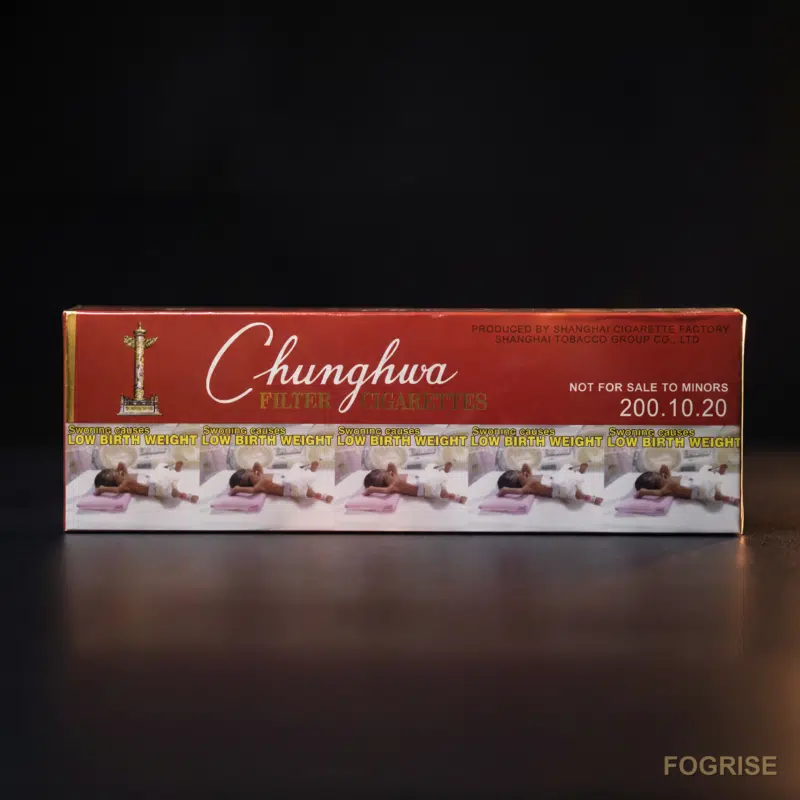
Walk into a Portuguese tabacaria and the wall behind the counter looks almost monochrome. That is by design. Portugal applies the EU-aligned standardised packaging format: a uniform brown-olive base, no brand colours, no logos, no decorative typography, with combined picture-and-text health warnings occupying most of the front and back of the pack (European Parliament and Council, 2014). The same TPD II baseline drives the equivalent shelf experience in Finland and Poland. Brand names appear only in a fixed, neutral font. For Chinese cigarettes, the practical implication is direct. Anything sold lawfully in Portugal will look nothing like the gold-foil Chunghwa or red-lacquer pack a traveler remembers from Shanghai. If the packaging looks "normal Chinese-market" in Portugal, it almost certainly isn’t a domestically compliant product.
Online Distance Sales: What Is Prohibited
This is where most misunderstandings start. Cross-border distance sales of tobacco products to consumers located in Portugal are prohibited under the Portuguese transposition of TPD II (European Parliament and Council, 2014, Art. 18; Assembleia da República, 2014). In plain terms: a Portuguese-resident adult cannot legally order cigarettes from an overseas website and have them shipped home as a retail purchase, regardless of brand origin. The ban applies to cigarettes, roll-your-own, and related tobacco products. Personal-import allowances for travelers arriving from outside the EU are a separate customs question and don’t convert "shipped to my door" into a lawful channel.
Tobacco Retail in Portugal: Tabacarias and Beyond
Lawful retail is the offline-only channel. Tabacarias remain the specialist tier (the Portuguese equivalent of dedicated tobacconists), and they sit alongside petrol-station shops, supermarket checkouts, and street kiosks. Every one of these outlets operates under the same TPD II display and advertising restrictions: products kept behind the counter or in closed displays, no promotional materials, and price lists that read like a registry rather than a menu (European Parliament and Council, 2014; Campaign for Tobacco-Free Kids, 2024). The combined effect, layered on top of plain packs, is a retail environment that deliberately strips brand storytelling out of the transaction. That sets the stage for the next question most buyers ask, which is where Chinese brands actually fit inside this quiet, tightly bounded shelf.
Top Chinese cigarette brands in Portugal
Eight Chinese brands surface most often in Portugal, though availability is uneven and most are personal-import or specialist-tobacconist finds rather than supermarket stock. Buyers comparing the Portuguese shelf with other European markets often look first at the United Kingdom and the Netherlands, where similar plain-packaging rules apply. The grid below maps the typical Lisbon retail price band, the parent State Tobacco subsidiary, and the most likely channel where a smoker actually encounters each label (Wikipedia contributors, 2024a). Prices reflect observed 2025 Lisbon tabacaria and duty-free pricing and shift with FX and excise; treat the bands as orientation, not quotes.
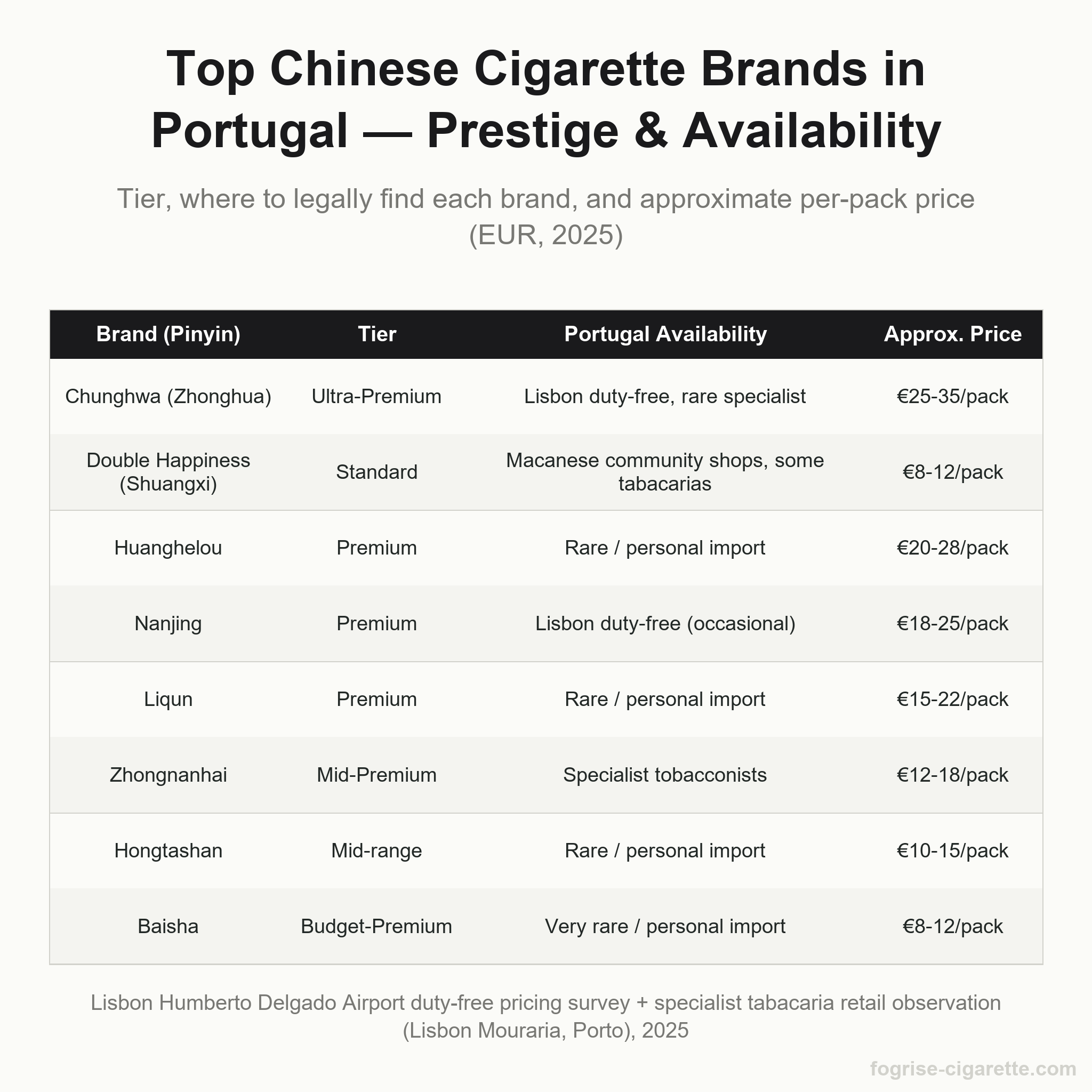
| Brand (中文) | Parent | Tier | Typical Lisbon price | Where to find |
|---|---|---|---|---|
| Chunghwa 中华 | Shanghai Tobacco Group | Ultra-premium | €25 to €35 | Lisbon duty-free (when stocked) |
| Double Happiness 双喜 | Guangdong China Tobacco | Standard | €8 to €12 | Tabacaria, Macanese community shops |
| Huanghelou 黄鹤楼 | Hubei China Tobacco | Premium craft | Rare | Personal import |
| Nanjing 南京 | Jiangsu China Tobacco | Premium | €18 to €25 | Occasional Lisbon duty-free |
| Liqun 利群 | China Tobacco Zhejiang | Premium | €15 to €22 | Personal import, Zhejiang networks |
| Zhongnanhai 中南海 | Beijing Tobacco Corp | Mid-premium | €12 to €18 | Specialist tobacconists |
| Hongtashan 红塔山 | Hongta Tobacco Yunnan | Mid-range | €10 to €15 | Personal import |
| Baisha 白沙 | Hunan China Tobacco | Budget-premium | €8 to €12 | Very rare |
Chunghwa (中华)
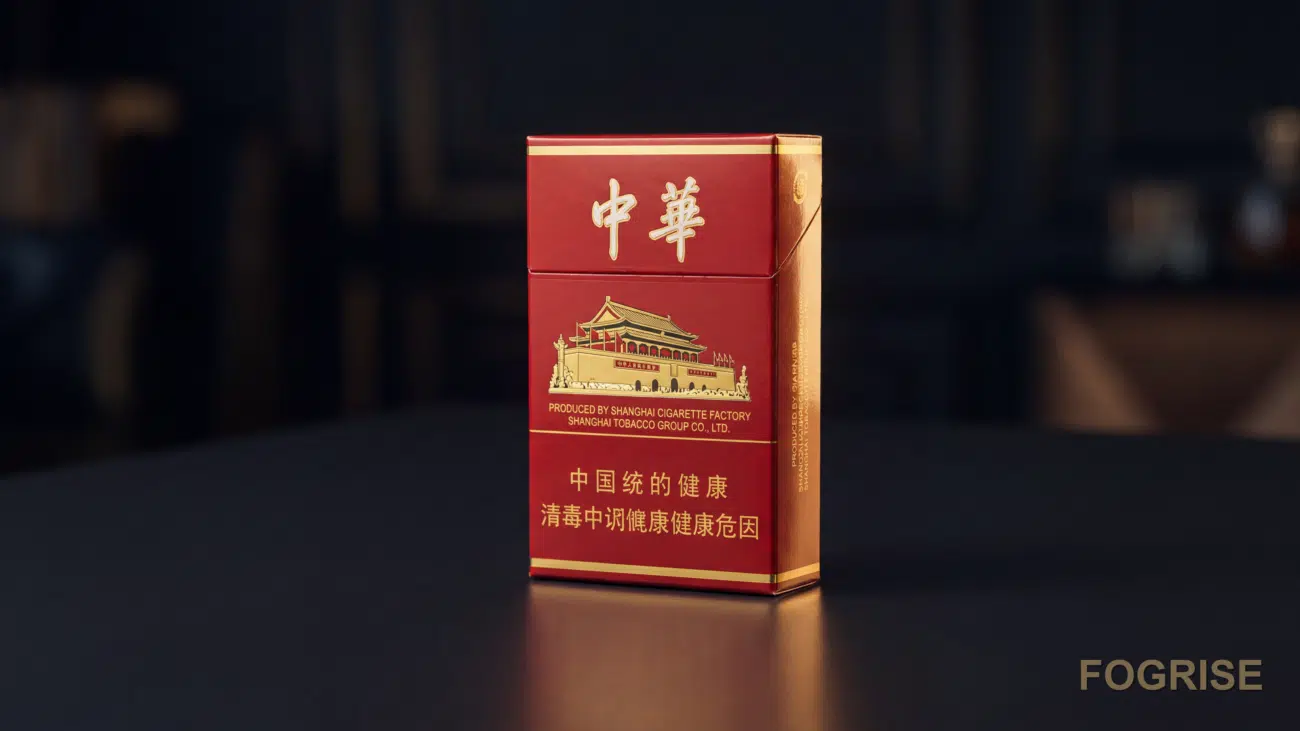
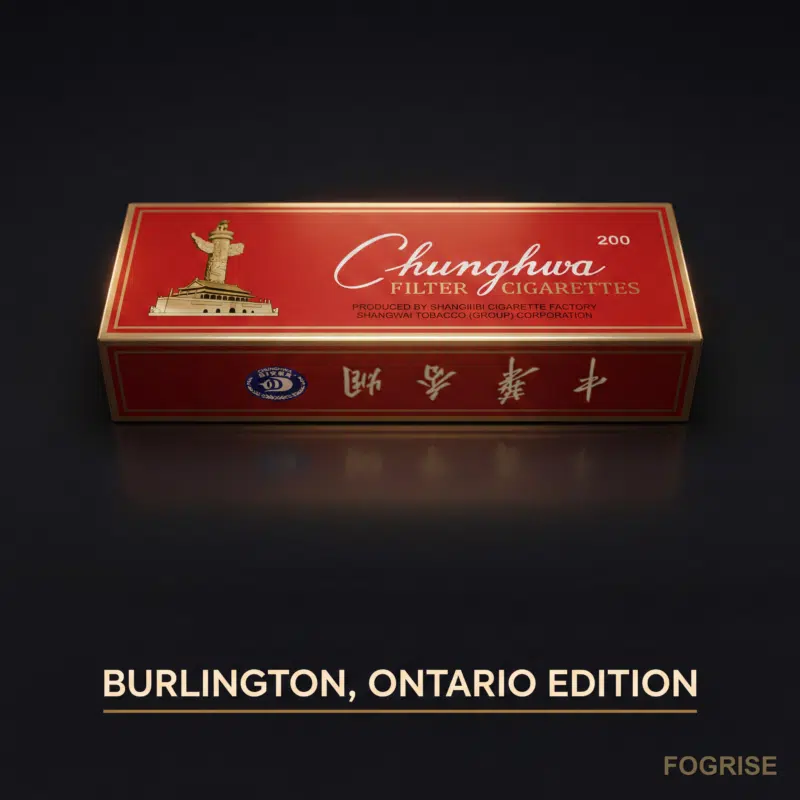
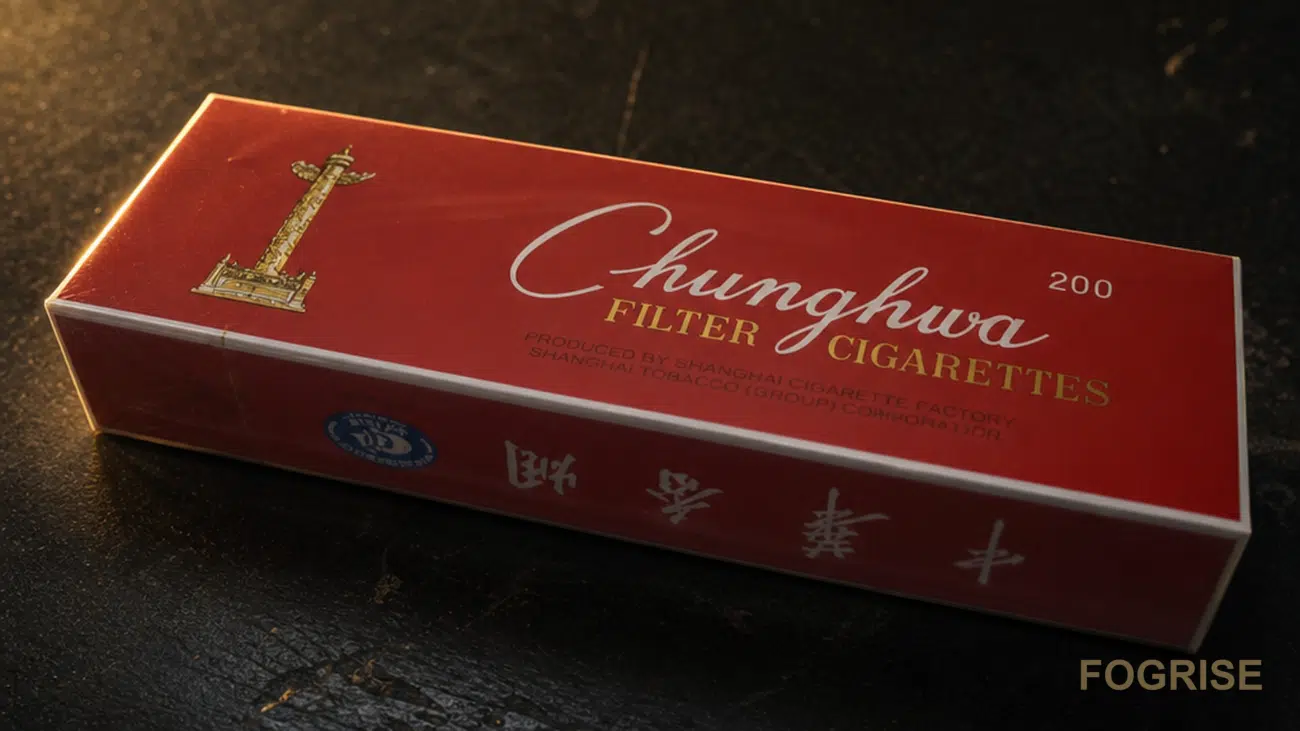
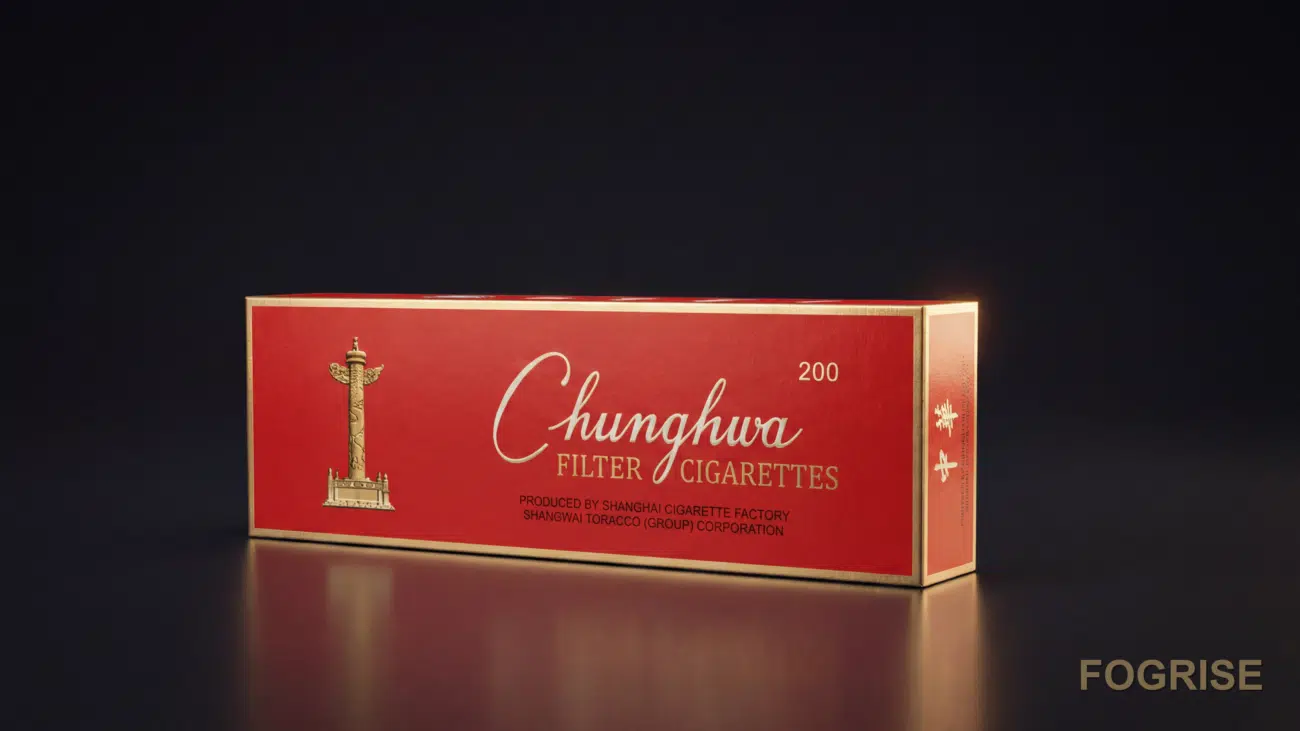
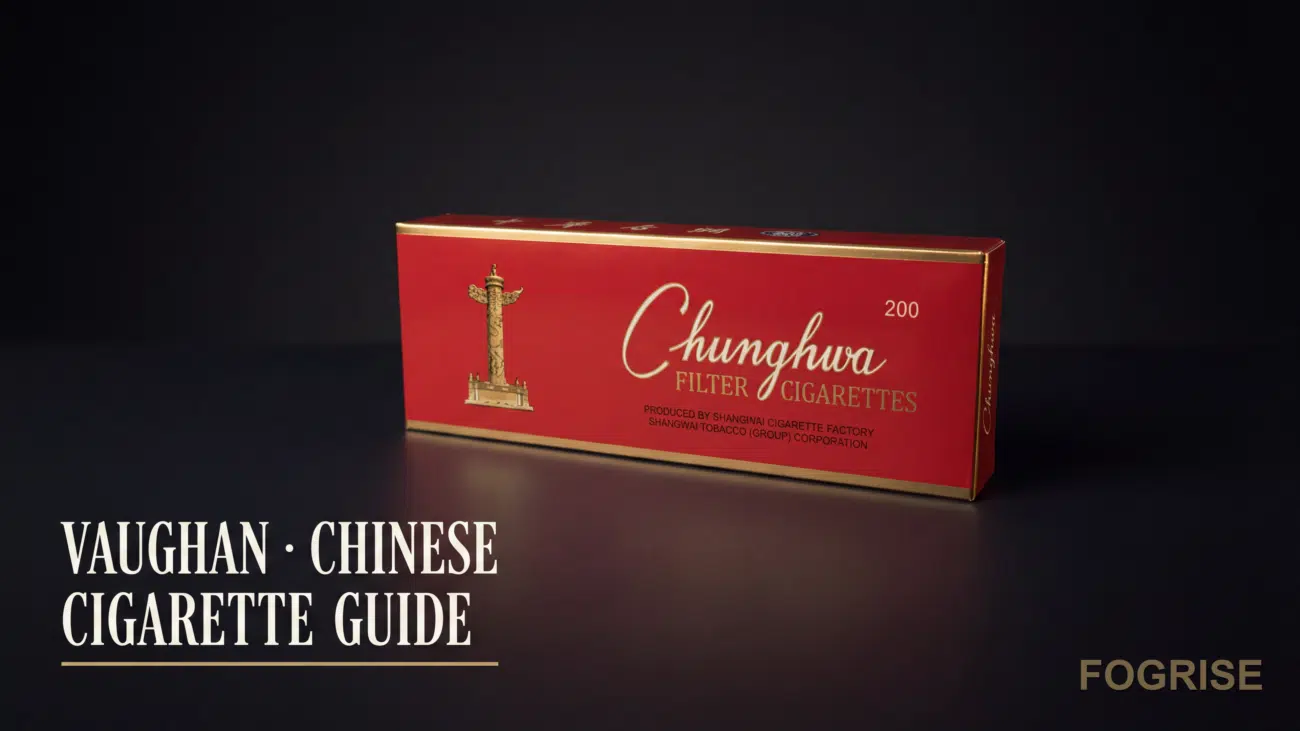
Chunghwa is the closest thing China has to a national cigarette, produced by Shanghai Tobacco Group and instantly recognised by its Tiananmen-gate softpack design (Wikipedia contributors, 2024a). Inside China it is a gifting and banquet brand more than an everyday smoke, which is why the Lisbon duty-free price band of €25 to €35 a pack feels normal to its target buyer. Stock in Portugal is intermittent and largely confined to airport duty-free when a shipment lands; high-street tabacarias rarely carry it.
Double Happiness (双喜 / Shuāng Xǐ)
Double Happiness, made by Guangdong China Tobacco, carries a layer of meaning for Portuguese buyers that no other brand on this list does. It was the everyday smoke across colonial-era Macau, and for the Macanese diaspora now settled in Lisbon, Almada, and the Setúbal peninsula it remains a nostalgic anchor (Wikipedia contributors, 2024c). That cultural pull, not its standard-tier €8 to €12 price, is why it turns up in specific tabacarias near Macanese community hubs and in Chinese grocery shops serving the same neighbourhoods.
Huanghelou (黄鹤楼)
Huanghelou, the premium-craft label from Hubei China Tobacco, is named after the Yellow Crane Tower in Wuhan and trades on regional prestige inside China. In Portugal it is genuinely rare; you will not find it on shelves and almost every pack in the country arrived as personal import via a returning traveller. Treat any tabacaria claim of regular Huanghelou stock with scepticism, and verify a sealed tax stamp before paying premium-craft money for it.
Nanjing (南京)
Nanjing, from Jiangsu China Tobacco, is a southeast-China premium classic with a longstanding following among smokers from the Yangtze delta. It surfaces in Lisbon duty-free on a more dependable cadence than the rarer entries on this list, with packs typically in the €18 to €25 band. Outside duty-free, expect personal-import-only availability; specialist tobacconists occasionally list it but stock is rarely continuous.
Liqun (利群)
Liqun is the flagship of China Tobacco Zhejiang and is closely associated with Hangzhou and the wider Zhejiang province. Portugal hosts a substantial Zhejiang-origin Chinese community, particularly in the restaurant and import trade, which is why Liqun circulates through personal-import channels and informal networks rather than general retail. Observed prices land in the €15 to €22 range when packs do appear, but consistent shelf presence is the exception.
Zhongnanhai (中南海)
Zhongnanhai, produced by Beijing Tobacco Corp, is a mid-premium label known for offering a wide tar-yield ladder across its lineup, which is why Portuguese specialist tobacconists sometimes stock it when they cater to a Chinese clientele. Lisbon prices generally sit between €12 and €18. Availability is patchier than Double Happiness but more reliable than the genuinely rare Yunnan and Hunan entries.
Hongtashan (红塔山)
Hongtashan, from Hongta Tobacco in Yunnan, is one of the most recognised mid-range Chinese brands domestically, yet in Portugal it sits firmly in the personal-import bucket. Packs occasionally appear via individual sellers in the €10 to €15 range, but no Portuguese channel stocks it on a routine basis. Buyers should expect to hunt rather than to walk in and find it.
Baisha (白沙)
Baisha, the Hunan China Tobacco budget-premium label, is the rarest entry in this guide for the Portuguese market. Even tabacarias that specialise in Asian imports rarely carry it, and pricing when it does turn up clusters in the €8 to €12 band. For most Lisbon-based smokers, Baisha is a special-request item or a souvenir pack from a returning traveller rather than a brand to plan around.
Where to Find Chinese Cigarettes in Portugal
Portugal does not stock Chinese cigarette brands in mainstream tabacarias the way it stocks Marlboro, SG, or Português Suave. Supply is thin, geographically clustered, and almost entirely shaped by passenger traffic and immigrant community demand. If you want a realistic shot at finding Chunghwa, Furongwang, Liqun, or Yuxi on Portuguese soil, four legal channels exist, in roughly descending order of reliability.
The four legal channels:
- Lisbon Humberto Delgado Airport (LIS) duty-free, on qualifying departures
- Specialist tabacarias in Lisbon’s Mouraria/Martim Moniz quarter and select Porto shops
- Chinese community grocery and Asian supermarkets in major cities
- Personal import within the EU travellers’ allowance, carried in your own luggage
Anything outside those four channels, including cross-border online orders shipped to a Portuguese address and resale of personally imported cartons, falls outside legal supply (Council of the European Union, 2007; Autoridade Tributária e Aduaneira, 2024). Readers cross-shopping the Iberian peninsula or weighing a Nordic stopover should compare these channels with the equivalent retail landscapes in neighbouring Spain and Sweden.
Lisbon Humberto Delgado Airport Duty-Free
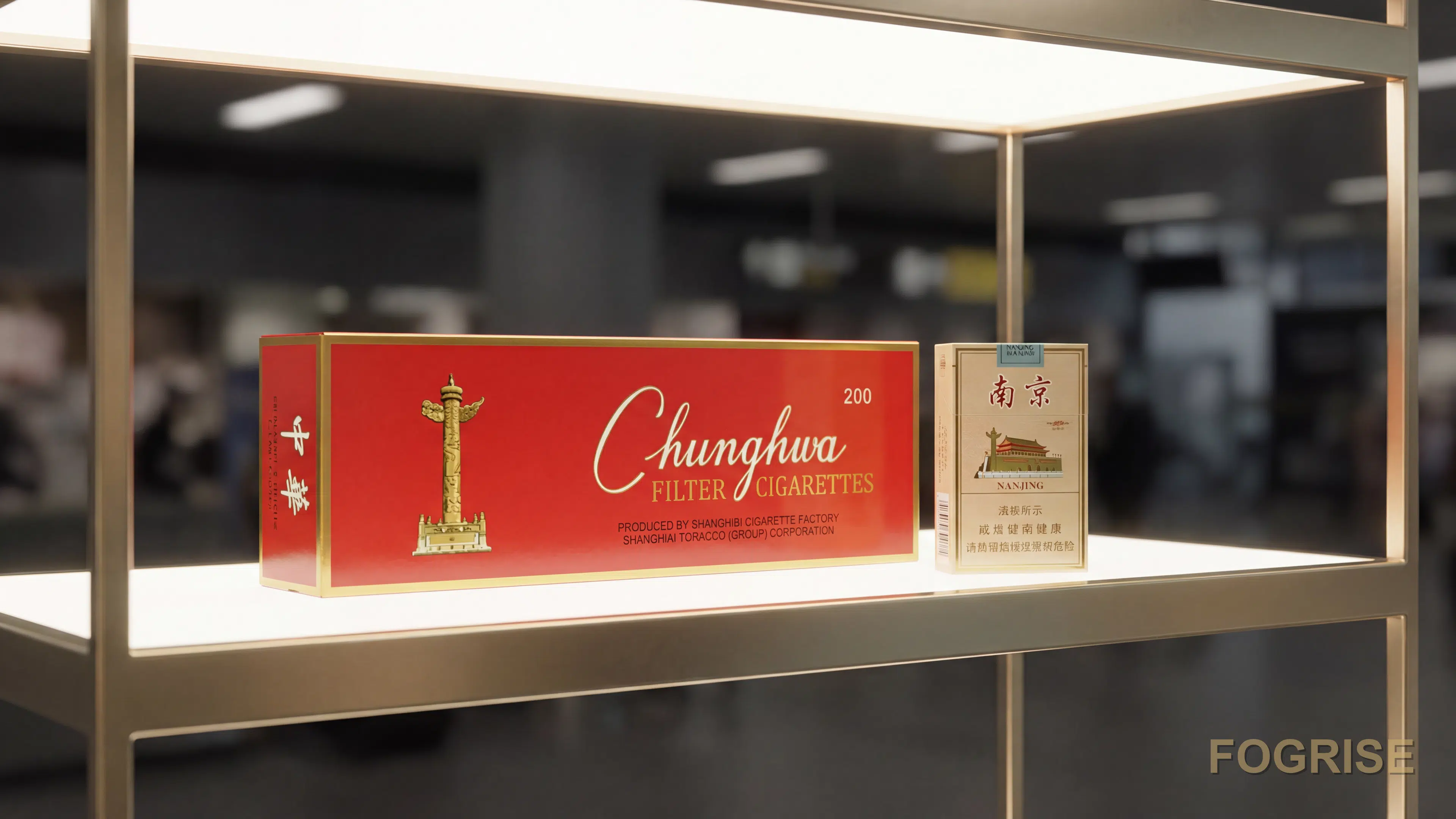
LIS operates duty-free tobacco counters in the international departures concourse, accessible after security on flights leaving the EU and Schengen area. Eligibility is the binding constraint: travellers heading to non-EU, non-Schengen destinations can purchase tobacco free of Portuguese excise and VAT, while intra-Schengen passengers pay the standard taxed price. Age verification at point of sale is mandatory and passport-checked (Autoridade Tributária e Aduaneira, 2024).
Chinese brand stock at LIS is intermittent. The airport rotates a small Asian-market selection alongside the dominant European and American lines, and inventory tracks seasonal traffic from Beijing, Shanghai, and Macau routes. Confirm availability at the counter rather than assuming a specific SKU will be on the shelf.
Specialist Tobacconists in Lisbon and Porto
A handful of independent tabacarias in Lisbon’s Mouraria district, the broader Martim Moniz and Intendente neighbourhoods, and a smaller number of Porto shops occasionally carry Chinese cigarette brands. These are not chain operators; they are family-run tobacconists serving immigrant clientele, and their suppliers source small quantities through legitimate import channels. Stock varies week to week, and a brand visible one month may be gone the next (Wikipedia contributors, 2024c). Phoning ahead, or visiting in person to ask, is more productive than searching online listings, which are rarely maintained.
Chinese Community Grocery Shops
Asian supermarkets and Chinese grocery stores clustered around Mouraria and Martim Moniz in Lisbon sometimes stock Chinese tobacco alongside food, tea, and household goods. The selection is narrower than a dedicated tabacaria and skews toward mid-tier daily-smoke brands that the local Chinese community asks for. Pricing here typically reflects full Portuguese excise and VAT, since these shops operate under standard retail licensing (Wikipedia contributors, 2024c).
Personal Import: Bringing Your Own Supply
For many readers, the most reliable path is carrying your own cigarettes into Portugal under the EU travellers’ allowance. From outside the EU, including direct flights from mainland China, the duty-free personal allowance is 200 cigarettes per adult. From another EU country, the indicative personal-use limit is 800 cigarettes. Both figures apply only to genuinely personal consumption, and resale of imported quantities is a customs and excise offence (Council of the European Union, 2007; Autoridade Tributária e Aduaneira, 2024). The next section walks through the import rules in full, including how Portuguese AT treats quantities above these thresholds.
Portuguese Tobacco Import Rules and EU Allowances
Adults travelling from non-EU countries to Portugal may bring a maximum of 200 cigarettes duty-free for personal use under Council Directive 2007/74/EC. The EU-wide indicative limit from another member state is 800 cigarettes. Portuguese VAT of 23% and EU minimum excise of at least 90 euros per 1,000 cigarettes apply to any excess declared at customs (European Commission, 2023).
Portugal applies the standard EU travellers’ framework for tobacco, with two separate thresholds depending on whether you arrive from outside the EU or from another member state. Both are personal-use allowances; neither authorises resale, gifts in commercial quantity, or stocking a shop. The Autoridade Tributária e Aduaneira, the Portuguese tax and customs authority, enforces these limits at airports, ports, and land entry points.
| Category | Non-EU Allowance | EU Indicative Limit |
|---|---|---|
| Cigarettes | 200 | 800 |
| Cigarillos | 100 | 400 |
| Cigars | 50 | 200 |
| Smoking tobacco | 250 g | 1 kg |
Non-EU Personal Import Allowance
Arriving in Portugal from a non-EU origin, including a direct or connecting flight from mainland China, Hong Kong, or Macau, each adult traveller may bring 200 cigarettes duty-free for personal consumption. The allowance is per person, not per family, and travellers under 17 carry no tobacco allowance at all (Council of the European Union, 2007, Art. 8). Quantities at or below the 200-stick limit pass through the green channel without declaration. Anything above it must be declared at the red channel before clearing customs.
EU Intra-Community Indicative Limits
Travelling into Portugal from another EU country, for example from Madrid, Paris, or Frankfurt with cigarettes purchased there at local taxed retail, the indicative personal-use limit is 800 cigarettes per adult. The word indicative matters. The 800-stick figure is not a hard ceiling; it is the threshold above which customs officers presume commercial intent and ask you to substantiate that the goods are genuinely for personal use (Council of the European Union, 2007; European Commission, 2024). If your travel pattern, packaging, or quantity suggests resale, AT can reclassify the consignment as commercial regardless of the headline number.
Portuguese AT and Customs Enforcement
The Autoridade Tributária e Aduaneira operates customs control at Lisbon, Porto, and Faro airports, the main seaports, and the land borders with Spain. AT officers can inspect baggage, request receipts, and assess additional duty and VAT on quantities exceeding allowance (European Commission, 2024; Autoridade Tributária e Aduaneira, 2024). Under-declaring tobacco, splitting a single shipment across multiple travellers’ allowances to evade limits, or claiming personal use for evident retail quantities are administrative offences and can escalate to criminal proceedings for repeated or large-scale evasion.
VAT and Excise on Excess
Tobacco brought in above the personal allowance is taxed at Portuguese rates on the full excess quantity, not just the marginal sticks. The standard Portuguese VAT rate of 23% applies, layered on top of cigarette excise duty (Autoridade Tributária e Aduaneira, 2024). EU minimum excise on cigarettes sits at €90 per 1,000 sticks or 60% of the weighted average retail selling price, whichever yields more, and Portugal applies a rate at or above that floor. In practice, paying duty on excess cigarettes erases most of the price advantage of bringing them from a cheaper origin, which is part of the policy design.
IQOS and Heated Tobacco in Portugal
Heated tobacco occupies a distinct regulatory category in Portugal, separate from both combustible cigarettes and vaping products. For travellers and residents weighing the options, the practical picture in 2026 is simple: the devices are legal, the consumables are taxed, and the import allowance mirrors the cigarette rule almost exactly.

Legal Status and Availability of IQOS in Portugal
IQOS is fully legal in Portugal and is distributed through dedicated brand stores in Lisbon, Porto, and several coastal cities, alongside a network of specialist tobacconists (tabacarias) that stock the devices and consumables (Campaign for Tobacco-Free Kids, 2024). The product category is regulated under the same Tobacco Products Directive II framework that governs cigarettes. That means plain, standardised packaging with combined health warnings covering 65% of the front and back, a strict age gate of 18, and broad restrictions on advertising across print, broadcast, and outdoor media. Brand activation is largely confined to point-of-sale and age-gated direct channels. Pricing reflects a heated-tobacco-specific excise that runs lower than the cigarette equivalent per stick, though the gap has been narrowing across successive Portuguese state budgets.
HEETS and TEREA Import Limits
For travellers entering Portugal from outside the EU, HEETS and TEREA sticks fall under the same personal-import allowance as conventional cigarettes: 200 units per adult passenger, duty-free, with anything above that quantity requiring declaration and excise payment (Council of the European Union, 2007; Autoridade Tributária e Aduaneira, 2024). Customs treats one HEETS stick as equivalent to one cigarette for counting purposes; mixing categories (for example, 100 cigarettes plus 100 HEETS) is allowed as long as the proportional total does not exceed the allowance. Intra-EU movement is more permissive under personal-use guidelines, but the 800-cigarette indicative ceiling still applies to heated-tobacco sticks. Travellers comparing third-country IQOS rules often cross-check Portugal’s framework against Canada’s heated-tobacco regime. Carry the original retail packaging and a receipt; loose or repacked sticks invite secondary inspection.
Portugal Heated Tobacco Regulation
Regulation is moving in one direction: tighter. The European Commission’s TPD recast proposal, published on 16 July 2025, would explicitly raise the minimum excise on heated tobacco and bring it closer to cigarette taxation, with member-state transposition realistically taking effect around 2028 (European Parliament and Council, 2014; World Health Organization, 2023). Portugal has signalled alignment with the recast trajectory. The FDA’s earlier Modified Risk Tobacco Product authorisation for certain IQOS variants applies only in the United States and reflects an FDA-specific evidentiary standard; it carries no legal weight in Portuguese or EU labelling, where all tobacco products, heated or combustible, must display the standard health warnings without reduced-risk claims.
The Macau Connection: Portugal, China, and Tobacco Culture
Portugal administered Macau from 1557 to 1999, a period of 442 years, making it one of the longest-running European colonial presences in Asia. Chinese nationals were the largest Golden Visa cohort in Portugal from 2012 to 2022, numbering over 5,300 main applicants and reinforcing the Chinese-Macanese diaspora in Lisbon and Porto (SEF Portugal, 2023).
The reason Chinese cigarette brands carry recognisable cultural weight in Portugal, more so than in any other Western European country, traces to a single, very long historical thread. Portugal and China share an administrative and diasporic relationship that lasted nearly four and a half centuries, and that relationship continues to shape consumer familiarity with mainland Chinese tobacco brands inside Portuguese borders today.
Portugal’s 442-Year Macau Administration
Portuguese merchants established a settlement at Macau in 1557 and held administrative presence there until the formal handover to the People’s Republic of China on 20 December 1999, a span of 442 years that ranks as one of the longest sustained European colonial presences anywhere in Asia (Wikipedia contributors, 2024b). Across those centuries Macau functioned as a critical entrepôt between southern China, Goa, Nagasaki, and Lisbon. Tobacco moved through the port in both directions: New World leaf inbound to Asian markets, and later, as mainland Chinese tobacco production matured in the twentieth century, branded Chinese cigarettes flowing outward through Macau’s duty-light retail channels. Double Happiness (双喜), produced in Shanghai from 1906 onward, became a fixture of colonial-era Macau tobacconists and remains tied in older residents’ memory to that period.
The Chinese-Macanese Diaspora in Lisbon and Porto
The handover did not sever the human link. Macanese families with Portuguese passports relocated to the metropole in successive waves through the 1980s and 1990s, joined by mainland Chinese nationals who came through Portugal’s Golden Visa programme. From its 2012 launch through 2022, Chinese applicants were consistently the single largest national cohort in the scheme, accounting for roughly half of all approvals during peak years (Wikipedia contributors, 2024c). The visible centres of Chinese-Portuguese life today are the Mouraria and Martim Moniz neighbourhoods of Lisbon, where Cantonese, Mandarin, and Portuguese are routinely heard on the same block, and a smaller but established community in Porto. Both Portuguese and Chinese remain co-official languages in the Macau Special Administrative Region, and the bilingual administrative reality keeps the cultural channel open through family, commerce, and tourism.
Chinese Tobacco Brands in Macau’s Cultural Memory
Within this diaspora context, two mainland brands carry the heaviest cultural signal. Chunghwa (中华), produced in Shanghai since 1951, is the prestige-gifting cigarette: the standard offering at weddings, business introductions, and Lunar New Year visits where social standing is being communicated (Wikipedia contributors, 2024a; Wikipedia contributors, 2024b). Double Happiness occupies the everyday register, the cigarette people remember from their grandfather’s kitchen table rather than a banquet hall. Both brands move through Macau duty-free channels into Portuguese-Chinese households, and both appear at community gatherings in Lisbon and Porto as deliberate markers of provenance. None of this is an endorsement of smoking, which carries documented health harms regardless of brand or cultural framing. The point is sociological: a 442-year administrative tie and an active diaspora explain why Chinese cigarette brands have a recognisable presence in Portugal that simply does not exist elsewhere in the EU. Comparable diaspora-driven demand patterns shape the markets in Malaysia and Singapore, where Chinese-heritage communities sustain similar cultural ties to mainland brands.
Frequently Asked Questions
Can I buy Chinese cigarettes online in Portugal?
Portuguese law, in line with EU rules, prohibits cross-border distance sales of tobacco to consumers. No online retailer can legally deliver Chinese cigarettes to a Portuguese address (European Parliament and Council, 2014; Council of the European Union, 2007; Autoridade Tributária e Aduaneira, 2024). The lawful channels are Lisbon Humberto Delgado Airport duty-free (for non-EU international passengers), specialist tabacarias, some Chinese community shops in the Mouraria area, and personal import within the 200-cigarette non-EU allowance for own use.
How many cigarettes can I bring from China to Portugal?
Adults travelling to Portugal from a non-EU country such as China may bring 200 cigarettes, roughly one standard carton, duty-free for personal use (European Parliament and Council, 2014; Council of the European Union, 2007; Autoridade Tributária e Aduaneira, 2024). From an EU country, the indicative personal-use limit is 800 cigarettes. Quantities above the duty-free limit must be declared to the Portuguese AT (Autoridade Tributária e Aduaneira) and attract excise duty plus 23% VAT. Travellers under 18 may bring no tobacco at all.
Is Chunghwa available in Portuguese shops?
Chunghwa is occasionally available at Lisbon Airport’s duty-free shops for passengers on non-EU international flights, though stock is not guaranteed and varies by season (European Parliament and Council, 2014; Council of the European Union, 2007; Autoridade Tributária e Aduaneira, 2024). Some specialist tabacarias in Lisbon’s Mouraria neighbourhood may carry it intermittently. It is not stocked in standard Portuguese supermarkets, petrol stations, or kiosks, and online ordering for delivery to a Portuguese address is not a legal option.
What is plain packaging and how does it affect Chinese brands in Portugal?
Under EU Tobacco Products Directive II, transposed by Portuguese Decreto-Lei 25/2014, all tobacco packs sold in Portugal must use standardised packaging: uniform colours, a single standard typeface, no logos or decorative elements, and mandatory pictorial health warnings (European Parliament and Council, 2014; Council of the European Union, 2007; Autoridade Tributária e Aduaneira, 2024). The iconic original designs of Chinese brands, Chunghwa’s red Tiananmen artwork for instance, are not visible on Portuguese shelves. Brands are identified only by their name in the standard font.
Is IQOS legal in Portugal?
Yes. IQOS heated-tobacco devices and HEETS or TEREA sticks are legal in Portugal and subject to the same TPD II restrictions as conventional cigarettes, including plain packaging, the age-18 minimum, and advertising limits (European Parliament and Council, 2014; Council of the European Union, 2007; Autoridade Tributária e Aduaneira, 2024). Dedicated IQOS stores and specialist tobacconists carry IQOS products. Non-EU personal import of HEETS/TEREA sticks is subject to the same 200-unit duty-free limit as cigarettes.
Where at Lisbon Airport can I buy Chinese cigarettes duty-free?
Duty-free tobacco shops at Lisbon Humberto Delgado Airport (LIS) are located in the international departure area, accessible to passengers on non-EU flights after passport control (European Parliament and Council, 2014; Council of the European Union, 2007; Autoridade Tributária e Aduaneira, 2024). Availability of specific Chinese brands such as Chunghwa or Nanjing is not guaranteed and varies. Age verification is mandatory. Checking with the duty-free retailer before travel is advisable.
What is the legal buying age for cigarettes in Portugal?
The minimum legal age to purchase tobacco in Portugal is 18. Retailers are required to verify age at point of sale (European Parliament and Council, 2014; Council of the European Union, 2007; Autoridade Tributária e Aduaneira, 2024). xiangyandd addresses its content to adults 21 and over. Portuguese law also prohibits displaying tobacco products in a way that is visible to minors from outside designated tobacco retail areas.
What is the Macau connection to Chinese cigarettes in Portugal?
Portugal administered Macau from 1557 to 1999, and the resulting Chinese-Macanese diaspora settled largely in Lisbon’s Mouraria and Martim Moniz neighbourhoods (European Parliament and Council, 2014; Council of the European Union, 2007; Autoridade Tributária e Aduaneira, 2024). This community maintains cultural ties to mainland Chinese tobacco brands, particularly Double Happiness (双喜), widely smoked in colonial Macau, and Chunghwa for prestige gifting. The diaspora represents the most historically rooted demand for Chinese cigarettes in Western Europe.
Conclusion
Portugal’s Macau heritage gives it Western Europe’s most historically rooted connection to Chinese tobacco culture. The diaspora settled in Lisbon’s Mouraria and Martim Moniz neighbourhoods carries ties to brands like Double Happiness and Chunghwa that no other European market can match. Yet legal access is narrow. Lisbon Humberto Delgado Airport duty-free (for eligible non-EU international passengers), specialist tabacarias, and Chinese community shops in Mouraria are the lawful channels, alongside personal import within the EU 200-cigarette non-EU allowance for own use.
Online cross-border orders of tobacco to a Portuguese address are not permitted under EU and Portuguese law. Before importing any quantity beyond the duty-free allowance, verify current rules with the Portuguese AT (Autoridade Tributária e Aduaneira), since excise duty and 23% VAT apply on declared excess.
For eligible adult customers exploring our selection, visit fogrise-cigarette.com/shop/.
A final word on health. Smoking is harmful and addictive. It causes lung cancer, cardiovascular disease, and respiratory illness, and there is no safe level of consumption. This content is for adults 21 and over only. If you do not currently smoke, do not start.
References
- European Parliament and Council of the European Union. (2014). Directive 2014/40/EU of 3 April 2014 on the approximation of the laws, regulations and administrative provisions of the Member States concerning the manufacture, presentation and sale of tobacco and related products (Tobacco Products Directive II). Official Journal of the European Union. https://eur-lex.europa.eu/legal-content/EN/TXT/?uri=CELEX:32014L0040
- Assembleia da República. (2014). Decreto-Lei n.º 25/2014, de 14 de fevereiro — Transposição da Diretiva 2014/40/UE relativa aos produtos do tabaco [Decree-Law No. 25/2014 transposing TPD II]. Diário da República. https://dre.pt/dre/legislacao-consolidada/decreto-lei/2014-66038
- European Commission, Directorate-General for Taxation and Customs Union. (2024). Excise duties on tobacco. https://taxation-customs.ec.europa.eu/taxation/excise-duties/excise-duties-tobacco_en
- Council of the European Union. (2007). Council Directive 2007/74/EC of 20 December 2007 on the exemption from value added tax and excise duty of goods imported by persons travelling from third countries. Official Journal of the European Union. https://eur-lex.europa.eu/legal-content/EN/TXT/?uri=CELEX:32007L0074
- Autoridade Tributária e Aduaneira. (2024). Viajantes — mercadorias sujeitas a impostos especiais de consumo [Travellers — goods subject to excise duties]. Portal das Finanças. https://www.portaldasfinancas.gov.pt/at/html/index.html
- Campaign for Tobacco-Free Kids. (2024). Portugal — Legislation overview. Tobacco Control Laws. https://www.tobaccocontrollaws.org/legislation/portugal
- World Health Organization. (2023). WHO report on the global tobacco epidemic, 2023: Protect people from tobacco smoke. World Health Organization. https://www.who.int/publications/i/item/9789240077690
- Wikipedia contributors. (2024). Macau. In Wikipedia. https://en.wikipedia.org/wiki/Macau
- Wikipedia contributors. (2024). Chunghwa (cigarette). In Wikipedia. [https://en.wikipedia.org/wiki/Chunghwa_(cigarette)(https://en.wikipedia.org/wiki/Chunghwa_(cigarette))
- Wikipedia contributors. (2024). Chinese people in Portugal. In Wikipedia. https://en.wikipedia.org/wiki/Chinese_people_in_Portugal
Last reviewed and updated: June 2025. Author: xiangyandd editorial team. Adults 21+ only, smoking is harmful; verify your local laws before purchase. Questions? contact our team.







 English (US)
 简体中文
 Deutsch
 Français
 Español