

Blog
Chinese Cigarettes in Lithuania: 7 Top Brands & Buying Guide

TL;DR
Online tobacco delivery to Lithuania is illegal; personal import under duty-free limits (200 cigs from non-EU, 800-cig EU guideline) is legal. Top brands: Chunghwa, Double Happiness, Panda, Furongwang, Yuxi, Hongtashan, Zhongnanhai. Contraband carries seizure + penalty risk. Adults 21+ only; verify your local laws.
Abstract
Buying Chinese cigarettes in Lithuania sits on a sharp legal split that most shoppers miss until customs flags a parcel. Online distance sale of tobacco to Lithuanian consumers is prohibited under the Lithuanian Tobacco Control Law and EU Tobacco Products Directive 2014/40/EU, so any website that promises mail-order Chunghwa or Double Happiness to a Vilnius address is operating outside the law. Personal import under traveller duty-free allowances, by contrast, is fully legal: 200 cigarettes from a non-EU origin or the 800-cigarette EU indicative guideline, declared and within personal-use intent. That gap between "buy online" and "carry in" is the entire decision space, and getting it wrong has real consequences. Lithuanian border guards (VSAT) seized 4.44 million packs of contraband cigarettes in 2025, and penalties for undeclared excess fall on the buyer, not the seller.
This guide walks through the legal framework, the current duty-free numbers for EU and non-EU arrivals, seven Chinese brand profiles worth knowing (Chunghwa, Panda, Double Happiness, Furongwang, Yuxi, Hongtashan, Zhongnanhai), the legitimate channels available to a Lithuania-based adult, and the contraband risk signals that should make you walk away.
Adults 21 and over only. Smoking causes cancer, heart disease, and addiction; there is no safe level of tobacco use. Tobacco laws and personal-import allowances change, and customs enforcement is discretionary. Verify current Lithuanian and EU regulations with the State Tax Inspectorate (VMI) and VSAT before you travel or purchase. This article is informational, not legal advice.
Key Takeaways
- Online sales are banned. Shipping cigarettes to Lithuanian addresses violates the Lithuanian Tobacco Control Law and EU TPD, regardless of seller location.
- Personal import stays legal within limits. Travelers may bring 200 cigarettes from non-EU origins, or up to 800 for genuine personal use from another EU member state.
- Three brands dominate Chinese cigarette demand. Chunghwa anchors the premium tier, Double Happiness covers mid-market buyers, and Hongtashan serves everyday smokers.
- Smuggling is surging. Lithuanian VSAT customs seized 4.44 million illicit packs in 2025, roughly triple the 2024 total, with most flowing via Latvia and Belarus.
- Adults 21 and older only. Lithuanian law sets the legal age at 18; xiangyandd applies a stricter 21+ editorial floor. Smoking harms health, and local rules can change, so verify current statutes before any purchase.
Table of Contents
- TL;DR
- Abstract
- Key Takeaways
- Table of Contents
- Are Chinese Cigarettes Legal in Lithuania? The Short Answer
- Lithuania’s Tobacco Rulebook: EU TPD + National Law in Plain English
- Online Sale Ban: Why No Website Can Legally Ship Cigarettes to a Lithuanian Address
- Personal Import: Your Legal Duty-Free Tobacco Allowances for Lithuania
- The Chinese Brand Landscape: 7 Brands Lithuanian Buyers Should Know
- Where Lithuanian Buyers Find Chinese Cigarettes Legitimately
- The Risk Layer: 2025 Contraband Data and What Customs Interception Really Costs
- Frequently Asked Questions
- Conclusion
- Further Reading
- References
Are Chinese Cigarettes Legal in Lithuania? The Short Answer
Buying Chinese cigarettes through a website that ships them to your home in Lithuania is illegal. Carrying a small personal allowance back from a trip abroad is legal. Those two sentences cover 95% of what most adult readers (21+) actually want to know, but the gap between them is wider than it looks, and the consequences for getting it wrong land on the buyer, not the seller.
What "legal" actually means here: two separate questions
Lithuanian tobacco law splits the question into two tracks, and conflating them is where buyers get into trouble.
Track one is distance sales. Under the Lithuanian Tobacco Control Law, any tobacco sale where the consumer sits in Lithuania and the retailer sits abroad, anywhere in the EEA or any third country, counts as a "distance sale" and is prohibited (Republic of Lithuania, 2023; European Parliament & Council, 2014; European Commission, 2024). That covers Alibaba listings, Telegram shops, Instagram resellers, and the polished-looking "duty-free" sites that promise EU-wide shipping. The EU Tobacco Products Directive 2014/40/EU (Article 18) gives member states the option to ban cross-border distance sales, and Lithuania has exercised it (Republic of Lithuania, 2023; European Parliament & Council, 2014; European Commission, 2024). Postal parcels of cigarettes are treated as commercial imports regardless of quantity, and Lithuanian customs routinely seizes them. The recipient, not the overseas seller, is the party on the hook for fines and confiscation.
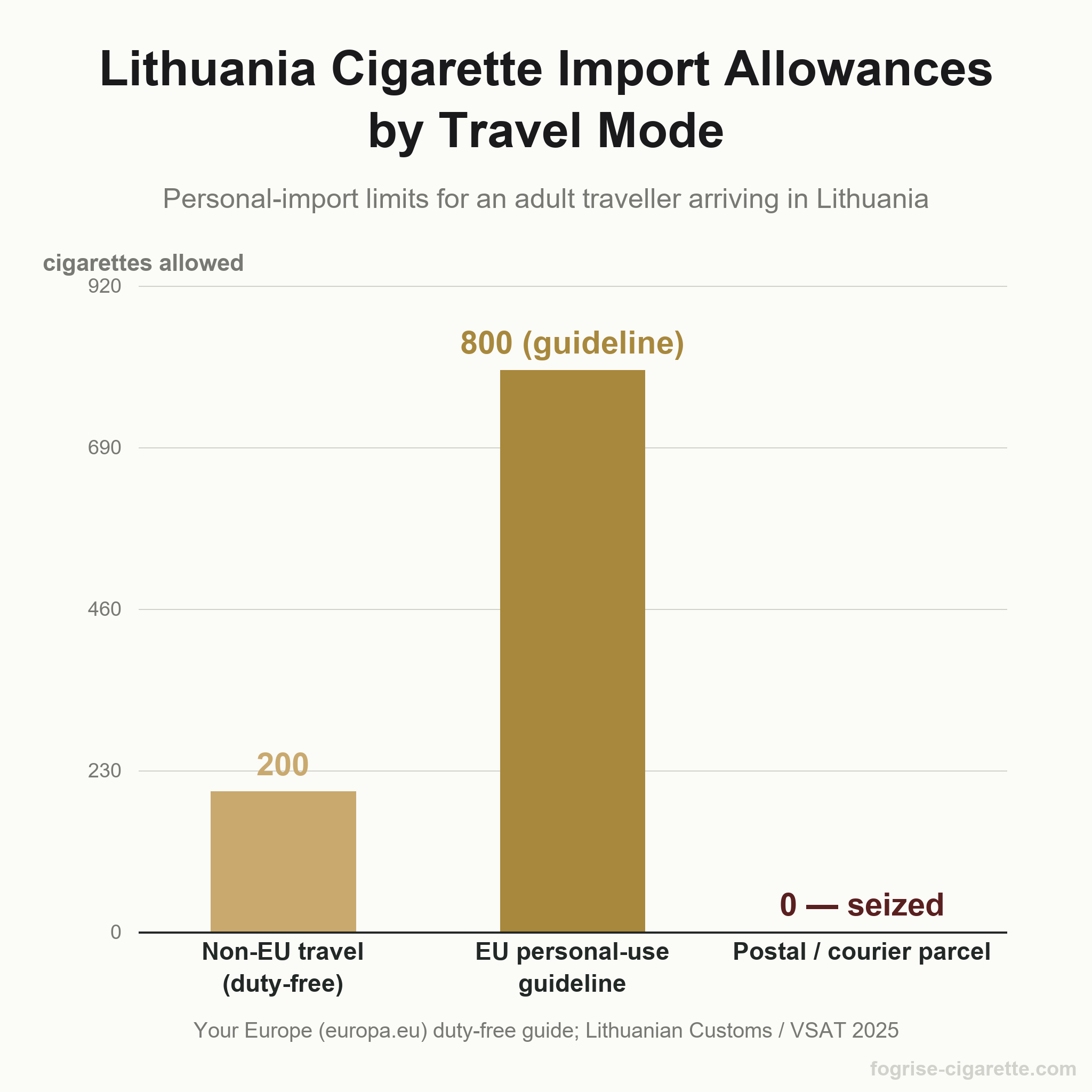
Track two is personal import while travelling. This is where the law opens up. An adult traveller arriving from a non-EU country may bring in up to 200 cigarettes duty-free for personal use (Republic of Lithuania, 2023; European Parliament & Council, 2014; European Commission, 2024). Travelling between EU member states, the indicative personal-use guideline rises to 800 cigarettes, provided the quantity is genuinely for you and not for resale (Republic of Lithuania, 2023; European Parliament & Council, 2014; European Commission, 2024). Customs officers weigh quantity, frequency of travel, and packaging when deciding whether a shipment looks personal or commercial.
The practical translation is simple. If a Chinese-brand pack is in your suitcase after a flight, you are inside the rules. If it arrives in a padded envelope from Shenzhen, you are not, no matter what the sender’s invoice claims. Anyone uncertain about a specific situation should check the State Tax Inspectorate or Lithuanian Customs before ordering, because tobacco enforcement here is active, and the penalties scale with quantity. The next section walks through which Chinese brands Lithuanian buyers actually encounter, and where each one tends to surface.
Lithuania’s Tobacco Rulebook: EU TPD + National Law in Plain English
Two layers of law govern every cigarette sold or shipped into Lithuania. The first is European. The second is Lithuanian. They sit on top of each other, and the stricter rule always wins. Tobacco use causes serious harm, including cancer, cardiovascular disease, and addiction. This section explains the rules in plain language so adults 21 and older can make informed, lawful choices. It is not legal advice. Verify current statutes with the State Tax Inspectorate or a Lithuanian lawyer before importing, selling, or shipping product.
EU Tobacco Products Directive 2014/40/EU: What It Requires
The TPD is the floor that every EU member state must meet. It sets product standards, labelling rules, and reporting duties. Combined picture and text health warnings cover 65% of both the front and the back of the pack. Standardised pack shapes and minimum stick counts apply. Characterising flavours, including menthol, were prohibited EU-wide as of May 2020 (European Parliament & Council, 2014). Manufacturers must notify ingredients and emissions to each member state before placing a product on its market. Cross-border distance sales between member states are subject to a notification regime, and member states may prohibit them outright.
Lithuania’s Tobacco Control Law: The National Layer
Lithuania uses the TPD floor, then goes further. The Republic of Lithuania Law on Tobacco, Tobacco Products and Related Products prohibits distance sales of tobacco products to consumers located in Lithuania. That ban covers internet retail, catalogue orders, and any remote ordering method, whether the seller is inside the EEA or outside it (Republic of Lithuania, 2023). The statutory minimum purchase age is 18. xiangyandd applies a stricter editorial floor of 21+, in line with our harm-reduction stance. Retail display restrictions limit how products can be shown inside shops. Ingredient and emissions reporting to Lithuanian authorities is mandatory for any product placed on the market.
Health Warnings, Age Restrictions & Display Rules
| EU TPD Requirement | Lithuanian Implementation |
|---|---|
| Combined health warnings cover 65% of front and back | Enforced; Lithuanian-language text mandatory |
| Cross-border distance sales subject to notification | Prohibited outright for consumers in Lithuania |
| Minimum purchase age set by member state | 18 statutory (xiangyandd editorial floor: 21+) |
| Standardised packaging dimensions, min. 20 sticks | Enforced; tax banderole required |
| Menthol and characterising flavours banned (May 2020) | Enforced; no menthol cigarettes lawfully sold |
| Ingredient and emission notifications required | Filed with Lithuanian authority before market entry |
Reading the table top to bottom, the pattern is consistent. Where the TPD permits member-state discretion, Lithuania picks the tighter option. The practical effect for buyers is simple. You cannot lawfully receive a cigarette parcel ordered online into Lithuania, regardless of where the seller sits. The next section covers the legal channels that remain open to adult buyers.
Online Sale Ban: Why No Website Can Legally Ship Cigarettes to a Lithuanian Address
Searching for "buy Chinese cigarettes online Lithuania" returns plenty of storefronts. None of them are operating legally. Distance selling of tobacco into Lithuania is prohibited under both EU and national law, and any retailer that does fulfil a Lithuanian delivery address is, by definition, not a compliant business. That single fact reshapes how a buyer in Vilnius or Kaunas should think about every online tobacco listing they encounter.
The Distance Sale Prohibition Explained
Lithuania’s Tobacco Control Law defines "distance sales" as any tobacco transaction where the consumer is physically in Lithuania at the moment of ordering and the retail outlet is located in another EEA country or any other foreign country (Republic of Lithuania, 2023). The category is deliberately broad. It captures websites, mobile apps, mail-order catalogues, telephone orders, and any other remote-purchase channel. Whether the seller sits in Germany, China, or a neighbouring Baltic state makes no difference to the legal status of the shipment.
This domestic rule sits on top of an EU-wide framework. Article 18 of the Tobacco Products Directive (Directive 2014/40/EU) requires member states to prohibit cross-border distance sales of tobacco to consumers located in countries where such sales are not permitted, and obliges retailers to verify the buyer’s location before completing a transaction. Lithuania has used that provision to impose a flat prohibition, not a registration regime. There is no permitted-seller list to consult, because no seller can be permitted.
The legal obligation lands on the retailer, not the buyer. A seller in Shenzhen or Warsaw who accepts a Lithuanian delivery address is the party breaking the law. The Lithuanian consumer is not the primary target of the rule, although a parcel intercepted at customs can still be seized and the recipient can be questioned, especially above personal-use thresholds.
What This Means for International Retailers
Any tobacco retailer that takes its compliance posture seriously will geo-block Lithuanian addresses at checkout. Some refuse the order outright. Others ship to a Polish or Latvian address and decline to forward onward. If a website happily accepts a Vilnius postcode, charges your card, and promises discreet packaging, that is itself the diagnostic: you are dealing with a grey-market or contraband operator, not a regulated tobacconist.
The distinction matters for buyers comparing options. Personal import (physically carrying cigarettes across the border within the duty-free or intra-EU personal-use limits covered earlier) remains lawful. Distance purchase by post or courier does not, regardless of how the seller markets it. The two routes are governed by entirely different rules, and the legality of the first does not extend to the second.
For Chinese brands specifically, this means there is no compliant online channel into Lithuania. A Chunghwa or Double Happiness pack arriving by mail has, by the structure of the law, passed through an illegal sale. The seizure and counterfeit risks attached to that route are covered later in this guide. Strict-jurisdiction comparisons are useful here: our Singapore guide covers a market where personal import allowances are even narrower, and the Malaysia walkthrough shows how customs treats parcels in another high-enforcement Asian context.
Personal Import: Your Legal Duty-Free Tobacco Allowances for Lithuania
There is a lawful path. If you want to bring a few packs of Chinese cigarettes into Lithuania for your own use, EU and Lithuanian customs rules give you a clear, if narrow, lane to do it. The trick is understanding which lane you are in, because the allowance that applies to a traveller stepping off a Beijing flight is not the same one that applies to a courier parcel from Shanghai, and not the same again as the one for a friend driving in from Warsaw. Adults 21+ only, and customs rules can change, so verify the current Lithuanian Customs guidance before you travel. This is informational, not legal advice. According to the European Commission’s Your Europe portal, the duty-free allowance for travellers arriving in the EU from a non-EU country is set at 200 cigarettes per adult, or proportionally equivalent quantities of other tobacco products, strictly for personal use (European Commission, 2024).
The European Commission confirms a personal duty-free allowance of 200 cigarettes per adult traveller arriving in the EU from outside the EU (or proportional equivalents: 100 cigarillos, 50 cigars, 250g tobacco), strictly for personal use and not for commercial resale (European Commission, 2024). Postal and courier parcels receive no equivalent exemption.
Non-EU Arrivals: 200-Cigarette Duty-Free Limit
If you fly into Vilnius, Kaunas, or Palanga from China (or any other non-EU origin), each adult passenger may carry 200 cigarettes duty-free in personal baggage. The proportional alternatives are 100 cigarillos (max 3g each), 50 cigars, or 250g of fine-cut tobacco, and you can split across categories as long as the total does not exceed 100% of one allowance. In practical terms: one carton of Chinese cigarettes (200 sticks) per adult traveller is fine. Two cartons is not, and the second carton becomes liable for full Lithuanian excise plus VAT, or seizure. Keep the goods in your accompanied baggage, and be ready to confirm they are for your own consumption, not resale or gifting at commercial scale. The same 200-stick non-EU allowance shows up in nearly identical form in the United Kingdom (post-Brexit) and the United States, though the downstream excise and reporting requirements differ.
EU Internal Travel: 800-Cigarette Personal-Use Guideline
Travelling within the EU (say, driving in from Poland or Germany with cigarettes bought there) works on a different principle. There is no fixed duty-free limit, because excise has already been paid in the country of purchase. Instead, EU rules use an indicative personal-use guideline of 800 cigarettes per adult (or 400 cigarillos, 200 cigars, 1 kg of smoking tobacco). Stay below that and customs will presume the goods are for personal use. Go above it and officers can challenge you to prove the cigarettes are not destined for commercial resale. Failing that proof means the shipment is reclassified as a commercial import, with Lithuanian excise reassessed at domestic rates. The same 800-cigarette indicative guideline applies across the bloc — our companion guides for Chinese cigarettes in Spain and Sweden walk through how each member state handles the personal-use threshold in practice.
Postal and Courier Parcels: A Different (Stricter) Rule
Here is where most buyers get caught. The moment a tobacco product crosses a border inside a postal envelope, a courier box, or any unaccompanied shipment, the personal-use exemption evaporates. There is no 200-cigarette allowance for parcels, no 800-stick guideline, no allowance at all. Customs treats every tobacco parcel as a commercial import, regardless of declared content, declared value, or quantity, which means full Lithuanian excise, VAT, import duty, customs handling fees, and a high probability of outright seizure with no refund of postage. The shipper, the addressee, or both can face administrative penalties on top. This is the legal reason the cross-border tobacco mail-order channel functionally does not exist for EU-bound buyers, and why any vendor promising to ship Chinese cigarettes by post to a Vilnius address is either lying about delivery or knowingly routing through the smuggling chain described earlier in this guide.
| Route | Quantity Limit | Legal Basis | Key Condition |
|---|---|---|---|
| Personal travel from non-EU | 200 cigarettes per adult | EU duty-free travel allowance | Accompanied baggage, personal use only |
| Personal travel within EU | 800 cigarettes (indicative) | EU excise personal-use guideline | Duty already paid in origin country |
| Postal / courier parcel | Effectively 0 | Treated as commercial import | No personal-use exemption applies |
The Chinese Brand Landscape: 7 Brands Lithuanian Buyers Should Know
China’s tobacco market is dominated by a single entity: the China National Tobacco Corporation (CNTC), which produces roughly 40% of the world’s cigarettes and remains the largest tobacco company on the planet by volume (Tobacco Atlas, 2024). Every brand worth knowing in this guide is a CNTC subsidiary or regional affiliate, organised by province and pedigree rather than by independent ownership. For Lithuanian buyers, that matters. It means the supply chain traces back to one of a handful of state-owned production hubs in Shanghai, Yunnan, Hunan, Guangdong, or Beijing, and quality control tends to follow tier rather than logo.
Before we walk through the seven brands one by one, here is the comparison at a glance.
| Brand | Chinese Name | Tier | Origin Province | Strength | Approx. International Price | International Availability |
|---|---|---|---|---|---|---|
| Chunghwa | 中华 | Premium | Shanghai | Full-bodied | $25-50+ per pack | Select duty-free, specialty tobacconists |
| Panda | 熊猫 | Premium (rare) | Shanghai | Smooth, refined | $30-60+ per pack | Very limited, near-collector status |
| Double Happiness | 双喜 | Mid-range | Guangdong / Shanghai | Balanced, some menthol | $8-20 per pack | Wider, including East Asian diaspora shops |
| Furongwang | 芙蓉王 | Mid-range | Hunan (Changsha) | Full, slightly sweet | $15-25 per pack | Moderate, often via Chinese specialty importers |
| Yuxi | 玉溪 | Everyday | Yunnan (Yuxi City) | Smooth, slightly floral | $10-18 per pack | Moderate |
| Hongtashan | 红塔山 | Everyday | Yunnan (Yuxi) | Robust, full-flavoured | $8-15 per pack | Moderate, strong East Asian distribution |
| Zhongnanhai | 中南海 | Everyday | Beijing | Mild, lower-tar | $8-15 per pack | Strongest international footprint in East Asia |

Prices are international street ranges observed in duty-free, specialty tobacconist, and importer channels outside mainland China; expect Lithuanian retail to sit at the higher end once excise, VAT, and import margins land. All brands listed are for adult consumers 21 and over, and Lithuanian law on cross-border tobacco purchases applies in every case.
Premium Tier: Chunghwa (中华) — China’s Prestige Export Brand
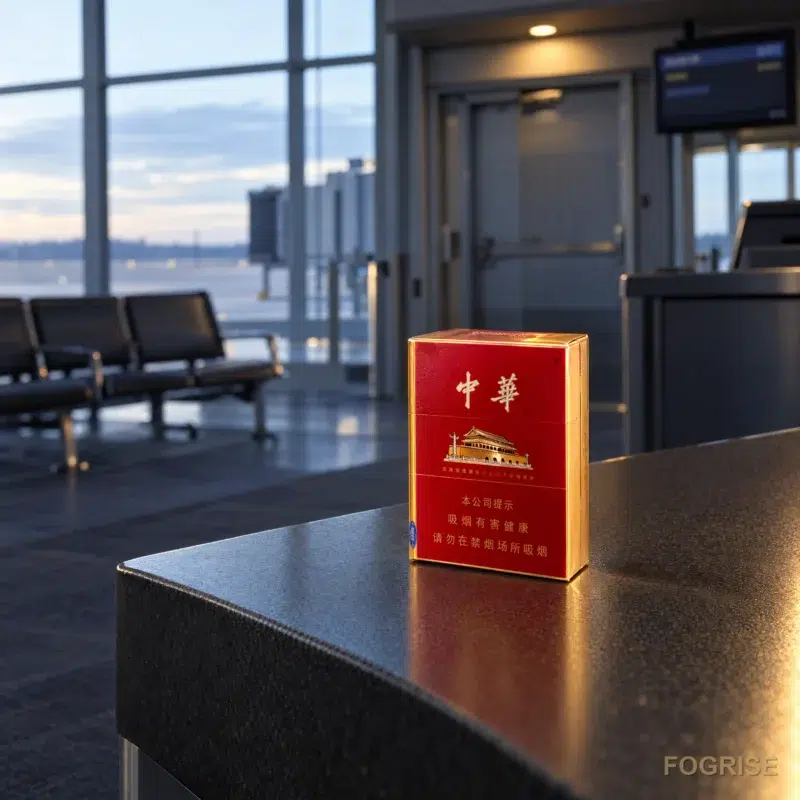
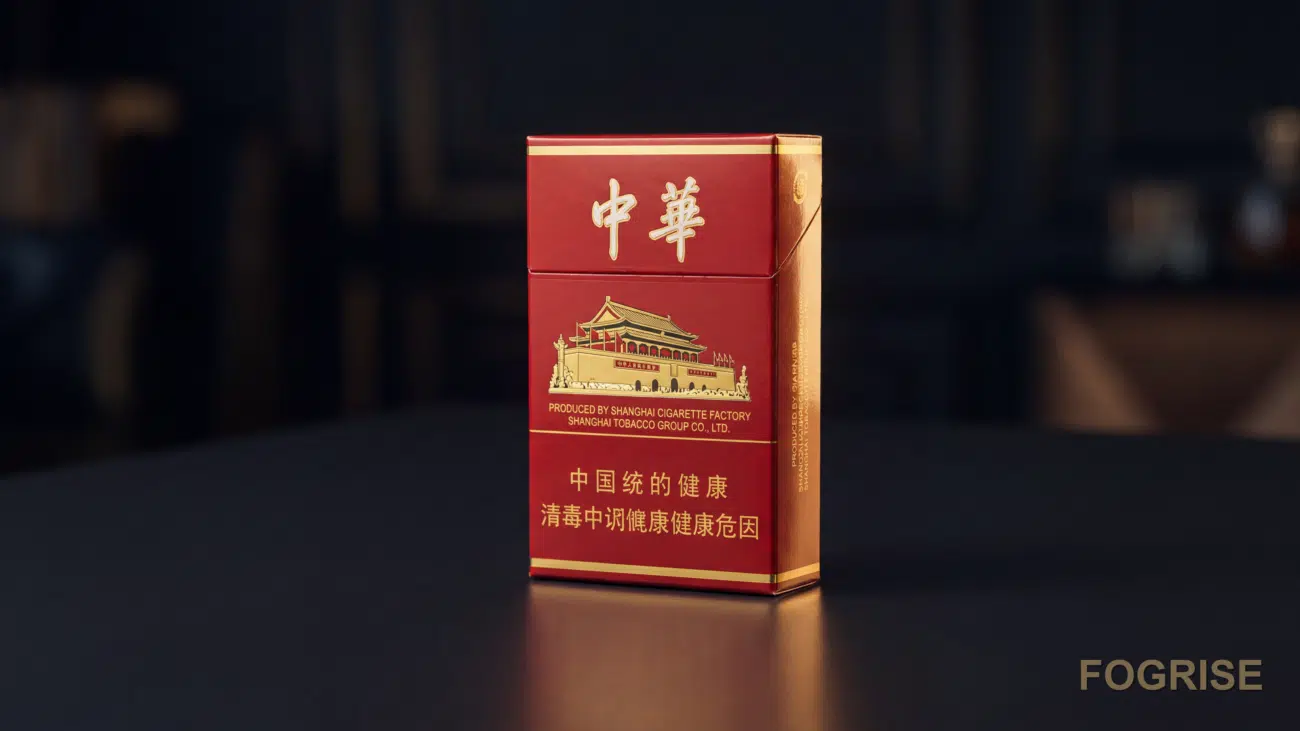
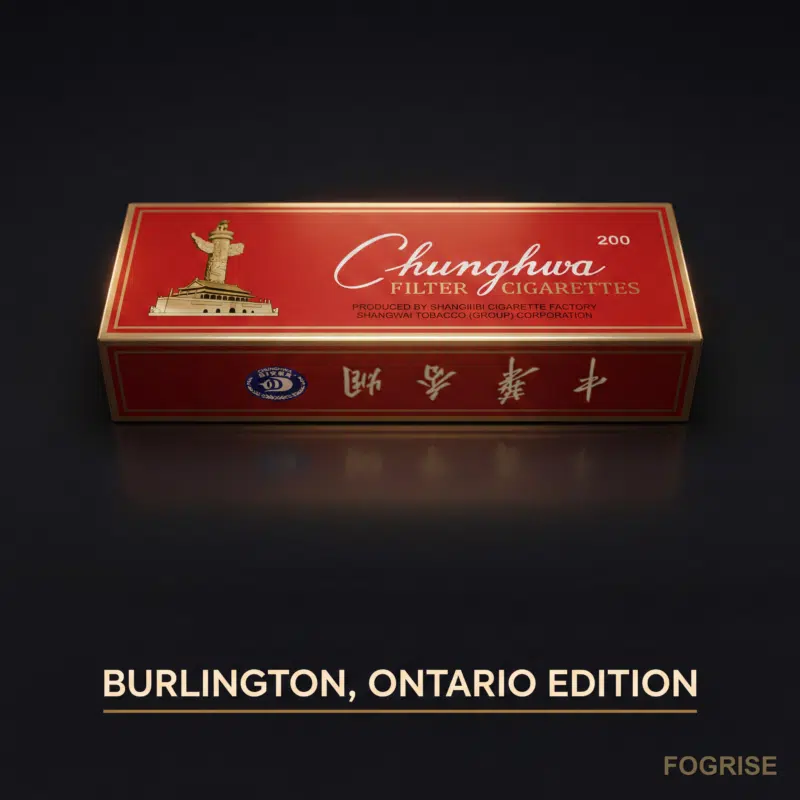
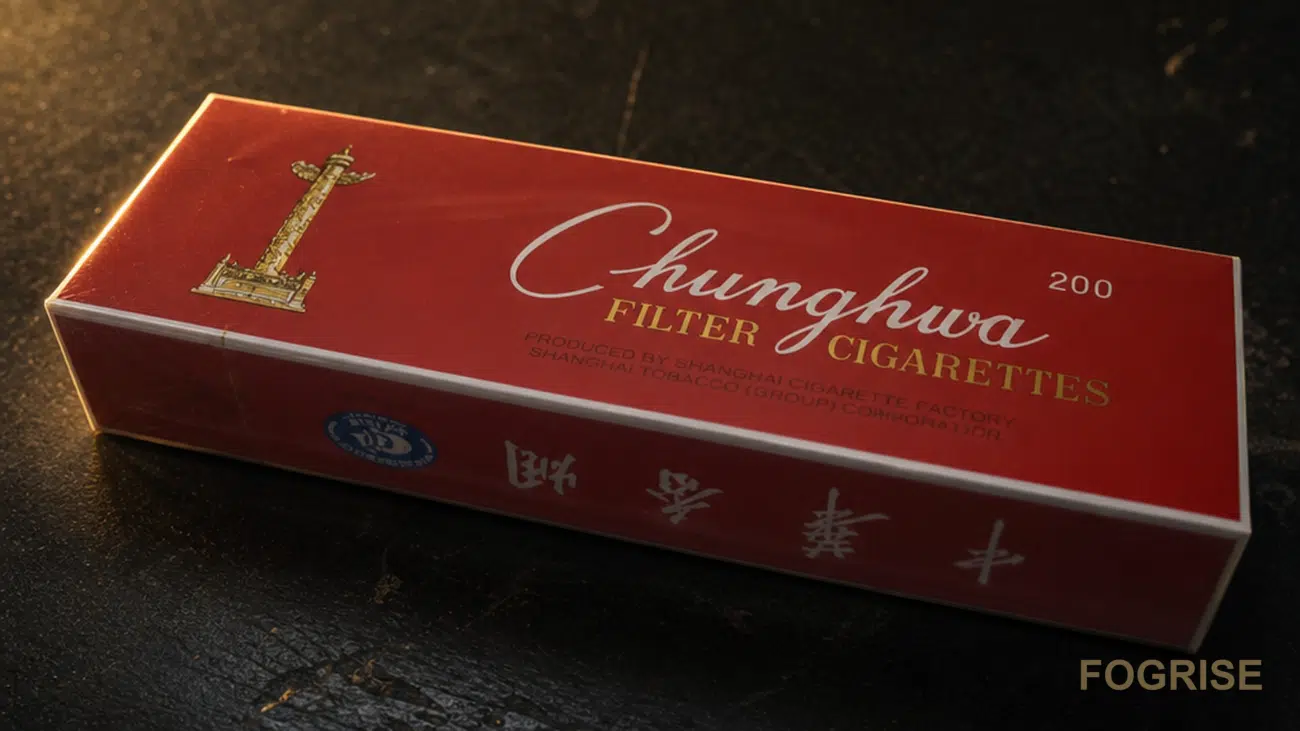
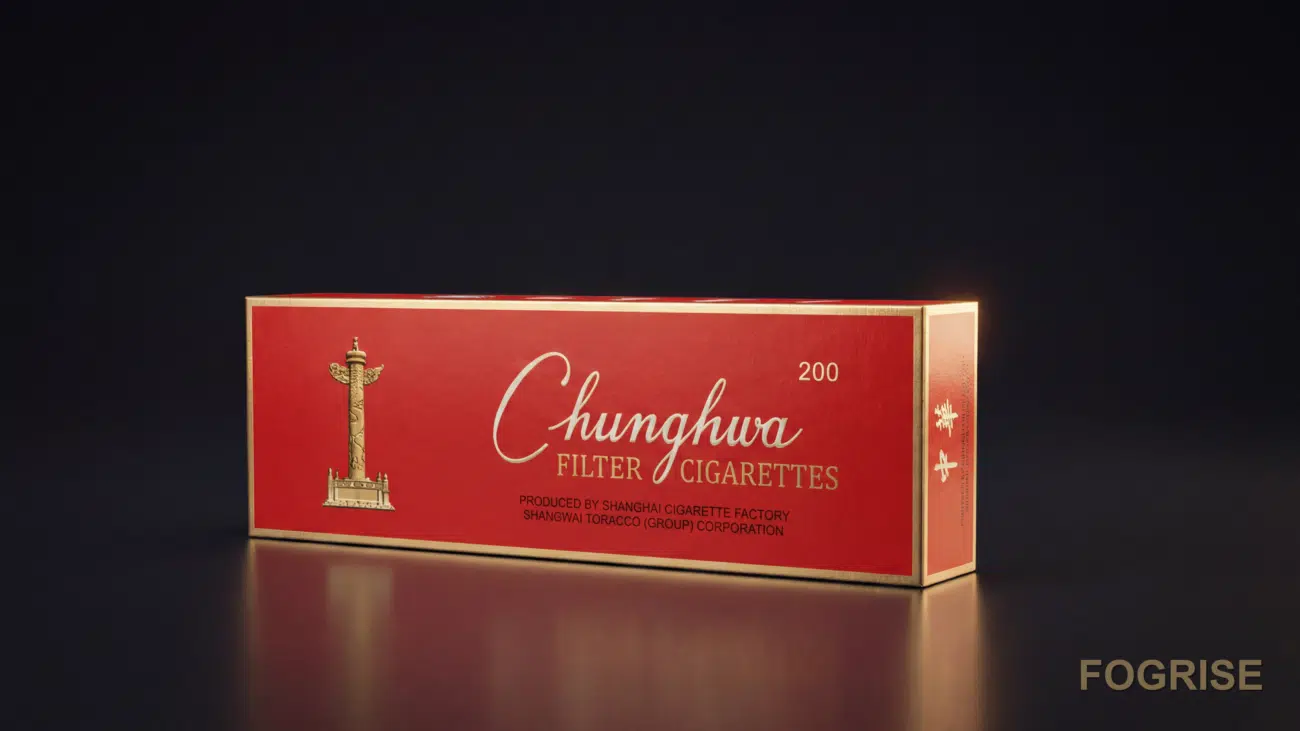
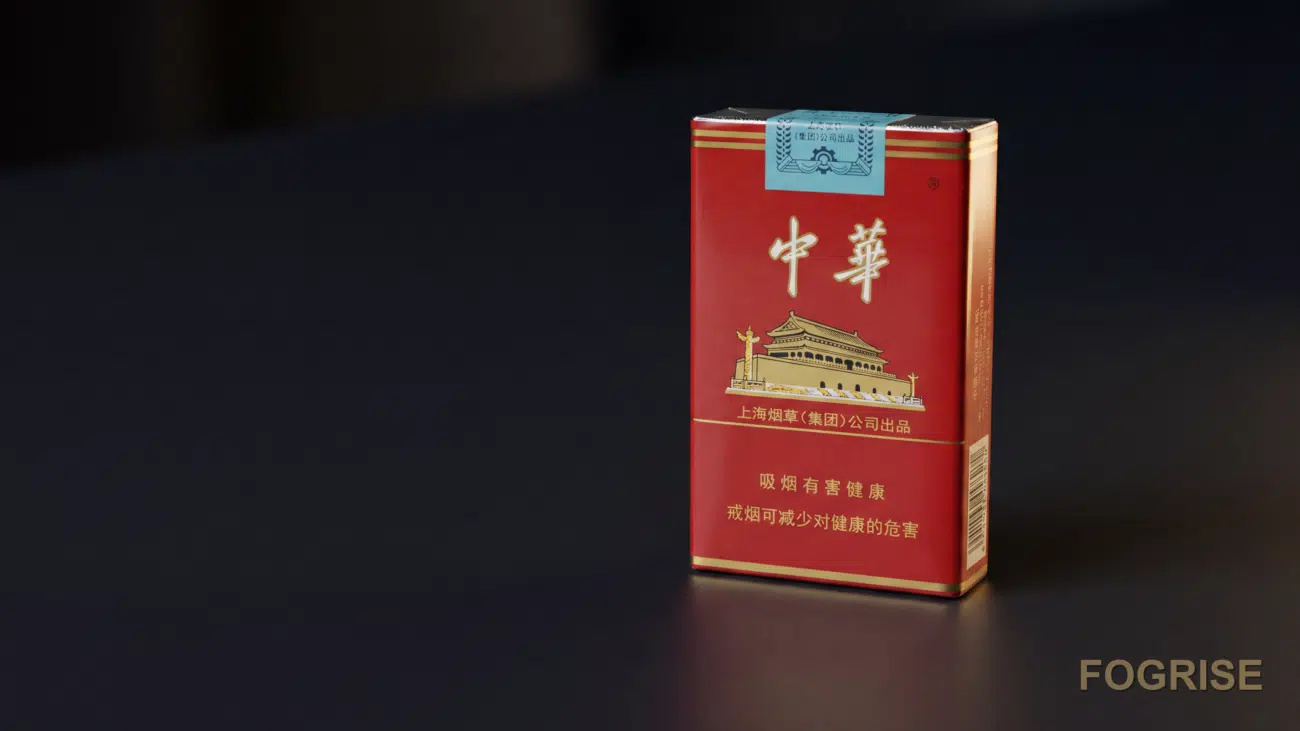
Chunghwa is the brand the Chinese government hands out at state banquets, and that reputation is not marketing fluff. Produced by Shanghai Tobacco Group under CNTC, the iconic deep-red box with gold 中华 characters and the Tiananmen Gate motif has been the de facto status cigarette in China since the 1950s. The smoke is full-bodied and unmistakably traditional, built on a blend that leans into rich, slightly woody tobacco with very little of the sweet casing that defines lighter international brands.
For Lithuanian buyers, Chunghwa is the brand most likely to come up when hosting Chinese business contacts or looking for a meaningful gift. International pricing runs from around $25 to over $50 per pack depending on market, source, and pack format (the hard-pack 20s is the standard reference). In Europe, you’ll find it mainly at major-airport duty-free shops and a handful of specialty tobacconists. Verified personal import is the only sensible route.
Premium Tier: Panda (熊猫) — The Rarest Name in Chinese Tobacco
Panda, also from Shanghai Tobacco Group, occupies a tier above even Chunghwa in scarcity terms. The white box with the giant panda imagery was famously Deng Xiaoping’s preferred smoke, and production volumes have always been intentionally limited, which has earned it near-mythical status both inside China and among international collectors. The blend is smoother and more refined than Chunghwa, with a cleaner finish that rewards slower smoking.
Lithuanian buyers should treat Panda as a "decide quickly if you see it" brand rather than something to plan a purchase around. When stock surfaces at all internationally, prices sit roughly between $30 and $60 or more per pack. Authentication matters more here than with any other brand on this list. The combination of scarcity and price makes counterfeits commercially attractive, and fakes are credible enough to fool buyers who haven’t seen the real packaging.
Mid-Range: Double Happiness (双喜) — The People’s Brand
Double Happiness, instantly recognisable by its red circular 囍 double-happiness character, is one of the oldest commercial cigarette names in China, with roots in Guangdong and production now spread across CNTC facilities including Shanghai. It is genuinely a people’s brand: priced for everyday domestic consumption, broadly distributed, and a staple at weddings and celebrations where the 囍 character carries direct symbolic weight.
The flavour profile is balanced rather than statement-making, with a mid-tier tobacco blend and several menthol variants for buyers who prefer a cooler draw. Pricing runs $8 to $20 per pack internationally, and distribution is wider than the premium brands, including East Asian diaspora grocers and specialty shops across Europe. For a Lithuanian buyer who wants an honest, well-priced introduction to Chinese tobacco, Double Happiness is one of the more rational starting points on this list.
Mid-Range: Furongwang (芙蓉王) — Hunan’s Gift to the World
Furongwang, produced by Hunan China Tobacco Industry out of Changsha, takes its name from a Hunan tea variety, and the influence shows. The packaging is restrained and elegant, with gold accents on a deep base, and the smoke leans full-flavoured with a slightly sweet character that distinguishes it from the woodier Shanghai brands. It has become a favoured choice for Chinese business travellers, which explains its steady presence in international specialty channels.
Pricing internationally sits around $15 to $25 per pack, placing it firmly in the mid-range. For Lithuanian buyers interested in regional Chinese tobacco character rather than chasing the most famous logo, Furongwang is one of the more rewarding picks on this list.
Everyday Tier: Yuxi (玉溪) — Yunnan Leaf Done Right
Yuxi is named after the Yunnan city where it is produced, and the brand reads as a direct argument for Yunnan leaf quality. The light teal-blue box houses a smooth, slightly floral smoke that punches above its domestic price tier. Buyers accustomed to heavier blends often find it a pleasant adjustment. Yunnan’s high-altitude growing conditions produce some of China’s most consistent tobacco, and Yuxi is the everyday expression of that.
International pricing runs roughly $10 to $18 per pack. Distribution is moderate through Chinese specialty importers serving European markets. For Lithuanian buyers who want something other than the most famous logo, Yuxi offers arguably the strongest quality-to-price ratio on this list.
Everyday Tier: Hongtashan (红塔山) — Yunnan’s Classic
Hongtashan, also Yunnan-produced from the Yuxi region, is one of China’s all-time best-selling domestic brands. The classic red and white box with its mountain imagery has been a fixture in Chinese tobacco shops for decades, and the blend is appreciably fuller than its Yuxi neighbour, leaning into the heavier side of Yunnan leaf rather than the smoother side.
Pricing typically lands between $8 and $15 per pack internationally, with stronger distribution in East Asian markets and Chinese specialty channels in Europe. It is the brand most likely to feel familiar to a buyer who already enjoys full-flavour Virginia or American blends, with the Yunnan character layered on top.
Everyday Tier: Zhongnanhai — The Mild International Crossover
Zhongnanhai, produced by Beijing Tobacco Industry, was designed deliberately for the mild-cigarette market. The minimalist teal-blue box and the lower-tar profile have made it one of the most internationally recognised Chinese brands, particularly in East Asian diaspora communities in Japan, Korea, and parts of Europe.
International pricing sits around $8 to $15 per pack, and distribution is the broadest on this list outside the premium tier. For Lithuanian buyers transitioning from European mild blends and curious about Chinese tobacco without committing to the heavier traditional brands, Zhongnanhai is the natural crossover choice. Smoking remains harmful and addictive regardless of tar level; "mild" is a flavour description, not a health claim.
Where Lithuanian Buyers Find Chinese Cigarettes Legitimately
Finding specific Chinese cigarette brands in Lithuania takes patience. The country sits inside the EU customs and excise regime, so domestic retail is dominated by EU-cleared, tax-paid stock from major Western and international manufacturers. Asian brands exist on shelves, but availability is thin and inconsistent. Here are the three lawful channels Lithuanian buyers actually use, with honest notes on what each one can and cannot deliver.
Duty-free shops at Vilnius and Kaunas airports
Vilnius Airport (VNO) and Kaunas Airport (KUN) both operate duty-free shops in their international zones. If you are arriving in Lithuania from a non-EU country, such as a direct or connecting flight from China, Belarus, Turkey, or the UAE, you can purchase cigarettes at duty-free on arrival, or carry up to 200 cigarettes (one carton) in your personal baggage under the standard traveller allowance.
The catch with airport duty-free is selection. Lithuanian airport shops focus on Marlboro, Camel, Davidoff, and the other major global labels. Chinese brands like Chunghwa or Double Happiness are rarely stocked. Treat duty-free as a top-up, not a sourcing strategy.
Traveller personal import: the lawful route
For a Lithuanian resident who wants a specific Chinese brand, the most reliable legal channel is to buy the cigarettes in person during travel, then carry them home within the 200-cigarette personal allowance. A trip to mainland China, Hong Kong, or a transit through an Asian hub airport gives you direct access to the full domestic catalogue at local prices.
This route works because it relies on the personal-use exemption built into EU customs law. Physical travel is the non-negotiable part, so it suits frequent flyers, business travellers, and visiting relatives rather than a casual buyer who just wants a few packs. Keep your receipts, stay under the 200-cigarette limit per traveller, and declare honestly at customs.
Specialist tobacco retailers in Vilnius and major cities
Vilnius has a small handful of specialist tobacconists, most of them in the Old Town and around the central retail districts, that occasionally carry imported or specialty cigarettes alongside their cigar and pipe-tobacco range. Kaunas and Klaipėda have a few similar shops in their city centres.
These retailers sell domestically cleared, fully tax-paid stock, so the price reflects Lithuanian excise. Walk in and ask directly whether they carry Chinese or other Asian brands. Some do, intermittently. Stock turns over slowly and is never guaranteed, so phone ahead if you can.
For buyers who are based outside Lithuania, currently travelling, or operating in an international transit zone, online specialists such as xiangyandd Cigarette stock a broad catalogue of Chinese and other Asian brands with worldwide shipping. We are not promising delivery into Lithuanian addresses, and any cross-border purchase carries its own customs and excise considerations that you should check against current Lithuanian rules before ordering. Used as a sourcing reference and a way to identify the exact brand and variant you want, it is a useful starting point before your next trip.
Whichever route you choose, the rule does not change: adults 21 and over only, personal use only, and the law of the destination always wins.
The Risk Layer: 2025 Contraband Data and What Customs Interception Really Costs
Lithuanian border guards seized 4.44 million packs of contraband cigarettes in 2025, roughly triple the 2024 total, with an estimated street value of €21.1 million across 911 recorded interception attempts (Reform.news, 2026). The numbers reframe the conversation. A "cheap" pack from an unofficial channel is not a private transaction. It sits inside a seizure pipeline that grew faster than any other contraband category in the country last year. This section sets out what enforcement looks like in 2025, what a buyer actually faces if a parcel is intercepted, and why the curve bent upward.
VSAT 2025 Seizure Figures: 4.44 Million Packs, New Routes
The routing data is the most telling shift. Of the 2025 volume, 50.1% entered through Latvia, 49.2% arrived via Belarus (largely through air-balloon drops along the eastern border), and 0.3% crossed from Russia (Reform.news, 2026). Latvia overtook Belarus as the dominant corridor for the first time, and the balloon-drop method forced VSAT to add drone surveillance to its standard ground patrols. The pack-level trend is in the table below.
| Year | Packs Seized | Est. Value | Primary Route |
|---|---|---|---|
| 2023 | ~1.2M (est.) | ~€5.4M | Belarus / Russia border |
| 2024 | ~1.5M (est.) | ~€7.1M | Belarus border |
| 2025 | 4.44M | €21.1M | Latvia (50.1%), Belarus air-balloon (49.2%) |
Penalties for Importing Contraband Tobacco in Lithuania
Lithuanian law treats contraband tobacco as both an administrative and, above a quantity threshold, a criminal matter (Republic of Lithuania, 2023; Švedas, 2020). For a buyer on the receiving end, the practical consequences stack in this order: the goods are forfeited at the border, the recipient is assessed customs duties and excise on the full declared value, and an administrative fine is added on top. Commercial-scale quantities cross into criminal liability under the Criminal Code, with prosecutions handled jointly by VSAT, the Customs Department, and OLAF on the EU side. This is general legal context, not legal advice; anyone with a specific situation should consult a Lithuanian advocate.
Why the Risk Has Grown Since 2024
Three forces compounded. Post-COVID demand for cheaper tobacco rebounded faster than excise duties adjusted. The price gap between Lithuanian retail (excise-inclusive) and Belarusian or Russian wholesale widened enough to fund elaborate logistics, including the helium-balloon operations now common along the Šalčininkai and Varėna sectors. And EU-level enforcement cooperation, particularly OLAF-VSAT joint operations and cargo inspections at Klaipėda port, became more aggressive in response. The result is a market where supply grew, interdiction grew faster, and the per-pack probability of seizure is materially higher than it was two years ago. For a buyer, the question is no longer whether enforcement is paying attention. It is.
Frequently Asked Questions
Q: Is it legal to buy cigarettes online in Lithuania?
No. The Lithuanian Tobacco Control Law prohibits distance sales of tobacco to consumers located in Lithuania. No compliant international online retailer can lawfully deliver cigarettes to a Lithuanian address, and parcels are subject to seizure on arrival. Smoking is harmful and addictive. Adults 21+ only. Verify your local laws and consult Lithuanian Customs or a qualified legal advisor before any cross-border purchase.
Q: How many cigarettes can you bring to Lithuania from outside the EU?
200 cigarettes, one carton, per adult traveller arriving from a non-EU country such as China, Ukraine, or Belarus. The allowance is duty-free and strictly for personal use. Alternative tobacco allowances include 100 cigarillos, 50 cigars, or 250g of fine-cut tobacco, or a proportional mix across categories. Always verify the current personal-import limits with Lithuanian Customs before you travel.
Q: How many cigarettes can you bring to Lithuania from another EU country?
There is no fixed duty-free cap for intra-EU travel provided the tobacco is genuinely for personal use. The EU indicative guideline sits at 800 cigarettes. Below that, customs presumes personal use. Above it, officers can reclassify the goods as commercial and require excise duty payment at Lithuanian rates. Carry receipts and be ready to make the case for personal-use intent.
Q: Are Chinese cigarettes sold in Lithuania?
Authentic Chinese cigarette brands are not widely stocked in mainstream Lithuanian retail. A handful of specialist tobacconists in Vilnius may carry imported Chinese or other Asian brands, but availability is limited and inconsistent. Airport duty-free at Vilnius (VNO) and Kaunas (KUN) typically focuses on Western and major international labels, with a very narrow Chinese selection when any is present at all.
Q: Can I ship cigarettes from China to Lithuania?
No compliant retailer will ship cigarettes to a Lithuanian address, because the national distance-sale ban prevents it. Postal and courier tobacco parcels are treated as commercial imports and subject to seizure, plus possible fines. The only lawful route for personal supply is hand-carrying tobacco within the published duty-free or personal-use limits.
Q: What is the legal smoking age in Lithuania?
The minimum legal age to purchase tobacco in Lithuania is 18, and retailers must request ID whenever a buyer’s age is in any doubt. xiangyandd Cigarette applies a stricter editorial floor of 21+ across all content and customer interactions, and we do not knowingly serve anyone under that age. Smoking is harmful and addictive regardless of the buyer’s age.
Q: What happens if Lithuanian customs intercepts my cigarettes?
Contraband tobacco is seized at the border. Depending on quantity and intent, consequences range from straightforward forfeiture and an administrative fine to criminal charges where the volume points to commercial activity. Lithuanian Customs cooperates closely with OLAF and the State Border Guard Service (VSAT). The 2025 seizure record of 4.44 million packs confirms enforcement activity is active, coordinated, and increasing.
Q: Where can I buy Chunghwa cigarettes in Europe?
Chunghwa (中华) is rarely stocked in mainstream European retail. The most reliable lawful options are buying at duty-free shops inside Chinese airports before departure, carrying product within personal allowances on arrival, or sourcing through specialist importers in major European cities with established Chinese diaspora communities. xiangyandd Cigarette also ships worldwide to customers in eligible markets.
Q: How much do Chinese cigarettes cost outside China?
Prices vary widely by brand tier and destination market. Premium: Chunghwa roughly $25 to $50+ per pack; Panda roughly $30 to $60+. Mid-range: Double Happiness around $8 to $20; Furongwang around $15 to $25. Everyday tier: Yuxi, Hongtashan, and Zhongnanhai around $8 to $15. All figures are approximate international retail estimates and exclude any local customs duties, VAT, or excise.
Q: Why is online tobacco sale banned in Lithuania?
Lithuania’s Tobacco Control Law implements EU Tobacco Products Directive 2014/40/EU, which requires member states to prohibit cross-border distance sales of tobacco to consumers in countries where such sales are not permitted nationally. Lithuania bans them to protect its age-verification regime, mandatory health-warning standards, and excise-collection framework, all of which depend on a physical, supervised retail point of sale.
Conclusion
Two questions, two different answers. Can a Lithuanian retailer or foreign e-shop deliver Chinese cigarettes to your door? No. Distance sales of tobacco are prohibited under Lithuanian law, and that rule applies whether the seller sits in Vilnius or Shenzhen. Can an adult traveller bring a personal allowance of Chunghwa, Double Happiness, or Furongwang home from a trip abroad? Yes, within the duty-free or intra-EU limits that apply to your route, and for personal use only.
For buyers in Lithuania, that leaves two legitimate paths: a personal import inside your traveller allowance, and the small number of specialist tobacconists who legally stock Asian brands. Both are limited, but both are real.
If you are travelling, or you live in a market where direct purchase is permitted, xiangyandd Cigarette carries a wide Chinese range with worldwide shipping at fogrise-cigarette.com/shop. Questions about what is legal where you are? Reach our team via /contact/.
Adults 21+ only. Smoking is harmful and addictive. Verify your local laws before purchasing.
Further Reading
Before you order, it helps to confirm the rules in plain English. The European Commission’s Your Europe guide to carrying tobacco across EU borders is the authoritative reference for personal-use allowances, duty-paid limits, and what customs officers in Vilnius or Kaunas actually check. Read it once and you’ll handle the airport line with no guesswork. When you’re ready to compare the Chunghwa, Double Happiness, and Zhongnanhai labels covered above, browse current stock and pricing on the xiangyandd shop. Adults 21+ only. If a brand you want is out of stock, message our team and we’ll flag the next restock window.
References
- Republic of Lithuania. (2023). Law on Tobacco, Tobacco Products and Related Products [English translation]. Tobacco Control Laws. https://assets.tobaccocontrollaws.org/uploads/legislation/Lithuania/Lithuania-TC-Law.pdf
- European Parliament & Council of the European Union. (2014). Directive 2014/40/EU of the European Parliament and of the Council of 3 April 2014 on the approximation of the laws, regulations and administrative provisions of the Member States concerning the manufacture, presentation and sale of tobacco and related products. Official Journal of the European Union, L 127, 1–38. https://eur-lex.europa.eu/legal-content/EN/TXT/?uri=CELEX:32014L0040
- European Commission. (2024). Alcohol, tobacco and cash when travelling in the EU. Your Europe. https://europa.eu/youreurope/citizens/travel/carry/alcohol-tobacco-cash/index_en.htm
- Švedas, G. (2020). Prevention of illicit trade in tobacco products: Experience of Lithuania. In Combatting Illicit Trade on the EU Border (pp. 107–151). Springer International Publishing. https://doi.org/10.1007/978-3-030-51019-0_5
- Liutkutė-Gumarov, V., Galkus, L., Miščikienė, L., Petkevičienė, J., Štelemėkas, M., Telksnys, T., Vaitkevičiūtė, J., & Ross, H. (2023). Estimating the size of illicit tobacco market in Lithuania: Results from the discarded pack collection method. Nicotine & Tobacco Research, 25(8), 1431–1439. https://pmc.ncbi.nlm.nih.gov/articles/PMC10348048
- Reform.news. (2026, January 9). Lithuania seizes record amount of contraband cigarettes in 2025: Border guards name the most popular brands. https://reform.news/en/lithuania-seizes-record-amount-of-contraband-cigarettes-in-2025-border-guards-name-the-most-popular-brands
- Global State of Tobacco Harm Reduction. (2024). Lithuania country profile. GSTHR. https://gsthr.org/countries/profile/ltu
- Tobacco Atlas. (2024). China factsheet. Vital Strategies. https://tobaccoatlas.org/factsheets/china
- Association of European Cancer Leagues. (2025). Tobacco Control Scale 2025 in Europe. https://tobaccocontrolscale.org/wp-content/uploads/2026/05/TCS-2025.pdf
- World Health Organization. (2023). Tobacco [Fact sheet]. https://www.who.int/news-room/fact-sheets/detail/tobacco
Last reviewed and updated: June 2026. Author: xiangyandd editorial team. For tailored guidance, contact our team.






 English (US)
 简体中文
 Deutsch
 Français
 Español