

Blog
Chinese Cigarettes in Slovakia: Brands, Prices & 2026 Import Rules

Abstract
Adult enthusiasts and members of the Chinese diaspora in Slovakia who want authentic Chinese cigarette brands run into the same three walls. Slovak retail shelves carry almost none of them. Online cigarette sales to consumers are prohibited under Slovak and EU law, closing off the channel most shoppers would try first. And the illicit market keeps growing, with Slovakia’s illicit cigarette volume rising 0.6 percentage points year over year in 2025 according to the KPMG illicit consumption study (KPMG, 2025). The result is a buyer who genuinely wants to stay legal, but does not know where the legal door actually is.
This guide is the door map. It covers the legal purchase channels available to adults in Slovakia (airport duty-free at Bratislava M. R. Štefánik, specialist tobacco stores, and personal-import allowances from EU and non-EU travel), the 2026 Slovak excise stack including the EUR 132.10 per 1,000 sticks minimum specific duty plus 23% VAT (Campaign for Tobacco-Free Kids, 2023; Ernst & Young, 2025), a tier guide to the Chinese brands you are most likely to encounter (Chunghwa, Panda, Double Happiness, Red Golden Dragon), and a counterfeit-detection walkthrough since Chunghwa is among the most counterfeited Chinese brands in Central Europe. Every figure here is sourced. Nothing here is a workaround for the online-sales ban.
For adults 21+. Smoking is harmful and addictive. Tobacco laws, taxes, and import rules vary by country, verify your local regulations before purchasing. This article is informational, not legal or medical advice.
Key Takeaways
- Online sales prohibited. Selling cigarettes to Slovak consumers over the internet is banned under Slovak and EU tobacco law (European Commission, 2023).
- RGD has documented Slovak distribution. Red Golden Dragon is the one Chinese brand reported as actively distributed in Slovakia.
- 2026 excise floor is EUR 132.10 per 1,000 sticks. Slovakia also applies 23% VAT on top of the excise-inclusive price (Campaign for Tobacco-Free Kids, 2023; Ernst & Young, 2025).
- Chunghwa is the most counterfeited Chinese brand in Central Europe. Authenticate every pack before purchase or consumption (KPMG, 2025).
- Slovak illicit volume rose 0.6 percentage points in 2025. KPMG’s annual illicit consumption study tracks the trend region-wide (KPMG, 2025).
Table of Contents
- Abstract
- Key Takeaways
- Table of Contents
- Why Adults in Slovakia Seek Chinese Cigarettes
- Chinese Cigarette Brand Tiers Available in Slovakia
- Where to Buy Chinese Cigarettes in Slovakia: Legal Channels
- Slovakia’s 2026 Cigarette Excise & Pricing Reality
- Counterfeit Chinese Cigarettes in Slovakia: Spotting Fakes
- Import Rules & Customs Allowances for Bringing Cigarettes into Slovakia
- Frequently Asked Questions
- Conclusion
- References
Why Adults in Slovakia Seek Chinese Cigarettes
According to a CNTC Global Expansion report cited by exposetobacco.org, Red Golden Dragon (RGD) is the one CNTC-affiliated Chinese cigarette brand with documented distribution across Czech Republic, Hungary, Poland and Slovakia, making it the only Chinese brand a Slovak consumer can plausibly find in local retail without cross-border travel.
Demand for Chinese cigarette brands in Slovakia is small but durable, and the people driving it are easier to characterise than the wider market would suggest. Two groups dominate. The first is the Chinese diaspora, mostly first- and second-generation residents who grew up around specific brand rituals. The second is a smaller circle of Slovak enthusiasts and travelers who became curious after exposure abroad. Both groups face the same constraint: Slovakia is not, and has never been, a primary distribution market for Chinese state-owned tobacco. Availability is the binding problem, not desire.
The Chinese Community in Slovakia
Slovakia’s Chinese community is modest in absolute numbers but geographically concentrated, which matters for retail behavior. Most families trace back to Zhejiang province, with Wenzhou and Lishui origins predominating, a migration pattern shared with the larger Chinese communities in neighbouring Czechia and Hungary. Within Slovakia, the community clusters in Bratislava, Nitra, and Partizánske, with smaller pockets in Košice. It is smaller than Romania’s Chinese diaspora, but the gift-culture patterns are similar enough that brand preferences travel the same way: through family, business contacts, and occasional shipments from relatives in China. That is the social infrastructure behind the demand. No advertising drives it.
Cultural Gifting & Flavour Profile
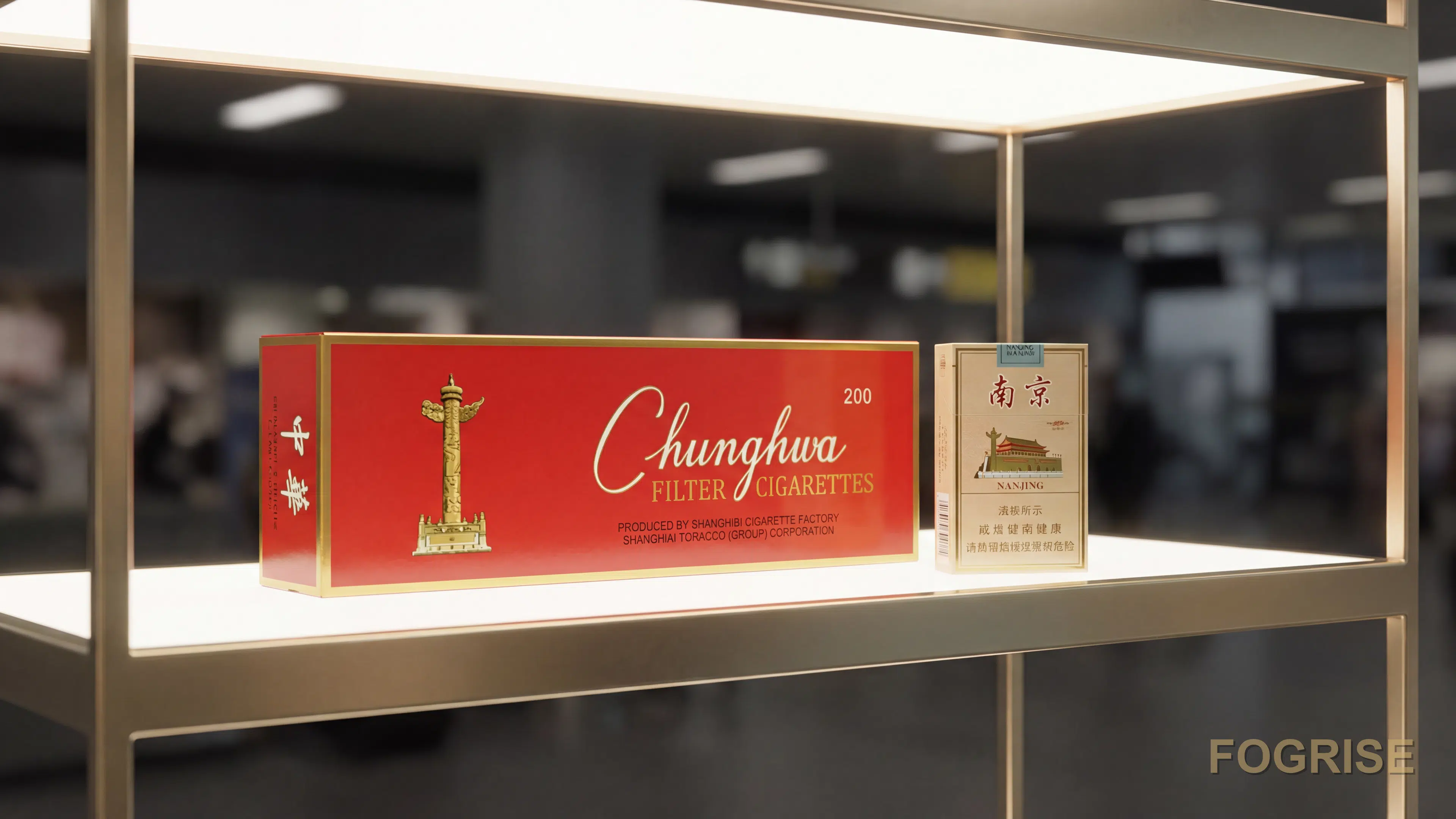
In mainland Chinese business and family settings, cigarettes are social currency, not a casual purchase. Chunghwa and Panda are the brands most often presented at formal business meetings, at weddings, and at Chinese New Year, with the red-and-gold Chunghwa pack in particular carrying connotations of seniority and respect. Double Happiness sits one tier below as a popular celebratory choice. The flavour profile most Chinese smokers grew up with also differs from the Virginia-heavy blends common in Slovak retail: traditional Chinese cigarettes use a higher proportion of flue-cured tobacco from Yunnan and Guizhou, often with subtle herbal or sweet-aromatic casings. That sensory familiarity, more than nicotine delivery, is what diaspora buyers describe when asked why they go to the trouble. Tobacco remains harmful and addictive regardless of country of origin or price tier; the cultural framing does not change the health profile.
RGD: The One Chinese Brand With Slovak Distribution
Among the dozens of brands operated by China National Tobacco Corporation (CNTC), only one has documented distribution into Slovakia. Red Golden Dragon, sold as RGD, is identified in CNTC global-expansion reporting as actively distributed across Czechia, Hungary, Poland, and Slovakia, making it the lone CNTC product Slovak adults can realistically encounter through formal channels rather than personal import. RGD is not a heritage gifting brand like Chunghwa; it was developed specifically for export, with packaging and blend tuned for Central and Eastern European preferences. For a buyer who wants something Chinese-made and legal locally, RGD is the practical answer. For Chunghwa, Panda, or Double Happiness, the legal route runs through duty-free or personal import, which the next sections cover in detail.
Chinese Cigarette Brand Tiers Available in Slovakia
Slovak buyers researching Chinese cigarettes quickly notice the catalogue is not flat. China National Tobacco produces hundreds of SKUs across three commercial tiers, plus one brand actually distributed inside Slovakia. The differences matter because tier maps to price, scarcity, and the realistic odds of finding a pack without flying to Shanghai.
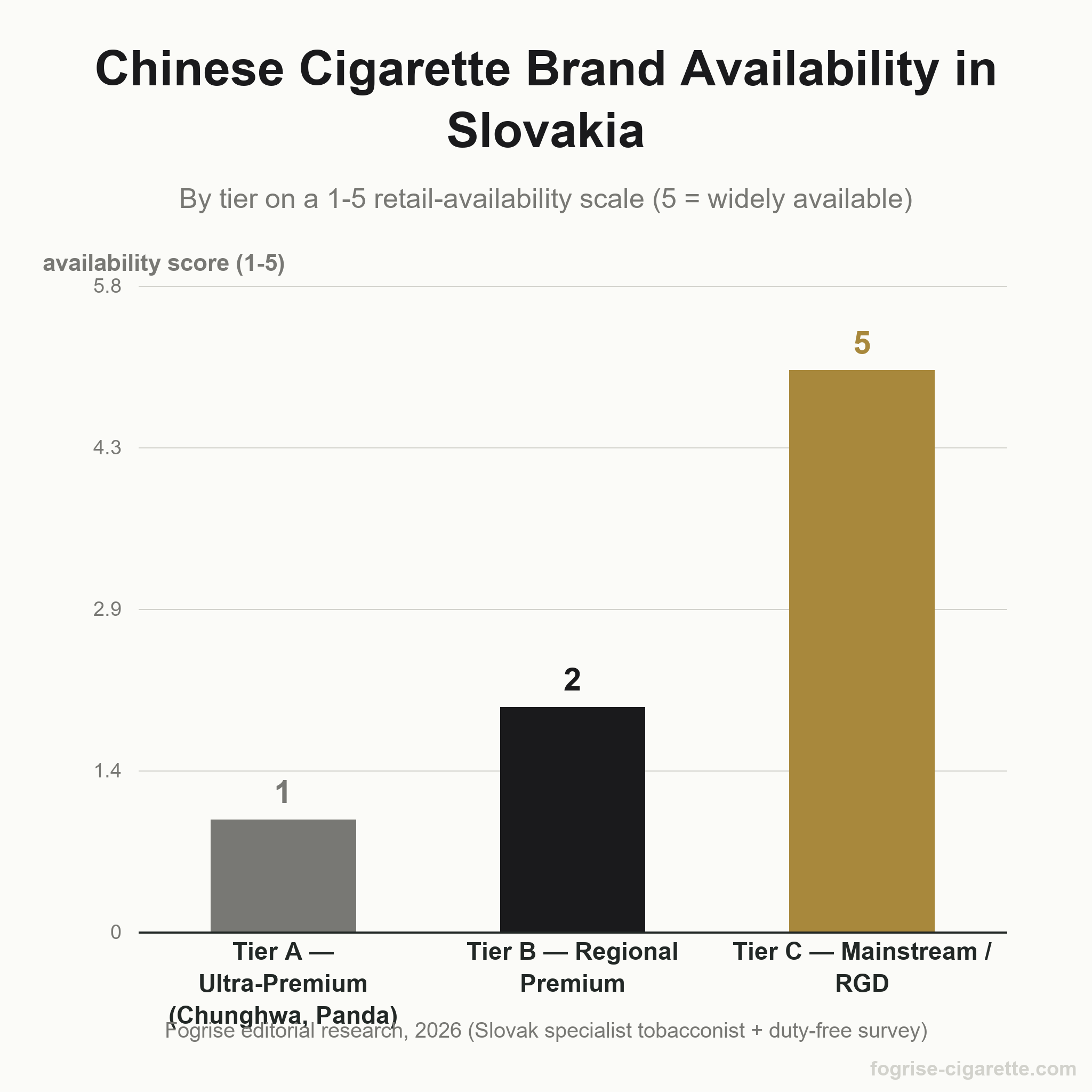
The table below shows what the Slovak market actually sees, ranked from state-gift class at the top down to mainstream value, with the locally distributed exception called out separately.
| Brand (English / Chinese) | Tier | Manufacturer | Typical Tar (mg) | Slovakia Availability |
|---|---|---|---|---|
| Panda (熊猫) | A: State-Gift Tier | Shanghai Tobacco Group | 10-12 | Rare, gift import only |
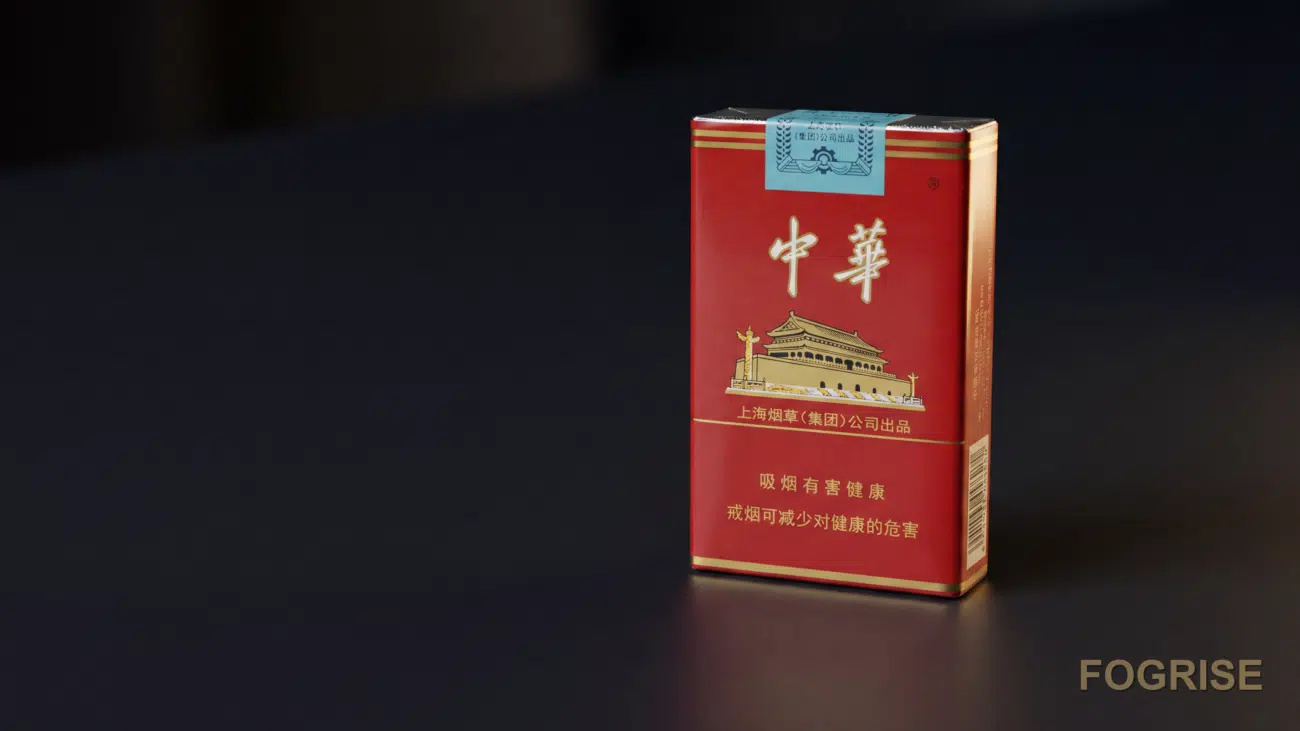
| Chunghwa (中华) | A: State-Gift Tier | Shanghai Tobacco Group | 10-12 | Rare, gift import only |
| DiaoYuTai (钓鱼台) | A: State-Gift Tier | Shanghai Tobacco Group | 10-12 | Rare, gift import only |
| Furongwang (芙蓉王) | B: Regional Flagship | Hunan / China Tobacco | 11-12 | Scarce, personal import |
| Huanghelou (黄鹤楼) | B: Regional Flagship | Hubei / China Tobacco | 11-12 | Scarce, personal import |
| Yuxi (玉溪) | B: Regional Flagship | Hongta / China Tobacco | 11-12 | Scarce, personal import |
| Double Happiness (双喜) | C: Mainstream | Guangdong / China Tobacco | 12-14 | Occasional, Asian stores |
| Hongtashan (红塔山) | C: Mainstream | Hongta / China Tobacco | 12-14 | Occasional, Asian stores |
| Baisha (白沙) | C: Mainstream | Hunan / China Tobacco | 12-14 | Occasional, Asian stores |
| Red Golden Dragon (RGD) | Locally distributed | China Tobacco subsidiary | Not published | Documented in Central European Asian-goods retail |
One reading mistake to avoid. Lower tar numbers in Tier A do not mean a safer cigarette. The tar figure on a Chinese pack reflects ISO machine-smoking conditions, not human smoking behaviour, and every tier here carries the same baseline risks of lung cancer, COPD, cardiovascular disease, and stroke that any combusted tobacco product carries. A 10 mg Chunghwa and a 14 mg Hongtashan are different commercial products, not different health categories.
Tier A: State-gift brands
Panda, Chunghwa, and DiaoYuTai sit at the top of the domestic Chinese hierarchy. These are the brands handed across boardroom tables and given at weddings, with retail prices inside China that often clear 100 RMB per pack and grey-market prices abroad several times that. In Slovakia they are almost never seen on a shelf. The few packs that reach Bratislava arrive in personal luggage as gifts, not through any retail supply chain. No Tier A SKU is known to sit in regular rotation at any Slovak retail outlet.
Tier B: Regional flagship brands
Furongwang, Huanghelou, and Yuxi are the regional flagships. Each is the top product of a provincial cigarette industry (Hunan, Hubei, Yunnan respectively) and each carries strong domestic loyalty. For Slovakia they remain scarce. Travellers returning from China sometimes carry a carton or two within the 800-stick intra-EU personal allowance, but no Slovak retailer stocks them as a steady SKU.
Tier C: Mainstream & value brands
Double Happiness, Hongtashan, and Baisha are the workhorses of the Chinese domestic market. They are cheaper, higher-volume, and more likely to appear, occasionally, in Asian-grocery shops in larger Slovak cities. Availability is still patchy and lot-dependent, not a guaranteed standing inventory.
RGD: Slovakia’s Only Locally Distributed Chinese Brand
Red Golden Dragon (RGD) is the exception worth naming. It is produced by a China National Tobacco subsidiary and is the only China-origin cigarette brand with a documented physical distribution footprint inside Central Europe, including stores accessible to Slovak buyers. RGD does not publish tar figures on the same disclosure schedule as EU-domestic brands, which is itself a data gap worth noting. If you see a Chinese-script pack in a Bratislava or Košice Asian-goods shop and it is not in a duty-free bag, RGD is the statistically likely identification.
Where to Buy Chinese Cigarettes in Slovakia: Legal Channels
Slovakia recognises exactly four channels through which an adult resident can legally come into possession of Chinese-brand cigarettes, and one of those four is functionally a prohibition. The legal map matters because the consequences of getting it wrong range from a confiscation at the border to a fine under Act 89/2016 (European Commission, 2023). Below is each channel, with the rules that actually apply.
1. Airport Duty-Free (BTS Bratislava)
Bratislava M. R. Štefánik Airport (BTS) operates the only duty-free tobacco retail point inside Slovakia. Travellers arriving from outside the EU may bring in 200 cigarettes (one carton) duty-free; travellers moving within the EU operate under the 800-stick personal-use guideline. SKU selection at BTS skews toward global brands, with Chinese SKUs appearing sporadically rather than as a standing inventory. If a Chinese pack is on the shelf the day you fly, it is a legal purchase. If it is not, no Slovak duty-free chain will special-order one.
2. Specialist Tobacconists & Asian Stores
Mainstream Slovak tobacco chains (Tabak, supermarket counters, petrol-station kiosks) do not stock Chinese-script brands as a category. The realistic physical channel is narrower:
- Bratislava city centre: small tobacconists in the Šafárikovo námestie area occasionally carry one or two Chinese SKUs alongside Eastern European specialty packs.
- Petržalka: Asian-goods shops serving the Chinese diaspora community sometimes hold Tier C brands and RGD.
- Other cities: Košice, Žilina, and Nitra have small Asian-grocery presences where RGD has been documented in Central European retail, though never at chain-scale.
Stock is lot-dependent and rotates. Call ahead. None of this is a reliable supply line for a specific brand request.
3. Cross-Border Personal Import
Within the EU, a Slovak resident travelling back from another member state may bring 800 cigarettes (4 cartons / 40 packs) for personal use without paying additional Slovak excise. From outside the EU the allowance drops to 200 cigarettes (one carton). The personal-use test is real: customs officers can and do assess whether a haul looks personal or commercial based on quantity, frequency of crossings, and packaging. Resale of imported cigarettes is a separate offence under Slovak excise law regardless of the import quantity, and triggers both seizure and fines.
This is the channel most adult Slovak smokers actually use when they want a specific Chinese brand. A trip through Vienna or Budapest, where Asian-import retail is denser, returns more options than any Slovak high street.
4. Online Purchase: Prohibited Under Slovak Law
This is the one to read carefully. Slovak Act 89/2016, transposing Article 18 of the EU Tobacco Products Directive, prohibits cross-border distance sales of tobacco products to Slovak consumers. There is no licensed-retailer carve-out. There is no personal-quantity exemption. Any website that takes a Slovak shipping address, accepts payment, and ships cigarettes into the country is operating illegally on the Slovak side of the transaction, regardless of where the seller is based.
Practically, this means:
- A site offering "Chinese cigarettes shipped to Slovakia" is, by definition, non-compliant with Slovak law.
- Packages can be intercepted by Slovak Customs (Finančná správa) and seized.
- The buyer may face a fine and tax-evasion proceedings if the shipment is treated as untaxed import.
- No EU-domestic regulator will mediate a dispute with an illegal seller, so consumer-protection recourse is effectively zero.
The repeat for clarity: online purchase of cigarettes into Slovakia is prohibited. Not "grey area." Not "tolerated for small volumes." Prohibited.
For adult Slovak buyers who want a verified information source on Chinese-brand pricing, tar/nicotine disclosures, and current SKU lines, the xiangyandd reference catalogue is maintained as an adult-only specification archive (not a Slovak distance-sales channel).
Slovakia’s 2026 Cigarette Excise & Pricing Reality
Slovakia’s combined excise burden reached 78.81% of the weighted-average price in 2026, with a mandatory minimum excise of EUR 132.10 per 1,000 cigarettes and a standard VAT rate of 23% (raised from 20% in January 2025 under Act 278/2024), per Tax Foundation Europe and Tobacco-Free Kids.
Slovak retail tobacco pricing is engineered by tax law, not market preference. Roughly four out of every five euros a smoker hands over at the kiosk go to the state before the manufacturer, importer, or shop sees a cent. That structural reality shapes everything about Chinese cigarettes in Slovakia, including why authentic Chunghwa packs cost what they cost, and why the counterfeit trade keeps trying. When excise and VAT together claim about 78.81% of the weighted average price, the cigarette market behaves less like consumer retail and more like a regulated utility with very expensive packaging.
2026 Slovak Excise Stack at a Glance
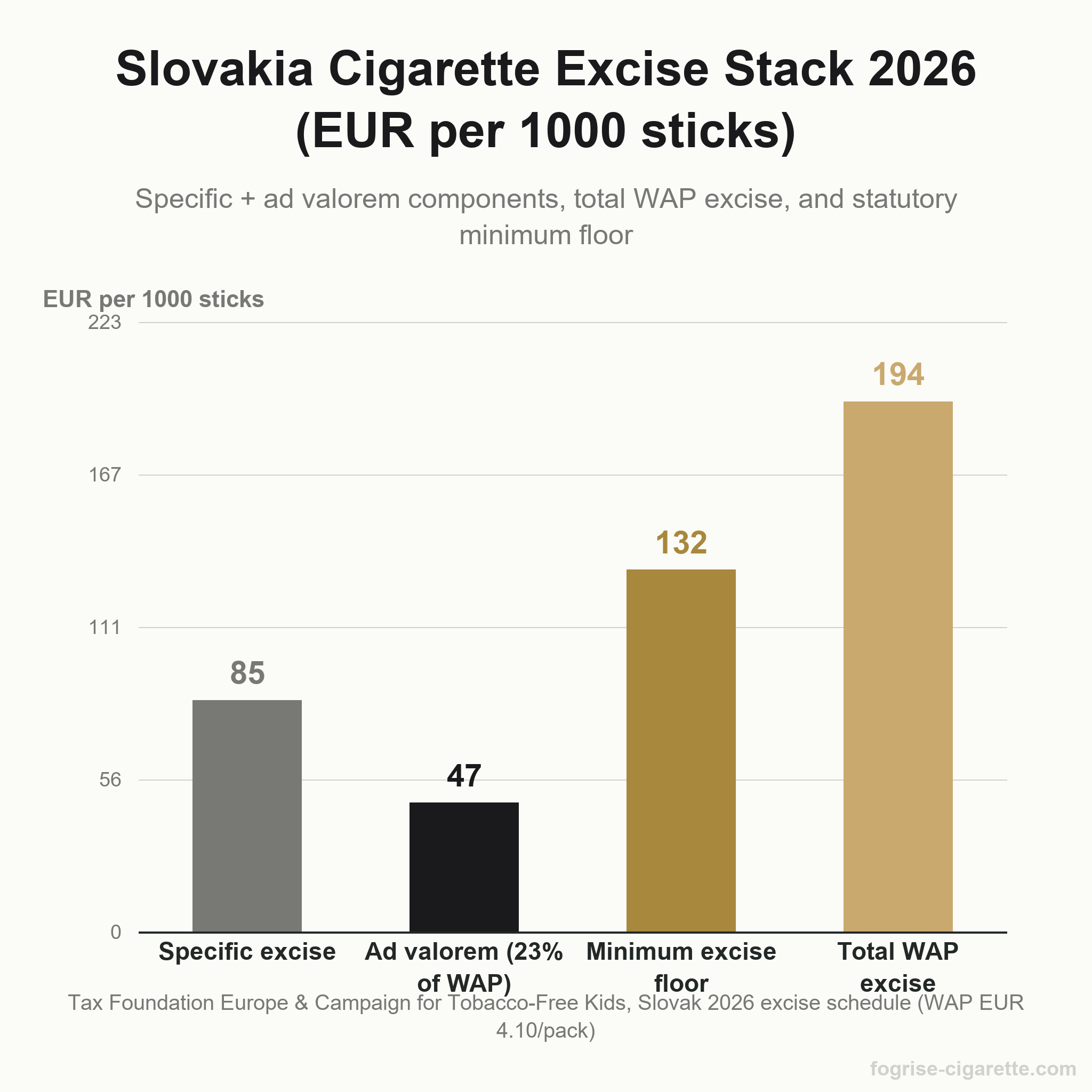
Slovakia layers four charges on every legally sold pack (Tax Foundation, 2026; Campaign for Tobacco-Free Kids, 2023; Ernst & Young, 2025; Tobacco Atlas, 2024). The specific excise sits at EUR 84.60 per 1,000 cigarettes. On top, an ad valorem excise of 23% of the retail sale price scales with the brand’s positioning. A minimum excise floor of EUR 132.10 per 1,000 sticks catches discount brands so they cannot undercut the system. Then VAT, raised to 23% from 1 January 2025 under Act 278/2024, applies on top. Slovakia’s weighted average price sits around EUR 4.10 per pack, with the total tax burden at roughly 78.81% of that WAP.
| Excise Component | Rate |
|---|---|
| Specific excise | EUR 84.6 per 1,000 sticks |
| Ad valorem excise | 23% of retail sale price |
| Minimum excise | EUR 132.10 per 1,000 sticks |
| VAT | 23% (from 1 Jan 2025) |
| Total tax burden | ~78.81% of WAP |
The Tobacco Atlas estimates that a Slovak smoker buying 100 packs per year spends roughly 2.2% of GDP per capita on cigarettes (Tobacco Atlas, 2024). In a country where the median wage stretches further than in Western Europe but tobacco is taxed at near-parity, the burden bites harder than in higher-income markets like the United Kingdom. Standard international brands like Marlboro typically retail in the EUR 4.00 to 4.50 range, and that ceiling sets buyer expectations across the whole market.
What It Means for Chinese Brand Pricing
Now imagine a pack of authentic Chunghwa landing in Bratislava through proper channels. It must clear EU import customs, sit in a Slovak-licensed excise warehouse, carry a compliant fiscal stamp, and absorb the same 78.81% tax wedge as any domestic brand. Add the scarcity markup, importer margin, and the genuine cost of Shanghai Tobacco Group’s high-grade Yunnan leaf, and authentic Chunghwa in Slovakia realistically prices at EUR 10 to EUR 20 or more per pack. We have not seen credible legal retail listings below that band.
That gap, between EUR 4.10 for a domestic brand and EUR 15 for a properly imported Chinese one, is exactly the wedge counterfeiters target. A fake Chunghwa pack offered at EUR 6 to EUR 8 looks like a deal next to a genuine import but a luxury splurge next to a Marlboro. The pricing psychology works on both sides, which is why Central European seizure data keeps showing Chinese brand counterfeits, with similar patterns documented across higher-tax EU markets.
One point we want to be straightforward about. Higher price does not mean lower harm. A EUR 20 authentic Chunghwa pack delivers the same combustion chemistry, the same tar, the same nicotine dependence, and the same long-term health risks as a EUR 4 domestic brand. Slovak excise policy is designed to reduce consumption through cost, not to certify any cigarette as safer. The next section looks at the counterfeit problem in detail, because if you are paying EUR 15 for a pack, you deserve to know what you are actually holding.
Counterfeit Chinese Cigarettes in Slovakia: Spotting Fakes
Counterfeit Chinese cigarettes are not a rumour in Slovakia. They are a documented enforcement problem, and Chunghwa is the brand counterfeiters reach for first. If you are buying high-end Chinese tobacco in Central Europe, you are working in a market where the fakes are common, the packaging is convincing, and the contents can be genuinely dangerous in ways that go beyond ordinary smoking risk.
Scale of the Problem in Slovakia
The KPMG 2025 SUN report on illicit cigarette consumption recorded Slovakia’s illicit volume share rising by 0.6 percentage points year over year, with Slovak authorities reporting major raids that seized 81 million and 24.1 million sticks at separate factory busts in 2025 alone (KPMG, 2025). Chunghwa is consistently flagged across Central European enforcement reports as the most counterfeited Chinese brand reaching the region, ahead of other Shanghai Tobacco Group SKUs. The reasons are commercial. Chunghwa carries the highest legitimate price ceiling, the strongest brand recognition among Chinese diaspora and curious Slovak buyers, and the largest gap between counterfeit cost and street selling price.
The contents matter more than the wrapper. Counterfeit cigarette fillers, when laboratory-tested by EU customs authorities, have shown unknown chemical residues, elevated heavy metal levels, undeclared additives, and even non-tobacco plant material (KPMG, 2025). You are not getting a slightly worse version of the real product. You are getting an unknown product in a familiar pack.
Authentication Checklist for Chunghwa Packs
If you are inspecting a pack and want a quick legitimacy call, work through these checks in order. None alone is conclusive. Together they catch most fakes.
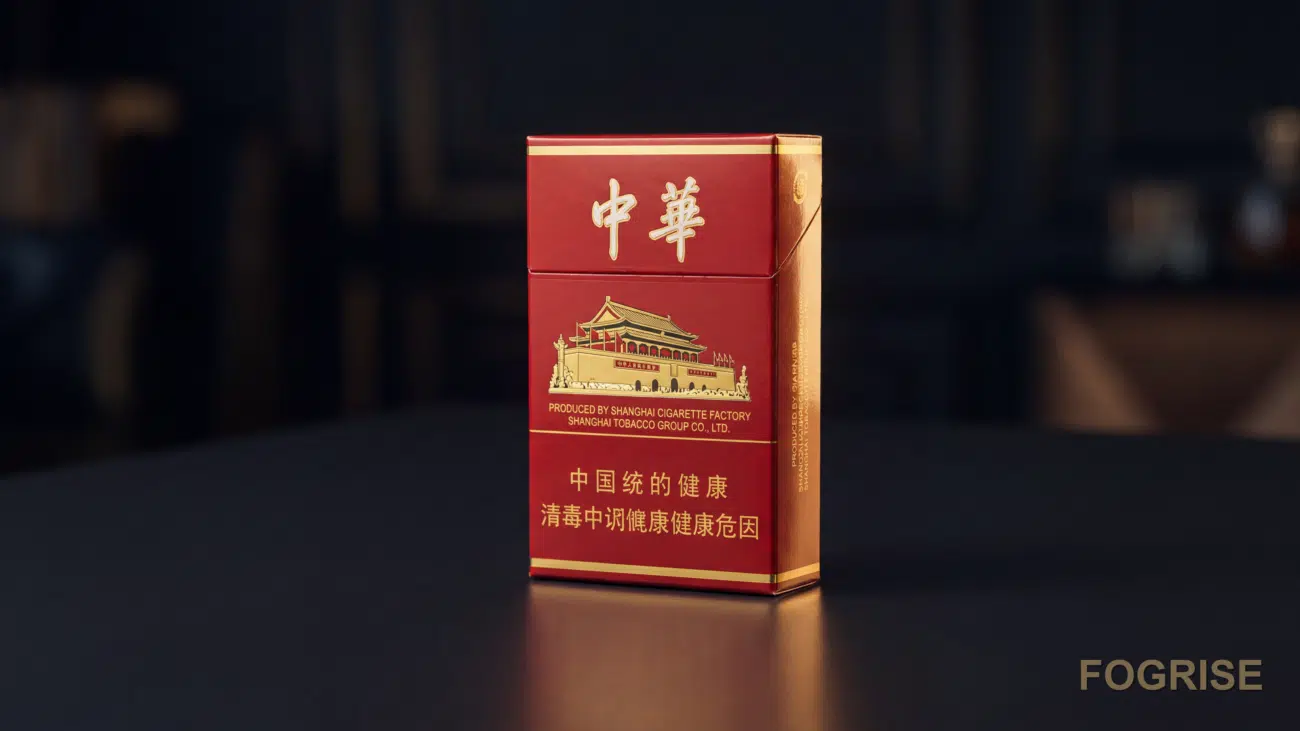
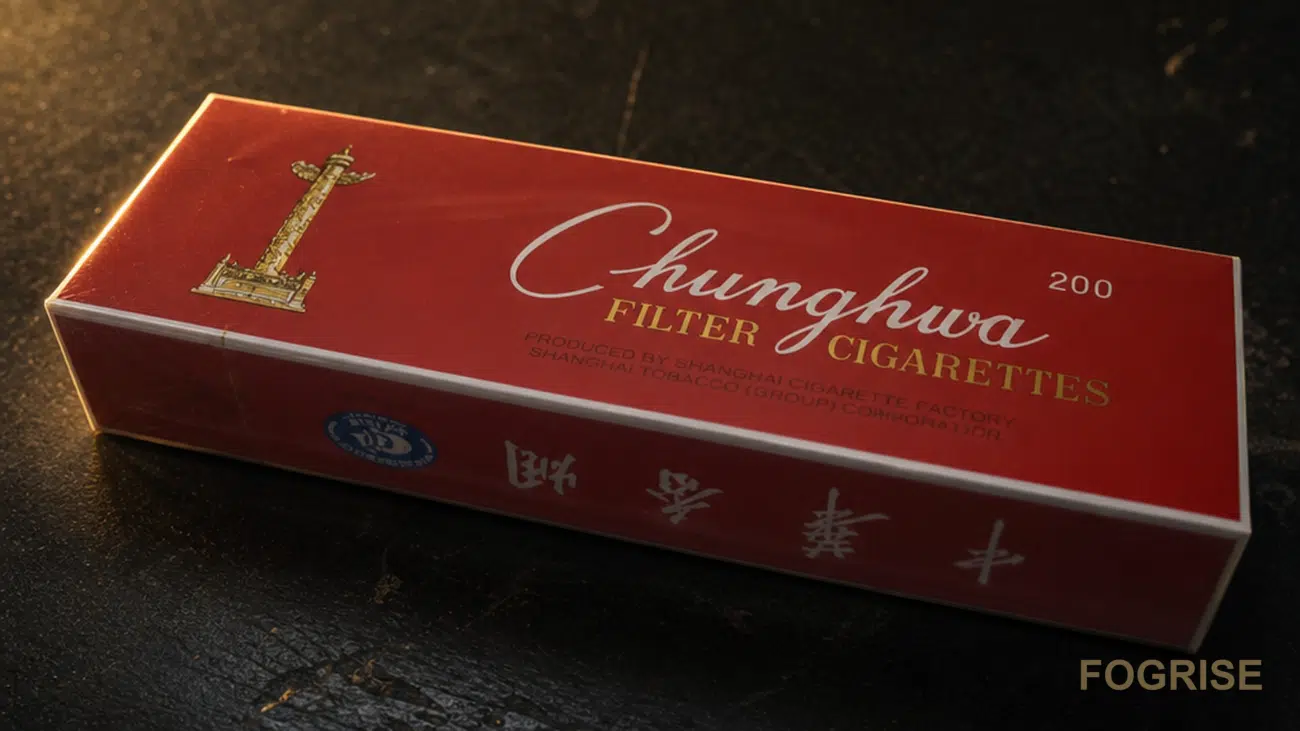
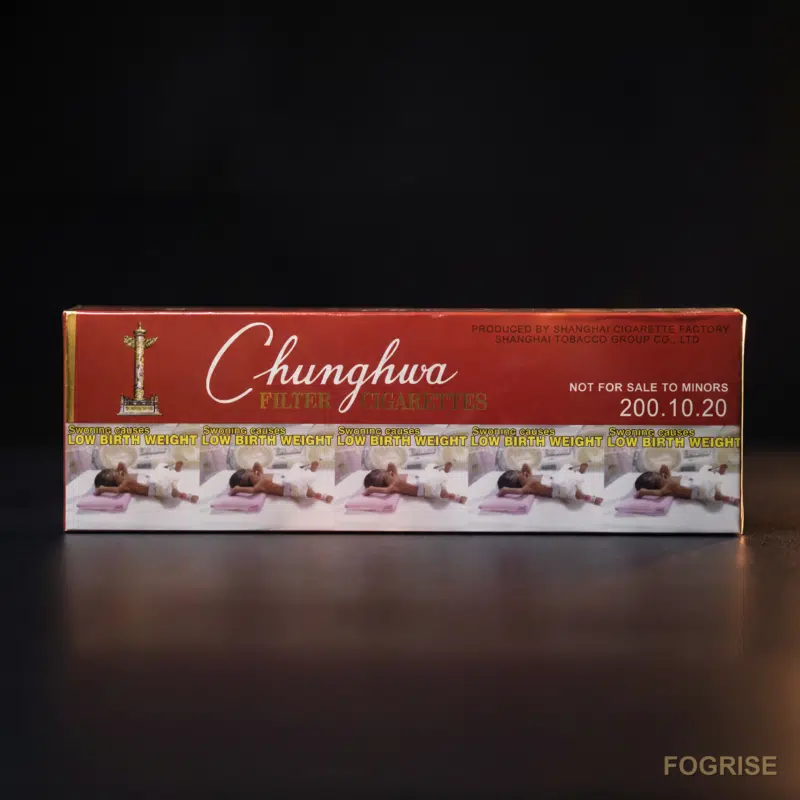
Start with the hologram sticker: a genuine pack carries a multi-axis holographic stamp on the cellophane that shifts pattern as you tilt it. Static or flat holograms are a red flag. Next, look at print quality. The 中华 characters should be sharp, with no colour bleed, ghosting, or pixelation. Counterfeit print runs often show fuzzy edges under a phone macro lens.
Check the cellophane wrap. It should be tight and factory-tensioned, with a functional pull-strip. Loose or hand-applied film fails this test. Then confirm the Slovak or EU fiscal stamp. Packs sold legally in Slovakia must carry a compliant excise stamp; no stamp, wrong stamp, or a stamp from another EU country on a pack sold in a Slovak shop is a problem.
Two final checks. The pack weight: genuine Chunghwa feels denser than a typical EU pack of 20, so a noticeably light pack suggests under-filled tobacco. And the smell: open and sniff. Authentic Chinese cure is aromatic, slightly sweet, distinct. Acrid, chemical, or musty notes mean the filler is not what the box claims.
What to Do If You Suspect a Fake
Stop using the pack. Counterfeit cigarettes are a real safety concern on top of the well-documented harms of any tobacco product, because the chemistry is unknown and unregulated. If you bought from a Slovak retailer and the pack fails multiple checks above, you can report to Slovak Customs (Finančná správa) or to the Slovak Trade Inspection (SOI). Keep the pack and the receipt. If you bought online from a non-EU seller, treat the loss as the cost of a lesson. Distance sales of tobacco to Slovak consumers are not legal under TPD Article 18, and there is no consumer protection route to pursue.
We say this plainly. The most reliable way to avoid counterfeit Chinese cigarettes in Slovakia is to recognise that the supply chain for authentic Chunghwa at retail price is extremely thin, and to factor that into any purchase decision before money changes hands.
Import Rules & Customs Allowances for Bringing Cigarettes into Slovakia
Bringing cigarettes into Slovakia, including Chinese brands, is governed by EU customs law plus Slovak national rules. The allowances are not generous, the enforcement is real, and the consequences of getting it wrong scale quickly. This section summarises the framework. It is not legal advice. For any binding answer on your specific situation, the authoritative source is Slovak Customs (Finančná správa) at financnasprava.sk.
Personal Allowances: EU vs Non-EU Travel
Where you are travelling from matters more than what brand you carry. Travelling within the EU, from another member state into Slovakia, the personal-use allowance is up to 800 cigarettes per adult, on the explicit condition that the tobacco is for your own consumption and not for resale (SAIA, 2024; European Commission, 2025; Finančná správa, 2024). Crossing into Slovakia from a non-EU country, including via Bratislava M. R. Štefánik Airport on a flight from outside the bloc, the duty-free allowance drops sharply to 200 cigarettes per adult (SAIA, 2024; European Commission, 2025; Finančná správa, 2024). The legal minimum age for tobacco purchase and possession in Slovakia is 17. xiangyandd applies a stricter 21+ policy across our entire site as a harm-reduction default, regardless of local minimums.
Carrying Chinese-brand cigarettes specifically does not change the numerical allowance, but it does increase customs scrutiny. Officers know that Chunghwa and Furongwang are high-counterfeit-risk brands, and a quantity at the personal-use ceiling will draw more questions than a single carton of a familiar EU brand.
Commercial Import & Slovak Licence Requirements
Any import above personal-use levels, or any tobacco brought in with the intention to sell, gift commercially, or distribute, crosses from personal allowance into commercial import. Slovakia requires a licensed excise warehouse operator, a registered customs broker, full payment of specific excise, ad valorem excise, the EUR 132.10 minimum, and VAT, plus compliant Slovak fiscal stamping before the goods can be legally moved to retail (SAIA, 2024; European Commission, 2025; Finančná správa, 2024). The licensing process runs through Finančná správa and is not realistic for an individual to navigate without professional support. There is no shortcut. There is no light-touch path for small importers.
TPD Article 18 also closes a route that some buyers ask about. Cross-border distance sales of tobacco products to Slovak consumers are prohibited (SAIA, 2024; European Commission, 2025; Finančná správa, 2024). A Chinese-based or third-country online seller shipping cigarettes directly to a Slovak address is operating outside the law, and the parcel is at risk of customs seizure regardless of declared value or product description.
Exceeding the Allowance: Consequences
What happens if you overshoot? At minimum, customs will confiscate the excess and assess the duty and VAT you owe on it. Beyond that, fines apply, scaling with quantity and intent. Commercial-quantity violations can escalate to criminal proceedings under Slovak tax law. Repeated breaches, or quantities that suggest distribution intent, are taken seriously.
The practical reading. If you are a Slovak resident considering personal use, stay clearly inside the 800-stick intra-EU or 200-stick non-EU ceiling, keep receipts, and be ready to demonstrate personal use. If your situation looks anything like commercial, do not improvise. Contact Finančná správa directly through financnasprava.sk before goods move, because retroactive compliance is not a category Slovak customs recognises.
And the underlying point this whole article keeps coming back to. Legal access to Chinese cigarettes in Slovakia is narrow, expensive, and bureaucratic by design. That design exists because tobacco causes serious, well-documented harm regardless of brand or origin. We would rather you have the full picture than only the easy half of it.
Frequently Asked Questions
Are Chinese cigarettes legal to buy in Slovakia?
Yes, in limited settings. Legal channels include airport duty-free at BTS Bratislava, specialist tobacconists, Asian-goods stores, and personal cross-border import within EU allowances (800 sticks intra-EU, 200 non-EU). Domestic online sale is banned under Slovak Act 89/2016 (European Commission, 2023, 2025; SAIA, 2024). Any website offering online cigarette delivery to Slovak addresses is operating outside the law. Adults 21+ only; verify local regulations.
Where can I buy Chinese cigarettes in Bratislava?
The most practical options are BTS Bratislava M. R. Štefánik Airport duty-free, specialist tobacconists near Šafárikovo námestie, and Chinese-goods stores in the Petržalka district and Nitra (European Commission, 2023, 2025; SAIA, 2024). Red Golden Dragon (RGD), the one CNTC brand with documented Slovak distribution, may be found in select Central European Asian-goods stores. Availability is inconsistent; call ahead before making a trip.
How many Chinese cigarettes can I bring into Slovakia from outside the EU?
Travellers arriving from a non-EU country may bring 200 cigarettes duty-free for personal use, aligned with EU customs rules (European Commission, 2023, 2025; SAIA, 2024). Travellers arriving from another EU Member State may bring up to 800 cigarettes for personal use, not for resale. Exceeding these limits may result in confiscation, duty assessment, and fines. Verify current limits with Slovak Customs (financnasprava.sk).
Which Chinese cigarette brand is available in Slovakia?
Red Golden Dragon (RGD), produced by a CNTC-affiliated subsidiary, is the one Chinese brand with documented distribution across Czech Republic, Hungary, Poland and Slovakia according to CNTC’s own Global Expansion report (European Commission, 2023, 2025; SAIA, 2024). State-gift brands such as Chunghwa (中华) and Panda (熊猫) are not stocked locally and must be sourced through personal import within legal allowances or airport duty-free.
How much do Chinese cigarettes cost in Slovakia?
Local mainstream packs (Marlboro, Philip Morris) retail around EUR 4.00 to 4.50 per 20 sticks in 2026. Authentic Chunghwa imported through legal channels typically costs EUR 10 to 20+ per pack, reflecting import costs, scarcity, and Slovakia’s 78.81% total tax burden (European Commission, 2023, 2025; SAIA, 2024). A higher price does not make any cigarette less harmful. All tobacco is harmful.
Is online cigarette sale legal in Slovakia?
No. Slovak Act 89/2016, which transposes EU Tobacco Products Directive Article 18, prohibits the distance (online) sale of cigarettes and other tobacco products to consumers in Slovakia (European Commission, 2023, 2025; SAIA, 2024). Cross-border online orders from foreign websites are equally banned. Websites claiming to ship cigarettes to Slovak addresses are operating illegally. For verified adult-oriented sourcing, visit fogrise-cigarette.com/shop/.
Conclusion
Slovakia offers limited but real legal pathways to Chinese cigarettes. BTS Bratislava duty-free, specialist tobacconists near Šafárikovo námestie, and Asian-goods stores in Petržalka and Nitra are the practical brick-and-mortar options. Personal cross-border import within the EU’s 800-stick intra-EU allowance, or 200 sticks from a non-EU origin, covers the rest (Tax Foundation, 2026; World Health Organization, 2023). Domestic online sale to Slovak addresses remains banned under Act 89/2016.
On the brand question, the picture is narrower than buyers often expect. Red Golden Dragon (RGD) is the one Chinese brand with documented Slovak distribution, per CNTC’s own Global Expansion reporting. State-gift brands such as Chunghwa and Panda are not stocked locally; sourcing them legally means duty-free or personal import. Counterfeit risk is real and rising. KPMG’s 2025 illicit-cigarette study recorded a measurable uptick in non-domestic illicit volume across Central Europe, and unverified online sellers remain the highest-risk channel.
Price-wise, the 2026 excise stack (Slovakia’s 78.81% total tax burden on the weighted average price) keeps all cigarettes expensive, whether local Marlboro at roughly EUR 4.00 to 4.50 or imported Chunghwa at EUR 10 to 20+ per pack (Tax Foundation, 2026; World Health Organization, 2023). A higher price does not make any cigarette safer.
Readers comparing markets may also find our country guides for the United States, Canada, and Singapore useful for context on how different regulatory regimes shape Chinese-brand availability for diaspora and enthusiast buyers.
For verified adult-oriented sourcing and questions about Central European availability, visit fogrise-cigarette.com/shop/ or contact our team.
Smoking is harmful and addictive, and quitting at any age reduces risk. For cessation support, the Slovak Ministry of Health and the World Health Organization publish free, evidence-based resources.
References
- Tax Foundation. (2026). Cigarette taxes in Europe. Tax Foundation. https://taxfoundation.org/data/all/eu/cigarette-taxes-europe
- Campaign for Tobacco-Free Kids. (2023). Slovakia tobacco tax data. Tobacconomics / Campaign for Tobacco-Free Kids. https://www.tobaccofreekids.org/what-we-do/global/taxation-price/tax-gap-slovakia
- European Commission, Directorate-General for Health and Food Safety. (2023). Health warnings on tobacco products. European Commission. https://health.ec.europa.eu/tobacco/product-regulation/health-warnings_en
- SAIA (Research in Slovakia). (2024). Import of goods, customs allowances. Slovak Academic Information Agency. https://www.researchinslovakia.saia.sk/en/main/welcome/import-of-goods
- Ernst & Young. (2025, January 9). Slovakia increases VAT rate. EY Global Tax Alerts. https://www.ey.com/en_gl/technical/tax-alerts/slovakia-increases-vat-rate
- KPMG. (2025). Illicit cigarette consumption in Europe: 2024 results [PDF]. KPMG / Philip Morris International. https://www.pmi.com/content/dam/pmicom/global/docs/itp/kpmg-illicit-cigarette-consumption-europe-2025-results.pdf
- Tobacco Atlas. (2024). Slovakia tobacco data factsheet. Vital Strategies & Tobacconomics. https://tobaccoatlas.org/factsheets/slovakia
- World Health Organization. (2023). Tobacco [Fact sheet]. World Health Organization. https://www.who.int/news-room/fact-sheets/detail/tobacco
- European Commission. (2025, July 22). Consumer goods you can carry in your suitcase. European Commission News. https://commission.europa.eu/news-and-media/news/consumer-goods-you-can-carry-your-suitcase-2025-07-22_en
- Slovak Republic Financial Administration. (2024). Act 278/2024: VAT amendment and 2025 tax measures. Finančná správa Slovenskej republiky. https://www.financnasprava.sk/en/homepage
Last reviewed and updated: June 2026. Author: xiangyandd editorial team. For tailored guidance, contact our team.




 English (US)
 简体中文
 Deutsch
 Français
 Español