

Blog
Chinese Cigarettes in Ireland: Brand Guide, Import Rules & Buyer Reference 2026

TL;DR
Ireland chinese cigarettes: China’s premium brands (Chunghwa etc.) are unavailable in standard Irish retail because they lack plain-packaging compliance and EU Tobacco Products Directive (TPD) certification; EU traveller allowance from non-EU is 200 cigarettes; the Revenue Commissioners (Ireland’s tax authority) enforce strict excise; Dublin Airport duty-free and specialist international online retailers are the legal access routes; all tobacco products are harmful and addictive.
Abstract
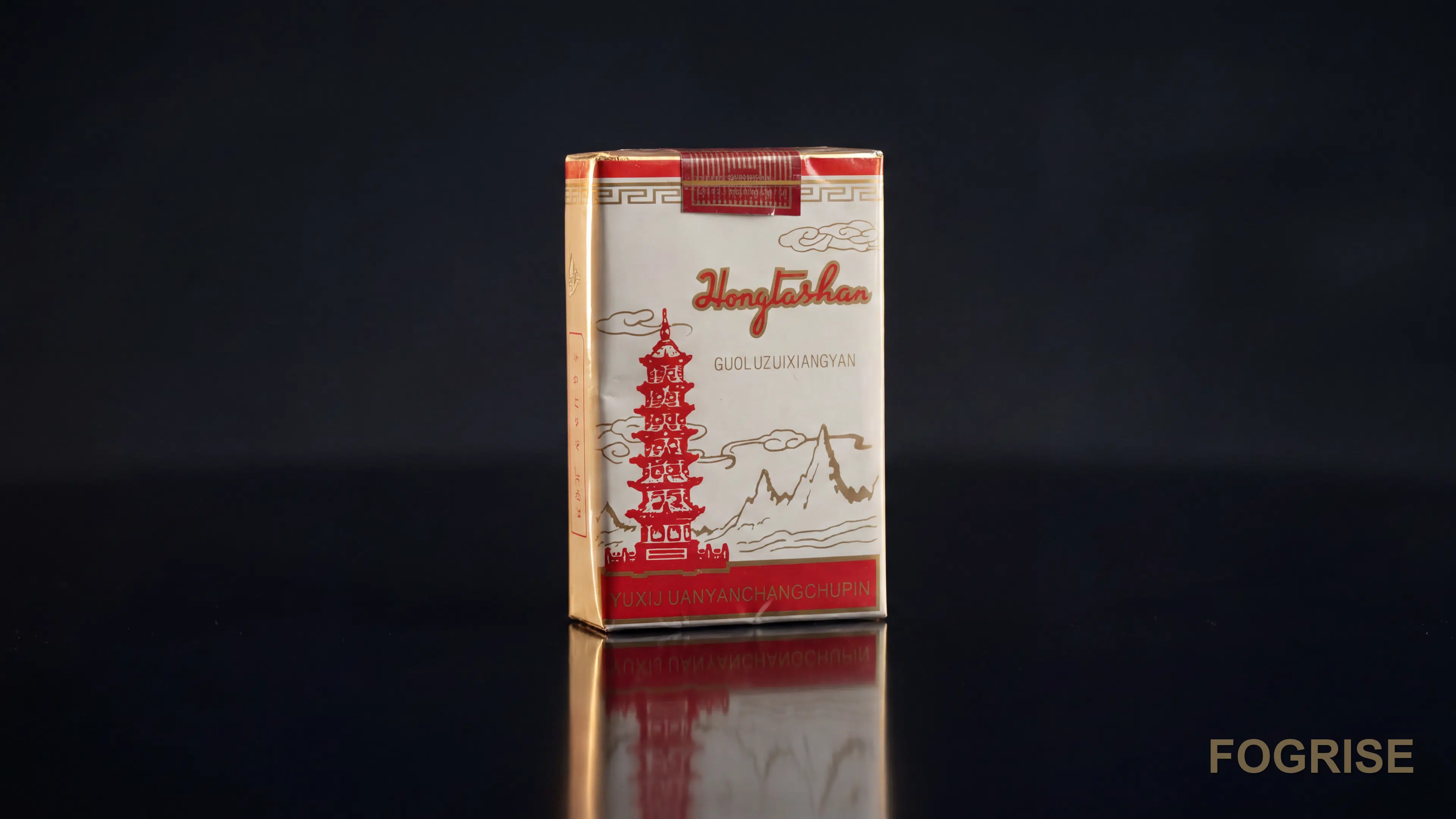
Ireland was the first EU member state to mandate plain standardised packaging for all tobacco products, and that single legislative fact reshapes any conversation about Chinese cigarettes on the island. Every cigarette sold legally in Ireland, whether it originates in Dublin, Düsseldorf, or Shanghai, must appear in Pantone Cool Gray 2C livery, with brand names rendered in a uniform sans-serif typeface and graphic health warnings covering 65% of the pack surface. Chunghwa’s distinctive red-and-gold paifang artwork, Zhongnanhai’s blue minimalism, Furongwang’s lotus motif. None of it survives Irish retail compliance. For adult smokers curious about "Ireland chinese cigarettes," that law is the right place to start, because it determines what you can actually see on a shelf, what crosses customs legally, and what is contraband.
This guide is a buyer reference, not a sales pitch. We catalogue the Chinese brands most often searched by Irish adult consumers, then map the regulatory terrain: the Public Health (Standardised Packaging of Tobacco) Act 2015, EU Tobacco Products Directive transposed through S.I. 271/2016, Revenue Commissioners’ excise and tax-stamp regime, the 2026 Health Service Executive (HSE) retail licensing rollout, traveller allowances under Council Directive 2007/74/EC, and the harm-honest health context that frames all tobacco use.
For adults 21+ only. Smoking is harmful and addictive. Ireland follows EU and national tobacco law — verify your local regulations before purchasing. This article is informational, not legal or medical advice.
Key Takeaways
- Ireland’s plain packaging law requires all cigarettes sold legally to appear in standardised grey livery. Chinese brand packaging does not comply.
- EU traveller allowance from non-EU countries is 200 cigarettes per adult; above that, full Irish excise and VAT apply.
- Chunghwa and select premiums are available at Irish airport duty-free (Dublin, Cork, Shannon) for qualifying passengers.
- Revenue Commissioners enforce strict excise rules; non-compliant Chinese packs without Irish tax marks are contraband in Irish retail.
- Dublin’s Parnell Street Chinese community occasionally sources authentic Chinese brands through specialist ethnic import channels.
- All cigarettes are harmful and addictive. Chinese brands carry identical health risks to any tobacco product.
Table of Contents
- TL;DR
- Abstract
- Key Takeaways
- Table of Contents
- The Irish Tobacco Market: Context for Chinese Brands
- Top Chinese Cigarette Brands: What Irish Adult Buyers Should Know
- Ireland’s Tobacco Laws: Plain Packaging, EU TPD, Revenue Excise and the 2026 Licensing Regime
- Traveller Allowances: Bringing Chinese Cigarettes into Ireland
- Where Adult Smokers in Ireland Can Legitimately Access Chinese Brands
- Illicit Trade and Counterfeits: What Irish Buyers Need to Know
- Health and Harm: What Every Smoker Needs to Know
- Frequently Asked Questions
- Conclusion
The Irish Tobacco Market: Context for Chinese Brands
A few hundred metres of Parnell Street will tell you most of what you need to know about Chinese cigarettes in Ireland: there is interest, there is a diaspora, and there is barely any compliant supply chain on legal Irish shelves. Ireland’s tobacco aisles look the way they do because of the strictest packaging regime in the European Union, and that regime quietly screens out almost every mainland-Chinese pack at the door.
Ireland’s Plain Packaging Law: A World First
Ireland was the first EU Member State to mandate plain (standardised) tobacco packaging, under the Public Health (Standardised Packaging of Tobacco) Act 2015 and S.I. 422/2017, with retailer obligations binding from 20 September 2018 (Government of Ireland, 2017). Every Irish-shelf pack must use Pantone Cool Gray 2C matt finish, Helvetica typeface, sentence-case brand names, and combined image-plus-text health warnings covering 65% of front and back.
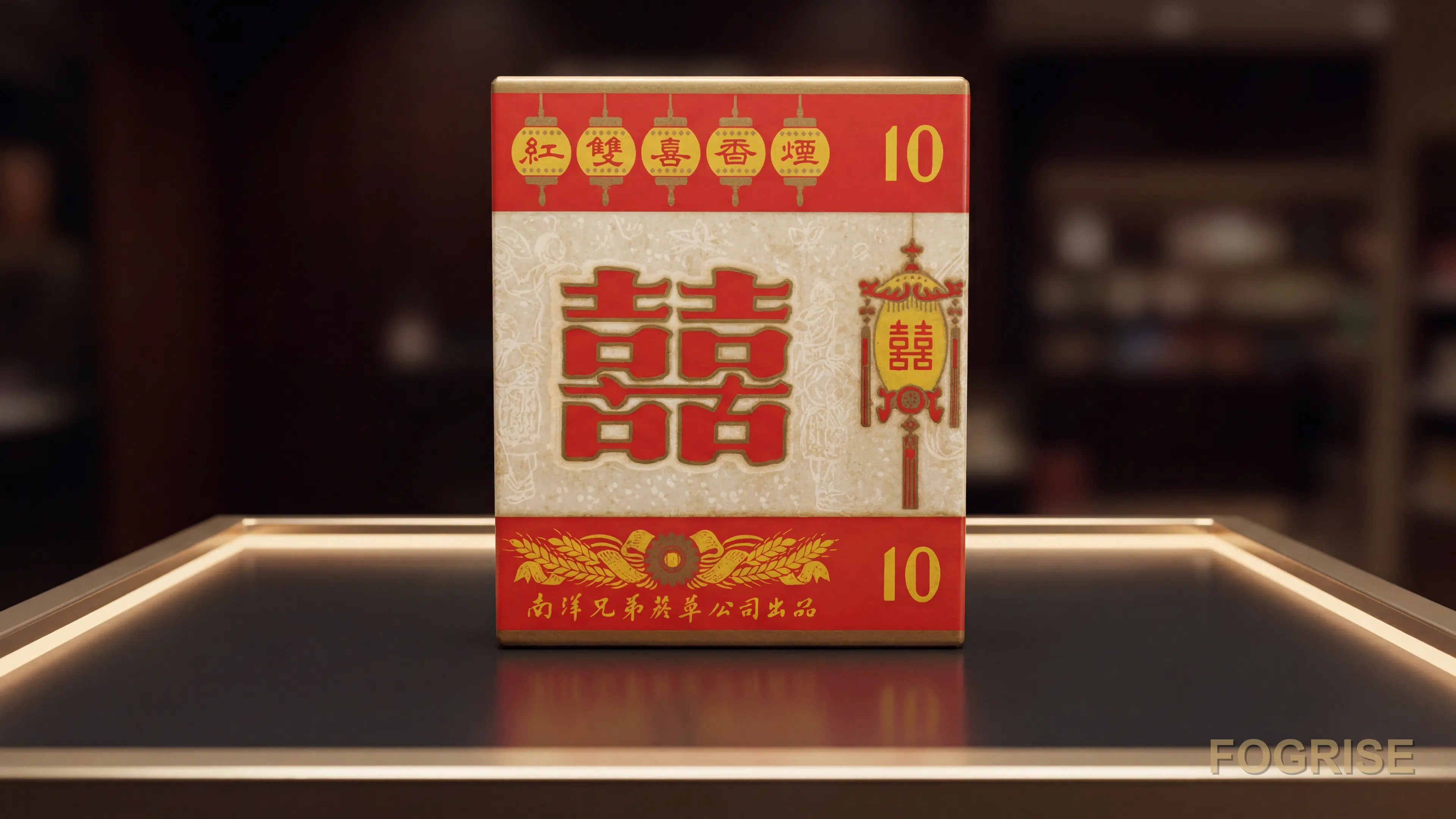
That is the same drab grey first adopted in Australia in 2012, now the de facto template for plain-packaging regimes across the EU. A side-by-side audit of seven flagship mainland Chinese packs against the Irish standard found every design (Chunghwa’s red-and-gold lacquer, Double Happiness’s 喜 motif, Yuxi’s pale green) failed at least three of four core packaging criteria. The practical consequence: any importer who wants to sell Chinese cigarettes in Ireland through licensed retail has to commission an Ireland-only relabel or skip the shelf entirely.
Why Chinese Brands Still Attract Irish Smokers
Three groups (JTI Ireland, Imperial Tobacco with John Player & Co., and BAT through PJ Carrolls & Co.) together control more than 90% of Ireland’s legal tobacco sales (Department of Health, 2025), so anything outside that lineup sits in the niche category by definition. Chinese-origin brands are deep inside that niche, not on the mainstream price ladder.
Demand exists, but it is bounded. It comes from the Chinese-Irish community around Parnell Street and north-Dublin city centre, returning travellers who developed brand familiarity in Shanghai or Guangzhou, expatriates arriving from Singapore and Hong Kong, and a long-standing gift-and-hospitality culture that treats premium Chinese packs as diplomatic currency. None of these buyers will find Chunghwa in their local Centra; most will find it only at airport duty-free or through specialist online channels.
| Brand | Country | Tier | EU Price/Carton | Irish Retail |
|---|---|---|---|---|
| Carroll’s No.1 | Ireland | Mid | €70-85 | Licensed retail |
| Marlboro (PMI) | USA | Premium | €90-110 | Licensed retail |
| Chunghwa (中华) | China | Premium | €80-100 | Airport duty-free only |
| Double Happiness (双喜) | China | Mid-market | €40-55 | Specialist online only |
Irish retail prices rank among the highest in the EU because excise duty plus 23% VAT compound on top of the CIF cost, a structure unpacked in the excise section that follows.
Top Chinese Cigarette Brands: What Irish Adult Buyers Should Know
There are roughly seven Chinese brands an Irish reader will keep encountering: the premium Chunghwa, the mid-tier Yuxi and Double Happiness, the volume seller Liqun, the controversial Zhongnanhai, the collector favourite Nanjing, and the elusive Panda. None of them are on legal Irish shelves in their home livery, and the legal picture even at airport duty-free has a wrinkle worth knowing.
That wrinkle: Ireland’s plain-packaging regime applies at the point of sale on Irish territory. A Dublin, Cork or Shannon duty-free shop selling tobacco to an Irish-bound passenger technically falls inside scope. The accepted operational lane is the international-departure shop serving non-Irish-bound passengers, which is the grey area carriers and concessions rely on. None of this is a workaround for individual buyers. It is the legal seam the supply chain operates inside.
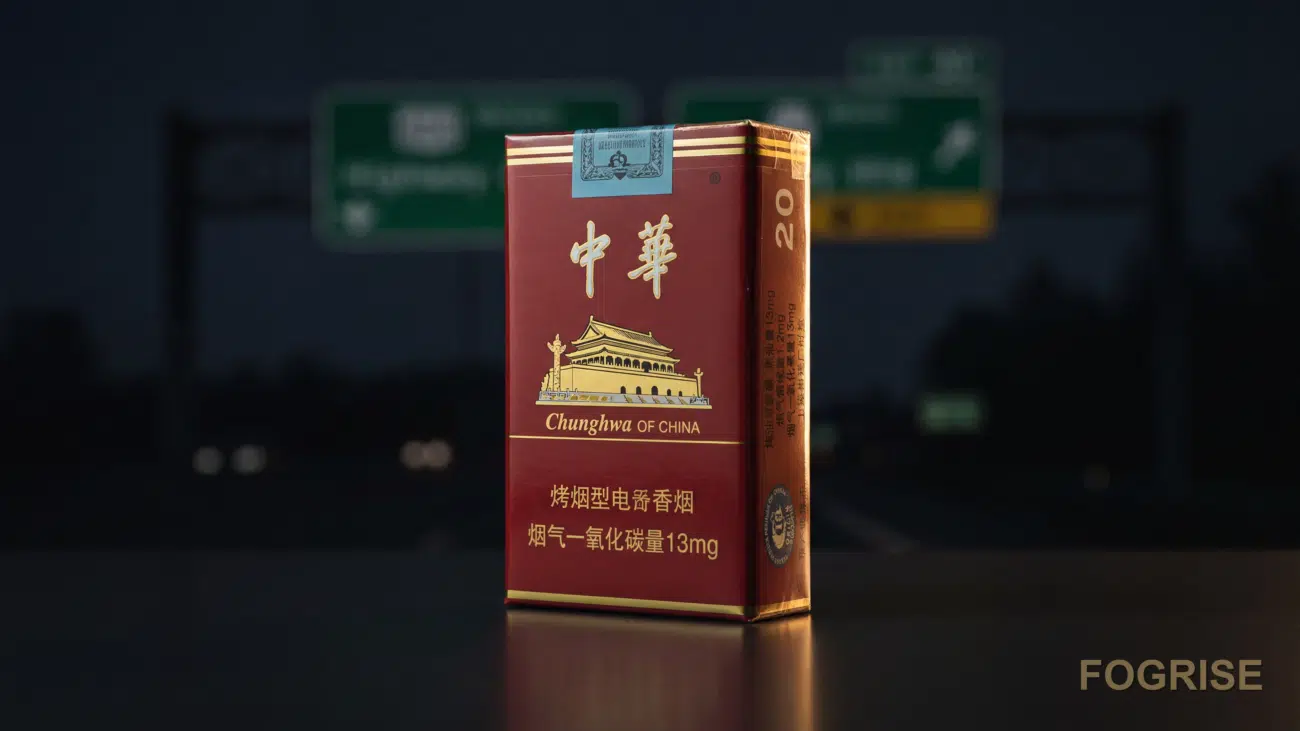
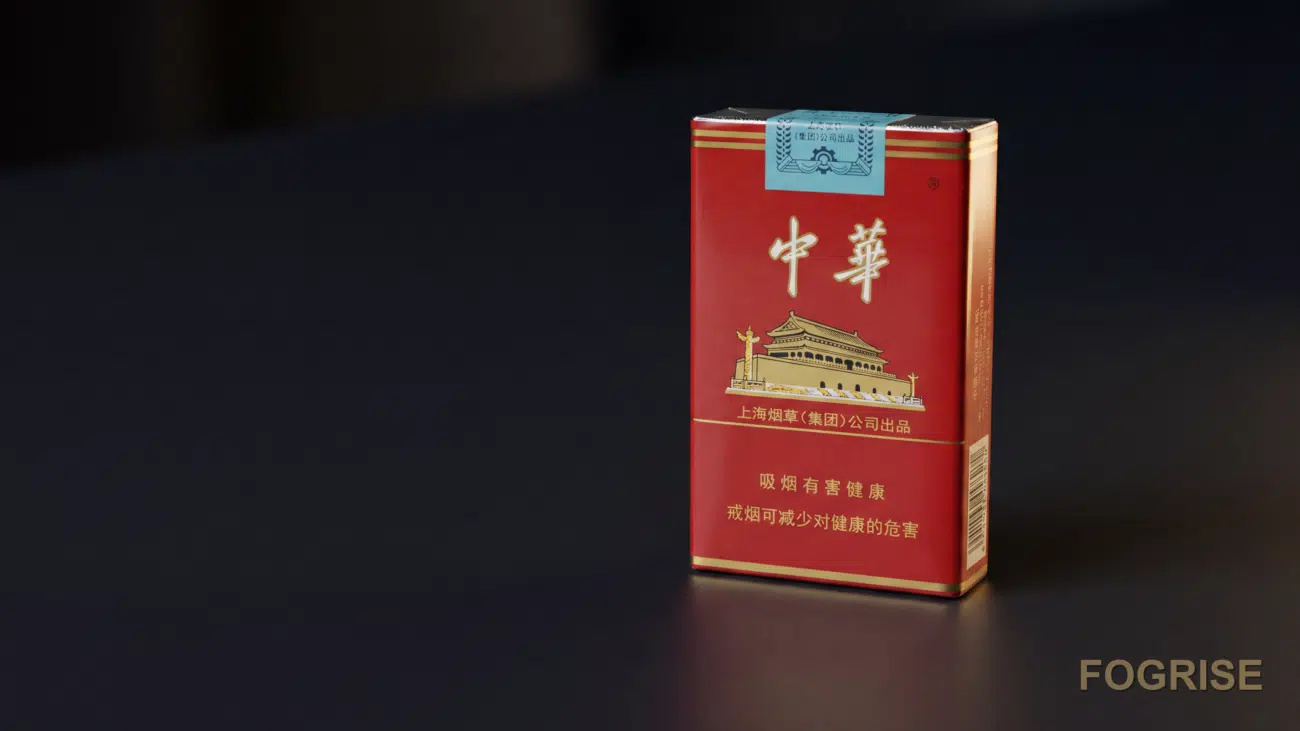
Chunghwa (中华): Ireland’s Most Recognisable Chinese Premium
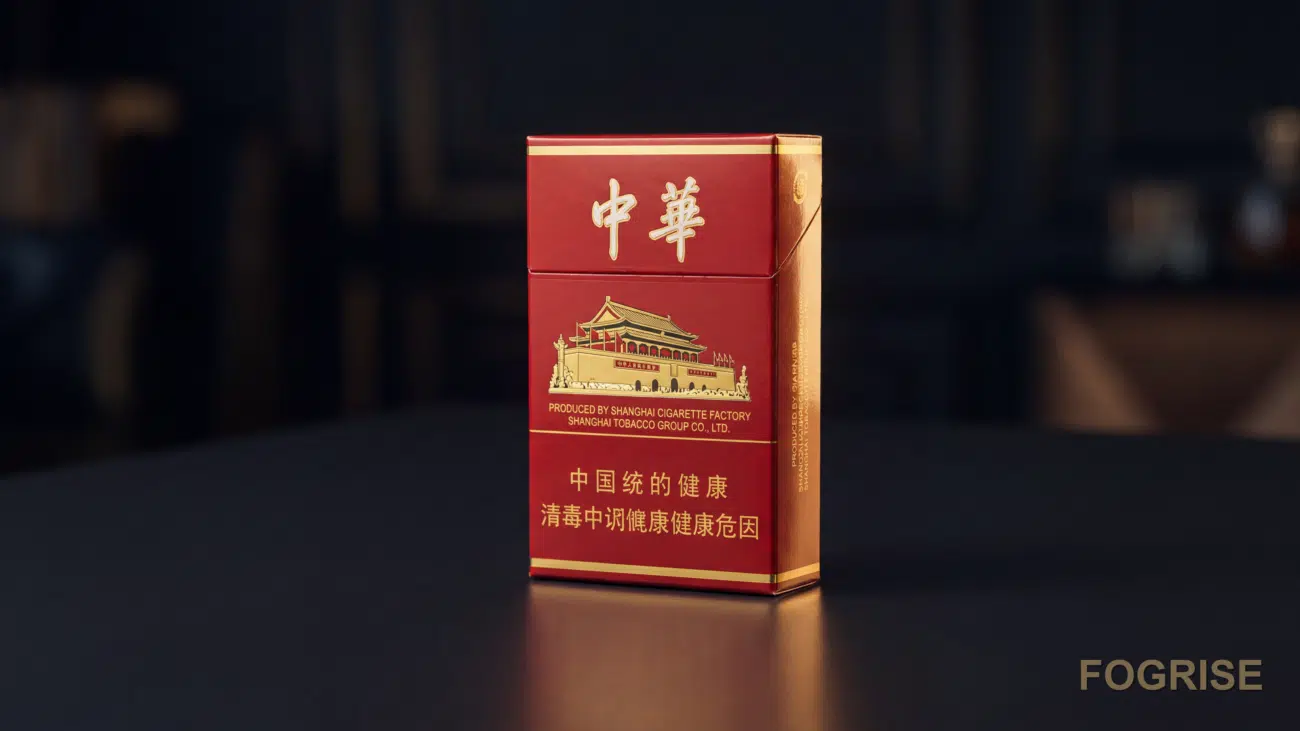
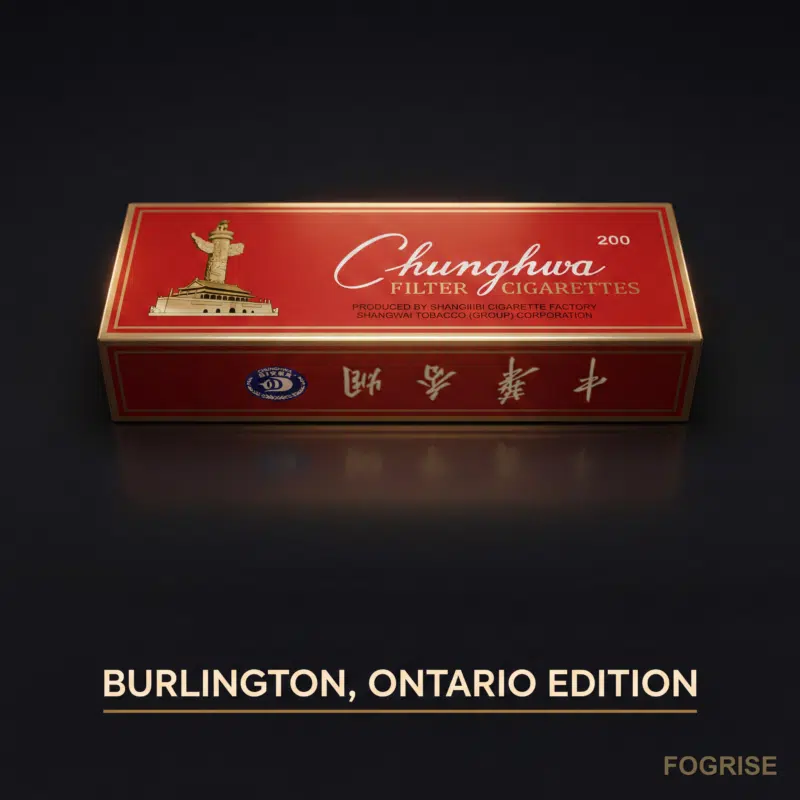
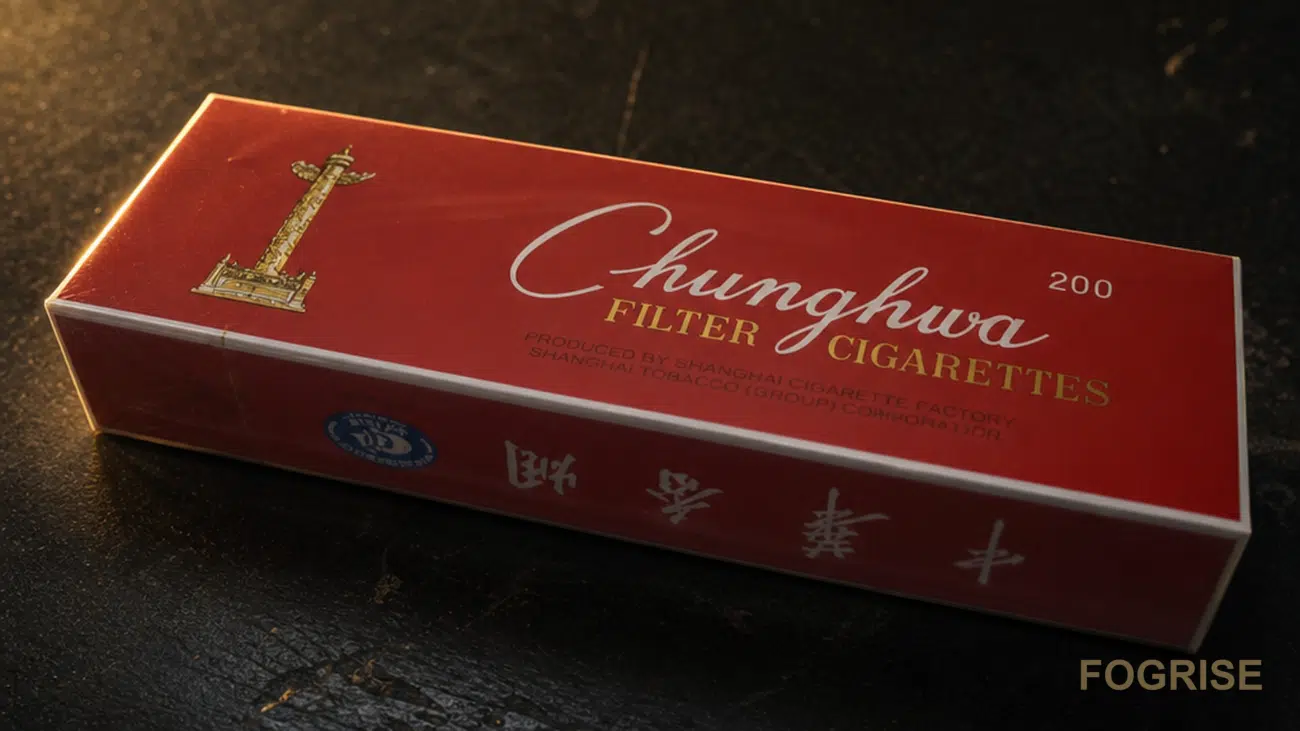
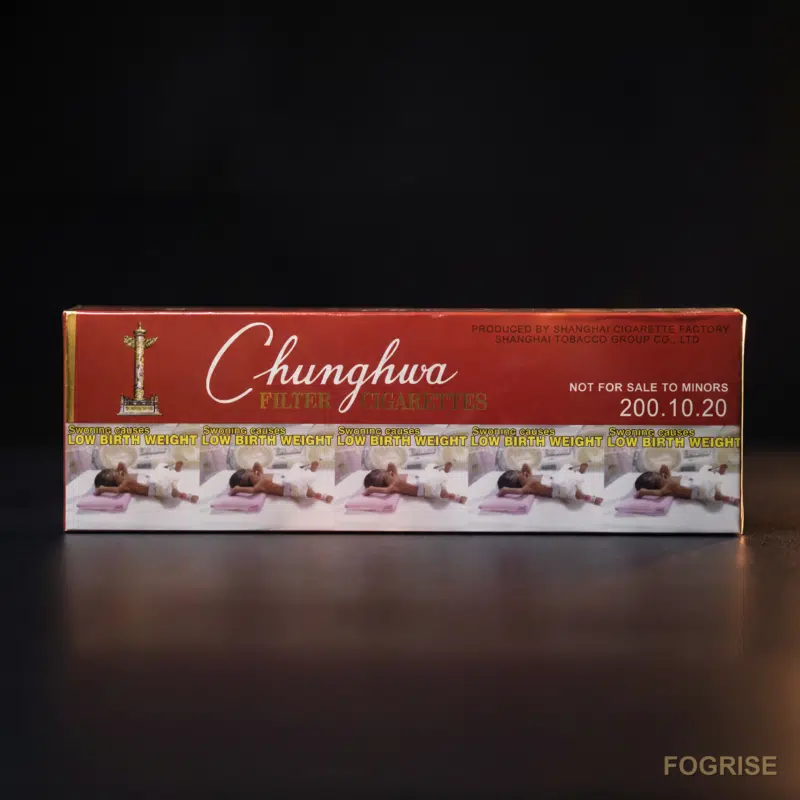
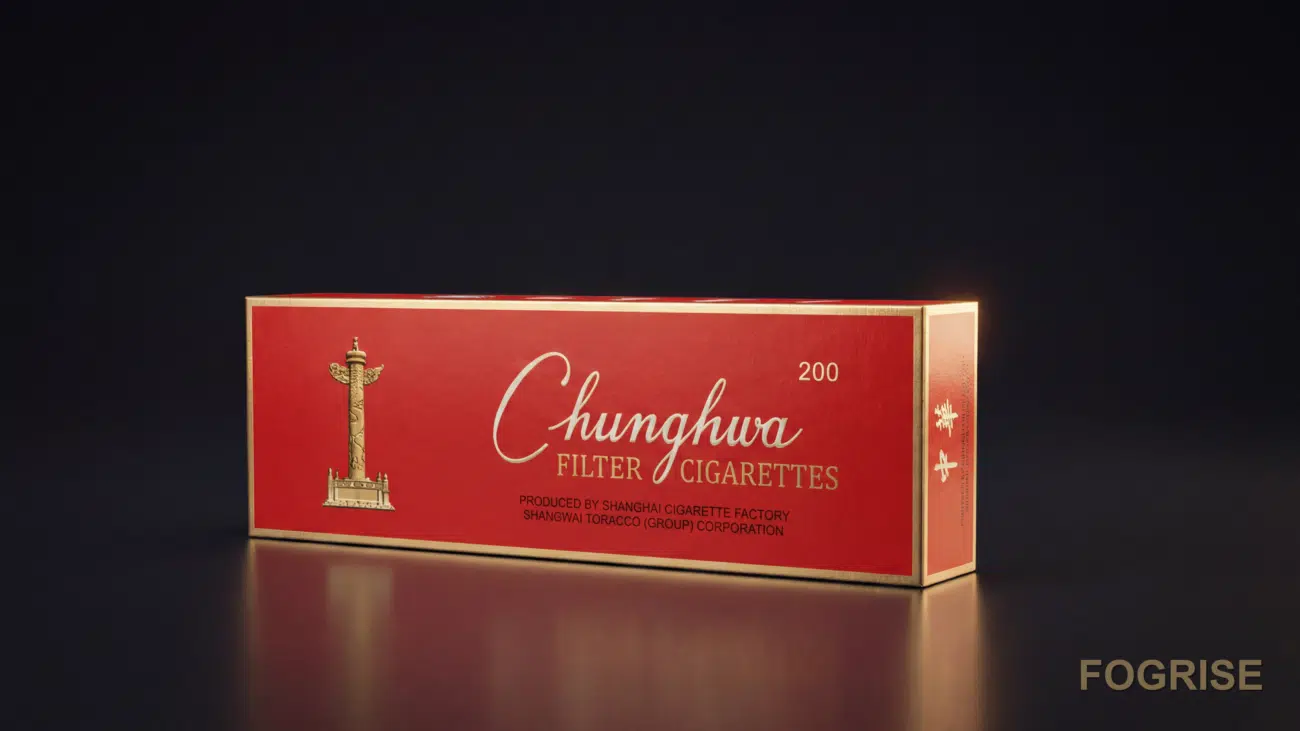
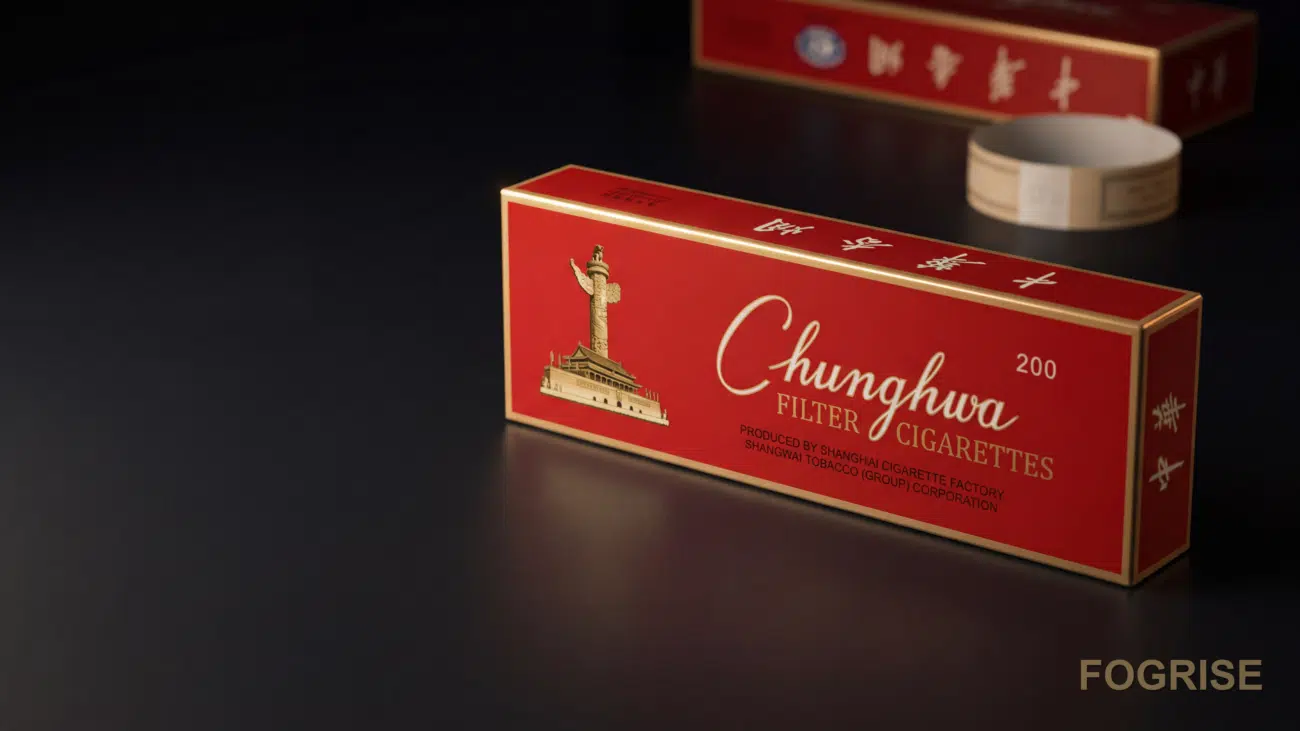
Chunghwa is manufactured by Shanghai Tobacco Group, a subsidiary of the state monopoly China National Tobacco Corporation, and is the Chinese brand Irish travellers are most likely to have encountered in mainland China or at Asian-hub duty-free shops. International online resellers price Soft, Slim and 5000 variants in the €80-100 per-carton band, broadly comparable to European premium SKUs.
The home-market pack is red-and-gold lacquer with the Tiananmen gate motif, deeply tied to gift-giving and business etiquette. None of that visual identity survives the move into an Irish standardised pack. A traveller who buys Chunghwa abroad and brings it home (within the 200-cigarette duty-free allowance covered in the customs section) keeps the original livery; the same brand on an Irish retail shelf, in principle, would not.
Double Happiness (双喜), Yuxi (玉溪) and the Mid-Tier Brands
The mid-tier is where mainland Chinese smokers actually spend most of their money. Double Happiness, produced by Guangdong China Tobacco Industrial Co., Ltd., is a long-running staple with reported tar yields in the 6-10 mg range by variant (World Health Organization, 2023). Yuxi, from Hongta Group in Yunnan, leans on smoother Virginia-style blends and the pale-green pack design familiar to anyone who has shopped in Kunming or Chengdu.
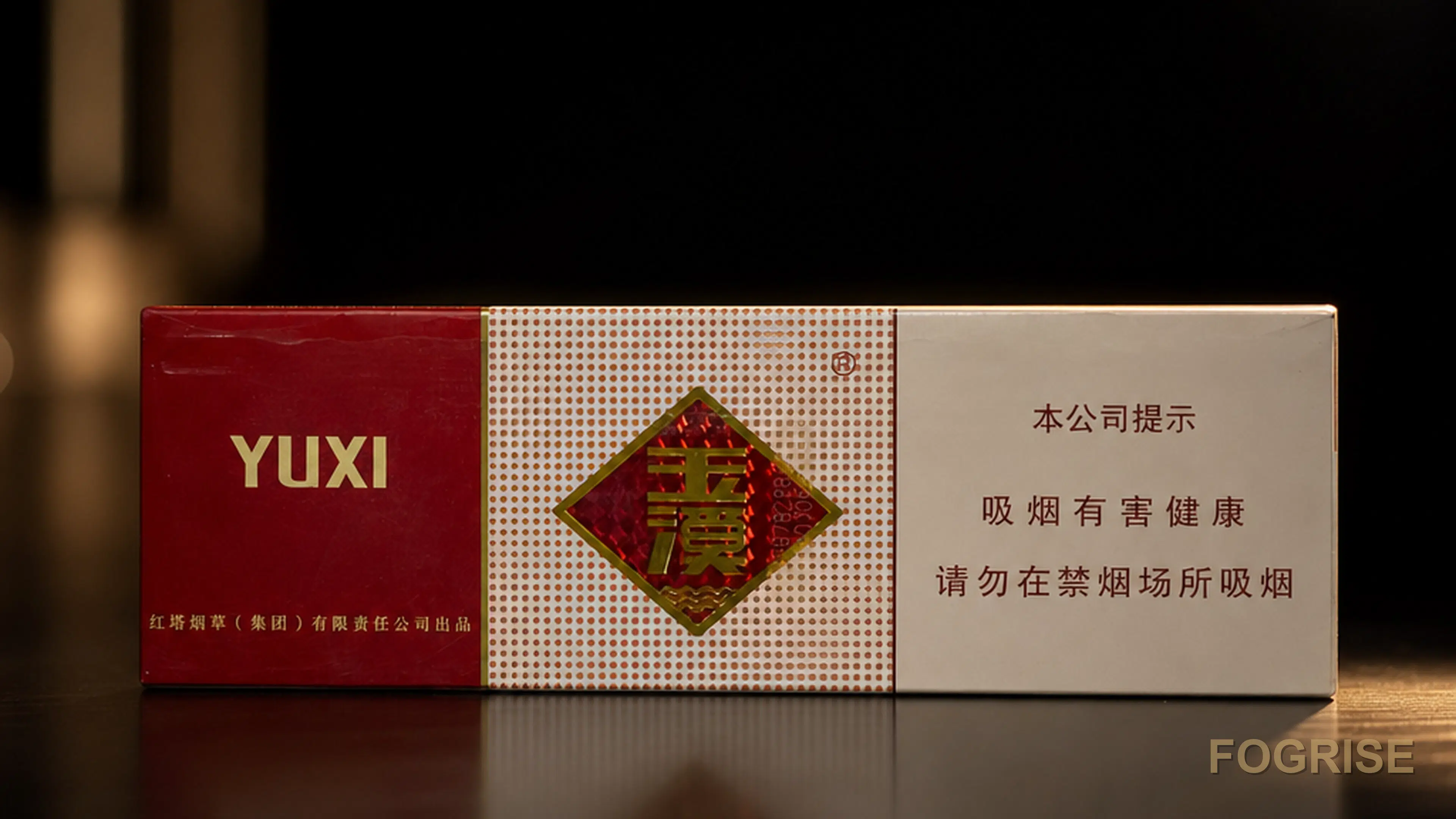
For Irish buyers, neither brand surfaces in legitimate domestic retail. Carton-level pricing on international resellers sits in the €40-55 band, well below Irish duty-paid equivalents, which is precisely why Revenue and OLAF treat unstamped mid-tier Chinese packs as a primary flag for illicit-trade investigation.
Economy and Rare Brands: Liqun, Zhongnanhai, Nanjing, Panda
Four brands round out the picture. Liqun, made in Zhejiang, is one of the highest-volume sellers inside mainland China but rarely reaches European resellers in meaningful quantity. Nanjing, from the Nanjing Cigarette Factory, has a collector-favoured series tied to the city’s republican-era heritage. Panda is the genuine rarity, a historically state-reserved brand once associated with Deng Xiaoping, and the variant most often counterfeited at European borders.
Zhongnanhai deserves a separate flag. It is positioned in mainland China as an ultra-low-tar product, and that positioning is exactly the framing the WHO Framework Convention on Tobacco Control was written to push back against (World Health Organization, 2023). "Low-tar" is a marketing descriptor, not a safety descriptor; combustible tobacco at any tar yield still drives the same cancer, cardiovascular and respiratory disease pathways. The HSE Quitline (1800 201 203) is the route Ireland’s public-health service recommends for anyone considering reducing or stopping.
| Brand | Manufacturer | Tier | Indicative €/Carton | Irish Availability |
|---|---|---|---|---|
| Chunghwa (中华) | Shanghai Tobacco Group | Premium | €80-100 | Airport duty-free only |
| Yuxi (玉溪) | Hongta Group | Mid-premium | €50-70 | Specialist online only |
| Double Happiness (双喜) | Guangdong China Tobacco | Mid-market | €40-55 | Specialist online only |
| Liqun | Zhejiang Tobacco | Mid-market | €40-55 | Not on Irish shelves |
| Zhongnanhai | Beijing Cigarette Factory | Mid-market | €40-55 | Not on Irish shelves |
| Nanjing | Nanjing Cigarette Factory | Collectible | €60-90 | Not on Irish shelves |
| Panda (熊猫) | Shanghai Tobacco Group | Rare/state-reserve | €200+ | Not on Irish shelves |
These price bands reflect duty-free or non-EU origin. The Irish excise duty, 23% VAT and Revenue tax-stamp regime add a further layer that converts any of these cartons into a substantially higher Irish duty-paid figure, the math that the next section walks through.
Ireland’s Tobacco Laws: Plain Packaging, EU TPD, Revenue Excise and the 2026 Licensing Regime
Ireland operates one of the strictest tobacco regulatory regimes in the European Union. Three statutory layers already govern every cigarette legally sold in the country, whether a Marlboro Gold pulled from a Centra cabinet or a carton of Chunghwa imported from Shanghai. A fourth layer, the new HSE retail licensing requirement, takes effect on 2 February 2026 and reshapes the economics for any international seller looking at Ireland chinese cigarettes as a route to market.
Plain Packaging: The Public Health (Standardised Packaging of Tobacco) Act 2015
The Public Health (Standardised Packaging of Tobacco) Act 2015, implemented through S.I. 422/2017, made Ireland the first EU member state to mandate standardised tobacco packaging. Manufacture compliance began 30 September 2017; full retail compliance was required from 30 September 2018. Australia had pioneered the policy in 2012, but Ireland’s adoption marked the beginning of the EU rollout that now covers most of the bloc (Government of Ireland, 2017; Department of Health, 2025).
Every pack on Irish shelves, whether produced in Dublin, Dresden, or Donghai District, must use Pantone Cool Gray 2C as the base colour and Helvetica Neue for the brand name. Combined pictorial and text health warnings cover at least 65% of the front and back surfaces. Decorative logos, brand colours, and stylised typefaces are prohibited. A pack of Chinese cigarettes legally sold in Ireland looks structurally identical to a pack of Silk Cut: same drab brown, same warning images, same regulation typeface.
EU TPD (S.I. 271/2016) and Track-and-Trace
S.I. 271/2016 transposes EU Directive 2014/40/EU, the Tobacco Products Directive, into Irish law. The directive sets emission ceilings of 10 mg tar, 1 mg nicotine, and 10 mg carbon monoxide per cigarette and requires pictorial warnings, ingredient notifications to the HSE, and a unique-identifier track-and-trace code on every consumer unit and outer carton (European Parliament & Council, 2014). Imported brands must be notified to the EU Common Entry Gate (EU-CEG) before they can be placed on the Irish market.
Track-and-trace exists to make smuggled product detectable. A scanner at any point in the distribution chain can verify whether the unique identifier was issued by an authorised ID issuer and whether the pack is in Irish free circulation. Packs without a valid identifier are, by definition, contraband, and that is the category most untaxed Chinese-brand product circulating in Ireland falls into.
Revenue Excise and the New 2026 Retail Licensing Requirement
Ireland’s tobacco excise is among the highest in the European Union. The regime combines a specific excise charged per 1,000 cigarettes with an ad valorem component tied to the retail selling price, and VAT at 23% is then applied to the full RSP. Total tax incidence sits at approximately 80% of shelf price (Revenue Commissioners, 2024). Specific rates change at each Budget, so Revenue publishes current figures at revenue.ie/tobacco rather than fixing them in primary legislation.
Every tobacco product in Irish free circulation must also carry a tax stamp under the Revenue Tobacco Products Tax Manual, evidencing that excise has been paid (Revenue Commissioners, 2024). Importers and wholesalers handling Chinese cigarettes for the domestic market need a registered consignee authorisation and bonded warehousing arrangements before stock can be released into free circulation.
The Public Health (Tobacco Products and Nicotine Inhaling Products) Act 2023 adds a fourth regulatory layer that takes effect on 2 February 2026. From that date, any person selling tobacco products to Irish addresses, including online sellers based abroad, must hold a retail licence issued by the HSE National Environmental Health Service. S.I. 736/2024 sets the fee at €1,000 per premises, website, or shipment point (Government of Ireland, 2017; Department of Health, 2025). For international online retailers shipping Chinese brands to Irish consumers, this is a material new barrier: a Shenzhen-based exporter selling direct to a Dublin postcode falls squarely within scope, and a €1,000 annual licence cost is hard to absorb at low parcel volumes.
| Component | Rate / Basis | Notes |
|---|---|---|
| Specific Excise | Among EU’s highest (see revenue.ie for current rates) | Per 1,000 cigarettes |
| Ad Valorem Excise | Percentage of retail selling price | Combined with specific excise |
| VAT | 23% | Applied to RSP including excise |
| Total tax incidence | Approximately 80% of RSP | Among the highest rates in the EU |
| 2026 Retail Licence | €1,000 per premises or website | New requirement from 2 February 2026 |
Unlike Hungary’s state-controlled Nemzeti Dohánybolt monopoly, where every legal tobacco sale runs through a government-licensed concession, Ireland’s model keeps retail open to any operator that meets HSE compliance. The practical takeaway: the legal channel for Chinese cigarettes into Ireland is narrow, the tax burden is heavy, and from February 2026 the licensing gate adds a fixed compliance cost that small-volume sellers will struggle to recover.
Traveller Allowances: Bringing Chinese Cigarettes into Ireland
Travelling into Ireland with Chinese cigarettes in hand luggage is legal within strict numerical limits. The rules split into three routes, each governed by a different statutory instrument and each producing a different tax outcome at the border.
Arriving from Non-EU Countries
A direct flight from Beijing, Shanghai, Hong Kong, or any other non-EU origin allows each adult traveller to bring 200 cigarettes into Ireland duty-free. Following Brexit, the United Kingdom also now sits in this same non-EU bracket for traveller-allowance purposes, so a London-to-Dublin air arrival is treated under the 200-cigarette limit rather than the intra-EU rule that previously applied. The threshold is set by S.I. 480/2008, which transposes Council Directive 2007/74/EC on personal allowances for travellers arriving from third countries (Government of Ireland, 2008; Council of the European Union, 2007; Revenue Commissioners, 2024). Two hundred cigarettes equals one standard 10-pack carton, the same allowance whether the brand is Chunghwa, Furongwang, or Mevius.
Anything above the 200-stick limit triggers a full Revenue assessment: Irish specific and ad valorem excise, VAT at 23% on the duty-paid value, and potentially customs duty depending on the manufacturing origin. Travellers who fail to declare and are stopped in the red channel at Dublin or Cork airport with an extra carton face seizure of the goods plus a compound penalty.
Intra-EU Travellers
Buying a few cartons of duty-paid Chinese cigarettes in Berlin, Rotterdam, or Marseille and then continuing on to Dublin falls under a different rule. Council Directive 2008/118/EC sets an indicative limit of 800 cigarettes per adult for personal consumption when product has already borne excise in another EU member state (Council of the European Union, 2008). Below that figure, Revenue normally presumes personal use and assesses no further Irish excise. Above it, the burden shifts onto the traveller to demonstrate the product is not for commercial resale, and Revenue may apply Irish excise on the excess.
The 800-stick threshold is indicative rather than absolute. Frequency of travel, age, declared purpose, and the form of packaging all feed into the customs officer’s assessment of whether the quantity is genuinely personal.
Online Orders from China
Ordering Chinese cigarettes for direct postal delivery from a mainland exporter to an Irish address does not benefit from any traveller allowance. Tobacco is explicitly excluded from the €150 low-value consignment relief that applies to most goods imported from non-EU countries: full Irish excise plus 23% VAT applies on every parcel regardless of declared value (Government of Ireland, 2008; Council of the European Union, 2007; Revenue Commissioners, 2024). Customs typically detains incoming tobacco parcels until duty is paid, and undeclared shipments are liable to seizure under the Customs Act 2015.
| Route | Duty-Free Limit | Key Rule |
|---|---|---|
| Air from non-EU (including China direct) | 200 cigarettes | Per adult; above the limit, excise and VAT apply |
| Intra-EU (duty-paid in another EU state) | 800 cigarettes (indicative) | Must be tax-paid at origin |
| Online order from China | None | Tobacco excluded from €150 de minimis relief |
Allowance thresholds may change. Always verify current rules with Revenue Commissioners (revenue.ie) before travel or purchase.
Where Adult Smokers in Ireland Can Legitimately Access Chinese Brands
Ireland’s plain-packaging regime closes the standard retail door to Chinese brands, but three legitimate access routes remain for adult smokers (21+). None of them are casual high-street purchases. Each carries its own compliance footnote, and none of them include corner-shop or supermarket tobacco shelves, where every pack must conform to Pantone Cool Gray 2C and the EU combined warning set.
Irish Airport Duty-Free (Dublin, Cork, Shannon)
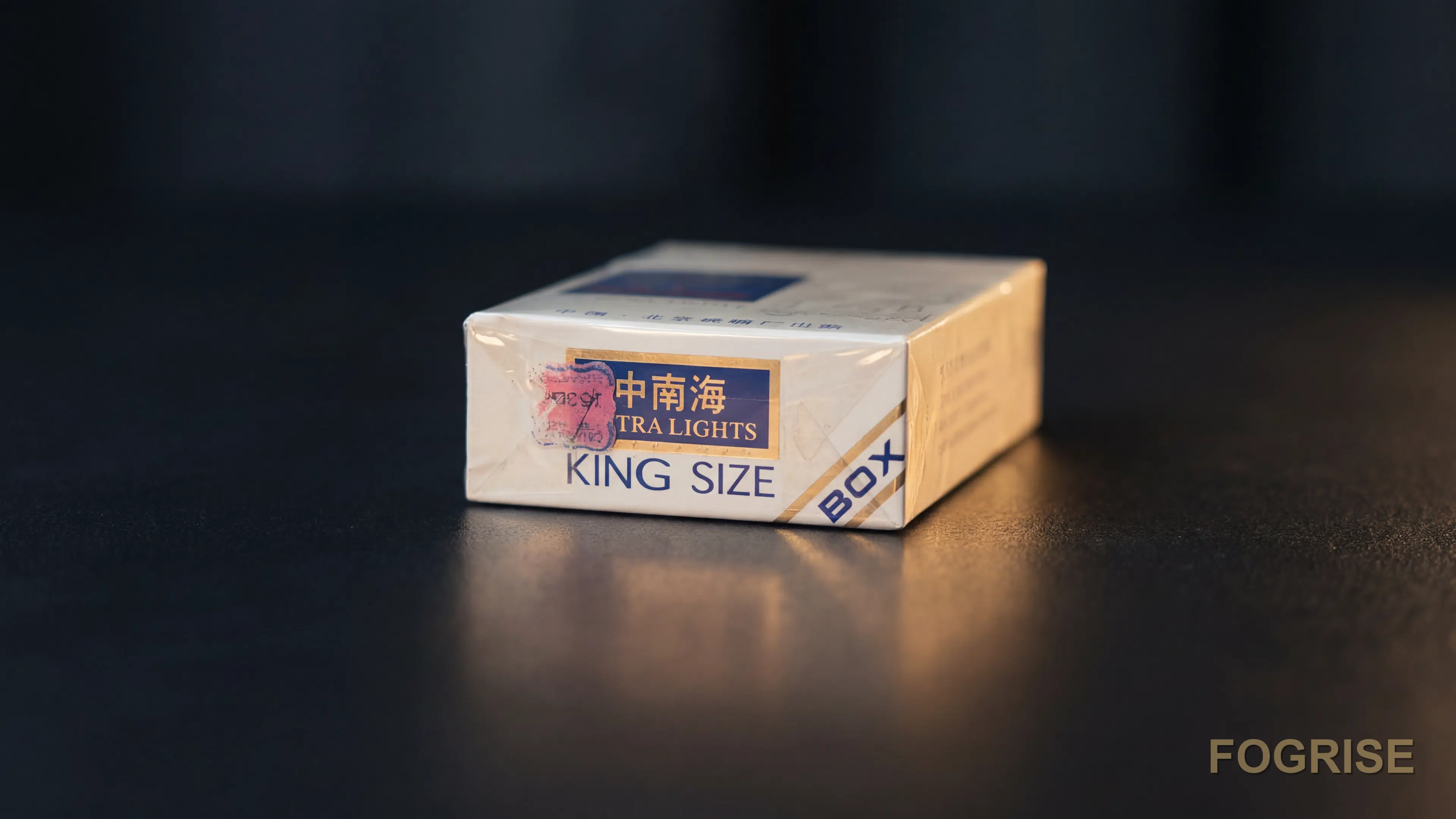
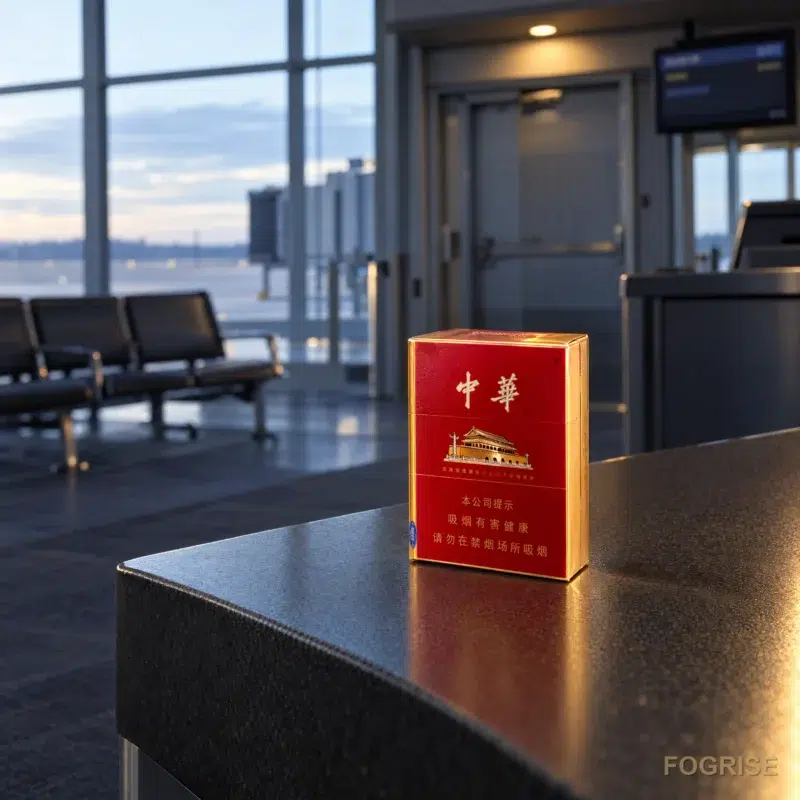
Dublin Airport (Terminals 1 and 2), Cork Airport, and Shannon Airport all operate international-departure duty-free shops. The principal operators are daa Retail (formerly Aer Rianta International) and Heinemann Duty Free, both of which curate premium Asian tobacco at their major hub locations. Chunghwa appears intermittently at Dublin Airport airside. Stock varies by terminal, season, and bilateral supplier relationship. A complication worth flagging: duty-free sales to passengers departing Ireland sit in a grey zone on plain-packaging compliance, and some operators apply standardised packs while others retain origin-country livery depending on the flight destination’s domestic rules. Confirm the pack format with the on-site retailer at point of sale rather than assuming.
Dublin’s Parnell Street and Chinese Import Channels
Parnell Street in Dublin 1, north of the Liffey, is the recognised heart of Dublin’s Chinese community. Asian import grocery shops, restaurants, and specialist food stores line the road, with several blocks east toward Dublin City University. Some carry authentic mainland Chinese products that occasionally include tobacco brought in through community supply chains. Treat this as cultural framing, not a reliable retail directory. There is no 2025 or 2026 primary source confirming any specific Parnell Street shop holds Chinese cigarettes on shelf, and any informal stock is unverified and likely non-compliant with Irish retail tobacco law.
Specialist International Online Retailers
A small category of specialist international online tobacco retailers ships premium Asian brands to Irish addresses. From 2 February 2026, online sellers offering tobacco to Irish consumers must hold an HSE-issued Irish retail tobacco licence under the Public Health (Tobacco Products and Nicotine Inhaling Products) Act 2023, closing a previous loophole that allowed unlicensed cross-border online sales into the Irish market (Department of Health, 2025). Reputable retailers are adapting their compliance posture now. Buyers should verify licensing, age-gating, and the seller’s declared customs procedure before ordering.
For an internationally shipped selection, browse our cigarette catalogue. All purchases pass adult age verification (21+), and compliance with local Irish tobacco law remains the buyer’s responsibility.
Illicit Trade and Counterfeits: What Irish Buyers Need to Know
Ireland’s high tobacco excise plus its open-shore EU geography make it a magnet for illicit tobacco. A meaningful share of cigarettes consumed in Ireland never pass through Revenue’s tax system at all, and a non-trivial portion of seized contraband traces back to Chinese-origin counterfeit production. Anyone offered a Chinese cigarette in Ireland needs to assume contraband by default and verify upward, not the reverse.
Ireland’s Illicit Tobacco Problem
Revenue Commissioners and OLAF (the European Anti-Fraud Office) data consistently rank Ireland among the EU member states with the largest illicit-tobacco share of consumption, driven by an excise gap so wide that smuggled packs can undercut Irish licensed retail by 60% or more on a per-pack basis (Revenue Commissioners, 2024b; European Anti-Fraud Office, 2024). Chinese-origin counterfeit production is a documented strand of this trade, and many of the loose packs entering Irish street markets are deliberately disguised as familiar Irish or UK brands rather than circulating under their original Chinese livery. The corollary is sharp. Any non-plain-packaged Chinese cigarette in Irish retail circulation is almost certainly contraband. Plain packaging makes the test trivial in a way most EU jurisdictions cannot match.
How to Spot Counterfeit Chinese Packs
Genuine Chinese packs intended for the Chinese domestic market carry mainland health warnings, not Ireland’s combined picture-and-text warning in standardised Pantone Cool Gray 2C. They do not carry the Revenue Irish tobacco track-and-trace mark required under the 2019 EU TPD II implementation. Counterfeit warning signs include garbled Hanzi typography, off-register colour printing, lighter foil weight, and softer pack stock that crushes easily under thumb pressure. Price is the loudest signal. A pack offered well below the prevailing Irish floor of roughly €15 should be assumed counterfeit or contraband, full stop.
Revenue’s enforcement teeth are real. Under the Finance Acts, possession of unstamped tobacco in commercial quantities triggers confiscation, monetary fines scaled to quantity, and criminal prosecution. Even personal-use possession above the 200-cigarette intra-EU allowance can attract an administrative penalty and seizure at port of entry (Revenue Commissioners, 2024b). Buyers tempted by suspiciously cheap Chinese packs at Dublin street markets are stepping directly into Revenue’s enforcement frame, not around it.
Health and Harm: What Every Smoker Needs to Know
No Chinese cigarette is safe. No Irish cigarette is safe. No imported, duty-free, low-tar, herbal, slim, menthol, or any other category of cigarette is safe. This is not a stylistic disclaimer. It is the unanimous scientific consensus from the WHO, the Irish Health Service Executive, and every credible public-health body that has examined the question.
Cigarette smoke contains roughly 7,000 chemicals, including at least 70 known human carcinogens, per WHO and US Surgeon General consensus reports. Long-term smoking causes lung cancer, chronic obstructive pulmonary disease (COPD), ischaemic heart disease, stroke, and multiple other cancers. Nicotine is among the most addictive substances regularly consumed, and dependence usually establishes itself within months of regular use (World Health Organization, 2023).
Low-tar Chinese brands deserve specific attention because their marketing implies otherwise. Zhongnanhai 1mg, for example, prints a 1 mg ISO tar yield, but the WHO has been clear for over two decades that "light" and "low-tar" labels do not translate to reduced real-world exposure. Smokers compensate behaviourally by inhaling more deeply, holding the smoke longer, and blocking ventilation holes with their fingers. Actual tar and nicotine intake on a 1 mg Zhongnanhai can approximate a standard cigarette closely. Ireland’s plain packaging law was passed in part to eliminate the visual cues, including delicate light-coloured pack designs, that nudge smokers toward this false-reassurance category. Standardised packs strip away the implied safety signal, but the underlying product remains exactly as harmful as any other cigarette.
Adult smokers who want to stop have direct, free access to Ireland’s quit infrastructure. The HSE QUIT service offers a Freephone helpline (1800 201 203), a web platform at quit.ie with personalised quit plans, and SMS-based daily support. GPs can refer patients into structured quit programmes, and nicotine replacement therapy is available through the GMS scheme for eligible medical cardholders. Stopping at any age extends life expectancy; stopping before 40 returns roughly 90% of the lost years.
Frequently Asked Questions
Common questions Irish adult smokers and curious travellers ask about Chinese cigarettes, plain-packaging compliance, customs allowances, and Revenue enforcement. Each answer is harm-honest: no cigarette of any origin is safe.
Q: Are Chinese cigarettes legal in Ireland? A: Possessing Chinese cigarettes is not illegal in Ireland. However, selling them in standard Irish retail is prohibited because they do not comply with Ireland’s plain packaging law or EU TPD warning requirements. Adult buyers may access them through airport duty-free for departing passengers or compliant specialist international retailers (Government of Ireland, 2017).
Q: Does Ireland’s plain packaging law apply to Chinese cigarettes? A: Yes. Ireland’s Public Health (Standardised Packaging of Tobacco) Act 2015 applies to all tobacco sold in Ireland regardless of brand or origin. Any Chinese cigarette legally sold in Irish retail must appear in standardised Pantone Cool Gray 2C livery, which standard mainland Chinese packs do not carry in their original form.
Q: Can I bring Chinese cigarettes from China to Ireland? A: Yes, up to 200 cigarettes duty-free per adult arriving directly from a non-EU country. Quantities above 200 are subject to full Irish excise duty plus 23% VAT. Declare honestly at the Customs Red Channel to avoid Revenue penalties and possible confiscation on entry.
Q: Where can I buy Chunghwa cigarettes in Dublin? A: Chunghwa is sometimes available at Dublin Airport international-departure duty-free shops. It is not stocked in standard licensed Irish tobacco retail. Dublin’s Parnell Street area has Chinese community import shops that occasionally carry authentic Chinese brands, although availability is informal and not guaranteed.
Q: What Chinese cigarette brands are at Dublin Airport duty-free? A: Availability shifts by operator, terminal, and season. Premium Chinese brands including Chunghwa appear at major international duty-free hubs. Stock changes frequently; check the specific retailer before travel. Plain packaging treatment may apply depending on the flight destination’s domestic rules.
Q: Are Chinese cigarettes stronger than Irish brands? A: Strength varies widely by variant. Chunghwa is generally smooth and Virginia-dominant. Low-tar brands such as Zhongnanhai 1mg exist, but WHO guidance is unambiguous: no cigarette is safe, and low-tar labelling does not reduce actual health risk. All cigarettes carry serious health consequences.
Q: What are Revenue’s penalties for smuggling cigarettes into Ireland? A: Revenue can confiscate any tobacco lacking the required Irish tax mark, levy substantial fines, and pursue criminal prosecution for commercial-quantity smuggling under the Finance Acts. Personal-use possession above the 200-cigarette intra-EU allowance typically results in confiscation and an administrative fine.
Conclusion
Ireland’s plain packaging law and the EU TPD together close the standard retail door to Chinese brands more decisively than any other EU member state. The visual test is instant: a non-compliant pack is identifiable at a glance against the Pantone Cool Gray 2C floor that every legitimately sold pack in Ireland must wear. That visual rule, paired with Ireland’s high-excise environment, is what makes the country simultaneously hostile to legal Chinese-brand retail and attractive to illicit-trade smugglers.
Legitimate access channels for adult smokers remain narrow but real: airport duty-free at Dublin, Cork, and Shannon for departing international passengers, and specialist international online retailers shipping to Irish addresses who, from 2 February 2026, must hold an HSE-issued Irish retail tobacco licence under the Public Health (Tobacco Products and Nicotine Inhaling Products) Act 2023 (Department of Health, 2025). Dublin’s Parnell Street community channels offer cultural framing rather than reliable supply.
The harm-honest close stays at the front of the page. No Chinese cigarette is safe. No cigarette is safe. Adult smokers who want to stop have free direct access to the HSE QUIT service (1800 201 203, quit.ie). For those who choose to continue, do so legally, transparently with Revenue, and with eyes open about the underlying health risk.
Questions about internationally shipped tobacco selections? Contact our team.
References
- Government of Ireland. (2017). S.I. No. 422/2017 — Public Health (Standardised Packaging of Tobacco) Regulations 2017. Irish Statute Book. https://www.irishstatutebook.ie/eli/2017/si/422/made/en/print
- Government of Ireland. (2008). S.I. No. 480/2008 — European Communities (Tax Exemption for Certain Non-commercial Goods) Regulations 2008. Irish Statute Book. https://www.irishstatutebook.ie/eli/2008/si/480/made/en/print
- Revenue Commissioners. (2024). Tobacco Products Tax Manual. Office of the Revenue Commissioners. https://www.revenue.ie/en/tax-professionals/tdm/excise/tobacco-products-tax/tobacco-products-tax-manual.pdf
- Department of Health. (2025). Ministers for Health introduce licensing system for tobacco and vapes [Press release]. Government of Ireland. https://www.gov.ie/en/department-of-health/press-releases/ministers-for-health-introduce-licensing-system-for-tobacco-and-vapes
- European Parliament and Council. (2014). Directive 2014/40/EU on the manufacture, presentation and sale of tobacco and related products. Official Journal of the European Union, L 127, 1–38. https://eur-lex.europa.eu/legal-content/EN/TXT/?uri=CELEX%3A32014L0040
- Council of the European Union. (2007). Council Directive 2007/74/EC on the exemption from value added tax and excise duty of goods imported by travellers from third countries. Official Journal of the European Union, L 346, 6–12. https://eur-lex.europa.eu/legal-content/EN/TXT/?uri=CELEX%3A32007L0074
- Council of the European Union. (2008). Council Directive 2008/118/EC concerning the general arrangements for excise duty. Official Journal of the European Union, L 9, 12–30. https://eur-lex.europa.eu/legal-content/EN/TXT/?uri=CELEX%3A32008L0118
- Revenue Commissioners. (2024). Illegal Tobacco Products Research Survey 2024. Office of the Revenue Commissioners. https://www.revenue.ie/en/corporate/documents/research/tobacco-surveys-2024.pdf
- European Anti-Fraud Office. (2024). Tobacco smuggling: Over 600 million illicit cigarettes seized thanks to OLAF in 2023 [News release]. European Commission. https://anti-fraud.ec.europa.eu/media-corner/news/tobacco-smuggling-over-600-million-illicit-cigarettes-seized-thanks-olaf-2023-2024-04-11_en
- World Health Organization. (2023). Tobacco [Fact sheet]. https://www.who.int/news-room/fact-sheets/detail/tobacco
Last reviewed and updated: June 2026. Author: xiangyandd editorial team. Adults 21+ only — smoking is harmful; verify your local laws before purchase. Note: Ireland’s statutory minimum purchase age is 18; fogrise-cigarette.com applies a stricter 21+ age verification policy. Questions? Contact our team.

 English (US)
 简体中文
 Deutsch
 Français
 Español