

Blog
Chinese Cigarettes in Lithuania: Brands, Customs & 2026 Rules

Abstract
Lithuania carries one of the European Union’s highest illicit-cigarette shares, roughly 21% of consumption in 2025 (KPMG, 2025), yet that contraband flow is overwhelmingly Belarusian and Russian product (Minsk, NZ) plus diverted Western labels such as Marlboro and Winston (State Border Guard Service of Lithuania, 2026). Chinese cigarettes are almost entirely absent from the seized-pack mix. For a reader hunting Chinese brands in Lithuania, that single fact reframes the whole question. The Lithuanian Tobacco Control Law (Article 14 of Law No. I-1143) prohibits placing tobacco on the market under distance contracts, including cross-border distance sales to consumers (Republic of Lithuania, 2018). Genuine Chunghwa, Yuxi, or Nanjing packs therefore reach a Lithuanian address only through narrow lawful channels, mainly personal-import allowances carried on travel. Any cheap "Chinese cigarettes in Lithuania" offer is doubly suspect: it sits outside the legal retail path, and it does not match what Lithuanian seizures actually contain.
For adults 21+. Legal and health notice. Lithuania’s statutory minimum tobacco-purchase age is 18 (Republic of Lithuania, 2018), and xiangyandd defers to the higher of local law and 21. Smoking is harmful and addictive, including every Chinese brand named here; no origin or tier is exempt from those risks. Tobacco laws, taxes, excise stamps, and import allowances vary by country and change frequently. Verify current rules with Lithuanian Customs (Muitinė) and the State Tax Inspectorate (VMI) before placing any order. This article is informational only, not legal or medical advice; readers who want to quit should consult a clinician or a Lithuanian public-health cessation service rather than a retailer.
Key Takeaways
- Lithuania bans distance sales of tobacco to consumers under Tobacco Control Law Article 14, including online cigarette orders (Republic of Lithuania, 2018).
- About 21% of Lithuanian cigarettes are illicit, but Chinese brands are nearly absent: Minsk, NZ, Marlboro, and Winston dominate seizures (KPMG, 2025; State Border Guard Service of Lithuania, 2026).
- Travel allowances are 800 cigarettes intra-EU, 200 by air, 40 by land, and Lithuania’s minimum purchase age is 18 (European Union, 2024; Republic of Lithuania, 2018).
- 2025 specific excise rose to roughly EUR 3.05 per pack from EUR 2.82, with the weighted-average retail price now near EUR 4.78 (Tax Foundation Europe, 2025).
- A suspiciously cheap "Chinese" pack in Lithuania is a counterfeit red flag: smoking is harmful, authenticate every pack and verify local law.
Table of Contents
- Abstract
- Key Takeaways
- Table of Contents
- Why Adults in Lithuania Seek Chinese Cigarettes
- Chinese Cigarette Brands That Matter for the Lithuanian Market
- Is It Legal to Buy or Ship Chinese Cigarettes to Lithuania?
- Lithuania’s Customs Allowances, 2025 Excise and Prices
- Lithuania’s Record Illicit Market — and the Near-Absence of Chinese Brands
- Spotting Counterfeit Chinese Cigarettes in Lithuania
- Public-Health Reality: What WHO and Lithuanian Authorities Say
- Frequently Asked Questions
- Conclusion
- References
Why Adults in Lithuania Seek Chinese Cigarettes
The query "Lithuania chinese cigarettes" looks niche on paper, and the local SERP confirms it: only about 111 results surface for the geo-targeted phrase, and none of the top pages read as a buyer’s brief. So who is actually typing it? Three groups, mostly. A small Chinese diaspora around Vilnius, a wider Baltic tobacco enthusiast community curious about Asian product, and adults planning travel across neighbouring borders who want the rules straight before they fly.
None of those motives is recreational thrill-seeking; they are informational. Smoking remains harmful and addictive regardless of brand or origin, and nothing in this section softens that.
Lithuania’s Chinese Community and Enthusiast Demand
Lithuania hosts a small but stable Chinese community, concentrated in Vilnius across academic and business life, with a foothold in the hospitality trade. Demand for familiar mainland brands here is cultural memory more than retail volume: a returning postgrad bringing back a carton, a host topping up before Lunar New Year, a long-term resident keeping a familiar red pack on the desk. Outside that diaspora, Baltic tobacco enthusiasts (collectors, sommelier-style smokers, frequent flyers between Vilnius, Riga, and Helsinki) read about Chinese cigarettes the way wine drinkers read about Burgundy: structure, terroir, history.
Gifting Culture and Flavour Profile
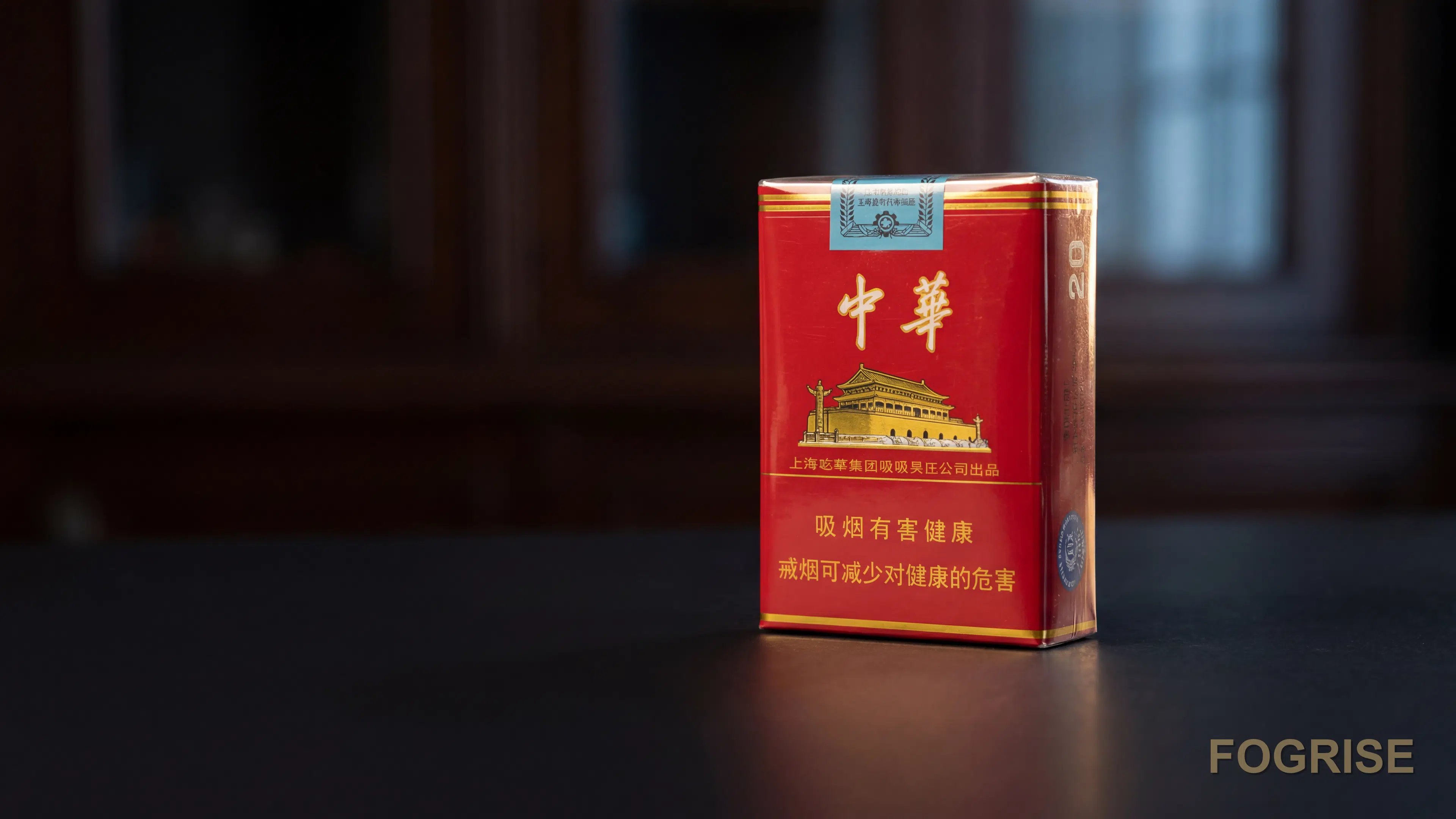
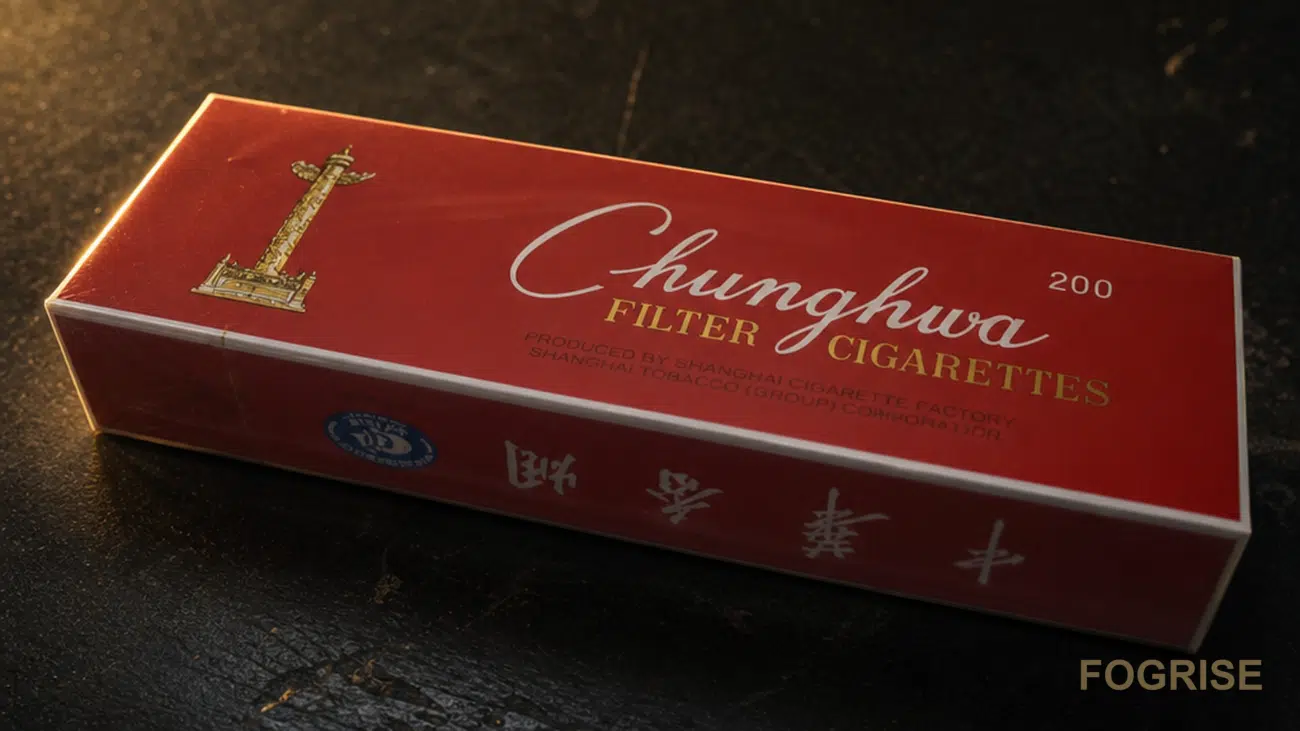
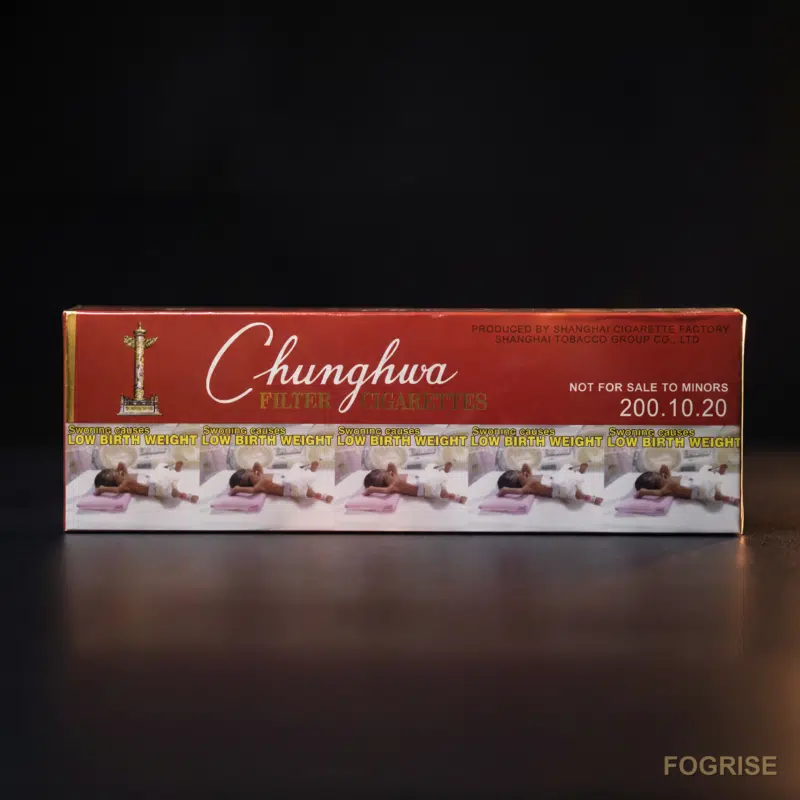
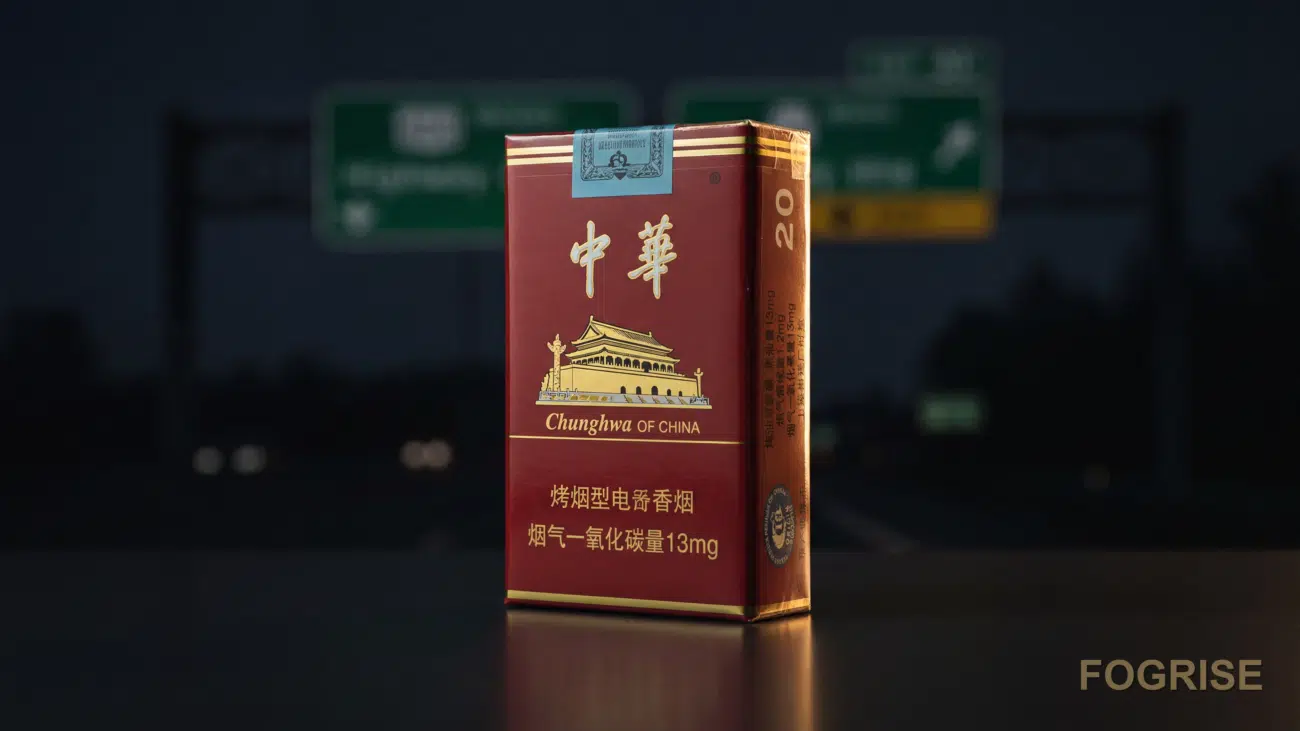
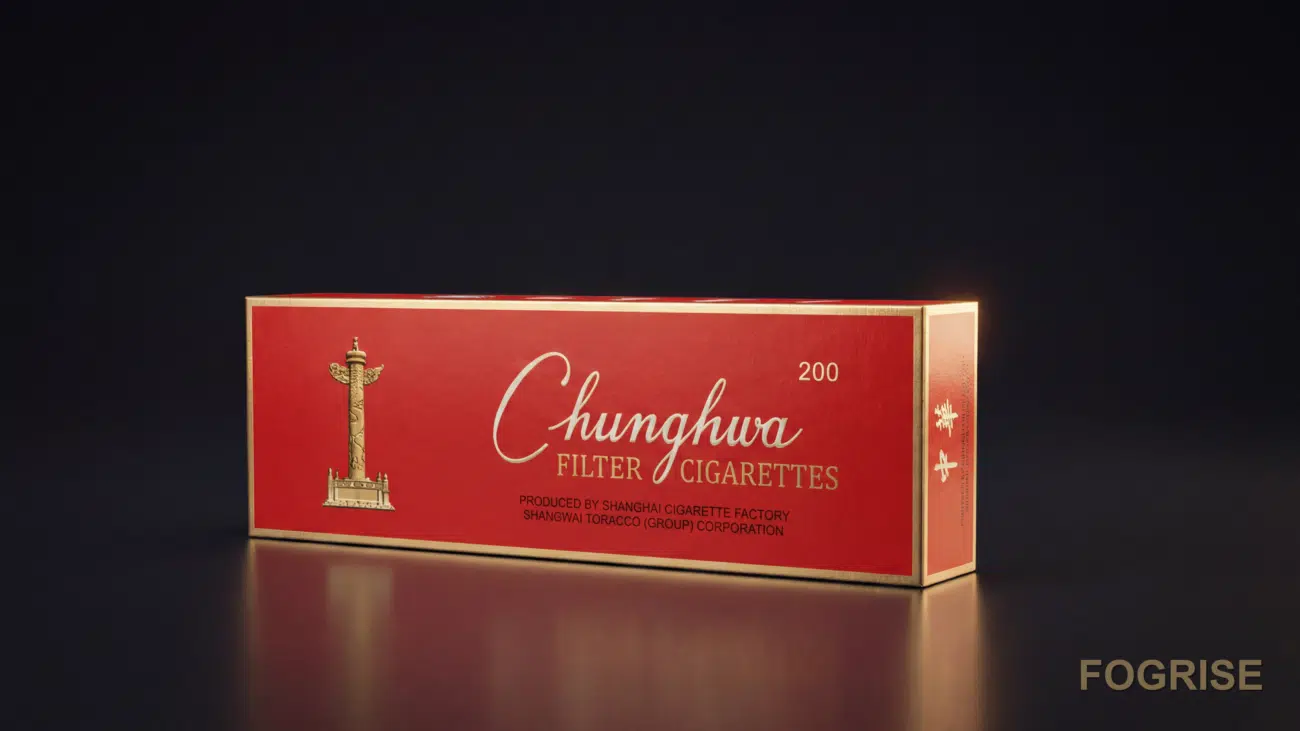
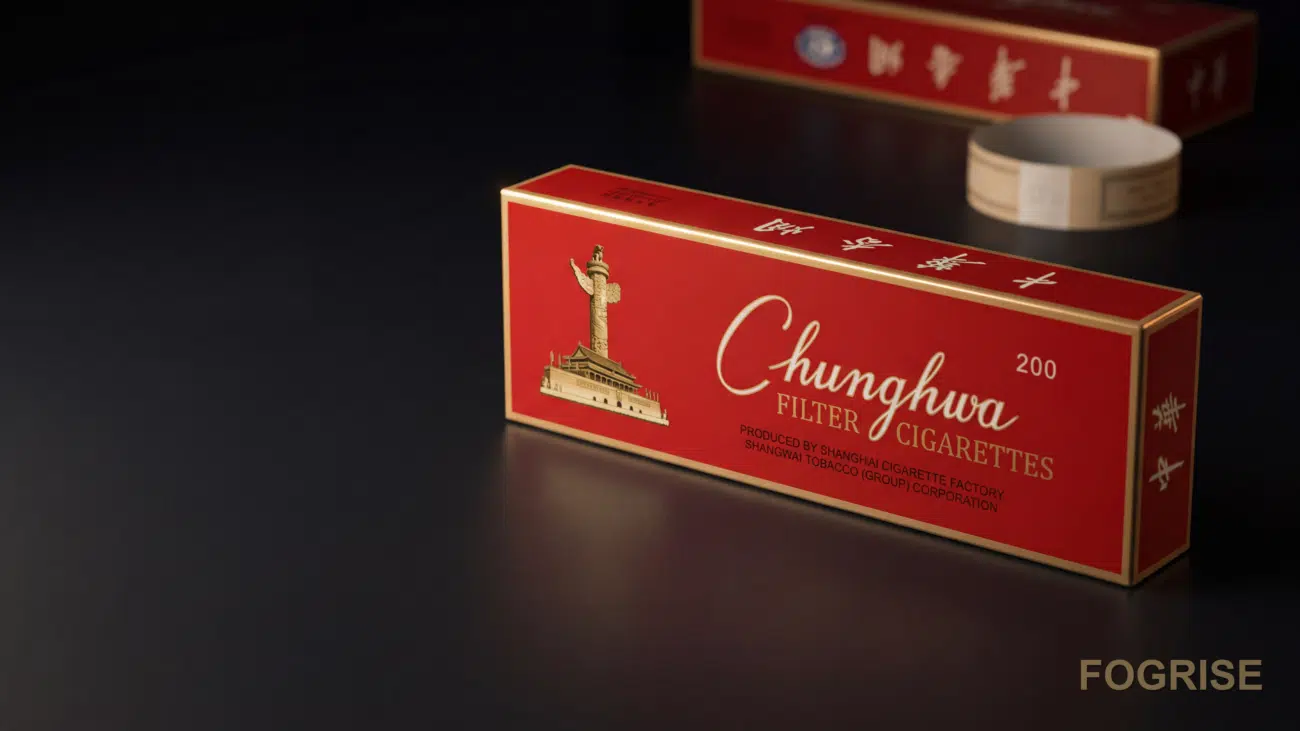
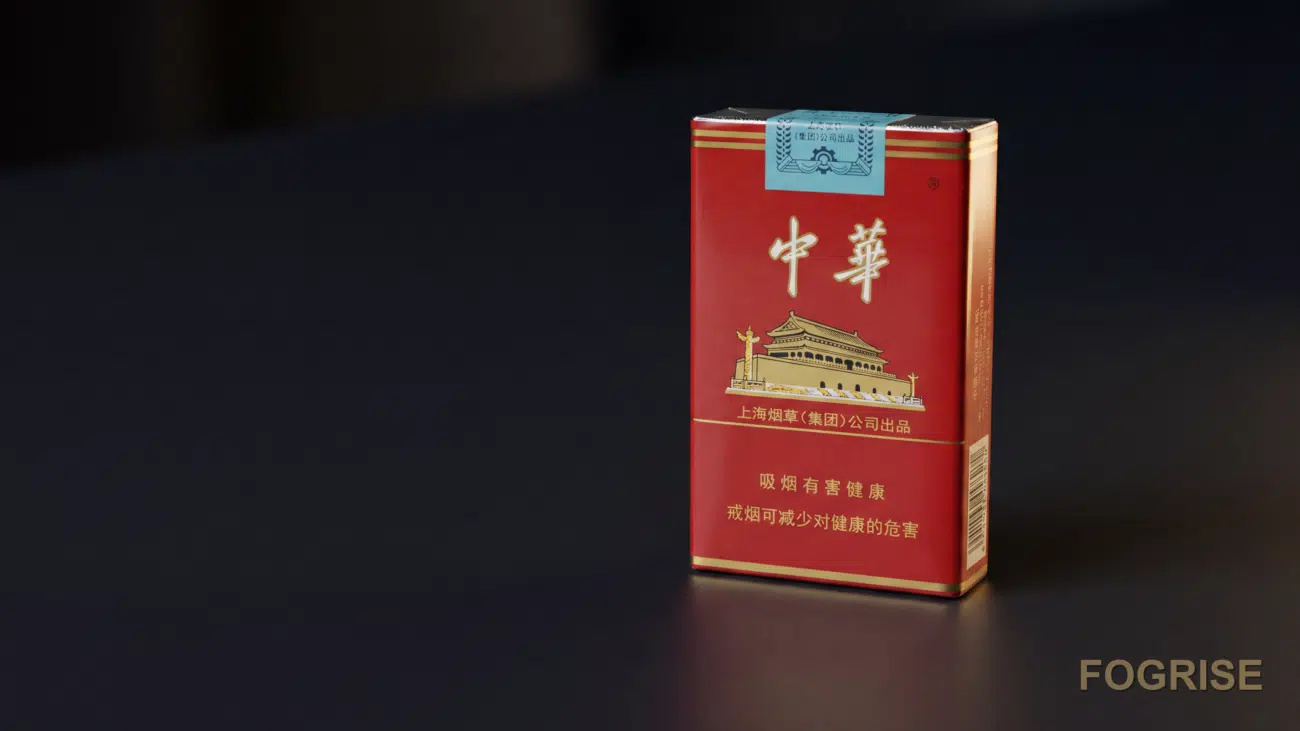
In mainland Chinese business and family culture, the cigarette pack is a social object before it is a smoking object. Chunghwa (中华), with the Tiananmen Gate stamped on its red lid, is the canonical gift; it reportedly captures more than half of China’s premium segment with around RMB 76 billion in annual sales (Clear The Air News Tobacco Blog, 2014). Lighting one for a guest, slipping a pack across a banquet table, leaving a sealed carton at a wedding registry: these are gestures, not consumption, and they migrate with diaspora life into Lithuania.
China’s State Tobacco Monopoly Administration has compressed the active cigarette brand roster from more than 1,000 names down to fewer than 200, and the top five grade-one brands (Furongwang, Chunghwa, Yuxi, Huanghelou, Liqun) now hold roughly 68% of the domestic market (Clear The Air News Tobacco Blog, 2014). That concentration is why a small set of names dominates international Chinese cigarettes Lithuania searches.
On the sensory side, mainland Chinese cigarettes lean toward warmer, sweeter, lower-tar profiles than the Marlboro and Winston defaults dominant across Europe. That contrast, not price, is what curious Baltic adults usually describe when they ask about Chinese cigarette brands Lithuania retailers might list.
The Baltic Cross-Border Context
Lithuania shares borders with Latvia, Belarus, Poland, and Russia’s Kaliningrad exclave, which makes the country a geographic crossroads for almost any tobacco question, legal or otherwise. Add the post-2021 diplomatic chill (after Vilnius allowed a Taiwanese Representative Office in late 2021, Beijing downgraded relations and trade with Lithuania thinned) and official mainland Chinese-brand cigarette trade into the country is now sparse by design, not by accident. That backdrop is precisely why most adults researching how to buy Chinese cigarettes in Lithuania end up studying customs allowances and excise first, then the distance-sale ban, which is exactly what the sections below cover.
Chinese Cigarette Brands That Matter for the Lithuanian Market
China’s State Tobacco Monopoly Administration (STMA) sorts cigarettes into informal grades, and that internal hierarchy travels with every pack a Lithuanian buyer encounters. None of the labels below sit on shelves at a Lithuanian retailer. They reach Lithuania only through narrow lawful paths: personal hand-carry inside the customs allowance, or a diplomatic-grade gift channel. Treat this as a vocabulary guide for Lithuania Chinese cigarettes shoppers, not a stock list.
We sort the eight brands most likely to surface in Lithuanian conversations into three prestige tiers, then map each to its manufacturer and the tar reading buyers should expect on the warning label.
China’s STMA consolidation shrank the active cigarette field from more than 1,000 labels to fewer than 200, with the top five grade-one brands (Furongwang, Chunghwa, Yuxi, Huanghelou, Liqun) holding roughly 68% of the domestic market. That concentration is why the same handful of names follow Chinese travellers to Vilnius (Clear The Air News Tobacco Blog, 2014).
Tier A: Ultra-Premium State-Gift Brands
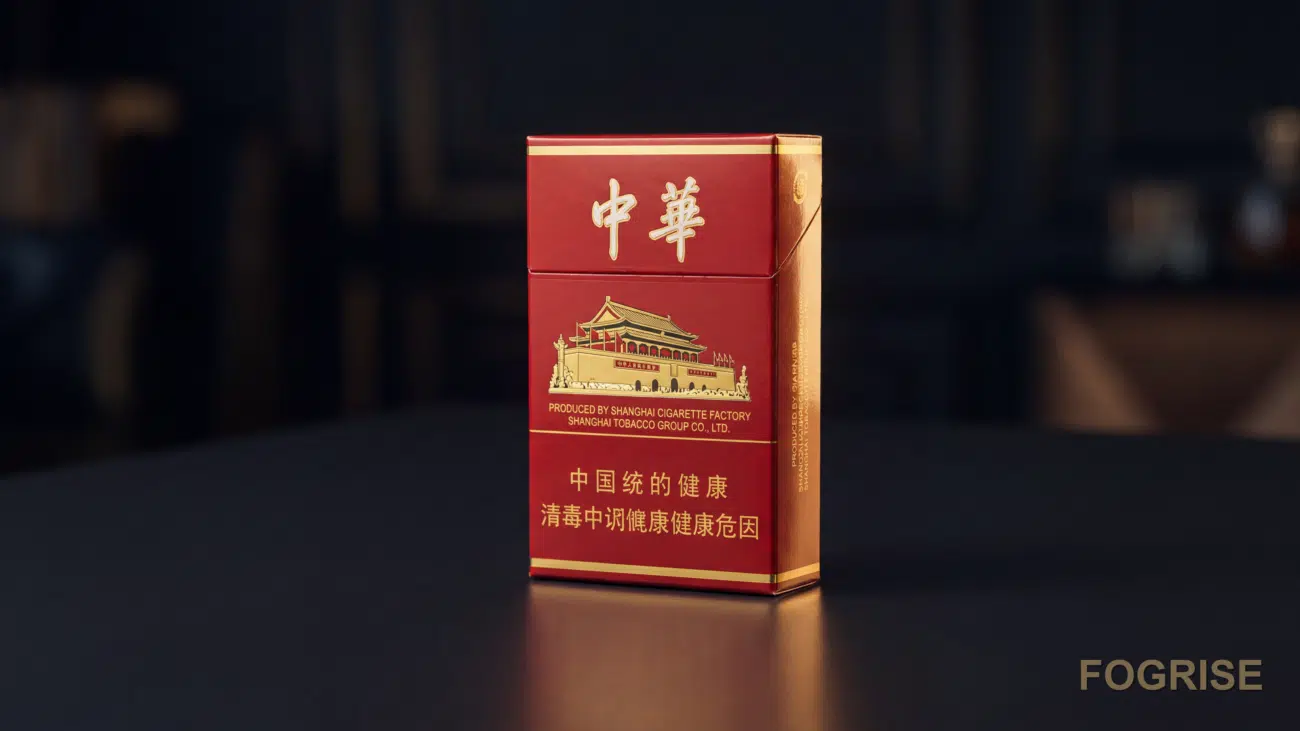
Chunghwa (中华) and Panda (熊猫) are the two state-banquet labels, both made by Shanghai Tobacco Group. Chunghwa, with the Tiananmen Gate on the red pack, carries an "aged plum" profile and reportedly holds more than 50% of China’s high-end segment (Clear The Air News Tobacco Blog, 2014). Panda is rarer, historically associated with Deng Xiaoping. Tar on the mainstream Chunghwa hard pack sits around 10 to 11 mg; both are gift-economy packs, not daily smokes.
Tier B: Regional Premium Brands
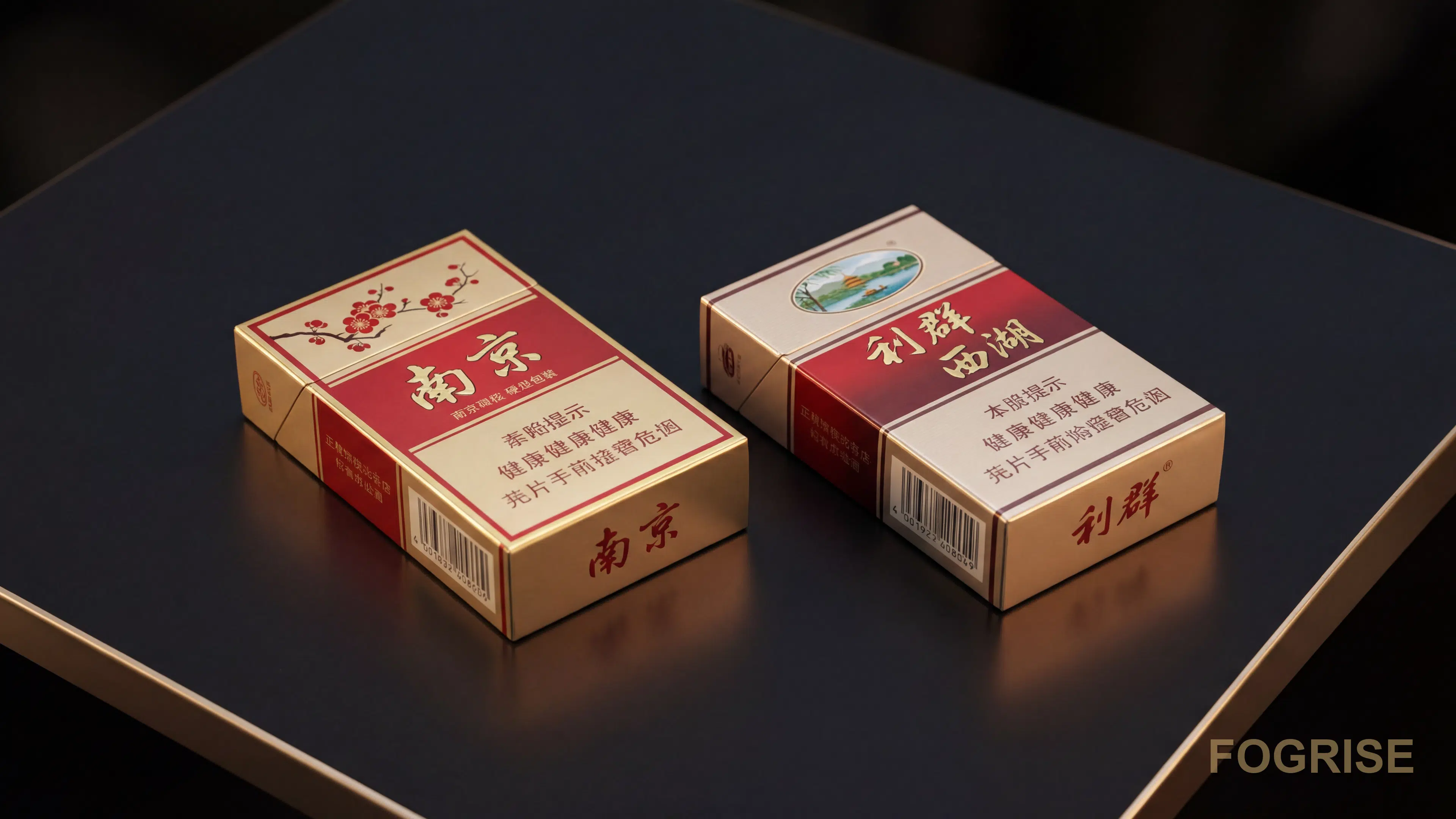
Yuxi (玉溪), from Yunnan’s Hongta Tobacco Group, is a southwest-China premium pillar. Furongwang, or Hibiscus King (芙蓉王), is made by China Tobacco Hunan Industrial and ranks inside the official top-five grade-one brands (Clear The Air News Tobacco Blog, 2014). Nanjing (南京), from China Tobacco Jiangsu Industrial, leans floral and is often the first Chinese pack a newcomer is offered at a Vilnius dinner. Typical tar runs 8 to 11 mg, with slim variants at the lower end.
Tier C: Mainstream & Value Brands
Double Happiness (双喜), from China Tobacco Guangdong Industrial, and Liqun (利群), from China Tobacco Zhejiang Industrial, round out the everyday-prestige tier; Liqun also sits inside the official top-five grade-one ranking (Clear The Air News Tobacco Blog, 2014). These are workhorse packs of a typical Chinese household, priced for daily use rather than gifting. Tar runs roughly 10 to 11 mg on standard king-size variants. For a Lithuania Chinese cigarettes buyer, Tier C is the realistic souvenir: lawful to hand-carry within the 800-stick intra-EU allowance, and far less likely to be counterfeited than a Chunghwa pack.
| Brand (EN / CN) | Tier | Manufacturer | Typical Tar | Lithuania availability |
|---|---|---|---|---|
| Chunghwa / 中华 | A | Shanghai Tobacco Group | ~10-11 mg | Not at retail; personal import only |
| Panda / 熊猫 | A | Shanghai Tobacco Group | ~8-10 mg | Not at retail; rare even in China |
| Yuxi / 玉溪 | B | Hongta Tobacco Group | ~8-10 mg | Not at retail; personal import only |
| Furongwang / 芙蓉王 | B | China Tobacco Hunan Industrial | ~10-11 mg | Not at retail; personal import only |
| Nanjing / 南京 | B | China Tobacco Jiangsu Industrial | ~8-11 mg | Not at retail; personal import only |
| Double Happiness / 双喜 | C | China Tobacco Guangdong Industrial | ~10-11 mg | Not at retail; personal import only |
| Hongtashan / 红塔山 | C | Hongta Tobacco Group | ~10-11 mg | Not at retail; personal import only |
| Liqun / 利群 | C | China Tobacco Zhejiang Industrial | ~10-11 mg | Not at retail; personal import only |
Every pack in this table is harmful and addictive, regardless of tier or printed tar value. A lower tar number does not mean a safer cigarette; the product is still tobacco. The next section covers whether ordering any of these brands online to Lithuania is even legal.
Is It Legal to Buy or Ship Chinese Cigarettes to Lithuania?
Short answer: a Lithuanian resident cannot lawfully receive Chinese cigarettes through an online (distance) order shipped to a private address in Lithuania. Lithuanian national law closes the distance-sales channel for tobacco entirely, well beyond the EU minimum. Personal import within published customs allowances is a separate, narrower route. Before any purchase, verify the current rules with the Lithuanian Customs Department (Muitinė) and the State Tax Inspectorate (VMI). Treat this section as informational, not legal advice.
The Republic of Lithuania’s Law on Control of Tobacco, Tobacco Products and Related Products (Law No I-1143, as last amended 18 October 2018), Article 14, prohibits placing tobacco products on the Lithuanian market under distance contracts, including both internal and cross-border distance sales (Republic of Lithuania, 2018). The EU Tobacco Products Directive (2014/40/EU) sets a harmonised floor; Member States may go beyond it, and Lithuania has (European Union, 2014).
fogrise-cigarette.com is a worldwide retailer of Chinese-brand product, but lawful delivery to a private Lithuanian address depends on what Lithuanian law currently permits. We do not frame any shipment to Lithuania as a way to bypass the national distance-sales rule.
Lithuania’s Tobacco Retail and the Distance-Sale Ban (Article 14)
Article 14 of Law No I-1143 prohibits placing tobacco products on the market in Lithuania by distance contract. That covers both internal Lithuanian online sales and cross-border online sales aimed at a Lithuanian consumer (Republic of Lithuania, 2018). The EU Tobacco Products Directive permits Member States to close the cross-border distance-sales channel, and Lithuania has exercised that option (European Union, 2014). A separate provision, Article 162, mirrors the rule for electronic cigarettes and refill containers, with first-offence fines of EUR 289 to EUR 868 and repeat-offence fines of EUR 868 to EUR 1,448 (Republic of Lithuania, 2018). The practical consequence for anyone searching for Chinese cigarettes in Lithuania is direct: any website promising home delivery of cigarettes "to your door in Vilnius" is asserting something Lithuanian national law does not allow.
The Age-18 Rule and the Tax-Stamp Requirement
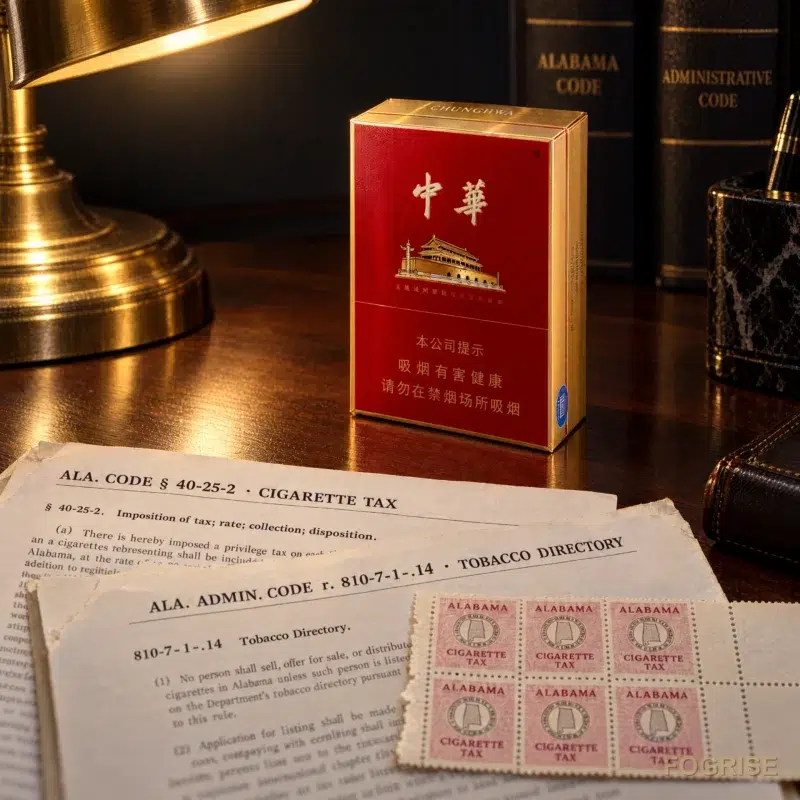
Two further conditions narrow the picture. First, the minimum age to be sold tobacco in Lithuania is 18 (Article 14(5)(3) of Law No I-1143), and sellers must request ID whenever there is doubt (Republic of Lithuania, 2018). Second, Article 14 prohibits a natural person from buying in Lithuania any tobacco product that is not labelled with the special tax-stamp markings prescribed by national legislation (Republic of Lithuania, 2018). Every lawful pack on a Lithuanian shelf carries that stamp; a pack without it is outside the legal retail channel, regardless of brand or origin. For a buyer of Chinese cigarettes in Lithuania, the practical test is twofold. Does the pack carry a current Lithuanian tax stamp, and was the buyer aged 18 or over at the point of sale? If either answer is no, the transaction is not lawful retail under Lithuanian law.
The Legal Route: Personal Import Within Allowances
One narrow channel does exist. Under EU rules for travel between Member States, an adult traveller may carry up to 800 cigarettes for personal use without owing further duty in the country of arrival, provided the tobacco was already taxed in the country of purchase (European Union, 2024). From a non-EU country, the duty-free allowance on arrival in Lithuania is 200 cigarettes by air, or 40 by land, for travellers aged 17 and over (European Union, 2024). Personal import is not a distance-sales workaround. The goods must travel with the traveller, must stay within the published allowance, and must respect the tax-stamp and age rules at destination. Exceeding the allowance triggers customs duty, VAT and excise on the excess, plus possible penalties. For any cross-border purchase of Chinese cigarettes intended for Lithuania, confirm the current allowances and tax-stamp rules with Muitinė and VMI before ordering.
Lithuania’s Customs Allowances, 2025 Excise and Prices
For any adult thinking through Chinese cigarettes Lithuania-side, three numbers do most of the talking: how many sticks you can lawfully carry across the border, how much tax is built into a legal pack, and what the shop-shelf price actually is. Lithuania’s 2025 figures sit at an interesting midpoint on the EU table, and the customs allowances split sharply by where you arrive from and how.
Customs Allowances: EU vs Non-EU (and the 40-Stick Land Limit)
Travelling between EU Member States, an adult can bring an indicative 800 cigarettes for personal use without paying extra duty, provided the tobacco was already taxed in the country of purchase (European Union, 2024). From outside the EU, the duty-free allowance collapses sharply: 200 cigarettes if you arrive by air or by sea-going passenger ship, and only 40 cigarettes if you cross by land or by other sea routes (European Union, 2024). The allowance is also age-gated: travellers must be 17 or older (European Union, 2024). That 40-stick land-border figure quietly catches out drivers heading in from Belarus or Kaliningrad with a single carton in the boot, since most travellers expect a 200-stick number everywhere.
| Allowance or price | Figure | Conditions |
|---|---|---|
| Intra-EU, personal use | 800 cigarettes | Indicative ceiling; tax already paid in origin country |
| Non-EU, by air or passenger sea | 200 cigarettes | Traveller aged 17+; duty-free |
| Non-EU, by land or other sea | 40 cigarettes | Traveller aged 17+; duty-free |
| 2024 specific excise | EUR 2.82 per 20-pack | Lithuanian national rate |
| 2025 specific excise | EUR 3.05 per 20-pack | Roughly +8% year on year |
| 2025 weighted-average retail | EUR 4.78 per 20-pack | 21% VAT applies on top |
The 2025 Excise Jump and Pack Prices
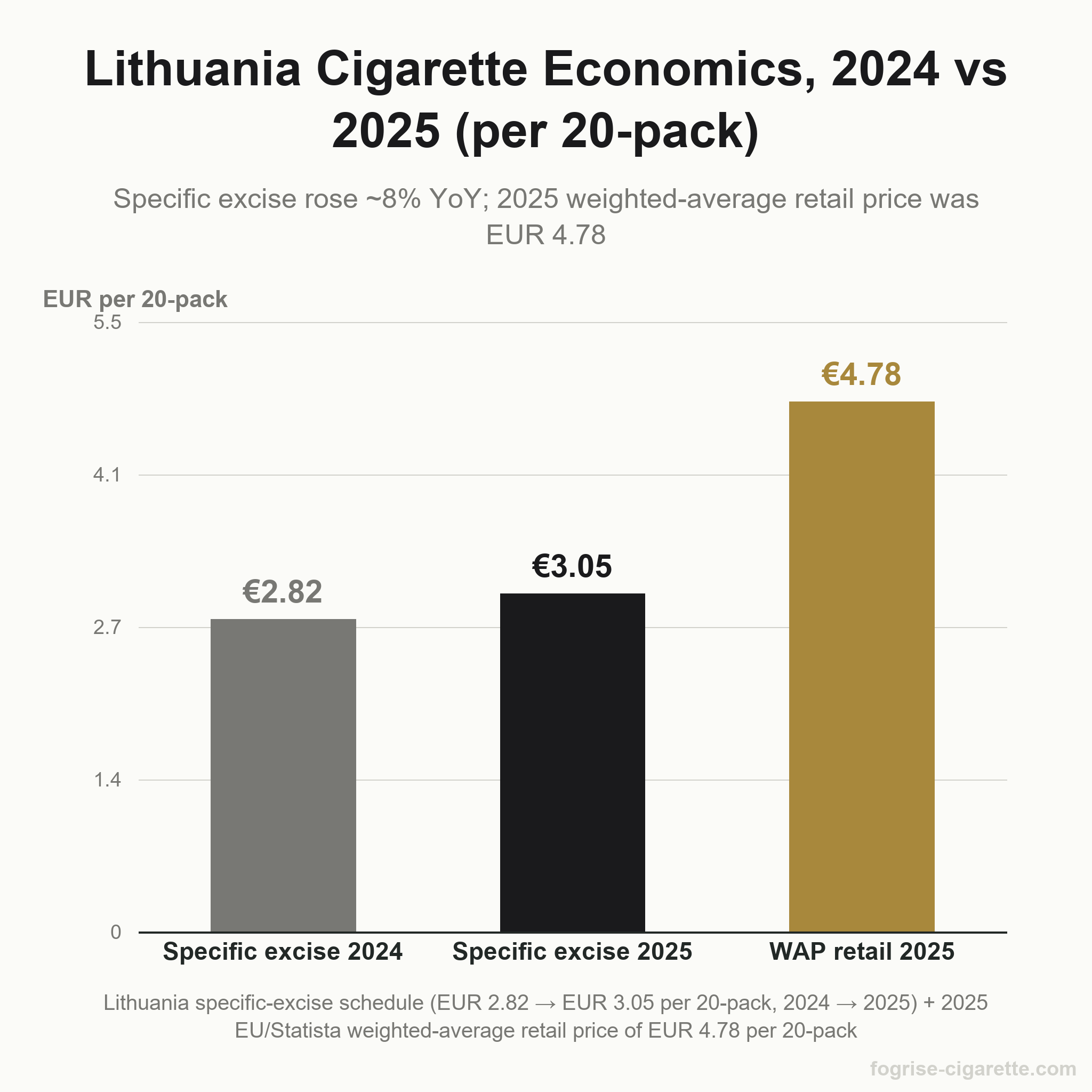
Lithuania’s specific excise on a 20-pack climbed from EUR 2.82 in 2024 to EUR 3.05 in 2025, an increase of roughly 8 per cent in a single step (Tax Foundation Europe, 2025). That puts the tax floor on a single pack at about three euros before retail margin or the standard 21 per cent VAT is layered on (Tax Foundation Europe, 2025). The 2025 weighted-average retail price for a pack of 20 settled at EUR 4.78 (Tax Foundation Europe, 2025), placing the country in the mid-lower band of EU pack prices, well above Bulgaria’s EUR 3.69 yet far below France or Ireland. For anyone modelling the real landed cost of Chinese cigarettes Lithuania-bound through any lawful channel, those three figures, the duty-free count, the specific excise, and the weighted-average retail price, are the starting point.
What Exceeding the Allowance Means
Exceeding the allowance is not an automatic seizure, but it is automatically a tax event. Quantities above the 800-stick intra-EU ceiling can trigger a customs check on whether the goods are genuinely for personal use; quantities above the 200 or 40 stick non-EU thresholds become subject to import duty, 21 per cent VAT, and Lithuanian excise on the excess. Packs without the prescribed Lithuanian tax stamp can be confiscated outright under Article 14, regardless of count. The framing here is informational, not a planning route: the live Lithuanian Customs (Muitinė) bulletin and the State Tax Inspectorate of Lithuania (VMI) remain the authorities on what gets calculated, what gets confiscated, and what gets fined. For a buyer of Chinese cigarette brands Lithuania-side, the only durable answer is to verify the current allowance and excise schedule before any border crossing.
Lithuania’s Record Illicit Market — and the Near-Absence of Chinese Brands
Lithuania runs one of the European Union’s largest illicit-cigarette markets, and at the same time that illicit market carries almost no Chinese-brand product. Those two facts together reframe every cheap "Chinese cigarettes Lithuania" listing a reader is likely to encounter online.
The 21% Illicit Share — Highest Tier in the EU
KPMG’s 2025 European Flows study, the industry’s standard annual measure of illicit-tobacco penetration, puts counterfeit and contraband (C&C) cigarettes at roughly 21% of total cigarette consumption in Lithuania in 2025, about 0.54 billion sticks, up 1.6 percentage points from 2024 (KPMG, 2025). Only a handful of EU members ran higher that year: France near 41%, Ireland 35%, the United Kingdom 32%, Belgium 25%, and Cyprus 24% (KPMG, 2025). Lithuania sits firmly in that top tier, well above the EU weighted average. So before any brand-specific question comes up, the baseline is clear. Roughly one in five cigarettes smoked in Lithuania did not pass through the legal supply chain. That is the floor every Chinese-cigarette claim in this market has to sit on top of.
In Lithuania’s 2025 KPMG country profile, counterfeit and contraband cigarettes reached 21% of total consumption (about 0.54 billion sticks), placing the country among the EU’s most exposed markets; yet, as the seizure data below shows, almost none of that illicit flow is Chinese-brand product (KPMG, 2025).
What the Contraband Actually Is (and Is Not)
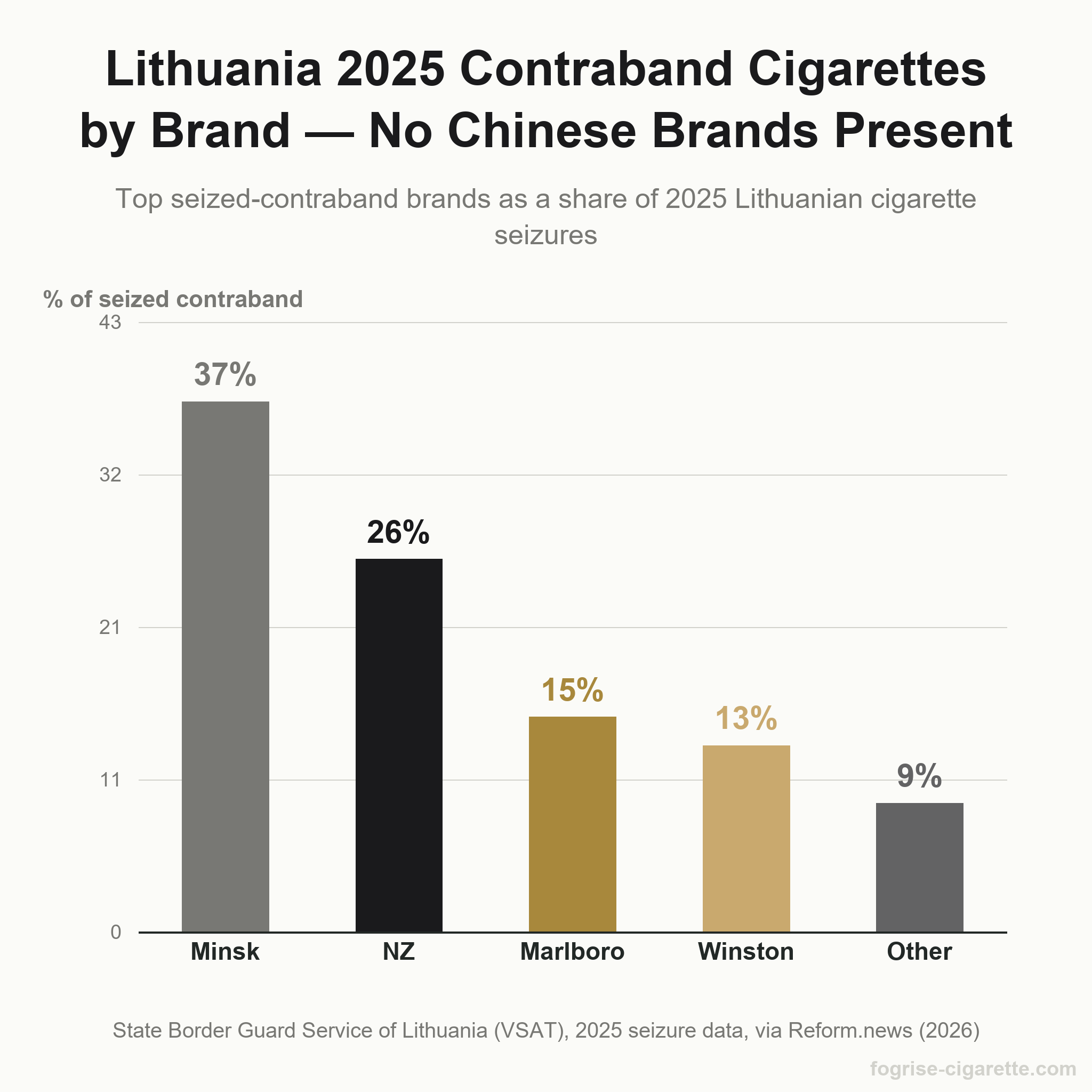
The composition of that illicit volume is the real story. Lithuania’s State Border Guard Service (VSAT) intercepted 4.44 million packs of contraband cigarettes in 2025, roughly three times the 1.39 million packs seized in 2024, with a declared market value near EUR 21.1 million (State Border Guard Service of Lithuania, 2026). Of those seized packs, the top four brands were Minsk at 37%, NZ at 26%, Marlboro at 15%, and Winston at 13%, with the remaining ~9% spread across other labels (State Border Guard Service of Lithuania, 2026). Read that list again. It is two Belarusian and Russian factory brands followed by two diverted Western multinationals. Zero Chinese brands. No Chunghwa, no Yuxi, no Furongwang, no Nanjing in the top of the seizure mix.
The routes match the brand mix. About 50.1% of seized packs entered Lithuania from Latvia, 49.2% from Belarus (much of the Belarus flow delivered by air balloon, with 635 balloon shipments intercepted in 2025 against 226 in 2024), and only 0.3% from Russia (State Border Guard Service of Lithuania, 2026). Counterfeit inflows specifically rose from 0.06 billion sticks in 2024 to 0.17 billion in 2025, again concentrated in the same Belarus-anchored brand families (KPMG, 2025). This is a regional smuggling economy oriented toward the eastern borders, not a Chinese-import economy.
Why This Matters for Chinese-Brand Buyers
The practical consequence for anyone searching for Chinese cigarettes in Lithuania is sharper than it first looks. The country runs both a record illicit market and a near-absence of Chinese brands inside that market. The two together mean a cheap Chinese cigarettes Lithuania offer is doubly suspect. It almost certainly does not ride the existing illicit supply lanes (which move Minsk, NZ, Marlboro and Winston volumes), and it almost certainly does not come through the lawful retail channel either, because Lithuania’s distance-sale ban under Article 14 blocks online tobacco delivery to private consumers. Neither route leads to a lawful, authenticated Chinese pack on a Lithuanian doorstep at a deep discount. The realistic explanations narrow to two unpleasant ones: a counterfeit pack mimicking a Chunghwa or Yuxi wrapper, or a diverted pack sold without the Lithuanian excise stamp. The next section explains how to tell which.
Spotting Counterfeit Chinese Cigarettes in Lithuania
KPMG’s 2025 European Flows study attributes about 0.17 billion counterfeit cigarettes to Lithuania for the year, roughly triple the 0.06 billion recorded in 2024 (KPMG, 2025). Because genuine Chinese brands are all but absent from that contraband flow, a suspiciously cheap pack sold as a Chinese brand is far likelier counterfeit than a real bargain.
Lithuania’s huge illicit market does not carry Chinese cigarettes in any meaningful volume, which inverts the usual cheap-pack logic. The seizure data from the previous section now becomes practical buyer protection rather than academic background. Treat any low-price "Chinese" pack inside the country as suspect by default.
Why Cheap Chinese Packs Are a Red Flag Here
The 2025 contraband seizure mix from State Border Guard interceptions ran Minsk 37%, NZ 26%, Marlboro 15%, and Winston 13% (State Border Guard Service of Lithuania, 2026); Chunghwa, Nanjing and Yuxi do not appear in the dominant flow. The illicit pipeline genuinely does not supply the real Chinese article, so a sub-EUR-3 pack offered as Chinese cigarettes Lithuania in a bar, social-media DM, or back-alley channel is almost certainly counterfeit, diverted from a duty-paid chain, or both. KPMG’s 2025 European Flows study attributes about 0.17 billion counterfeit sticks to Lithuania for the year, roughly triple the 2024 figure of 0.06 billion (KPMG, 2025). Counterfeit volume is climbing fast while genuine Chinese brands in that flow remain almost entirely absent, so the cheap-Chinese-pack offer carries double-stacked risk: wrong supply lane, wrong price floor. Default to skepticism, especially against the 2025 weighted-average retail price of about EUR 4.78 per 20-pack (Tax Foundation Europe, 2025).
Authentication Checklist for a Chunghwa Pack
Treat every Chunghwa pack as guilty until verified. Six checks, in this order:
- Printing register, the part most fakes get wrong first. Real Chunghwa shows sharp Tiananmen Gate artwork at all four corners with hairline ink-trap detail. Tilt the pack toward the light and the fine lines should stay crisp. Soft edges, ghosted color, or visible halftone dots indicate a counterfeit press.
- Lithuanian tax stamp. A pack lawfully on the Lithuanian retail market must carry the national excise stamp; its absence is dispositive.
- Holograms and foil. Genuine premium tiers ship with a foil seal whose hologram shifts cleanly under angle and never looks painted on. Flat, dull, or mis-registered holograms are common counterfeit tells, and the cellophane tear strip is worth a second look too.
- Glue lines. Authentic factory wrap shows even, narrow glue beads, the kind a high-speed packing line leaves behind. Uneven, lumpy, or excess glue points to hand-assembled fakes, and a side seam that lifts under a thumbnail tells the same story.
- Font consistency. Compare both the Chinese characters and the Latin print to the brand’s reference typeface. Spacing irregularities and weight mismatches are reliable flags.
- Verified channel. Buy only from a licensed source whose chain of custody you can trace to the manufacturer or licensed importer.
If any single item fails, walk away. Counterfeit packs often contain lower-grade tobacco, unverified additives, and printing inks unrelated to whichever brand sits on the label, so a failed check is not cosmetic, it is a content warning.
Why the Lithuanian Tax Stamp Matters
Article 14 of Lithuania’s Tobacco Control Law prohibits natural persons from buying tobacco products that are not labelled with the special tax-stamp markings prescribed by national legislation (Republic of Lithuania, 2018). The stamp is not decorative; it is the country’s legal and fiscal proof that a pack moved through the licensed supply chain, paid the 2025 specific excise of about EUR 3.05 per 20-pack (Tax Foundation Europe, 2025), and is intended for the Lithuanian retail market. A pack of Chinese cigarettes in Lithuania without that stamp fails the legal test before the authenticity test even begins, and cross-checking the stamp with Muitinė or VMI guidance is a five-minute habit. Smoking is harmful and addictive at any tier and origin; this checklist is buyer protection, not endorsement.
Public-Health Reality: What WHO and Lithuanian Authorities Say
The World Health Organization reports that tobacco kills up to half of its long-term users and causes more than 8 million deaths worldwide each year, including roughly 1.3 million among non-smokers exposed to second-hand smoke (WHO, 2024). That risk applies to every cigarette brand, tier, and origin, Chinese brands included.
The harm-honest posture on this site is fixed. Every brand and tier covered above is a combustible tobacco product, and combustible tobacco remains the deadliest consumer product legally sold anywhere in the European Union. That posture applies to every pack discussed in any Lithuania chinese cigarettes context, from Tier A Chunghwa down to value-tier Hongtashan, and to every European or American label alongside them.
The health burden of smoking
The World Health Organization estimates tobacco use kills up to half of its long-term users and is responsible for roughly 8 million deaths each year worldwide, including about 1.3 million people killed by second-hand smoke exposure; that excess mortality is observed across every cigarette brand, manufacturing origin, and tar tier (World Health Organization, 2024). Nicotine is addictive, and dependence usually sets in long before the user recognises it. Lithuania’s National Public Health Centre (Nacionalinis visuomenės sveikatos centras, NVSC), under the Ministry of Health, treats smoking as a leading preventable cause of cancer, cardiovascular disease, and chronic respiratory illness for adults in the country (World Health Organization, 2024). The European Union’s Tobacco Products Directive (2014/40/EU) codifies the same posture: combustible cigarettes carry pictorial health warnings on at least 65% of pack faces because the EU recognises no safe exposure level (European Union, 2014).
A peer-reviewed analysis in Tobacco Control reported elevated lead, cadmium and arsenic levels in cigarettes manufactured with tobacco grown in China, with concentrations persisting across the 2009 sampling round and later (O’Connor et al., 2014). That is a named scientific finding, not a marketing claim, and it does not make any other origin a safe alternative. If a regulator anywhere has ever applied "reduced-risk" language to a specific tobacco product, that language belongs to that regulator and that product, never to a Lithuania chinese cigarettes retailer.
Resources for readers who want to quit
If you are an adult in Lithuania considering quitting, the right channels are clinical and public-health, not commercial. Speak first to your family physician (šeimos gydytojas), then consult NVSC’s public-health information channels and the WHO’s tobacco cessation resources at who.int. Every EU member state, Lithuania included, publishes national quit-support pathways through public-health portals. A cigarette retailer, xiangyandd included, is not the place to seek cessation advice.
Frequently Asked Questions
Can I order Chinese cigarettes online to Lithuania?
No. Lithuanian Tobacco Control Law Article 14 prohibits placing tobacco products on the market in Lithuania through distance contracts, including internal and cross-border online sales (Republic of Lithuania, 2018). That means any retailer shipping a Chunghwa or Yuxi pack to a private Lithuanian address is operating outside the law. The lawful route for adults is in-person purchase from a licensed Lithuanian retailer, or personal-import within the customs allowance below.
Is it legal to ship cigarettes to Lithuania from abroad?
Cross-border distance sales of tobacco to Lithuanian consumers are banned under the same Article 14 (Republic of Lithuania, 2018). Lithuania exercised the EU Tobacco Products Directive option that lets a Member State prohibit such shipments. A foreign retailer addressing a parcel of cigarettes to a private home in Vilnius or Kaunas is non-compliant. Verify the current rule with Lithuanian Customs (Muitinė) before any order.
How many cigarettes can I bring into Lithuania from abroad?
Traveller allowances depend on origin. Coming from another EU country, the personal-use guide level is 800 cigarettes (European Union, 2024). Arriving from outside the EU by air, the duty-free limit is 200 cigarettes for travellers aged 17+; arriving by land or sea, the limit drops to 40 cigarettes. Above those thresholds, customs duty, VAT and excise apply, and the goods must be declared.
What is the minimum age to buy cigarettes in Lithuania?
The statutory minimum age is 18, set by Article 14(5)(3) of the Tobacco Control Law (Republic of Lithuania, 2018). Sellers must request photo ID where there is any doubt. Some retailers and many EU airports apply a higher 21 threshold. xiangyandd serves adults 21+ only, in line with the project YMYL policy. If you are under 18, you cannot legally buy in Lithuania.
How much does a pack of cigarettes cost in Lithuania in 2025?
The 2025 weighted-average retail price of a 20-pack in Lithuania is about EUR 4.78 (Tax Foundation Europe, 2025). That places Lithuania in the mid-lower band of EU prices, well below Ireland (around EUR 18.94) and France (around EUR 14.25), and a touch above Bulgaria (around EUR 3.69). Specific excise rose from EUR 2.82 in 2024 to EUR 3.05 in 2025, so a further uplift is already baked in.
What is the most popular Chinese cigarette brand?
Chunghwa (中华) is the most-requested premium Chinese brand, both domestically and among diaspora buyers (Clear The Air News Tobacco Blog, 2014). The red pack features the Tiananmen Gate, and the brand reportedly holds more than half of China’s high-end segment with annual sales near RMB 76 billion. Furongwang, Yuxi, Huanghelou and Liqun follow on grade-one share. None of these are stocked at Lithuanian retail; availability runs through narrow lawful channels only.
What share of cigarettes in Lithuania are illicit?
KPMG’s 2025 European Flows study estimates Counterfeit and Contraband cigarettes at roughly 21% of total Lithuanian consumption, among the highest shares in the EU (KPMG, 2025). Belarusian Minsk and Russian-origin NZ dominate that flow, with Marlboro and Winston filling most of the rest. Chinese brands barely feature in the contraband mix, so a cheap "Chinese" pack on a Lithuanian street is almost certainly counterfeit.
Do Chinese cigarettes contain real tobacco?
Yes. Chinese cigarettes are conventional combustible tobacco products manufactured under the State Tobacco Monopoly Administration, and they remain harmful and addictive like any other cigarette (O’Connor et al., 2014). A 2015 Tobacco Control peer-reviewed study did report higher levels of toxic metals (lead, cadmium, arsenic) in tobacco grown in China than in several international comparators. Counterfeits, by contrast, may contain unverified or adulterated contents.
Conclusion
If you came here looking for Chinese cigarettes in Lithuania, the honest answer has three layers.
First, the brands that matter are the same ones that matter in Beijing duty-free: Chunghwa and Panda at the state-gift tier, Yuxi, Furongwang and Nanjing in regional premium, and Double Happiness, Hongtashan and Liqun in the everyday tier. Knowing that hierarchy keeps you from overpaying for a Tier-C pack at Tier-A money.
Second, the law. Lithuania’s Tobacco Control Law (Article 14) prohibits distance sales of tobacco to consumers, the minimum purchase age is 18, and every lawful pack carries a Lithuanian tax stamp. The 2025 specific excise climbed to roughly EUR 3.05 per 20-pack and the weighted-average retail price sits near EUR 4.78. Before you order anything from anywhere, verify the current rules with Muitinė (Lithuanian Customs) and the State Tax Inspectorate.
Third, the trap. Lithuania carries one of the EU’s highest illicit-cigarette shares, around 21% of consumption, yet the contraband flow is Belarusian and Russian labels, not Chinese ones. A cheap "Chinese" pack offered in Lithuania is doubly suspect: the supply is not really there, and the price cannot be honest.
If you are an adult smoker exploring genuine Chinese brands, browse our catalog at fogrise-cigarette.com/shop/ or reach our team at fogrise-cigarette.com/contact/. Verify your local law before ordering, and consider the health cost honestly. Smoking causes serious disease at every tier, every brand, every origin.
References
- KPMG LLP. (2025, June). Illicit cigarette and heated tobacco consumption, and oral nicotine share in Europe — 2025 results (20th annual report). Commissioned by Philip Morris Products SA. https://www.pmi.com/content/dam/pmicom/global/docs/itp/kpmg-illicit-cigarette-consumption-europe-2025-results.pdf
- Republic of Lithuania. (2018). Law on Control of Tobacco, Tobacco Products and Related Products, No I-1143 (as last amended 18 October 2018) [English translation]. Tobacco Control Laws / Campaign for Tobacco-Free Kids. https://assets.tobaccocontrollaws.org/uploads/legislation/Lithuania/Lithuania-TC-Law.pdf
- European Union. (2014). Directive 2014/40/EU of the European Parliament and of the Council of 3 April 2014 on the approximation of the laws, regulations and administrative provisions of the Member States concerning the manufacture, presentation and sale of tobacco and related products. Official Journal of the European Union, L 127/1. https://eur-lex.europa.eu/legal-content/EN/TXT/?uri=CELEX:32014L0040
- European Union. (2024). Alcohol, tobacco and excise duties — Your Europe (Citizens). Retrieved June 29, 2026, from https://europa.eu/youreurope/citizens/travel/carry/alcohol-tobacco-cash/index_en.htm
- State Border Guard Service of Lithuania (VSAT). (2026, January). 2025 contraband cigarette seizure statement [As reported by Reform.news]. https://reform.news/en/lithuania-seizes-record-amount-of-contraband-cigarettes-in-2025-border-guards-name-the-most-popular-brands
- Tax Foundation Europe. (2025). Cigarette taxes in Europe, 2025. Retrieved June 29, 2026, from https://taxfoundation.org/data/all/eu/cigarette-taxes-europe/
- World Health Organization. (2024, July 31). Tobacco — Key facts. World Health Organization. https://www.who.int/news-room/fact-sheets/detail/tobacco
- O’Connor, R. J., Schneller, L. M., Caruso, R. V., Stephens, W. E., Li, Q., Yuan, J., & Fong, G. T. (2014). Toxic metal and nicotine content of cigarettes sold in China, 2009 and 2012. Tobacco Control, 23(Suppl 1), i31-i36. https://doi.org/10.1136/tobaccocontrol-2013-051078
- Clear The Air News Tobacco Blog. (2014). China — The big brands era begins. Retrieved June 29, 2026, from http://tobacco.cleartheair.org.hk?p=5733
- European Commission. (2024). Excise duties on tobacco. Taxation and Customs Union. Retrieved June 29, 2026, from https://taxation-customs.ec.europa.eu/taxation/excise-duties/excise-duties-tobacco_en
Last reviewed and updated: June 2026. Author: xiangyandd editorial team. For tailored guidance, contact our team.



 English (US)
 简体中文
 Deutsch
 Français
 Español